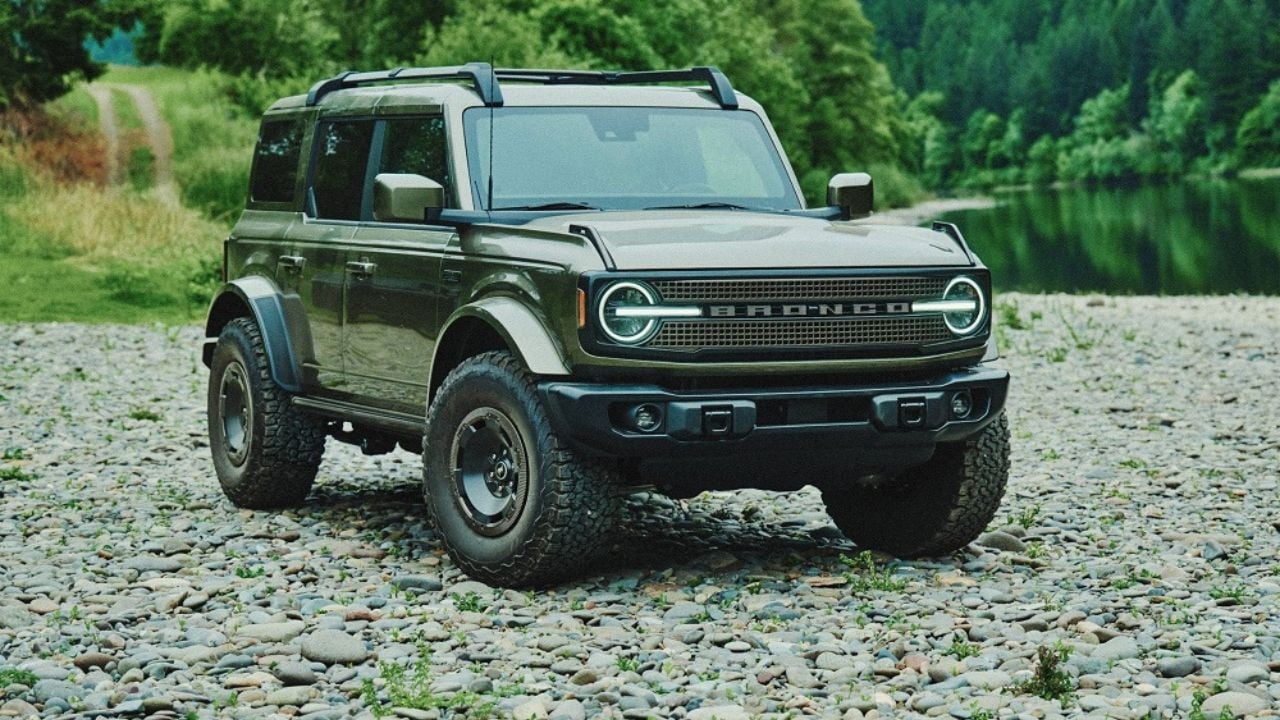
One of the biggest attractions of the Ford Bronco is its ability to deliver a true open-air driving experience. Like the Jeep Wrangler, owners can remove sections of the roof and enjoy the outdoors, making the SUV especially appealing to adventure-focused buyers.
The freedom that comes with a removable roof also creates a practical problem. Once the panels come off, owners need a safe and convenient place to store them while they are on the road.
Ford has explored several solutions over the years through patent filings aimed at improving the Bronco ownership experience. The latest concept focuses less on removing the roof itself and more on what happens to the panels afterward.
A newly published patent outlines a system that would allow the Bronco’s roof panels to be stacked together and secured directly on the vehicle. If it ever reaches production, the design could make spontaneous open-air driving much easier for owners.
A New Approach To Roof Panel Storage
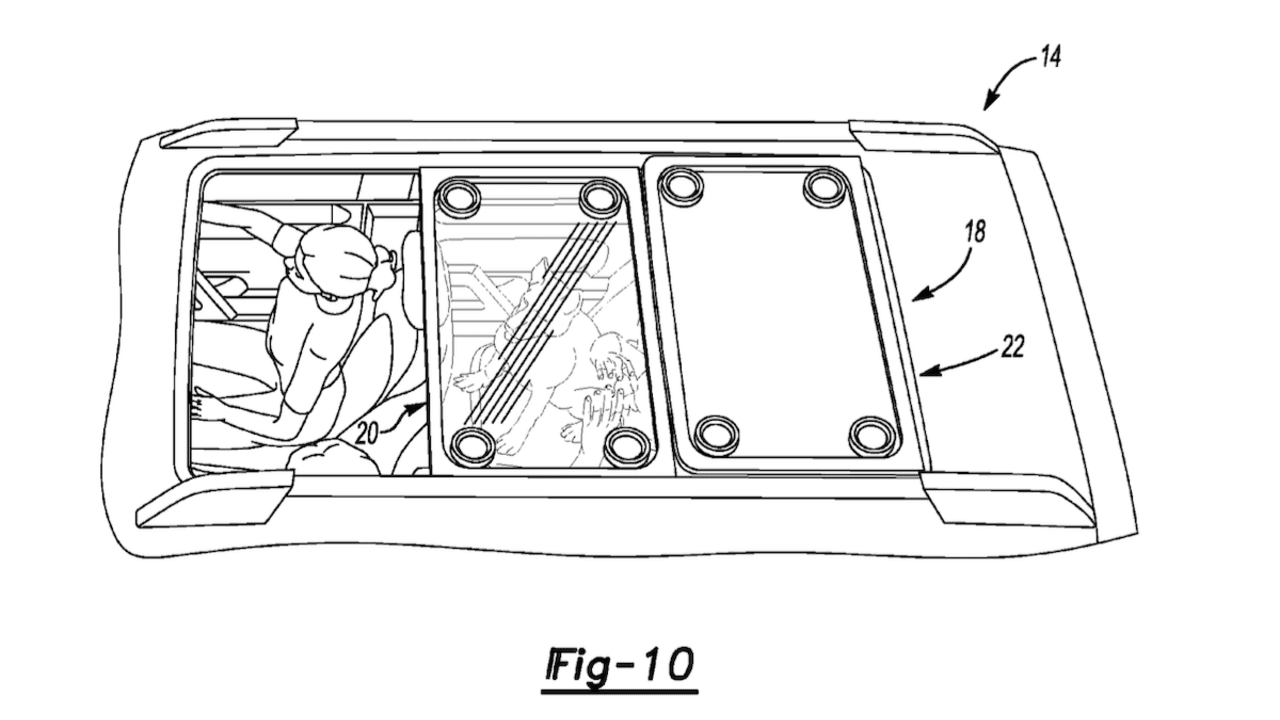
The patent, originally filed with the United States Patent and Trademark Office in December 2024, became public in June 2026. It describes a removable roof system that allows multiple roof sections to connect together into a compact package after removal.
Patent illustrations show a Bronco-style SUV equipped with several removable roof panels. Rather than leaving the pieces loose or requiring dedicated storage bags, the design enables the panels to interlock with one another using built-in mounting points.
The concept relies on small feet located underneath each panel and matching slots integrated into the top surfaces. Once removed, the panels can be stacked securely, creating a single unit that is easier to handle and transport.
Panels That Travel With The Vehicle
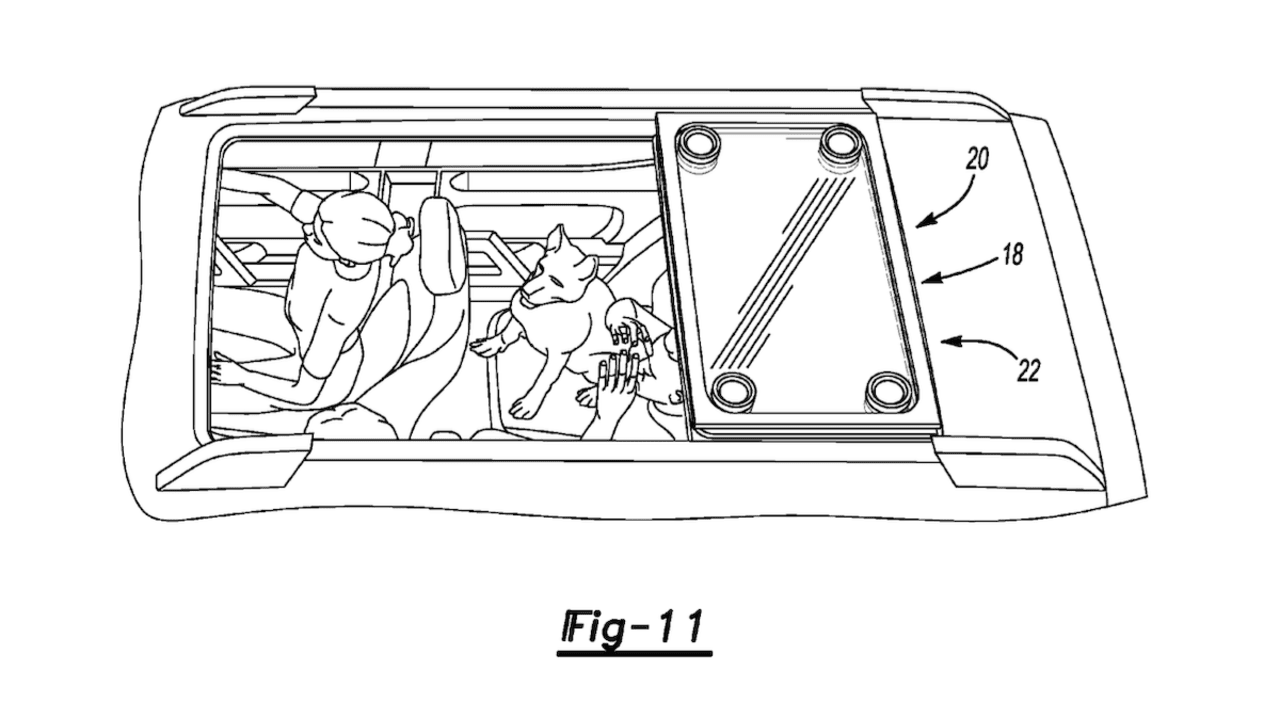
One of the most interesting aspects of the design is how the stacked panels are stored. Instead of occupying cargo space inside the vehicle, the system uses a specially designed rack mounted to the Bronco’s roof rails.
Crossbars equipped with their own mounting points secure the stacked roof sections in place. This allows drivers to keep the panels with them throughout a trip without sacrificing valuable interior storage capacity.
For Bronco owners who frequently remove their roofs during outdoor adventures, the concept could provide significant convenience. Rather than deciding in advance whether to leave the panels at home, drivers could take them along and reinstall them whenever weather conditions change.
The design also eliminates the challenge of finding a secure location for several individual roof pieces. Everything remains attached to the vehicle in a compact and organized manner.
Designed For Simplicity
According to the patent drawings and descriptions, the system does not appear to require any complicated tools or powered mechanisms. The roof sections can be removed manually and connected together using integrated attachment points.
Once stacked, the panels lock together to help prevent movement and rattling while the vehicle is in motion. This could be particularly beneficial during off-road driving, where vibrations and rough terrain place additional stress on mounted accessories.
The straightforward design may also help reduce complexity and manufacturing costs if Ford ever chooses to develop the system further. Simplicity often plays a major role in determining whether patent concepts make the transition from paper to production.
Still Room For Additional Cargo
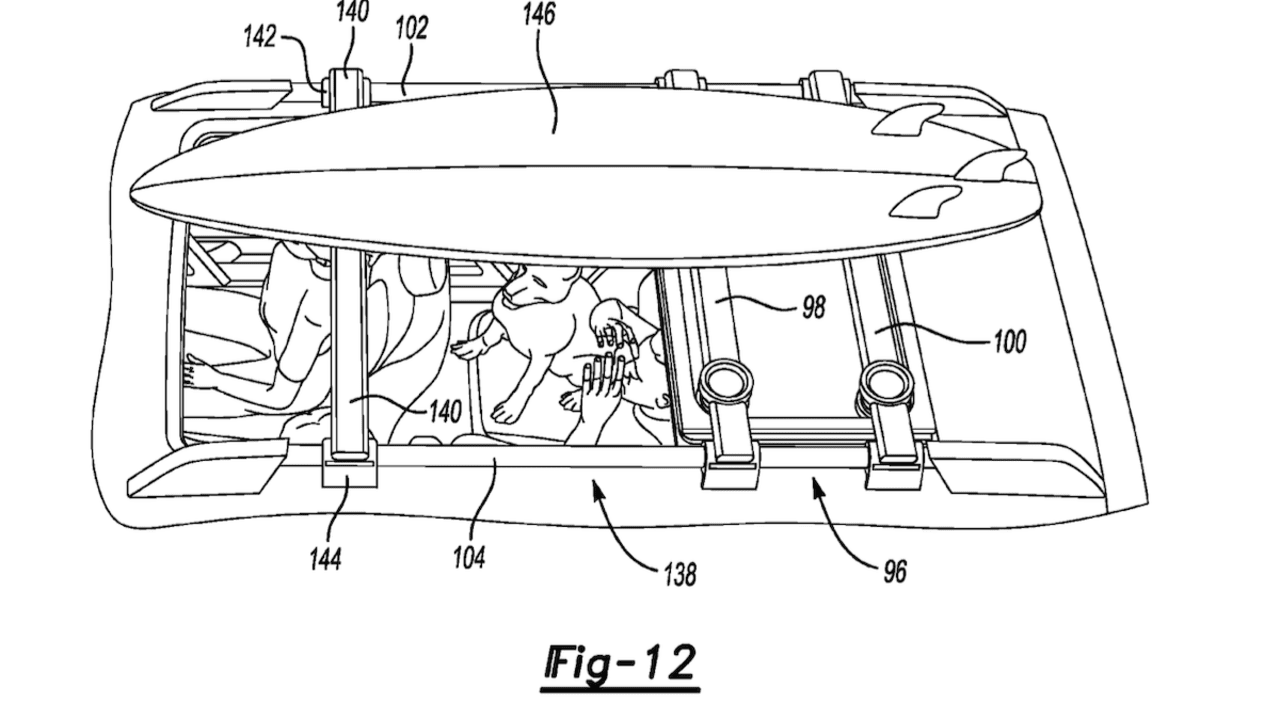
Another noteworthy detail shown in the patent illustrations is the continued functionality of the roof rack. Even with the roof panels stacked and secured on top of the vehicle, additional cargo space appears to remain available.
One illustration depicts extra gear mounted above the stored roof sections. This suggests Ford’s engineers considered maintaining utility alongside convenience rather than forcing owners to choose between roof storage and cargo-carrying capability.
For outdoor enthusiasts who regularly transport camping equipment, bicycles, kayaks, or other recreational gear, preserving that versatility would be an important advantage. The Bronco’s adventure-focused image depends heavily on its ability to carry both passengers and equipment.
A Clever Idea That May Never Reach Production
As with any automotive patent, there is no guarantee that the technology will ever appear on a production vehicle. Automakers routinely file patents to protect ideas that never progress beyond the concept stage.
Still, this particular design addresses a genuine concern voiced by many Bronco owners. The challenge of storing removable roof panels has existed since the vehicle’s launch, and Ford continues searching for ways to make the process easier.
Whether this solution ultimately reaches dealerships remains unknown. However, the concept demonstrates that Ford is still looking for practical ways to enhance one of the Bronco’s signature features while preserving the freedom that makes open-air driving so appealing.