When the New York Knicks clinched a spot deeper into the NBA Finals, the streets of New York erupted in the kind of celebration that makes great sports memories. For one cab driver working the area that night, though, the party became something else entirely. Noureddine Bitat, an Algerian immigrant who had no idea what the Knicks even were, found himself in the middle of a mob that swarmed his taxi, stomped on it, and put his windshield through its paces in the worst possible way.
Video of the incident spread quickly online and struck a nerve far beyond New York. Here was a man just trying to work his shift, entirely disconnected from the game being celebrated around him, watching his livelihood get pounded into sheet metal by strangers in team jerseys. The footage drew outrage, sympathy, and, eventually, some notable attention from an unexpected corner of the entertainment world.
That corner belongs to French Montana, the Grammy-nominated rapper and Morocco-born New York transplant who caught the clip and recognized something personal in it. His own father drove a cab in New York City after the family emigrated when French Montana was 13, which gives him a particular vantage point on what this kind of vehicle represents to an immigrant family. It is not just a car. It is the job. It is everything.
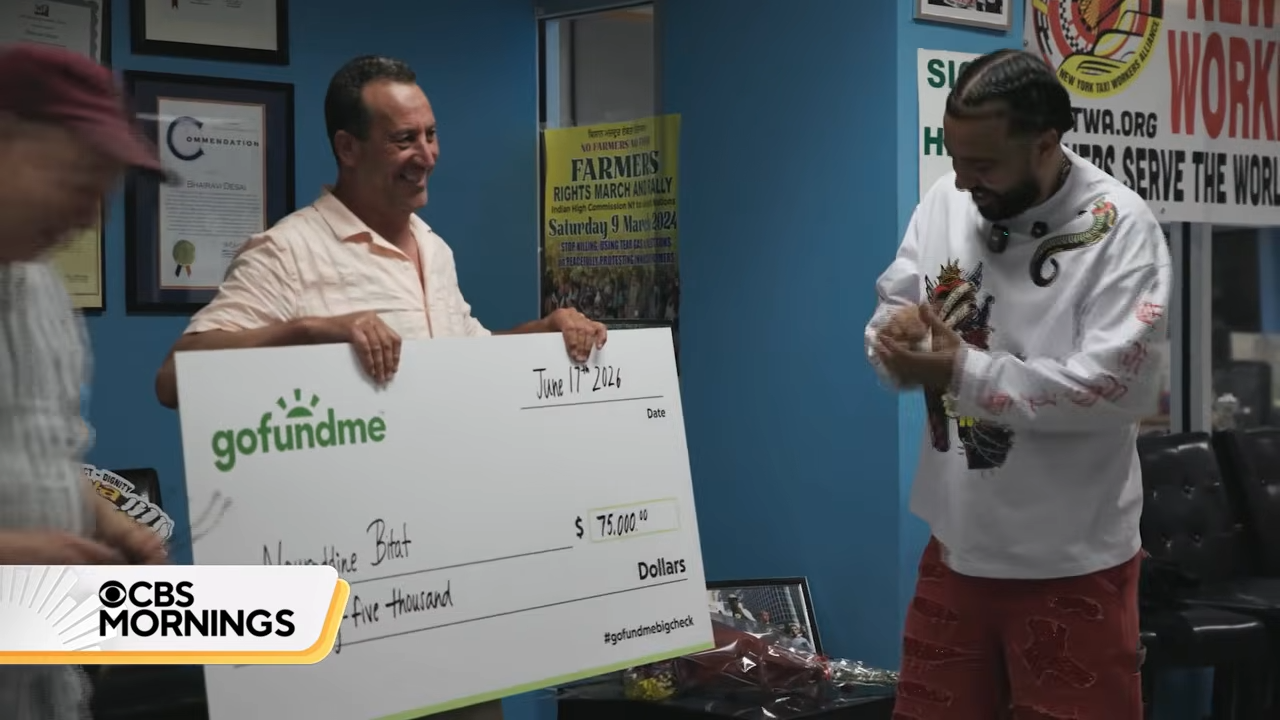
The story moved quickly from viral clip to coordinated action. French Montana partnered with YouTuber Zachery Dereniowski and the New York Taxi Workers Alliance to launch a GoFundMe campaign targeting $75,000. More than 2,000 donors showed up, the goal was met, and French Montana appeared on CBS Mornings to hand Bitat a check in person while announcing he would also cover a full year of the driver’s living expenses.
A Taxi Is More Than Transportation
For working-class immigrants in major American cities, the cab or rideshare vehicle has long functioned as the entry point into the economy. You do not need a degree. You do not need a long employment history. You need a car, a license, and the willingness to put in the hours. New York City’s taxi industry in particular carries decades of that story, with immigrant families across multiple generations threading their way into the middle class behind the wheel of a yellow cab.
Bitat was doing exactly that when the celebration found him. According to French Montana, the driver had no connection whatsoever to the game happening nearby. When Montana later asked if Bitat watched the Knicks, the driver reportedly said he did not even know what the Knicks were. Wrong place, wrong shift, wrong block.
How the Response Came Together
French Montana flagged the story to Dereniowski, a content creator with a large following built around surprise acts of generosity. The two joined forces with the New York Taxi Workers Alliance, which has spent years advocating for drivers who are often squeezed from multiple directions by platform fees, insurance costs, and lease arrangements. The GoFundMe campaign reached its target in a matter of days.
The alliance’s involvement carries some weight here. Taxi drivers in New York have faced a sustained financial squeeze since the rise of rideshare platforms, and many took on significant debt purchasing medallions before the market collapsed. Bitat’s situation landed against that backdrop, giving the campaign a layer of meaning beyond just one bad night.
The Moment on CBS Mornings
French Montana kept it straightforward during his television appearance. He described seeing a man working to support his family and feeling like he had to do something about it. He credited the broader coalition that made the response possible, calling out Dereniowski, the taxi workers union, and the individual donors who contributed. The $75,000 check covered what the fundraiser raised, and the commitment to a year of living expenses came directly from the rapper.
Bitat told Montana during a conversation between them that he no longer wants to drive a taxi. Montana said he would support the driver financially until Bitat figures out what comes next.
What This Story Actually Says
Championship celebrations and property damage have a long and unfortunate relationship in American sports cities. Windows get broken, cars get climbed on, and the people who own those cars or work those streets generally do not appear in the highlight reel. Bitat’s story broke through partly because of how random and unfair it was, and partly because the video made it impossible to look away.
The response, from thousands of strangers and one well-known rapper with a personal connection to the cab industry, suggests that the same technology that spread the damage footage can also mobilize something more useful. Whether that qualifies as a silver lining is probably up to Bitat, who by most accounts just wants to move on to whatever comes next.