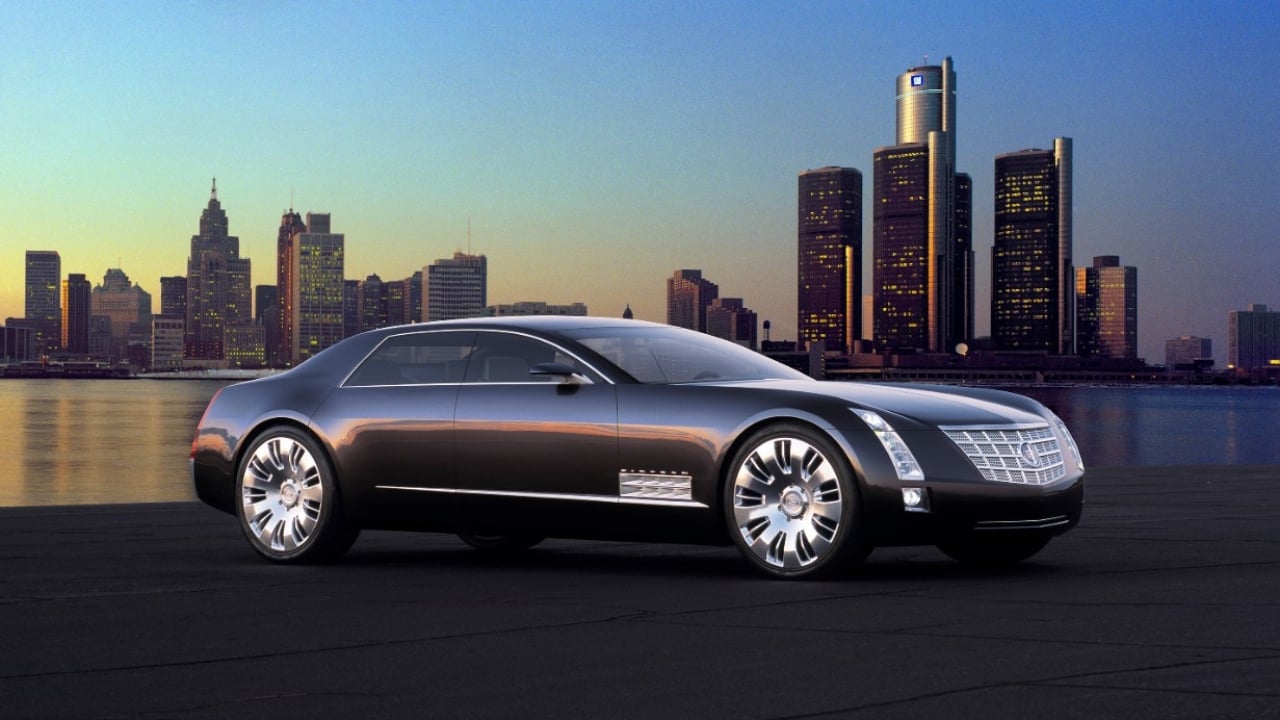
As the 2000s began, American automotive giant Cadillac was at an interesting crossroads. It wanted to head in a new direction that would excite customers and the world in general, but without too much risk of hurting the company’s fortunes. So it decided to gamble on a big change of direction.
At a time when car design leaned into ‘Art Deco Futurism’, Cadillac unveiled the radical Sixteen Concept at the 2003 Detroit Auto Show. Its purpose was to lean into the past, but also move the company forward from some of its older designs, such as the DeVille.
To create the concept, it looked right back to the 1920s and 1930s, when it unveiled the world’s first production V16 engine in the 1930 Cadillac V16. It seemed like an unusual move, but the reaction the concept had in Detroit made Cadillac think they were on to a winner.
Unfortunately, as we know, the car would never make it into production. Yet what it promised would have given even the likes of Rolls-Royce cause to worry. But Detroit refused to build it, and we were left wondering what might have been had it made it into production.
How the World Was Stunned by the Cadillac Sixteen Concept
Cadillac took the covers off the new concept at the 2003 Detroit Auto Show, and it’s fair to say, the crowd was stunned. The car measured 18.6 ft long, almost as long as a Chevrolet Suburban SUV. But it had been built as an ultra-luxurious sedan, to celebrate the 100th anniversary of the American company.
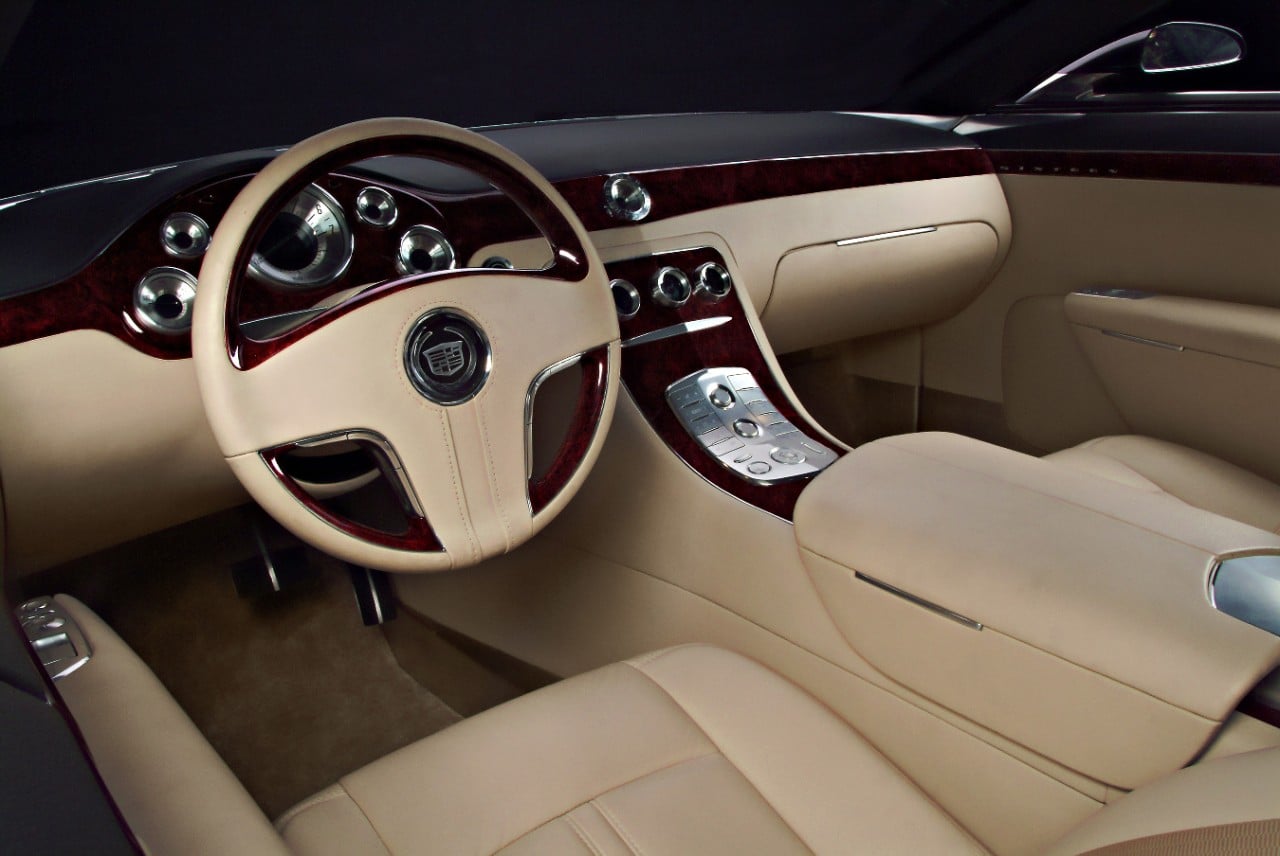
The Sixteen Concept was very low-slung, sat on 24-inch diameter wheels, and had massive 16-inch brake rotors. Cadillac gave it 20 coats of paint, and inside the luxury was plain for all to see. It had Tuscan leather, silk carpets, walnut burl veneer as well as a Bvlgari clock. Then there was the Bose sound system, and a rear-seat DVD player for those who sat in the back. It was clear that Rolls-Royce was being targeted with the car.
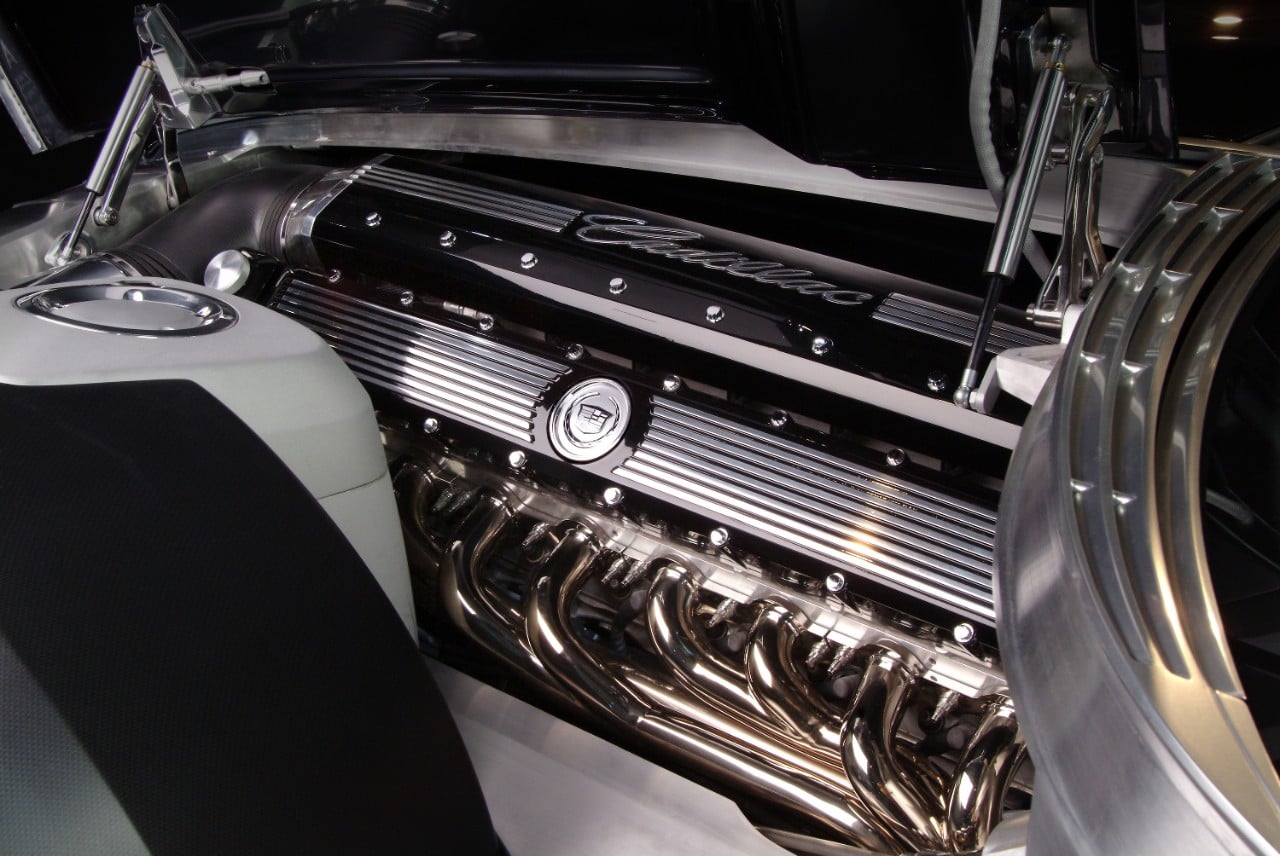
Then there was the engine. Under the hood was a mighty 13.6-liter V16 engine, codenamed XV16. Derived from the General Motors line of small-block V8 engines, the V15 used a pushrod design and packed in 1,000 hp and 1,000 lb-ft of torque. Incredibly, the engine was lighter than GM’s 8100 Vortec V8, thanks to its extensive use of lightweight aluminum alloys.
Cadillac Was Serious About the Sixteen Concept
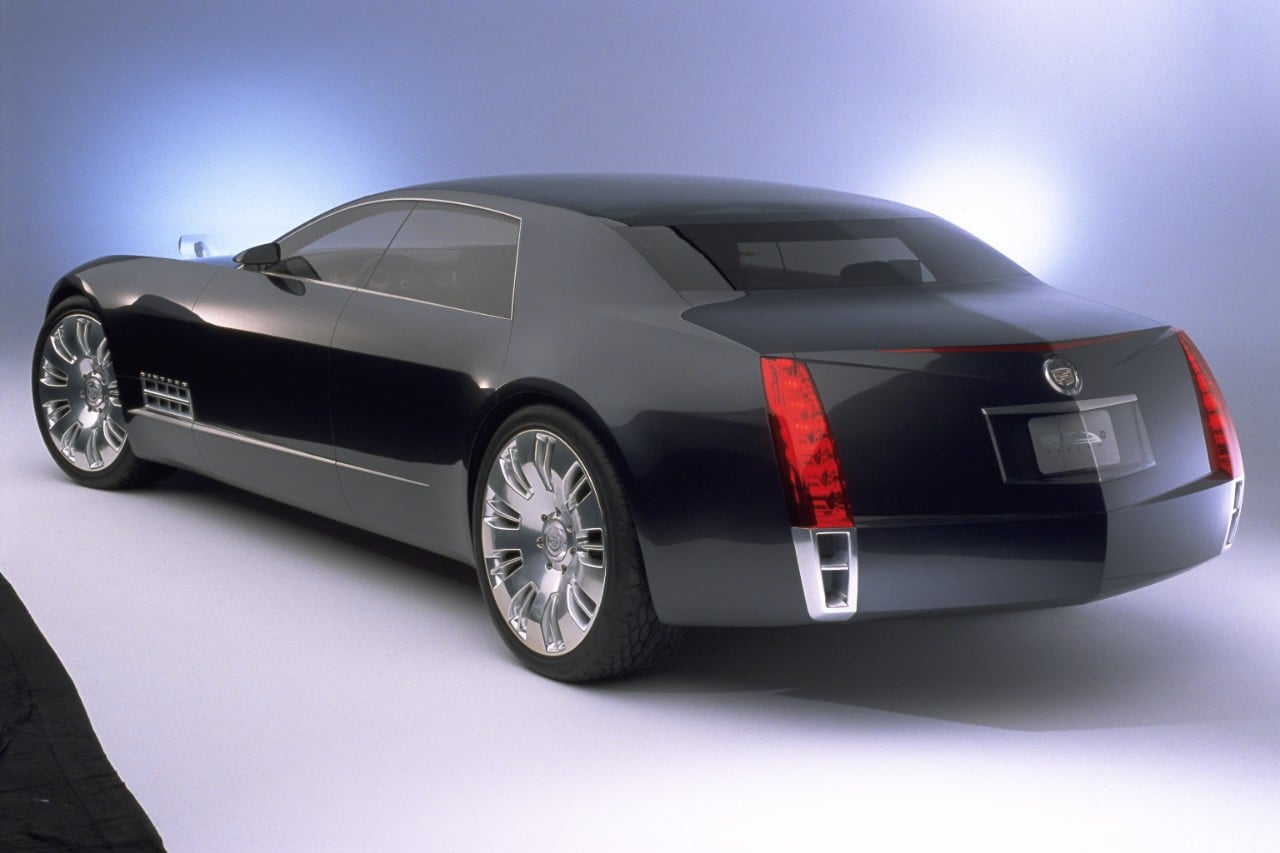
The company didn’t produce the concept to showboat or show off what it could really do. Cadillac was rumored to be very serious about putting it into production, especially as the concept was a fully functioning vehicle, and not a static model. This carried on up until 2007, with the company looking to create a flagship sedan that was very similar to the concept car. Even if it had gone to a V12 engine, as was also rumored, it would have kept virtually everything else from the concept car.
However, as we all know, it didn’t happen. The American automotive industry was in a state of flux, and by the end of the 2000s, Pontiac, Saturn, and Hummer all disappeared from the landscape. Eventually, the Cadillac Sixteen idea was quietly dropped. Even if it had gone into production, the volume produced and the cost of it may have been enough to sink the American brand.
Cadillac Did End up Changing Direction
The irony is that the company did change direction, just perhaps not in the way it intended. It moved away from the ultra-luxury market and went up against the likes of BMW and Mercedes. We got the Cadillac V-Series, a wagon version of the model, and of course the CT5-V Blackwing. The Escalade is a staple product for the range, and the company’s fortunes really turned around. So perhaps the creation of the Sixteen Concept was a good thing for Cadillac after all.