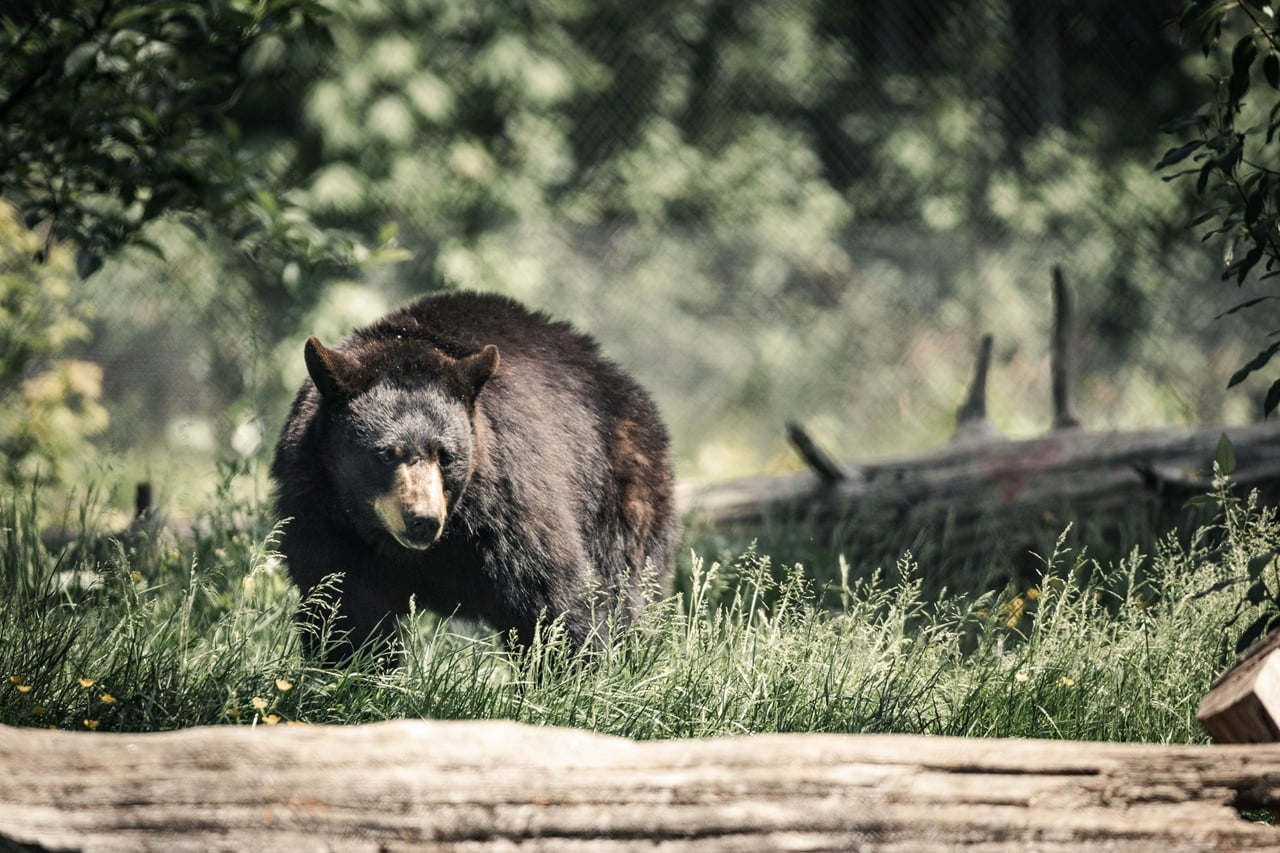
When most people hop on a bicycle for an evening ride, the usual hazards come to mind: potholes, distracted drivers, maybe a loose dog giving chase. Don Terres, a 67-year-old man enjoying a weekend at a cabin near Pinecrest Lake in Tuolumne County, California, had all of those bases covered in his mental checklist. What he did not account for was a 200-plus-pound black bear standing in the middle of the road at the bottom of a hill.
Terres and his wife had spent a pleasant Sunday pedaling up to a nearby ski resort before turning around for the return trip. On the way down, he was moving along at roughly 25 miles per hour when he rounded a curve and found himself staring at the bear from approximately five feet out.
At that range, with that kind of speed, there is simply no time to react, and Terres freely admits the bear looked just as blindsided as he was. The collision knocked him unconscious and deposited him on the pavement while the bear, in what can only be described as a more dignified exit, bolted into the surrounding woods.
A U.S. Forest Service fire engine happened to be passing through the area and came upon the scene. An ambulance was eventually called, and Terres was transported to the hospital. The damage was substantial: three cracked ribs, a separated shoulder, and extensive road rash across his back and leg. These are the kinds of injuries that remind you just how unforgiving pavement is, regardless of whether a car or a bear put you on it.
The California Department of Fish and Wildlife noted that this particular type of incident was a first for their records. A spokesperson described it as bad timing all around and issued the sensible reminder that anyone traveling through rural or forested areas should remain aware that wildlife can appear at any time, on any stretch of road. It’s advice that applies equally well to drivers and cyclists, and maybe most urgently to anyone coming down a hill with any kind of speed.
California’s Black Bear Population Is Larger Than Most People Realize
The Golden State is home to a substantial bear population, with wildlife officials estimating somewhere north of 71,000 black bears roaming the state. Black bears are the only species of bear native to California, and they have expanded their range significantly over the decades as human development has pushed further into forested terrain. The Sierra Nevada, where Tuolumne County sits, is prime habitat.
For all of that population density, direct conflicts between bears and humans remain relatively uncommon. Black bears are generally inclined to avoid people, and serious attacks are rare. California recorded its first and only fatal black bear attack in 2023, when a woman was killed in a incident that drew widespread attention precisely because it was so unprecedented.
Non-fatal encounters do happen, but they usually involve bears protecting cubs or reacting to a perceived threat. Terres was simply in the wrong place at the wrong speed.
What 25 MPH on a Bicycle Actually Means in a Collision
Twenty-five miles per hour is not a casual cruising speed. For context, that is competitive cycling territory, or at minimum a solid clip for a downhill run on a road bike. At that velocity, a rider has very little time to identify a hazard and even less time to do anything about it.
Reaction time studies in automotive research generally suggest that the average person needs somewhere between 1.5 and 2.5 seconds to recognize a danger and initiate braking. At 25 mph, a cyclist covers about 55 feet per second. From five feet out, that gap closes in essentially zero time.
The physics of the crash itself are worth considering. Terres hit a mass estimated between 200 and 250 pounds, which is roughly the same as hitting a moderately heavy adult human or a large piece of road debris. Bears are also compact and low to the ground relative to a car, meaning the impact would have been concentrated and abrupt rather than a glancing blow. The rider went over and down onto asphalt, which accounts for the severity of the injuries.
Road Hazard Awareness Extends Well Beyond Other Vehicles
There is a tendency, particularly among urban cyclists and drivers, to think about road hazards in purely mechanical terms: construction zones, debris, ice patches, other vehicles. Wildlife crossings rarely enter the conversation unless you happen to live or ride in areas where they are a documented concern.
The reality is that in California, particularly in the mountain counties of the Sierra Nevada, deer, bears, mountain lions, and other large animals cross roadways with regularity, and they do not follow any particular schedule.
The California Department of Transportation maintains wildlife crossing data and has invested in underpasses and fencing in specific high-collision corridors, but the sheer scale of rural roads in the state means most stretches remain unmarked and unguarded.
Tuolumne County, which sits at the gateway to Yosemite and encompasses large sections of the Stanislaus National Forest, sees regular bear activity throughout the warmer months. Anyone riding or driving in that region would be well served to treat every blind curve the same way a reasonable driver treats a school zone: assume something unexpected might be on the other side.
Terres Is Recovering, and the Bear Appears to Be Fine
There is, buried in this story, a faint element of dark comedy in that the bear likely walked away without so much as a scratch. Black bears have a layer of muscle and fat that serves them reasonably well in blunt-force situations, and the fact that this one was observed running into the woods under its own power suggests it fared considerably better than the cyclist.
Terres, for his part, is dealing with a recovery that will sideline him for some time given the rib and shoulder injuries, but he was fortunate to have been found quickly and to have avoided more critical trauma.
The incident serves as one of those unusual reminders that roads are shared infrastructure in a much broader sense than we typically acknowledge. Out in the Sierra Nevada foothills, that point has a way of making itself very clear, whether you are ready for it or not.