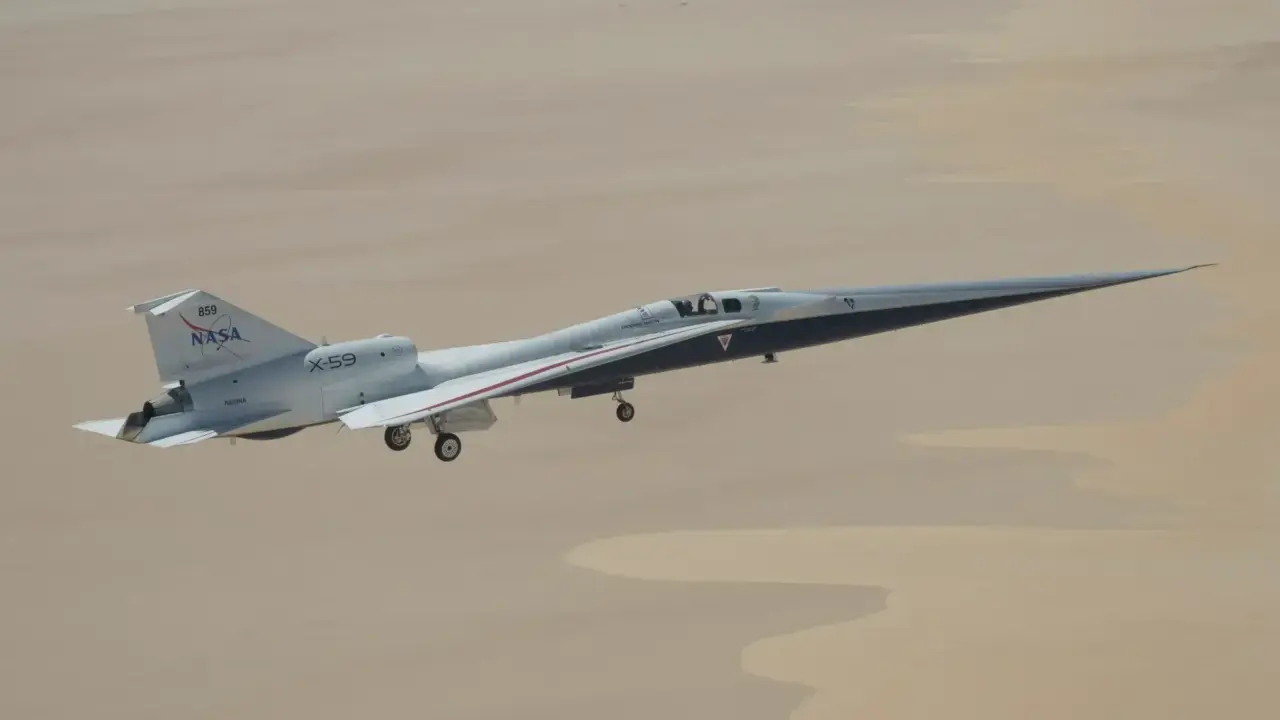
NASA’s experimental X-59 aircraft has officially gone supersonic for the first time, marking a major milestone in the agency’s effort to make commercial high-speed air travel viable over land again.
The sleek, needle-nosed research jet exceeded the speed of sound on June 5 during a test flight over California’s Edwards Air Force Base. Piloted by NASA test pilot Jim “Clue” Less, the aircraft reached approximately Mach 1.1, or about 713 mph, during an 81-minute mission designed to expand the X-59’s flight envelope.
While breaking the sound barrier is impressive on its own, the real goal behind the X-59 program is far more ambitious. NASA hopes the aircraft can prove that supersonic travel does not need to produce the violent sonic booms that led regulators to ban commercial supersonic flights over land decades ago.
Instead of a deafening boom, the X-59 is designed to create what NASA calls a quiet “sonic thump.” The aircraft’s unusual shape and aerodynamic layout are specifically engineered to soften the shock waves that normally reach the ground during supersonic flight.
The X-59 Is Built To Change Supersonic Flight
The X-59 serves as the centerpiece of NASA’s Quesst mission, a long-running project focused on reshaping how supersonic aircraft interact with people on the ground.
Traditional supersonic aircraft generate shock waves that combine into explosive sonic booms capable of rattling buildings and disturbing communities below. Those concerns led to a 1973 ban on civilian supersonic flights over land in the United States, effectively limiting aircraft like the Concorde to transoceanic routes.
NASA’s answer is the X-59’s unusual shape. The aircraft features an extremely long and narrow nose, carefully sculpted fuselage surfaces, and an aerodynamic layout specifically engineered to spread shock waves apart before they reach the ground.
The goal is to transform the traditional sonic boom into something closer to a muted thump that would be far less disruptive for people below.
NASA Is Already Preparing Faster Test Flights
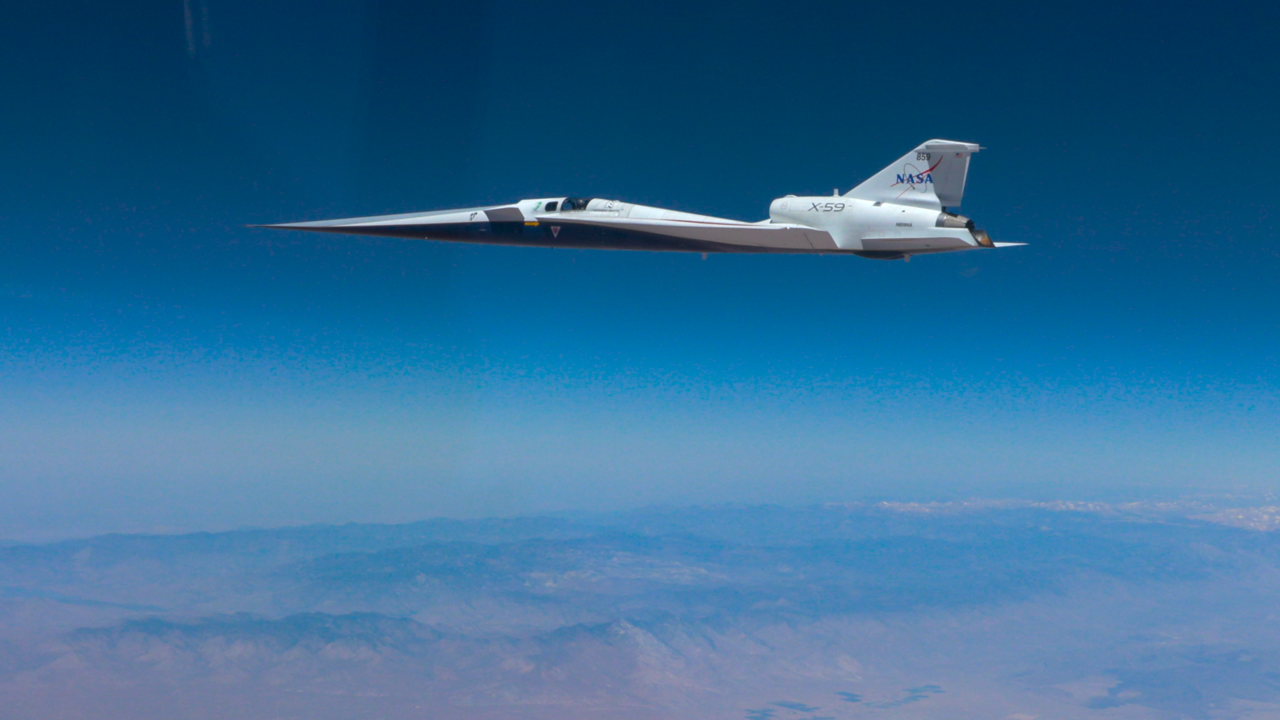
This first supersonic flight was only the beginning of a much larger testing campaign. NASA says the next major step will push the aircraft to Mach 1.4, roughly 925 mph, at an altitude of about 55,000 feet.
Those flight conditions are considered critical because they match the X-59’s intended operational profile during future community noise tests.
NASA plans to eventually fly the aircraft over several U.S. cities to study how residents react to the quieter sound signature. The agency will collect public feedback and acoustic data before presenting the findings to American and international aviation regulators.
If successful, the data could help establish entirely new noise standards for future commercial supersonic aircraft.
The Return Of Supersonic Travel Could Look Very Different
The Concorde proved decades ago that supersonic passenger travel was technically possible, but its operations remained limited due to noise restrictions, high operating costs, and environmental concerns.
NASA believes quieter supersonic technology could dramatically expand the market by allowing aircraft to fly over populated land routes instead of remaining confined to ocean crossings.
That could eventually shorten travel times between major cities significantly. Flights that currently take five or six hours could potentially be reduced to only a few.
NASA Administrator Jared Isaacman said the X-59’s progress represents part of a push to revive America’s experimental aircraft development programs and accelerate innovation in aviation technology.
Since its first flight in October 2025, the X-59 has already completed 16 flights over the past several months as engineers gradually increased speed and altitude limits.
There Are Still Major Challenges Ahead
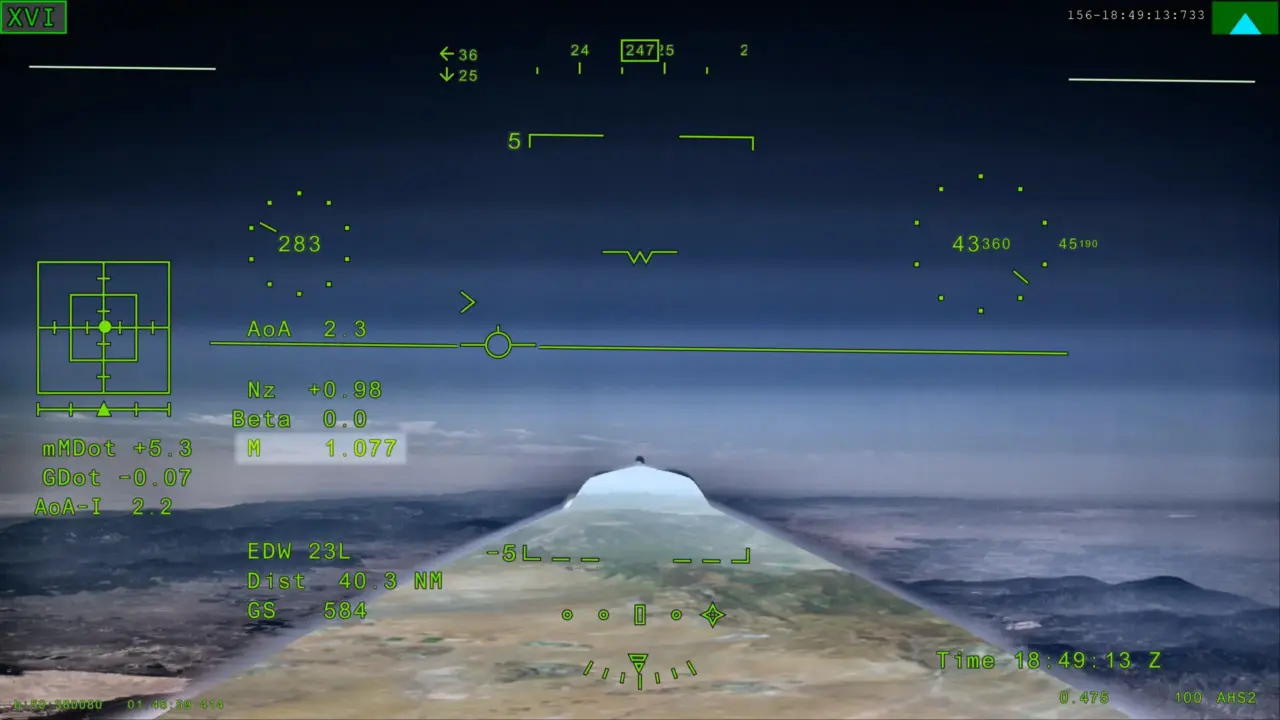
Despite the milestone, the X-59 remains an experimental aircraft designed primarily for research rather than commercial production. The current testing phase focuses heavily on validating handling characteristics, aerodynamic performance, and the aircraft’s acoustic profile.
NASA is also working closely with Lockheed Martin’s Skunk Works division, which built the aircraft, to verify that computer modeling accurately predicts how the quieter shock waves behave in real-world conditions.
The aircraft’s first supersonic run was accompanied by a NASA F-15 chase plane, whose much louder sonic booms intentionally masked any sound generated by the X-59 itself during the test.
Later flights focused specifically on noise analysis will provide a clearer picture of whether the “sonic thump” concept truly works outside simulations and wind tunnels.
If it does, the X-59 could become one of the most important aviation demonstrators since the Concorde era, potentially opening the door to a new generation of faster commercial aircraft that can finally fly supersonic over land without shaking cities apart.