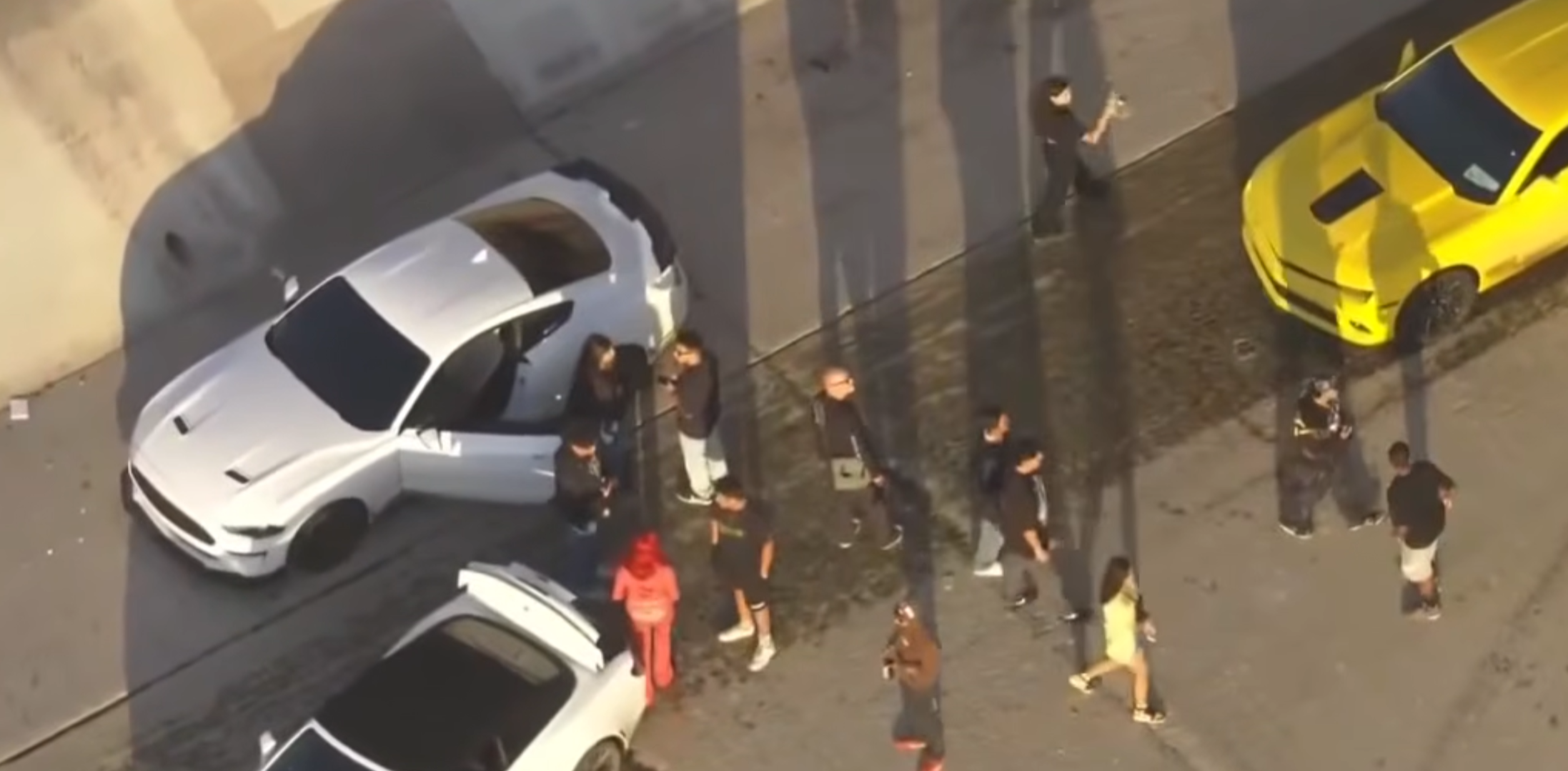
What started as a Sunday evening photo shoot along the Los Angeles River ended with 72 vehicles on the back of tow trucks, a stack of trespassing citations, and a crowd of bewildered car enthusiasts wondering where exactly the evening went wrong. The event, advertised online as a community photo opportunity for the LA car scene, drew roughly 100 vehicles to the riverbed near Cypress Park, with drivers looking to capture their machines against the city skyline. It is the kind of thing the car community does regularly, and for the vast majority of those who showed up, that was genuinely all they had in mind.
LAPD’s Street Racing Task Force arrived around 6:30 p.m. Sunday at the 400 block of North San Fernando Road, moving into the river channel and beginning what would become one of the larger single-event vehicle impound operations in recent memory. Officers issued multiple trespassing citations and hauled away 72 cars, trucks, and motorcycles. The department has confirmed the impounds and citations, though it has notably stopped short of characterizing the gathering as a street race or takeover.
That distinction matters quite a bit. The task force was created specifically to address the dangerous, organized street racing events that have plagued Los Angeles neighborhoods for years, complete with spinning vehicles, blocked intersections, and genuine public safety threats. Whether a photo meetup in a riverbed constitutes the same problem is a question the community, and perhaps eventually a judge, will be asked to sort out.
What is not in dispute is the cost. Drivers on scene reported hearing that some vehicles could be held for up to 30 days, with release fees potentially reaching around $3,000. Under California’s impound laws, that is not an exaggeration. Daily storage rates at official police garages average $42.50, with larger vehicles running between $47 and $74.50 per day, and a city-imposed release fee of $115 on top of that. For someone whose only offense was parking on the wrong side of a concrete riverbank, that is a steep bill.
What the Drivers Say Happened
The version of events offered by attendees is fairly consistent. The gathering was promoted through social media as a photo shoot, with the Los Angeles skyline serving as a dramatic backdrop. Alexander Pimienta, whose motorcycle was among the vehicles impounded, told reporters the trespassing signs in the area were about the size of a piece of paper and barely legible. He said there were no bad intentions, no racing, just people with cameras and cars enjoying a view.
Other drivers echoed that account, saying they believed they were attending a photo shoot for the Los Angeles car community, not a street takeover. The LAPD confirmed the trespassing citations and impounds but did not characterize the event as an active street race. A handful of participants did acknowledge that some people in the group started doing burnouts before police arrived, which, according to multiple accounts, prompted others to call law enforcement. Those individuals reportedly left before officers showed up, leaving the photographers and bystanders to absorb the consequences.
The Task Force and Its Mandate
LAPD’s Street Racing Task Force has been an active presence in Los Angeles for years, specifically targeting the organized street takeovers that shut down intersections and put bystanders at genuine risk. Officers working these operations have arrested people for reckless driving, for standing and watching, and also for having vehicle modifications that led to citations and tows. The task force has broad enforcement authority, and it uses it.
That breadth is exactly what some drivers are now pushing back against. The argument being made on the street is that showing up to a photo event is categorically different from organizing or participating in a takeover, and that a trespassing ticket would have been a proportionate response to the actual conduct at hand. It is a reasonable position on its face, though it runs headlong into the practical reality that law enforcement does not always have the luxury of subdividing a crowd after the fact.
The 30-Day Impound Problem
The financial stakes here go well beyond an inconvenient weekend. Under California law, an impound lot can hold a vehicle for a maximum of 30 calendar days. If the vehicle is not claimed within that period, it may be sold at auction. Owners do have the right to request a hearing before a judge to challenge the impoundment before that deadline passes. That hearing right is meaningful, but it requires navigating a legal process that many drivers, particularly younger ones, may not know exists or know how to access.
LAPD has not confirmed whether the 30-day hold will apply to all 72 vehicles in this case, which leaves affected owners in an uncomfortable position. The difference between a standard tow and a 30-day impound is the difference between a bad Saturday and a serious financial hardship.
Access, Signage, and What Comes Next
One of the more practically sensible suggestions to come out of the whole episode came from a driver named Rodriguez, who said that if the city wants to keep cars out of the river channel, blocking the access ramp would be more effective than waiting for a crowd to gather and towing them all out. It is hard to argue with the logic. The LA River channel is a wide, flat, visually striking expanse of concrete that is essentially designed to look like a film location, and people are going to keep treating it like one until the entrance is physically impassable.
Whether the city acts on that suggestion remains to be seen. For now, 72 vehicle owners are working out the math on tow fees, storage costs, and release charges, the kind of civic arithmetic nobody planned to do on a Sunday evening when all they came for was a decent photo against the skyline.