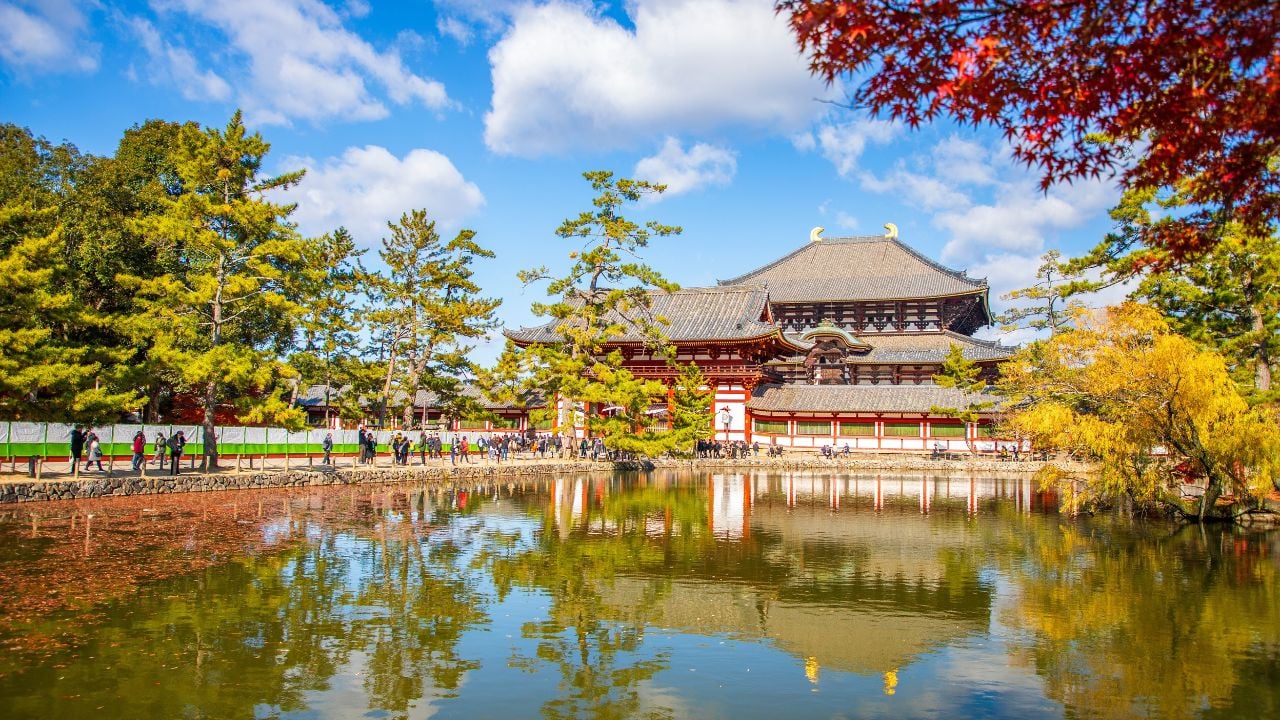
Some cities do not need size to feel substantial. Their strength sits in a small area: old streets, churches, markets, walls, canals, workshops, courtyards, parks, and museums close enough to move between on foot.
Toledo, Bath, Nara, Lucca, and Delft all have that concentration. Toledo has Christian, Jewish, and Muslim history above the Tagus River. Bath has Roman water and Georgian stone. Nara has temple paths, deer, shrines, and parkland. Lucca has walls, towers, piazzas, and Puccini. Delft has canals, church towers, Vermeer, and blue ceramics.
These are places for slow walking, open doors, small museums, lunch breaks, old materials, and streets that do not need a huge itinerary to hold attention.
1. Toledo, Spain

Toledo sits on a steep rock above the Tagus River, with streets that climb, bend, narrow, and open again near stone doorways, convent walls, tiled signs, and small shopfronts. The old center holds centuries of religious, political, and artistic life inside a compact stone maze.
UNESCO describes the Historic City of Toledo as built on a steep rock skirted by the Tagus River and shaped by twenty centuries of history. Its preserved area covers about 260 hectares, with a historical heritage formed by different civilizations and traditions.
The cathedral brings Gothic scale into the center. The Jewish Quarter has synagogues, courtyards, and quieter lanes. Former mosques, Mudéjar details, old city gates, monastery walls, sword shops, marzipan windows, and El Greco references keep different periods close together.
A walk can move from a cathedral portal to a narrow lane, from a small courtyard to a river edge, from church bells to a shop window filled with sweets or steel. Toledo keeps the past close to the street, packed into stone, shade, steps, and doorways.
2. Bath, England

Bath is built from honey-colored stone, curved streets, formal terraces, river crossings, shop windows, and warm water history. The center feels polished without losing its walking scale.
UNESCO says the City of Bath preserves key Roman remains in a museum environment and notes that the Roman Baths can still be appreciated for their original use. It also highlights the city’s large stock of Georgian buildings, many of which remain continuously inhabited.
The Roman Baths bring pools, stone edges, old pavements, steam, and underground history into the middle of the city. Bath Abbey stands nearby, while Pulteney Bridge carries shops across the River Avon. The Circus and Royal Crescent stretch the city into broad curves of Georgian stone.
Bath can fill a day with Roman remains, abbey stone, river light, crescents, tea rooms, bookstores, and small museums without making visitors cross a huge city. The water, stone, bridges, and formal streets do most of the work.
3. Nara, Japan
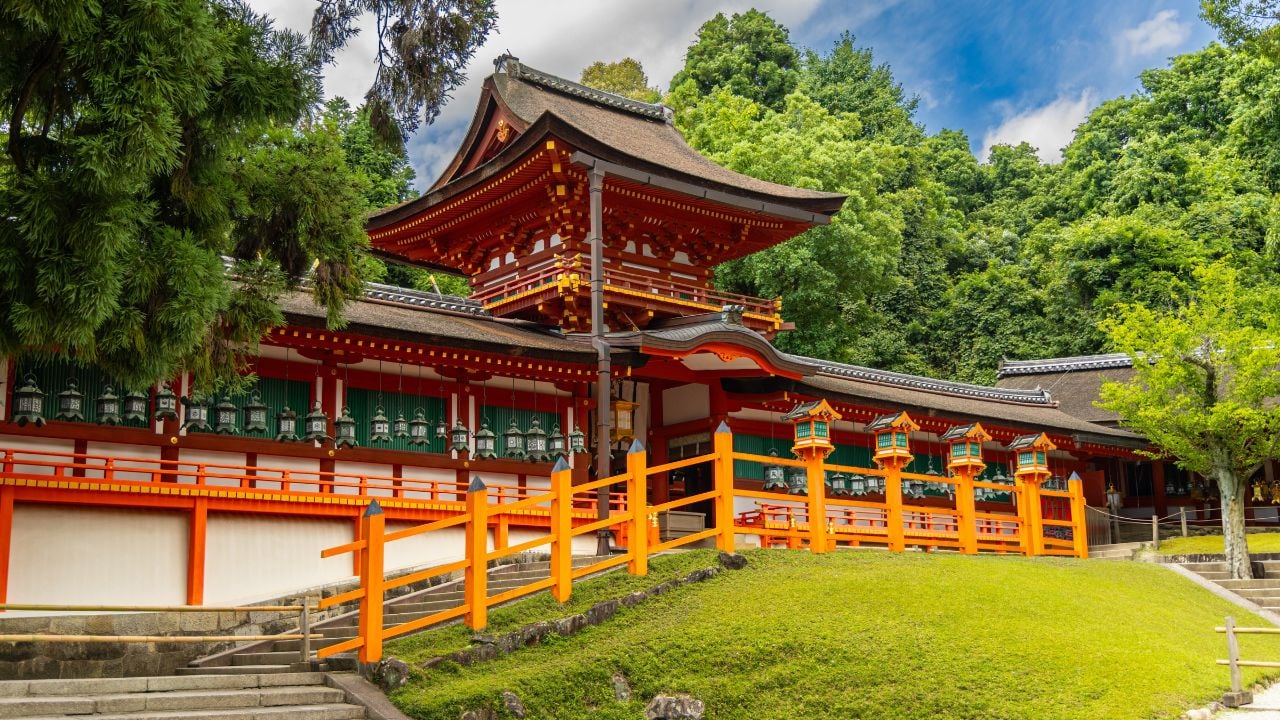
Nara’s old center has temple roofs, wooded paths, deer moving across lawns, stone lanterns, shrine approaches, tea houses, museum rooms, and quiet ground underfoot. The city feels calmer than Kyoto or Osaka, but it still carries major cultural weight.
The official Nara travel guide says Nara Park covers 660 hectares and is known for free-roaming deer and world-famous temples. The same guide points visitors toward places such as Todaiji, Kasugataisha Shrine, Nara National Museum, Nigatsudo, and gardens within the broader park area.
Nara City Tourism says the deer around Nara Park have long been regarded as divine envoys of the kami of Kasugataisha Shrine, so they are tied to the area’s religious and cultural identity rather than treated only as a cute attraction.
The day can move from Todaiji’s wooden scale and Great Buddha to deer-filled lawns, then toward the lantern-lined paths around Kasugataisha. Tea houses, gates, wooded edges, stone lanterns, and museum rooms sit close enough to make Nara feel generous without feeling scattered.
4. Lucca, Italy
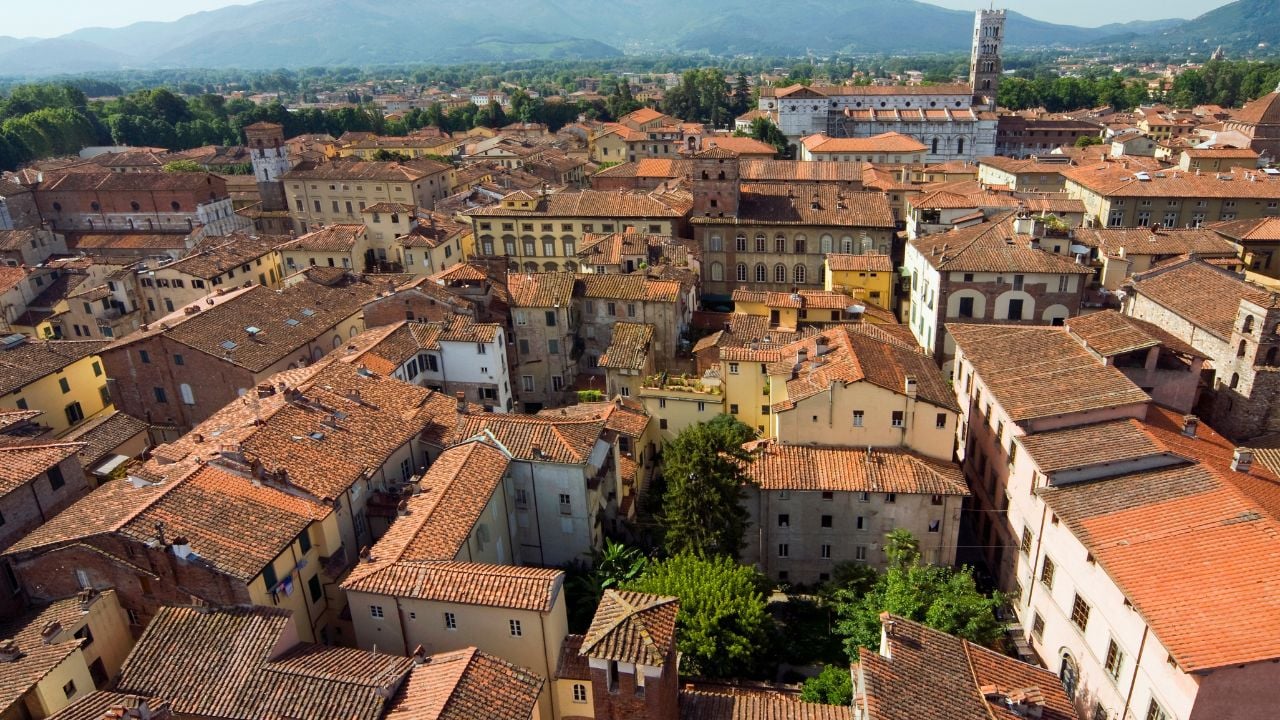
Lucca’s walls do not only surround the city. They carry walkers, cyclists, benches, trees, grassy terraces, and views down into gardens, rooftops, towers, and inner streets. The old defensive edge now feels like a raised park.
Lucca Tourism describes the Lucca walls as an elevated promenade with monumental bastions, grassy terraces, and tree-lined avenues. The route circles the city and lets visitors move above churches, palaces, gardens, towers, and vegetable plots before returning to the streets below.
Inside the walls, Piazza dell’Anfiteatro keeps the shape of the old Roman amphitheater. Torre Guinigi rises with trees at the top. San Martino Cathedral, small churches, narrow lanes, bakeries, shopfronts, and shaded squares fill the old center without turning it into a heavy museum district.
Lucca Tourism says the Puccini Museum is the composer’s birthplace and sits in the heart of Lucca between Piazza Cittadella and Corte San Lorenzo. The museum belongs naturally to the same walk as the walls, squares, churches, and café tables.
5. Delft, Netherlands
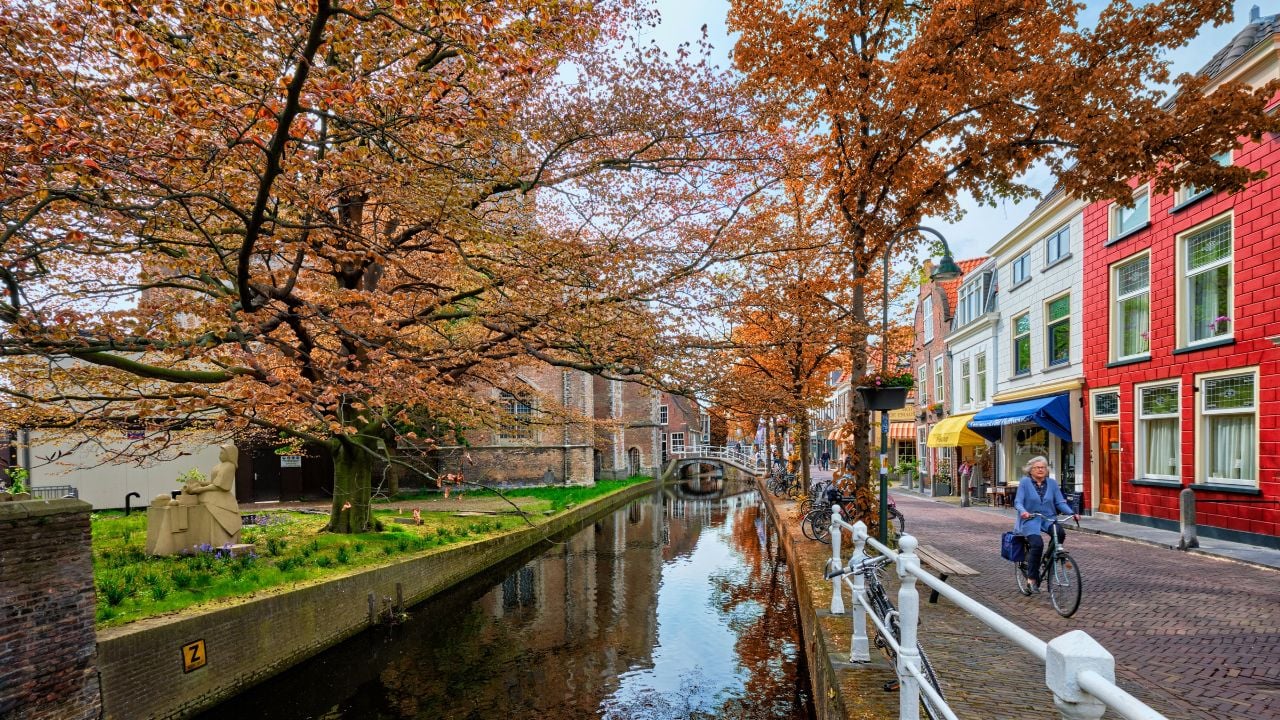
Delft has canals, brick façades, market squares, church towers, bicycles, small bridges, ceramic shops, and calm streets between The Hague and Rotterdam. The center feels lived in, not staged.
Holland.com describes Delft as a city of canals, historical façades, Vermeer, and Delft Blue. The city is linked to Johannes Vermeer, and the canals, gabled houses, narrow streets, and market square keep that older Dutch atmosphere close to daily life.
The churches carry much of Delft’s history. The Old and New Church Delft site says the Nieuwe Kerk is internationally known as the final resting place of William of Orange and other members of the Dutch Royal House. The Oude Kerk houses graves of figures including Johannes Vermeer, Antoni van Leeuwenhoek, and Piet Hein.
Royal Delft says it has been creating Delft Blue since 1653, with pieces still made entirely by hand in Delft. The Royal Delft Museum says it is the only remaining Delft Blue factory from the 17th century.
That ceramic history appears in blue-and-white plates, tiles, vases, painted details, showroom shelves, museum displays, and workshops where the old decorative language is still visible. Around it, Delft keeps moving through canals, bikes, church bells, market stalls, café tables, and brick streets that still feel used every day.