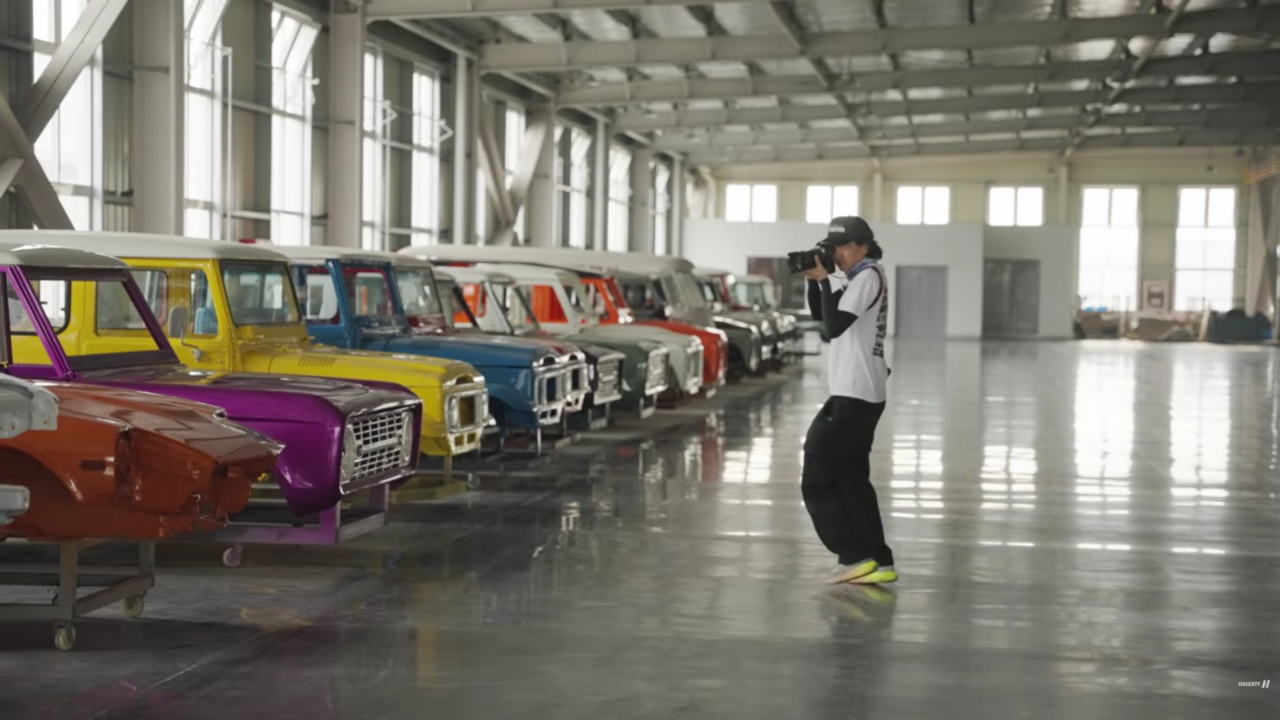
China is now becoming part of the classic car restoration world in a way few enthusiasts expected. In a new Hagerty video, photographer Larry Chen visits Jiangsu Juncheng Vehicle Industry Co., Ltd. in Baoying, China, where workers are producing brand-new body shells for some of the world’s most beloved classics.
The factory builds bodies and panels for vehicles including the Toyota AE86, Datsun 240Z, Ford Bronco, Land Rover Defender, and even a 1967 Ford Mustang. According to Chen, AE86 and 240Z bodies start around $9,500, while the new Mustang shell costs about $16,000.
What makes the operation fascinating is the scale. Juncheng reportedly handles roughly 95% of the process in-house, from scanning original cars to creating stamping dies, pressing panels, coating parts, and assembling full shells by hand.
The result raises big questions for car culture. Is this the future of saving rusted-out enthusiast cars, or does replacing nearly everything blur the line between restoration and reproduction?
How The Bodies Are Made
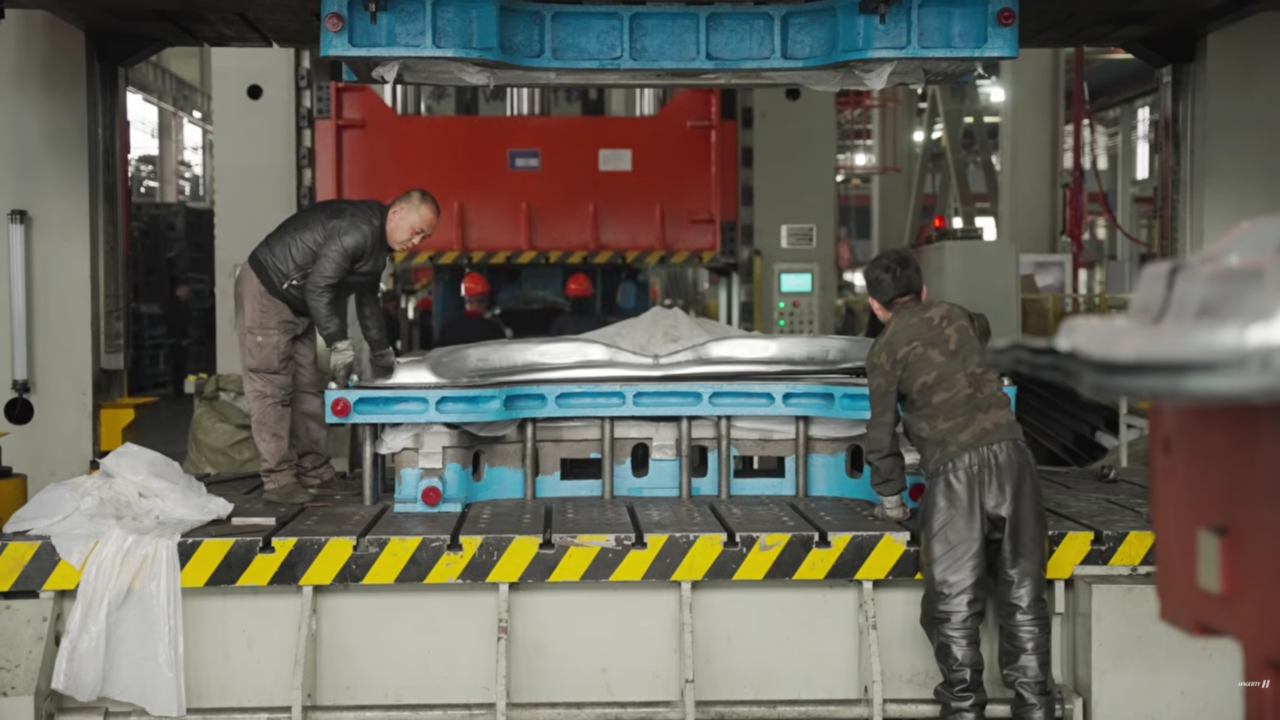
The process begins with original, unmodified cars used as references. Juncheng disassembles one car piece by piece, 3D scans every panel, then uses another example to verify whether newly stamped parts match factory dimensions.
From there, the company creates massive stamping dies using CNC-machined steel or sand-cast forms. Some dies take dozens of hours to machine and still require careful hand polishing before they can produce usable panels.
Each car requires hundreds of dies. Chen notes that the AE86 and 240Z each use more than 300 dies just to create one full body shell.
Old Cars, Modern Manufacturing
Once the dies are complete, workers stamp panels one by one using large presses. Unlike modern OEM factories, where robots handle much of the body assembly, many of Juncheng’s classic shells are still welded and finished by hand.
The factory also improves on some original manufacturing methods. For example, Chen notes that AE86 panels are galvanized and primered to help resist rust, something the original Toyota shells did not benefit from in the same way.
That detail is important because many of these cars were never treated as collectibles when new. Cars like the AE86 and 240Z were often daily driven, modified, crashed, or left to rust long before values exploded.
The Gray Area Of Reproduction
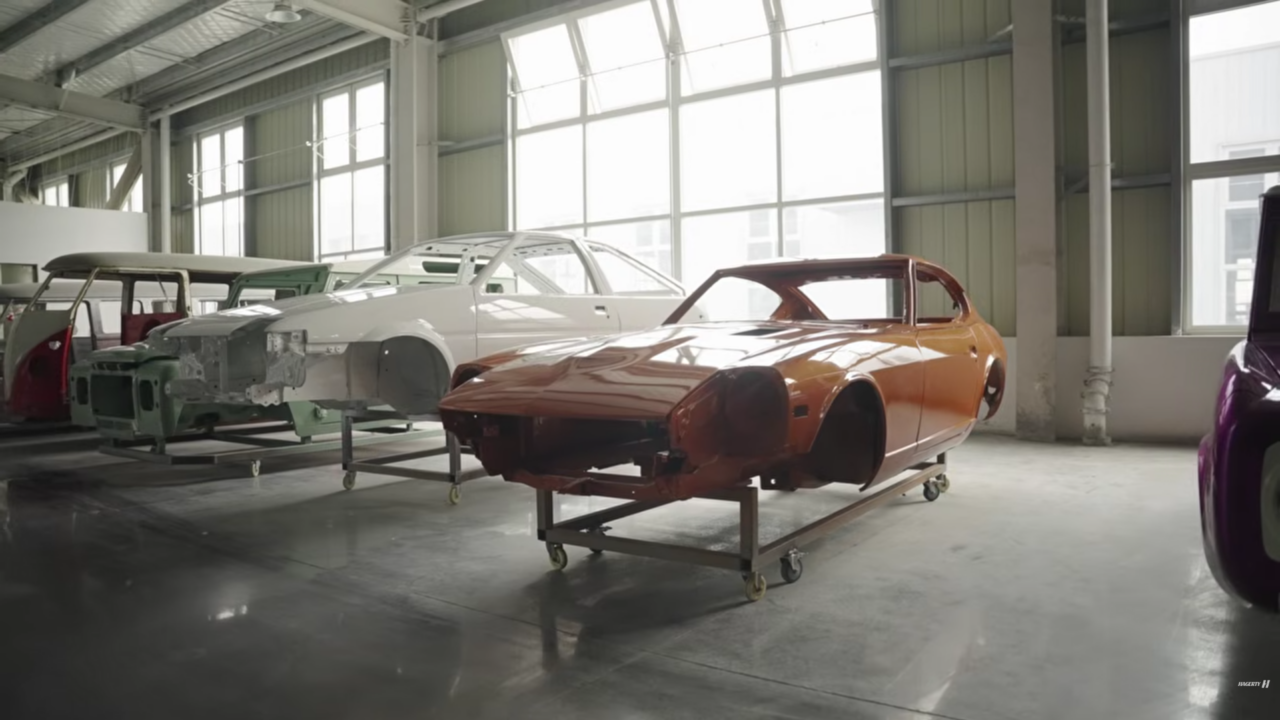
The biggest debate is not whether these bodies are impressive. It is what they actually are once completed. Juncheng says the shells are intended for restoration and does not apply manufacturer badges. Still, the question becomes complicated when someone uses the VIN from a damaged original car and builds around a brand-new shell.
That practice already exists in the restomod world. Some companies preserve a firewall, VIN section, or other original component to keep a legal identity attached to an otherwise heavily rebuilt vehicle.
A New Lifeline For Enthusiasts
Despite the legal and philosophical questions, the practical benefit is obvious. Clean original shells for cars like the AE86, 240Z, Defender, and early Bronco are getting harder to find every year.
Replacement panels could help keep real cars on the road without forcing owners to cut up rare survivors. Full shells also give builders a way to create race cars or extreme restomods without destroying clean originals.
A Juncheng-built Bronco body reportedly formed the basis of a truck that sold for $400,000 at Barrett-Jackson. That suggests the market may care less about where the shell was stamped and more about the quality of the finished build.
The Future Of Classic Car Culture
Juncheng is already looking beyond its current catalog, with future projects reportedly including the Porsche 964 and possibly even more ambitious classics. If demand keeps growing, more 1980s and 1990s enthusiast cars could eventually receive the same treatment.
That could be huge for JDM culture, where rust-free shells are becoming painfully scarce. Popular requests already include cars like Nissan S-chassis models, which have suffered decades of drifting, crashes, and corrosion.
Whether purists embrace or reject Chinese-built replacement shells, the factory is filling a real gap. For many enthusiasts, the choice may soon be to let beloved classics disappear, or accept that keeping them alive might require brand-new metal from halfway around the world.