A sedan is supposed to be the sensible shape. Four doors, a usable trunk, proper rear seats, and enough comfort to make daily driving feel calm.
That is why the wildest four-door performance cars feel so interesting. They take the body style people associate with executives, families, and highway travel, then hide engines that feel far too dramatic for normal sedan duty.
Some lean on exotic hardware. Some use V8s, V10s, or V12s that completely change the way the car feels. Others are memorable because the engine was developed specifically for a sedan and still seemed almost unreasonable once it reached production.
Ferrari-derived V8s, Maranello-built Maserati power, Lamborghini-linked V10 hardware, Corvette-family muscle, AMG V12 bloodlines, and sedan-specific madness all appear here. The body shape may be practical, formal, or restrained, but the engines make each car feel much stranger than an ordinary four-door performance model.
The result is not a list of sedans with a little more power. It is a group of four-door cars whose engines made the body shape feel like camouflage.
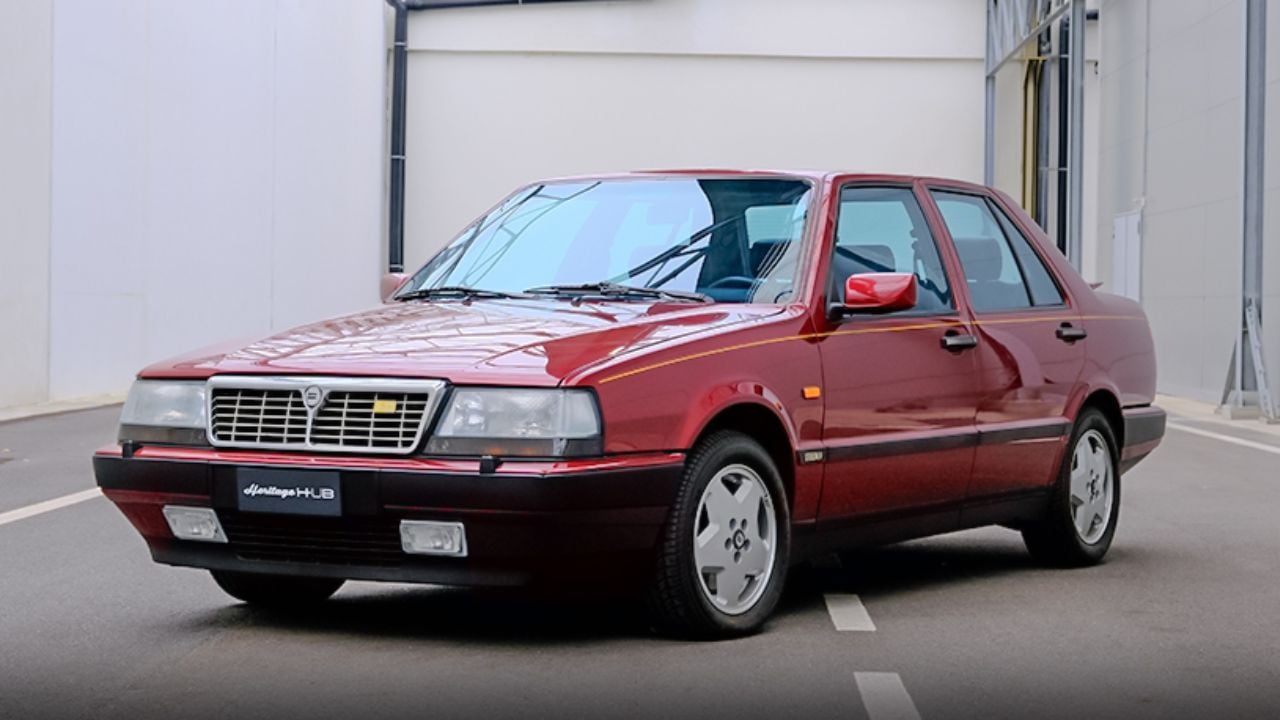
Lancia Thema 8.32
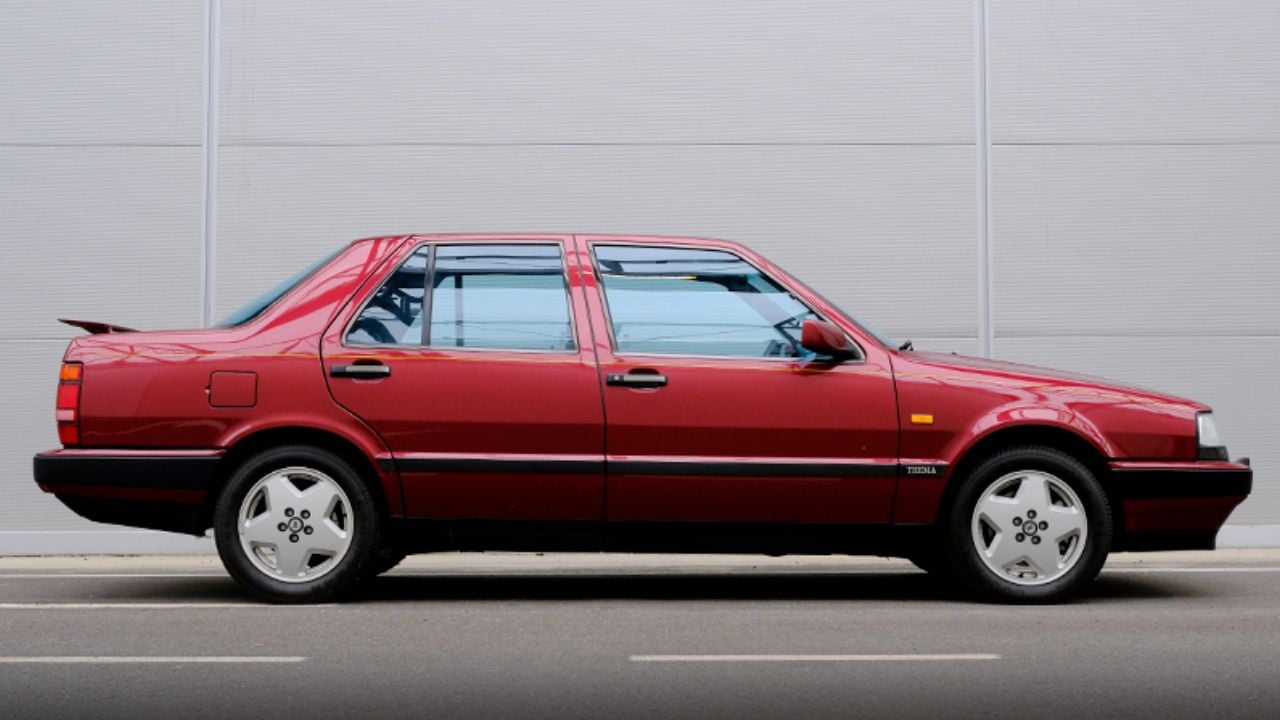
The Lancia Thema 8.32 is one of the strangest executive sedans Italy ever built. It looked restrained, upright, and discreet, yet its 2.9L V8 was based on the Ferrari 308 GTB and Mondial Quattrovalvole engine family. The name gave away the secret: eight cylinders and 32 valves.
Lancia reworked the engine for sedan duty, including a cross-plane crankshaft that gave it a smoother character than the sharper Ferrari applications. In non-catalyst form, the engine produced 215 PS, enough to make the Thema feel nothing like the regular front-wheel-drive sedan parked beside it.
The finished car mixed front-wheel-drive executive-car manners, Italian luxury trim, and Ferrari-derived V8 hardware under one quiet body. It was not a supercar and never tried to behave like one. It was something odder: a luxury sedan with a hidden exotic streak.
Maserati Quattroporte Trofeo
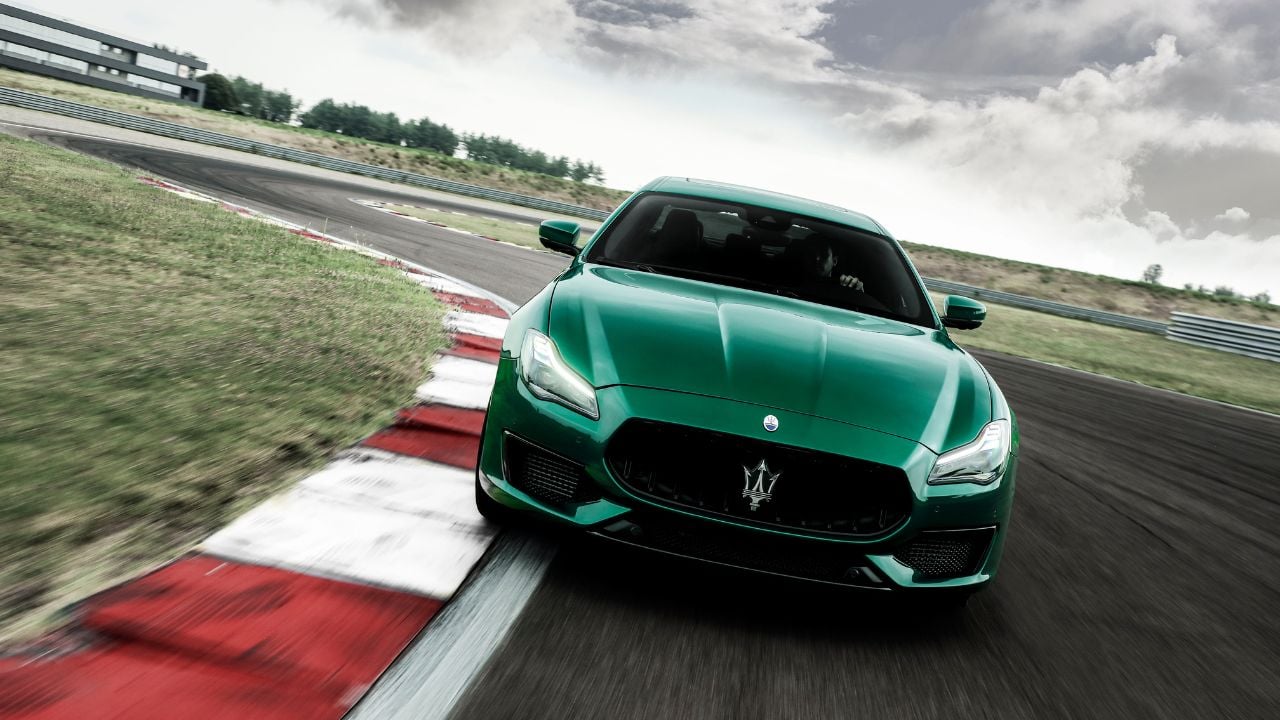
The Maserati Quattroporte Trofeo gave the classic Italian luxury sedan one final blast of V8 theater. Its 3.8L twin-turbo engine was built at Ferrari’s Maranello plant to Maserati specifications, and it gave the Quattroporte a mechanical character far beyond the usual executive-car brief.
The numbers were wild for a long four-door sedan. The Trofeo produced 572 hp and 538 lb-ft of torque, and Maserati listed a 203 mph top speed. That kind of pace feels absurd in a car with a proper rear seat, a formal roofline, and business-class presence.
The Quattroporte Trofeo carried old-school Maserati drama into the brand’s final V8 chapter. It could cruise like a luxury sedan, but the engine always belonged to the louder, faster, less sensible side of the company’s personality.
Audi S8 V10
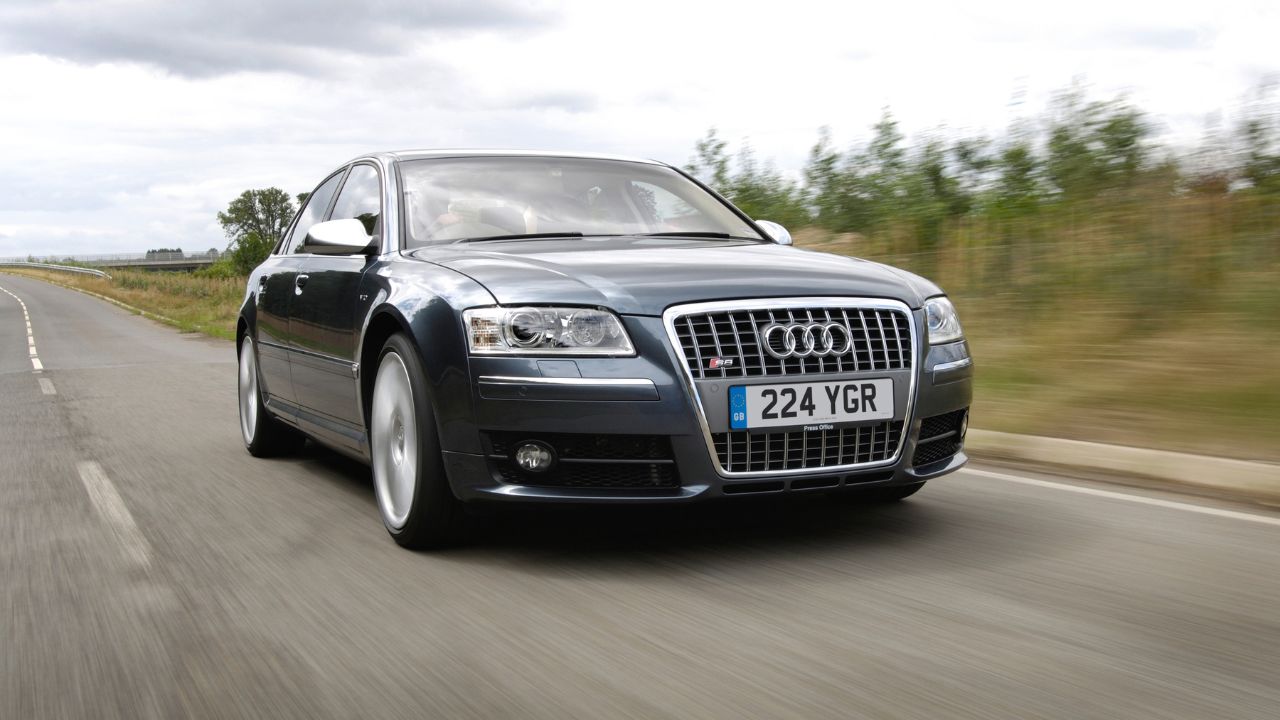
The D3-generation Audi S8 V10 looked like a severe German flagship sedan, but the engine bay told a stranger story. Audi used a 5.2L naturally aspirated V10 with a real Audi-Lamborghini relationship, then tuned it for flagship smoothness, quattro traction, and long-distance authority.
In the S8, the V10 produced 450 PS and 540 Nm of torque. The car around it stayed calm and formal, with the kind of shape that seemed more suited to boardroom arrivals than high-revving Italian-flavored hardware.
The best part was the contrast. The S8 did not need aggressive styling to feel unusual. It hid a naturally aspirated V10 inside one of Audi’s most composed luxury sedans, then used it for quiet speed instead of obvious theater.
BMW M5

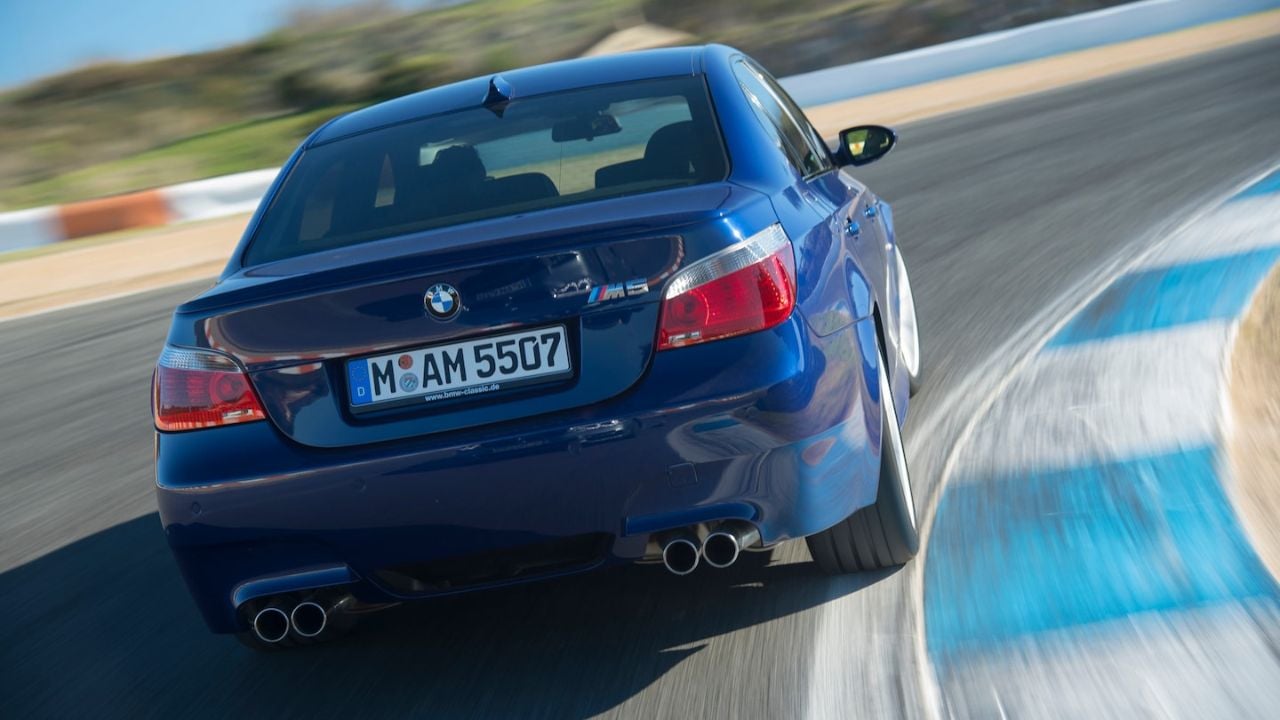
The E60 BMW M5 brought one of BMW’s wildest modern engines into a four-door executive sedan. BMW built the S85 V10 for the M5 and M6, and the idea still feels outrageous: a 5.0L high-revving V10 in a car with rear seats, a trunk, and business-sedan proportions.
BMW M lists the S85 at 507 hp, with a high-rev concept and a 7-speed SMG Drivelogic transmission. It arrived during BMW’s Formula 1 era, and the car carried that atmosphere into a body that still looked like a sharp executive machine from a distance.
The engine demanded revs, heat, maintenance, and respect. Neglected cars became expensive quickly. Healthy ones sounded unlike almost anything else with four doors. The E60 M5 remains memorable because BMW put an engine this intense into a sedan at all.
Cadillac CTS-V

The 2016 to 2019 Cadillac CTS-V turned a luxury sedan into one of America’s most serious four-door performance cars. Its supercharged 6.2L LT4 V8 was closely tied to the C7 Corvette Z06 engine, with Cadillac-specific tuning for sedan duty.
In the CTS-V, the LT4 produced 640 hp and 630 lb-ft of torque. That output sat only slightly below the Corvette Z06’s headline figure, and it gave the Cadillac acceleration that felt almost unreasonable inside a car with four doors, a trunk, Magnetic Ride Control, and daily-driver comfort.
The styling did not need to scream. The engine handled the violence. The CTS-V made Cadillac’s executive sedan feel like a Corvette-powered missile with leather seats and room for adults in the back.
HSV GTSR W1
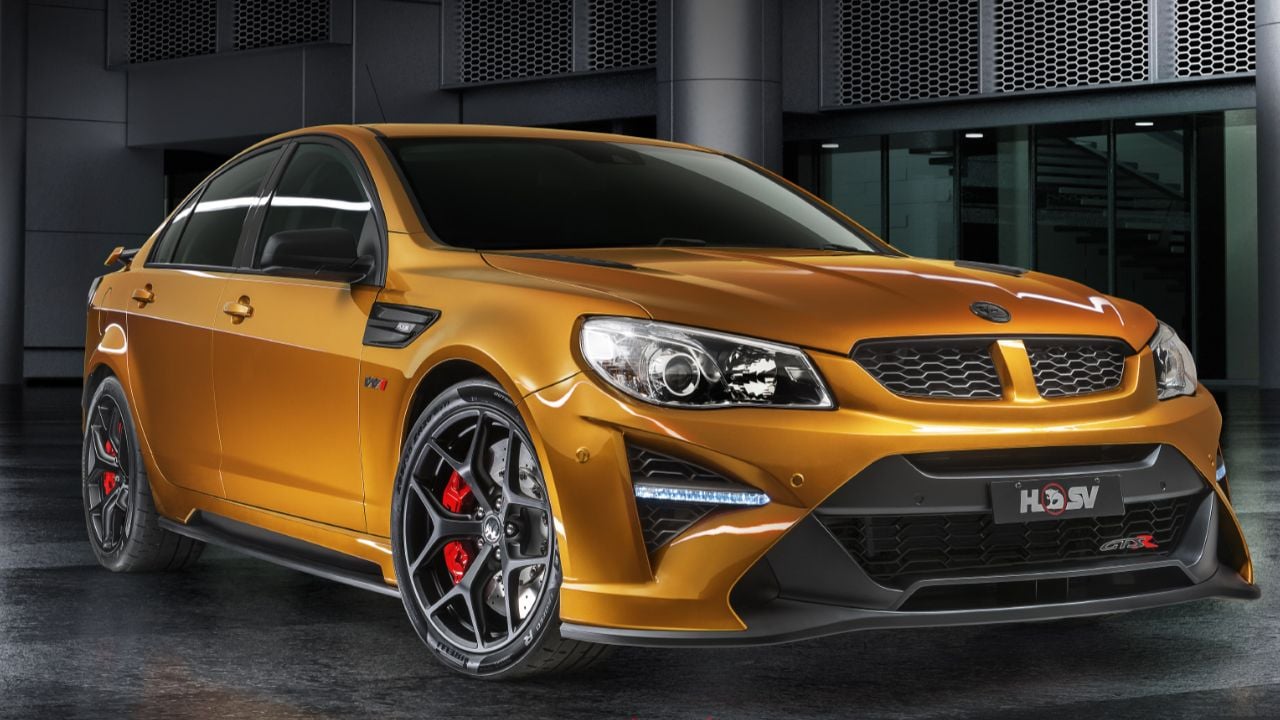
The 2017 HSV GTSR W1 may be the most dramatic Australian sedan ever approved for the road. Under the hood sat the LS9, the supercharged 6.2L V8 used by the C6 Corvette ZR1.
HSV rated the GTSR W1 at 636 hp and 601 lb-ft of torque. The car also received a Tremec 6-speed manual transmission, rear-wheel drive, serious braking hardware, and suspension work developed for far more than normal Commodore-family sedan duty.
The body still came from the Australian Holden Commodore world, which made the engine choice even more outrageous. The W1 was a final thunderclap for Australian V8 performance: a four-door sedan carrying Corvette ZR1 firepower.
Jaguar XE SV Project 8
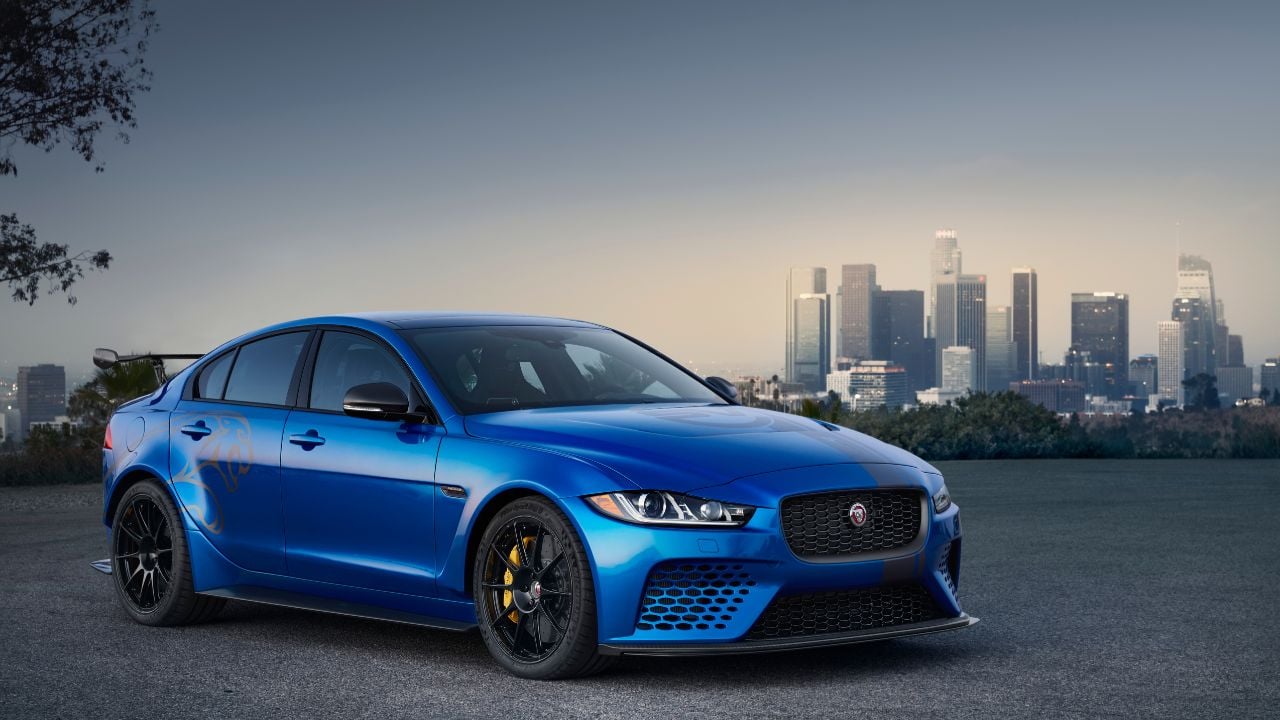
The Jaguar XE SV Project 8 took the compact luxury sedan idea and pushed it toward track-car territory. Special Vehicle Operations fitted it with Jaguar’s own 5.0L supercharged V8, tuned here to 600 PS and 516 lb-ft.
Jaguar called it the most powerful engine ever fitted to one of its road cars at the time. The Project 8 was limited to 300 units, hand assembled, and built with carbon fiber aerodynamic hardware that made the normal XE sedan body look like a starting point rather than a finished idea.
The XE body became a shell for something far more aggressive than a normal sport sedan. It still had four doors, but its engine, aero, and limited-production SVO treatment moved it closer to a factory track weapon.
Aston Martin Rapide S

The Aston Martin Rapide S stretched Aston Martin’s grand touring formula into a four-door shape. It was long, low, and dramatic, with rear doors worked into a body that still looked closer to a stretched coupe than a conventional luxury sedan.
The Rapide S used a hand-built naturally aspirated V12 producing around 550 bhp. The engine came from Aston Martin’s own V12 grand touring world, which gave the car a very different personality from the German executive sedans and American muscle four-doors around it.
The rear seats were tight, the roofline was dramatic, and practicality clearly lost several arguments to style. The reward was a four-door car with proper Aston Martin V12 theater under the hood.
Mercedes-Benz S600
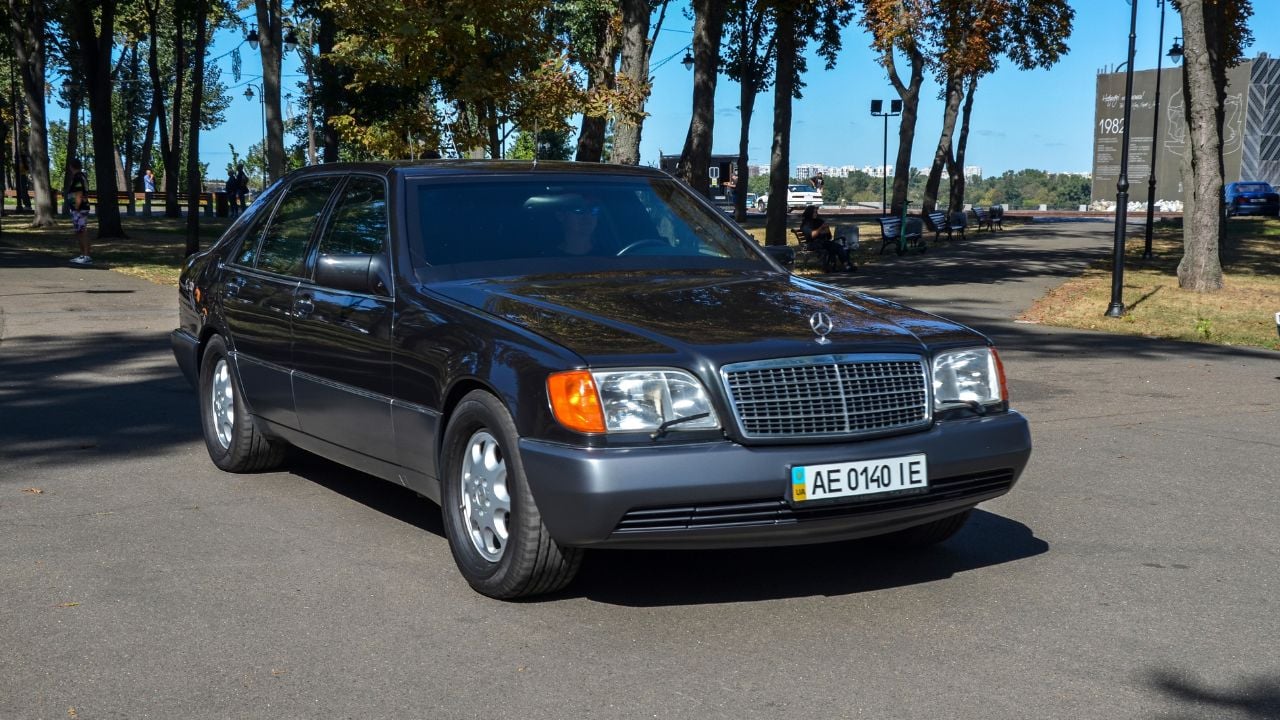
The W140 Mercedes-Benz S600 looked like the ultimate 1990s luxury fortress, but its M120 V12 later gained a second life in supercar history. The 6.0L version served Mercedes flagship sedans and coupes, while AMG-developed versions of the same engine family later became part of the Pagani Zonda story.
When new, the S600 was built around silence, mass, and authority. The V12 made the flagship S-Class feel unstoppable rather than theatrical, which fit the car’s formal character perfectly.
The later Pagani link gives the M120 family extra mythology, but the S600 already had its own appeal. It placed a huge, smooth V12 inside one of the most imposing luxury sedans of its decade.
Chevrolet SS
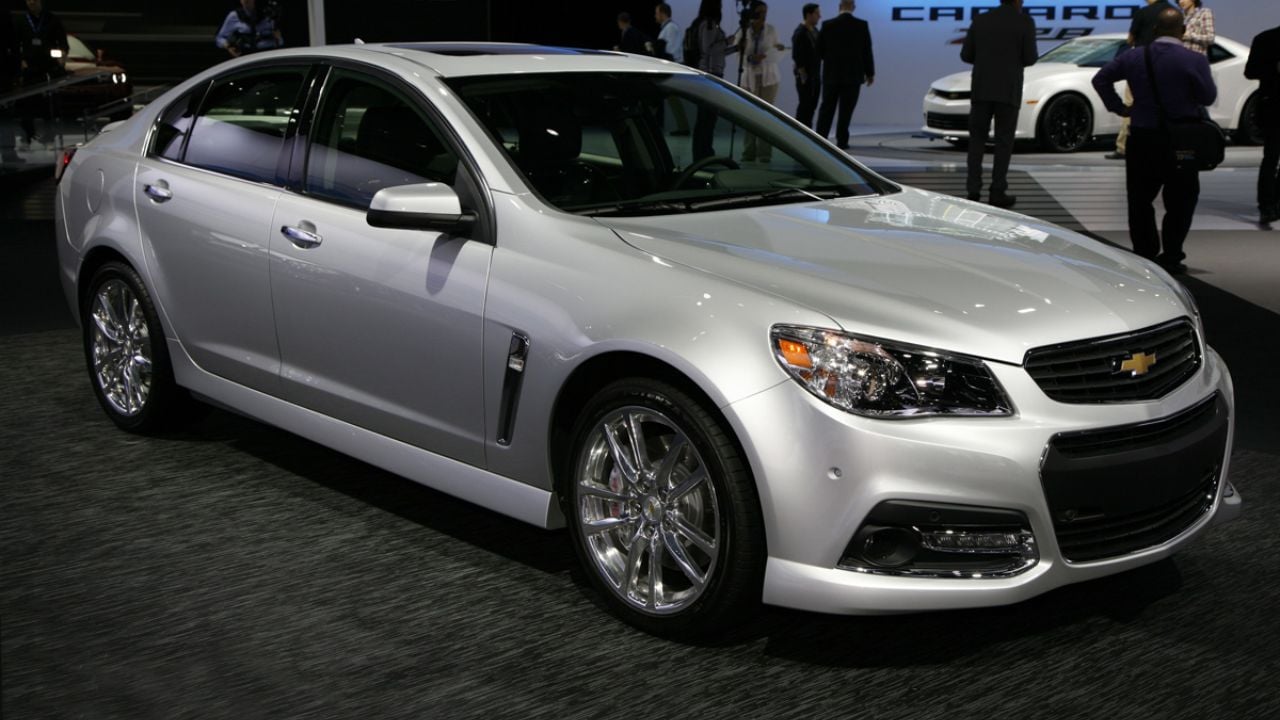
The Chevrolet SS looked almost too ordinary for its own survival in the U.S. market. Under the conservative sedan body sat a 6.2L LS3 V8 from the same engine family that powered the C6 Corvette.
In the SS, the LS3 produced 415 hp and 415 lb-ft of torque. Chevrolet paired it with rear-wheel drive, and later model years offered a 6-speed manual transmission. The car was Holden-engineered, Chevrolet-badged, and far more interesting than its quiet styling suggested.
The SS was not exotic. It did not need to be. A naturally aspirated Corvette-family V8, rear-wheel drive, available manual transmission, and sleeper sedan body gave it the kind of honesty many modern performance cars struggle to recreate.
Why These Four-Door Cars Still Feel So Strange
The best performance sedans create a mismatch between shape and sound. A four-door body suggests responsibility, but the right engine can turn that responsibility into theater.
The Lancia Thema 8.32 hid Ferrari-derived hardware in a formal Italian sedan. The Maserati Quattroporte Trofeo carried Maranello-built V8 force into executive luxury. The Audi S8 used V10 power with Lamborghini flavor under German restraint. The BMW M5 put a high-revving V10 into a sedan at a time when BMW was willing to be genuinely unreasonable.
The Cadillac CTS-V, HSV GTSR W1, and Chevrolet SS brought Corvette-family muscle into four-door bodies. The Jaguar XE SV Project 8 turned a compact sedan into an SVO track project. The Aston Martin Rapide S wrapped V12 grand touring drama around rear doors. The Mercedes-Benz S600 gave a formal luxury sedan a V12 family later tied to Pagani legend.
None of these cars needed two seats, scissor doors, or supercar proportions to feel special. Their engines did the work. The sedans simply gave those engines somewhere unexpected to live.