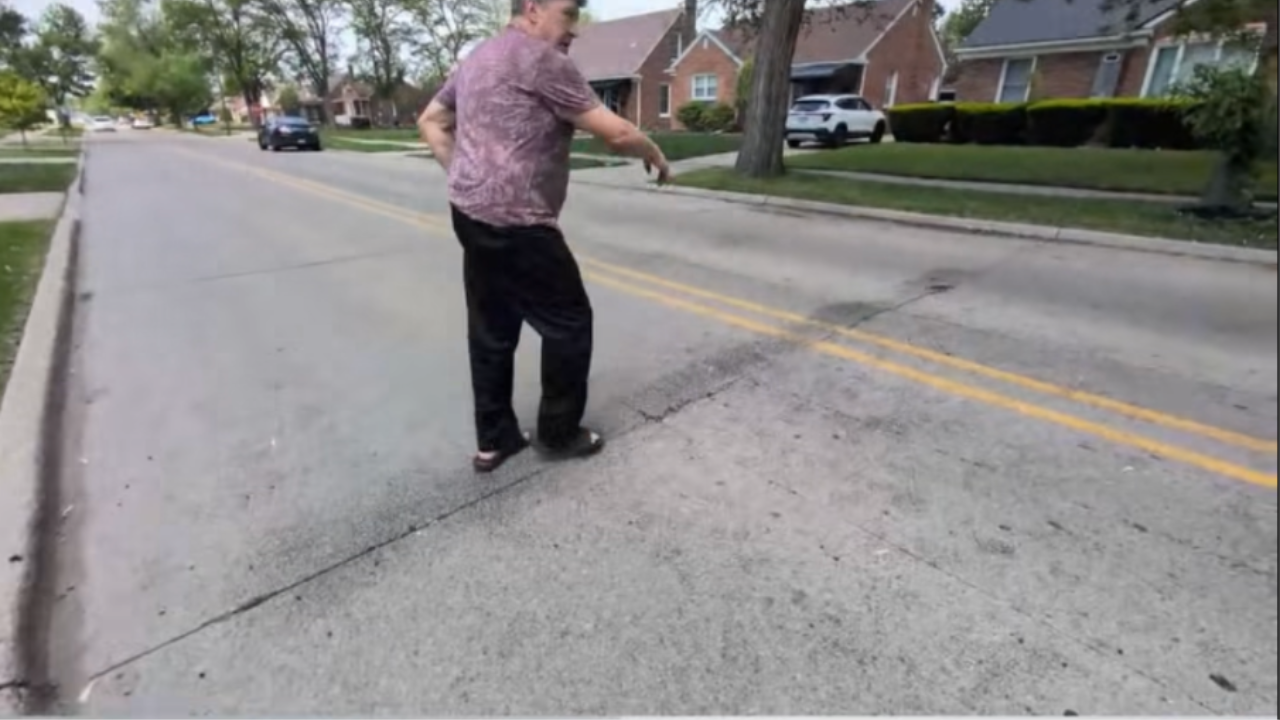
A Michigan man’s homemade solution to speeding in his neighborhood has stirred up a bigger conversation about road safety and what happens when residents feel ignored by local officials.
It all started in Lincoln Park, just south of Detroit. Dale Wells, after years of watching cars zip down Moran Avenue and blow through a stop sign, finally had enough. One Sunday evening, he took matters into his own hands and spent hours pouring asphalt across the street, creating a DIY speed bump in hopes of slowing drivers down.
It didn’t last long. Police showed up within minutes, told him to remove the bump, and reminded him that altering public roads isn’t something residents get to do on their own. By the end of the night, all that was left was a streak of asphalt, a sign someone had tried to do something.
The story stuck with a lot of people, especially online. So many suburban neighborhoods deal with speeding drivers, and Wells tapped into that frustration.
He told reporters he’d reached out to city officials and police plenty of times but nothing really changed. He described cars flying through the stop sign late into the night. People and kids living nearby felt like sitting ducks.
Residents Say Speeding Has Become a Serious Neighborhood Problem
Other neighbors got where he was coming from, even if they wouldn’t have poured their own speed bump. At least one woman said she worries all the time about kids getting hit, and while she might not have gone as far as Wells, she understood why he did.
City officials tried to explain their side. Lincoln Park doesn’t have any official speed bumps anywhere. But, they said, residents can file complaints, which may lead to a traffic study, and maybe the city council will recommend something.
Sure, that process sounds slow and bureaucratic, but experts say there’s a reason for it. A lumpy, badly placed speed bump could damage cars, mess up tires, trip bikers, block ambulances, or even hurt pedestrians. There are a lot of engineering rules involved.
Traffic engineers don’t just guess where to put speed bumps. They check things like how fast cars really go, how wide the road is, how close it is to intersections, and other factors before making any changes.
Why Cities Can’t Simply Let Residents Build Their Own Traffic Calming
Wells’ story highlights another point: street design matters. Wide, open roads with clear lines of sight invite people to go faster. But when streets are narrower and include raised crosswalks, curb extensions, trees, or chicanes, drivers slow down, sometimes without even realizing why. So maybe it’s not just reckless drivers. The street itself can encourage speeding too.
That’s the thinking behind “traffic calming.” It’s a major focus in transportation planning now. Instead of just telling people to drive more slowly or handing out tickets, cities are redesigning streets so that driving slowly feels more natural.
No wonder so many people paid attention to Wells’ story. Some saw his DIY speed bump as dangerous or reckless, but many others saw a guy who got tired of waiting for something to change, someone doing whatever he could to keep his neighborhood safe.
A Viral Story Reflecting a Bigger National Debate
Not everyone agreed with his approach. Online, some praised Wells for getting the city’s attention, saying government moves too slowly on problems that matter. Others called it vigilantism, warning that things could have easily gone wrong and that you can’t let anyone remodel a road whenever they feel like it.
All of this circles back to a basic tension: public streets belong to everyone, and there are rules for a reason. But people feel road safety issues in a personal way, especially when they worry about their kids, their neighbors, and their homes.
Ironically, Wells may have gotten somewhere anyway. After the asphalt incident, police started monitoring traffic on Moran Avenue. Now residents are hoping the city will finally take these complaints seriously before someone really gets hurt.