A beautiful trip does not need a famous skyline, a packed promenade, or restaurant reservations planned like a military operation. Some places are better when the day has room: a stone bridge after rain, a river bend below a village, a whitewashed lane, a mountain church, or cliffs closing around a quiet French valley.
The six places below still have real sights, but they do not feel built only for quick photos. They are better when you stay long enough for the smaller details to catch up with the big view: water under bridges, sheep bells in the hills, vines on steep slopes, dry Alentejo light, church towers against mountains, or the sound of a waterfall somewhere beyond the village.
They may still get busy in summer, on weekends, or around famous viewpoints. Go early, stay overnight, and let the day stretch past the easiest visiting hours. That is usually when these places stop feeling like entries on a list and start feeling like proper escapes.
The reward is not only that they are beautiful. It is that you can actually notice the beauty without being pushed along by the next crowd.
1. Zagori, Greece
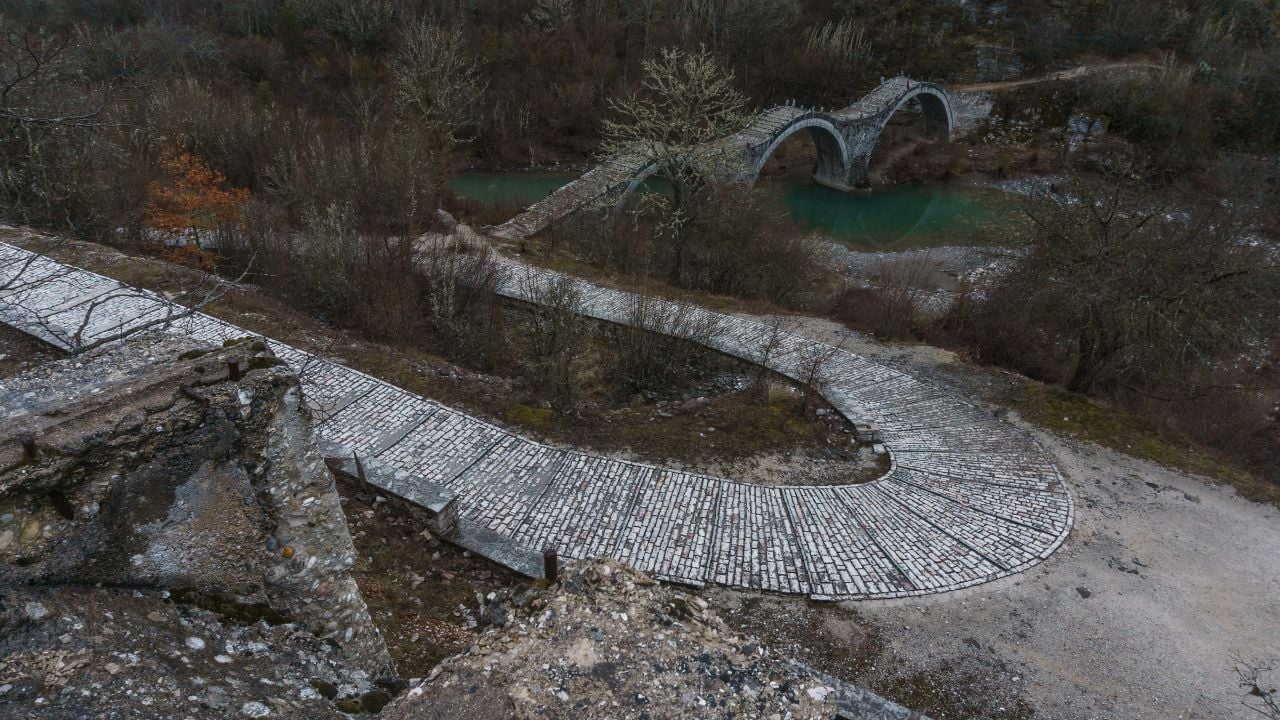
Zagori feels like Greece turned toward the mountains and decided not to explain itself too loudly. The villages sit among forested slopes, stone roofs, deep gorges, old paths, and arched bridges that look as if they grew from the same rock as the landscape around them.
UNESCO describes the Zagori Cultural Landscape as a network of villages linked by stone-arched bridges, cobbled paths, and staircases across the Vikos and Voïdomatis river basin. That matters because the beauty here is not only in one viewpoint. It is in the old connections between villages, rivers, bridges, and paths.
A village like Monodendri has that quiet mountain feeling where stone walls, slate roofs, and shaded lanes make you slow down almost immediately. Nearby, Vikos Gorge cuts the landscape open with the kind of scale that does not need dramatic language. You stand at a viewpoint, look across the drop, and the cliffs do the talking.
The bridges are the part that makes Zagori feel especially old and human. A stone arch over clear water is not flashy, but it stays in the mind: wet stones under your shoes, trees leaning over the stream, the sound of the river below, and the feeling that people crossed this way long before the region became a travel idea.
Give Zagori more than a drive-through stop if possible. A short walk, a village meal, a bridge after rain, and a late afternoon under the plane trees will tell you much more than a rushed viewpoint ever could.
2. Kuldīga, Latvia
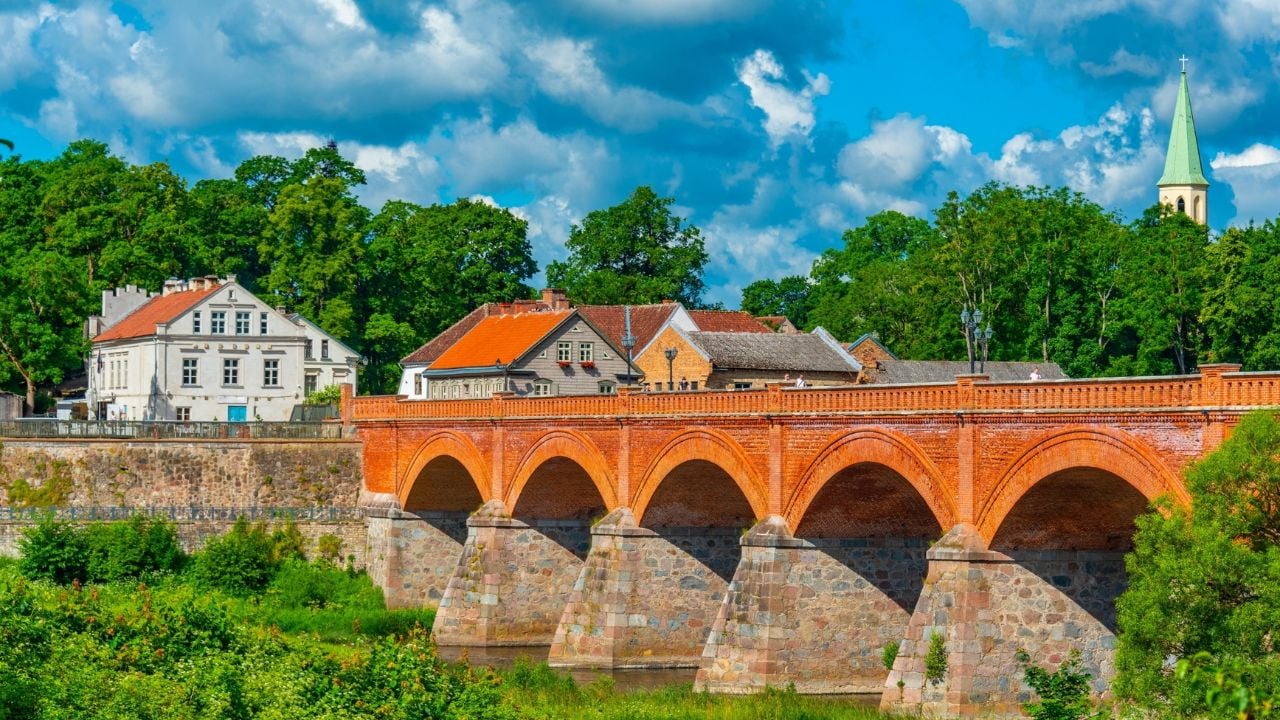
Kuldīga is quiet, but not empty. The old streets sit close to water, the brick bridge stretches across the Venta, and the town has that soft Baltic look where weathered buildings, low light, and slow walks feel like part of the reason to come.
UNESCO describes Kuldīga’s old town as an exceptionally well-preserved traditional urban settlement that grew from a small medieval hamlet into an important administrative center of the Duchy of Courland and Semigallia. The official wording is formal, but the town itself feels simple: old facades, river air, bridges, and streets that do not need much noise to hold your attention.
The Venta Rapid is the strange, memorable centerpiece. It is not a tall waterfall that crashes down for drama. It spreads wide and low across the river, which makes people stop for a different reason. The water moves in a long broken line, and the scene feels more unusual the longer you look at it.
Visit Kuldīga gives Venta Rapid’s width as 249 meters and describes it as Europe’s widest waterfall, with the width changing depending on water levels. In spring and autumn, the rapid is also associated with fish attempting to jump upstream, which turns the river into something closer to a small natural performance.
Kuldīga works best when the day stays unhurried. Walk the old town, cross the bridge, listen to the water, and come back through the streets when the light softens. Nothing here needs to be loud to stay with you.
3. Ribeira Sacra, Spain
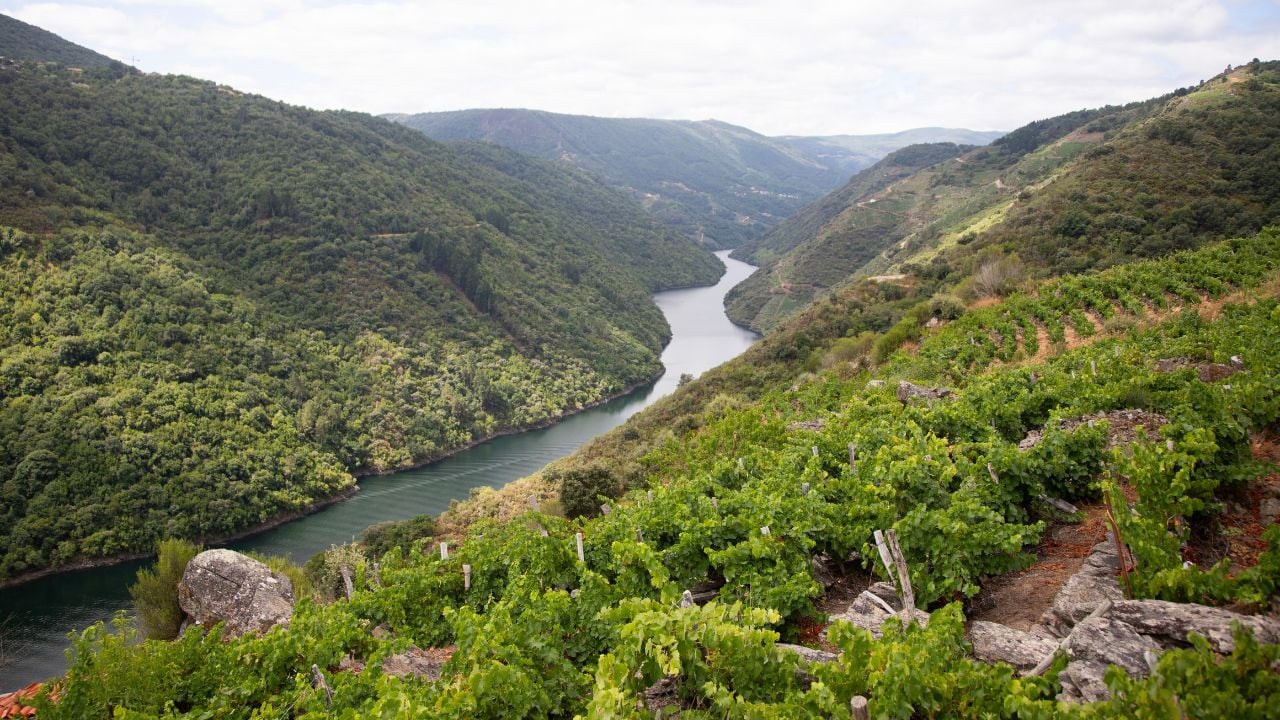
Ribeira Sacra is Galicia away from the usual coastal image. The landscape turns inland and steeper: river canyons, terraced vineyards, monasteries in green folds of land, and roads that keep bending toward another view over the Sil or Miño.
Ribeira Sacra Tourism points visitors toward the Sil Canyon, the Balcones de Madrid viewpoint, boat trips on the Sil, wineries, tastings, and guided visits. The region is not difficult to understand once you are there. Water cuts below, vines climb above, and stone religious buildings appear in places that feel far from ordinary traffic.
The Balcones de Madrid viewpoint gives one of the clearest looks at the canyon. The name sounds urban, but the view is all rock, water, forest, and steep vineyard slopes. If the day is clear, it is the kind of stop where everyone gets quiet for a moment and then takes the same photo anyway.
A boat ride on the Sil changes the scale. From the water, the canyon walls rise around you, and the vineyards suddenly look even steeper than they did from the road. The wine here is not an accessory to the landscape; it comes from those slopes, from land that looks hard to work and impossible to ignore.
Santa Cristina monastery adds stone and silence to the trip. Hidden among trees near the canyon, it gives the day a different kind of beauty after all the viewpoints. Ribeira Sacra is at its best when you let those pieces sit together: river below, vines above, a monastery in the trees, and a glass of local wine at the end.
4. Mértola, Portugal
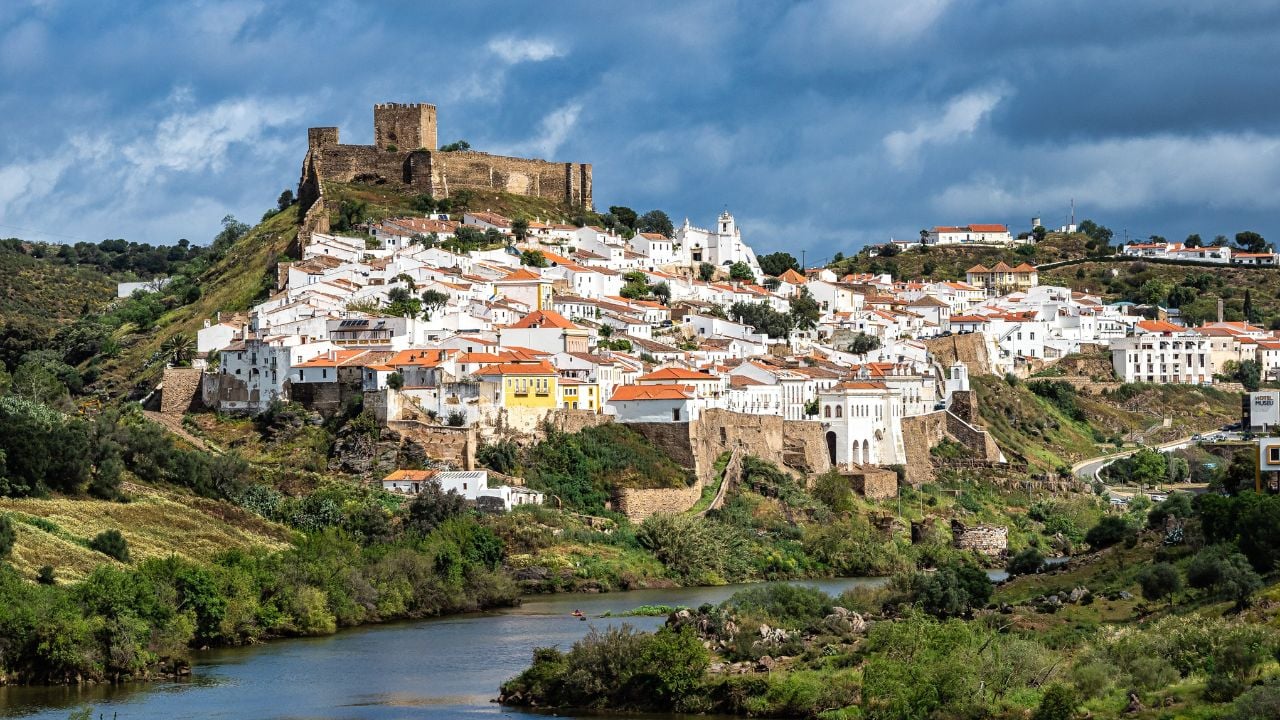
Mértola rises above the Guadiana with dry Alentejo light on its walls. White houses step down toward the river, the castle sits above the town, and the streets feel hot, pale, and quiet in a way that makes shade suddenly very important.
The town’s beauty is not soft in a polished resort way. It is sun, stone, river, castle walls, narrow lanes, and the feeling of a place that has watched people arrive by water for a very long time. Mértola was shaped by Roman, Islamic, and Christian periods, and the traces do not sit in one neat museum building.
Mértola’s municipal site describes the Museum of Mértola as a circuit spread across several nuclei, including the castle, the Roman acropolis, and the Islamic neighborhood. That setup suits the town perfectly. History appears in pieces as you climb, turn a corner, step into a small museum space, or look back across the river.
The castle view is the moment to save time for. From above, the Guadiana bends below the town, the roofs sit tight together, and the Alentejo opens out dry and wide beyond the walls. It is not the green, lush version of Portugal many travelers imagine first. It is older-looking, sharper, and much quieter.
After the climb, the best thing is to let the town cool down around you. Find a shaded street, sit for a drink, and let Mértola feel remote without turning it into a hardship. It is a small place, but the river and centuries behind it make the stop feel much larger.
5. Vall de Boí, Spain
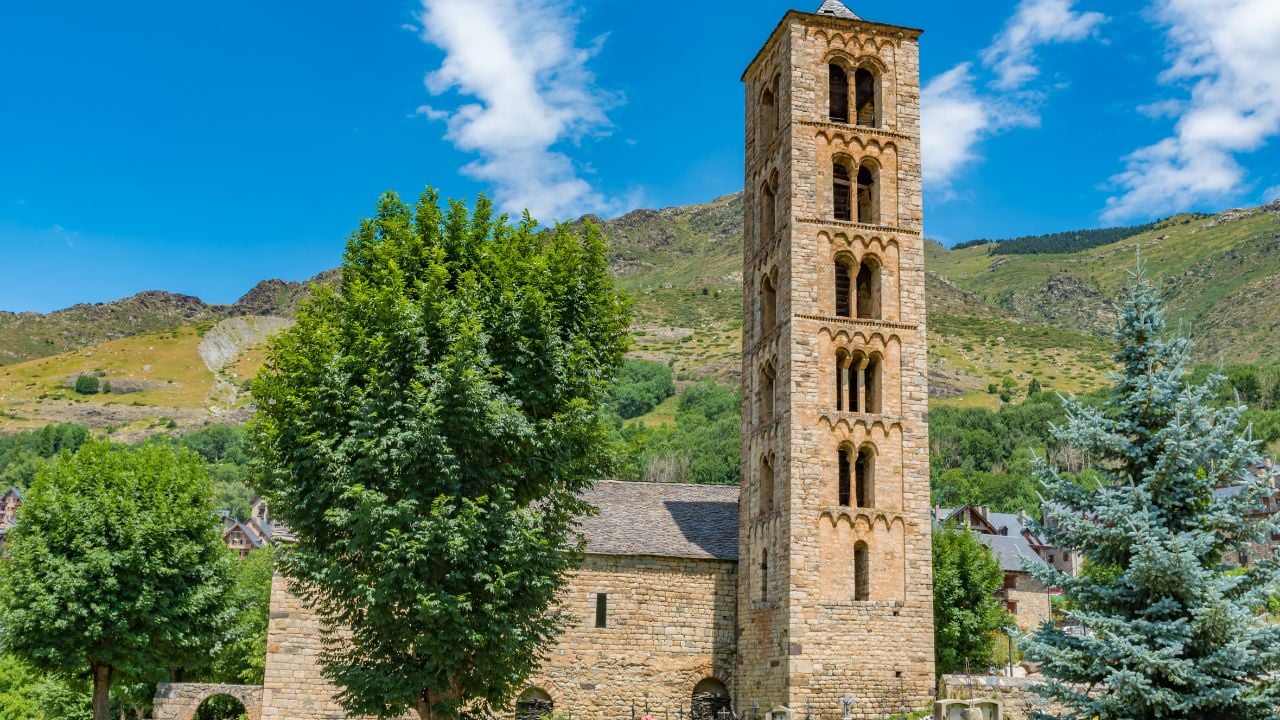
Vall de Boí has the kind of mountain quiet that makes church bells feel louder. Stone villages sit in the Catalan Pyrenees, steep slopes rise behind them, and Romanesque towers stand against the mountains instead of city traffic.
UNESCO lists the Catalan Romanesque Churches of the Vall de Boí as a World Heritage property, including churches such as Sant Climent de Taüll, Santa Maria de Taüll, Sant Joan de Boí, Santa Eulàlia d’Erill-la-Vall, and others across the valley. The local tourism site describes the ensemble as eight churches and one hermitage, all recognized by UNESCO.
Sant Climent de Taüll is the image many visitors carry away first: a slim bell tower, pale stone, mountain air, and a village small enough that the church seems to watch over everything nearby. The buildings are not impressive because they are huge. They are impressive because they look rooted into the valley.
The landscape keeps the visit from becoming only architectural. Nearby Aigüestortes i Estany de Sant Maurici National Park brings rivers, ravines, waterfalls, marshes, peaks above 3,000 meters, and more than 200 mountain lakes. That means one day can belong to stone churches and another to cold water, high paths, and Pyrenean air.
Vall de Boí is not a loud destination. It is a place of bells, slate, paths, valley light, and churches that look as if they have been holding their ground for centuries. That kind of beauty does not need crowds around it to feel important.
6. Baume-les-Messieurs, France
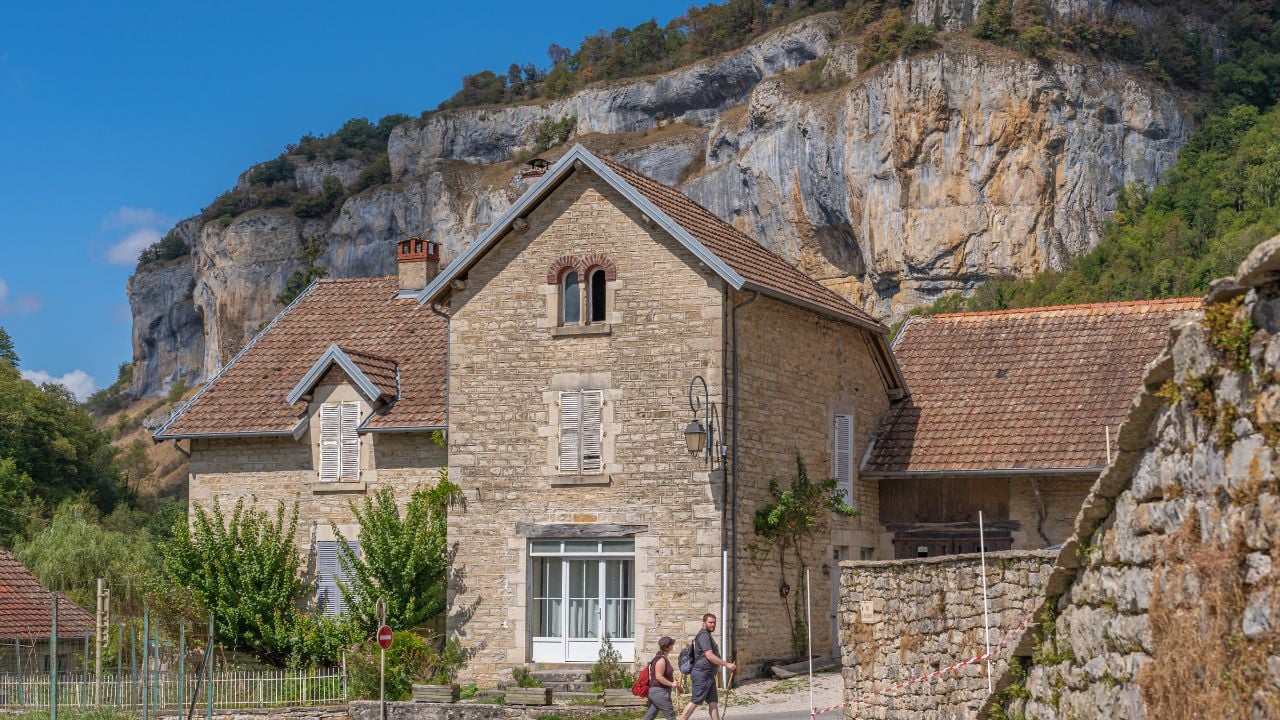
Baume-les-Messieurs sits low in the Jura, tucked beneath limestone cliffs that make the village look protected from the rest of the world. Stone houses, narrow lanes, an old abbey, and steep green walls all sit close together, so the first impression is quiet but not small.
The village does not show everything at once. First come the houses and the abbey, then the cliffs start to feel higher, then the road leads toward water, caves, and the kind of cool shade that makes the valley feel deeper than it looked from the entrance.
Jura Mountains tourism describes the Baume-les-Messieurs waterfall as a natural site at the bottom of one of Jura’s famous steephead valleys. The waterfall is fed by the Dard, an underground river that emerges after passing through subterranean caves.
That detail changes the walk. The sound of water is not just decoration at the end of a village stroll; it comes from a hidden system of caves and underground flow. The tufa, moss, wet rock, and green light around the waterfall give the place a cooler, wilder edge after the calm of the village.
Baume-les-Messieurs is best when you do not rush it into one quick photo stop. Walk the lanes, look into the abbey, follow the road toward the waterfall, and stay long enough for the cliffs to change color. The village is small, but the landscape around it gives the day real weight.