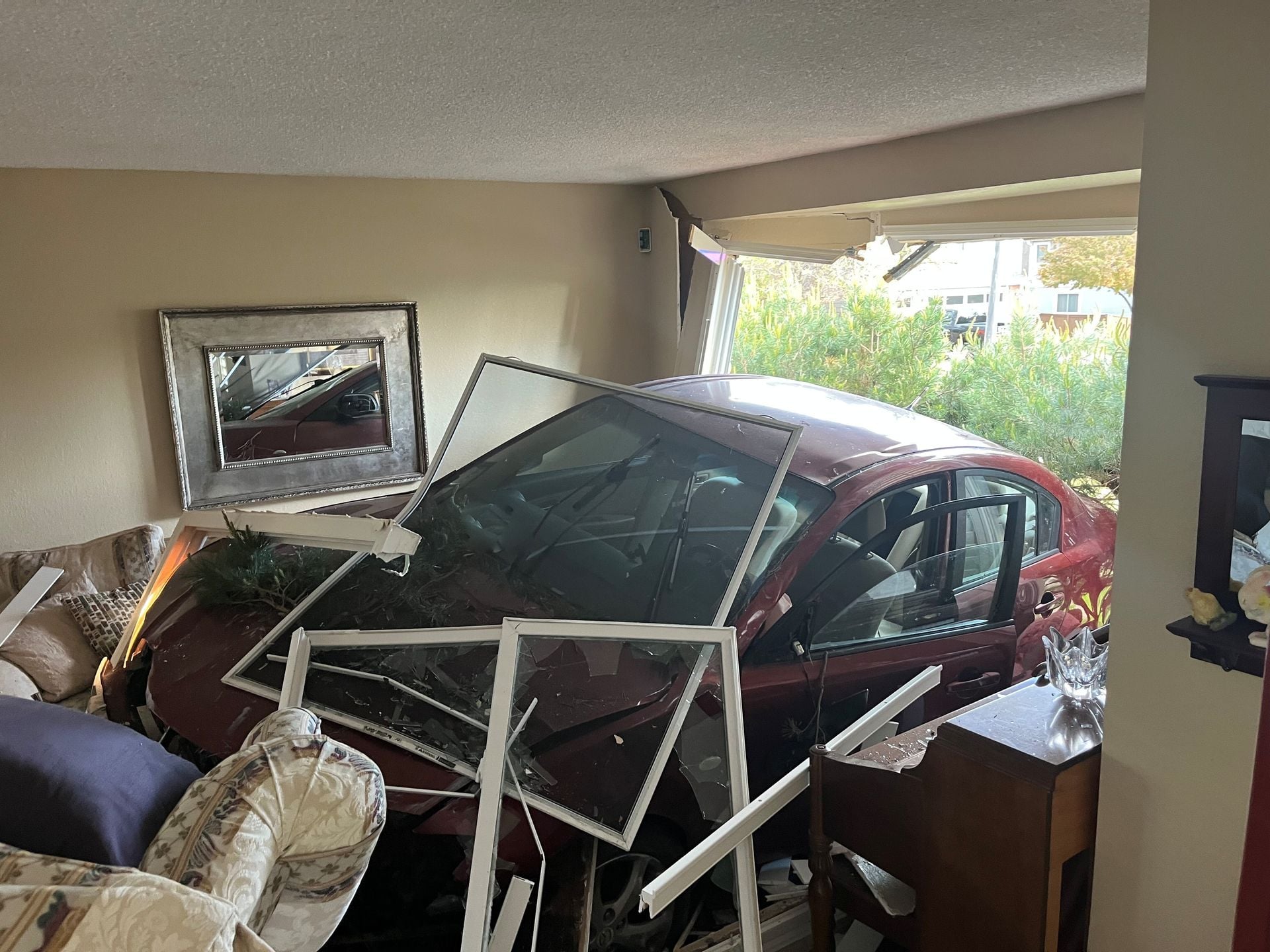
Not exactly the kind of “door-to-door delivery” anyone wants showing up before sunrise.
According to a Facebook post shared by the Douglas County Sheriff’s Office, deputies and firefighters responded early Sunday morning to a vehicle that crashed into a home in the 9800 block of Wedgewood Drive in Highlands Ranch. Amazingly, nobody inside the home or involved in the crash was injured despite the vehicle plowing directly into the residence.
The sheriff’s office said the driver initially reported falling asleep behind the wheel while delivering packages. Deputies later arrested the driver on suspicion of driving under the influence. Authorities did not release the suspect’s name, booking photo, or additional booking information in the social media release.
Naturally, the internet immediately went to work on the jokes.
Commenters flooded the post with “same-day delivery” cracks, “door-to-door service” jokes, and plenty of variations of “you can’t park there.” One person joked that at least the package probably arrived on time, while another called it “closer than curbside pickup.” The absurdity of a car sticking out of a suburban home almost looks fake at first glance, which is exactly the kind of thing social media tends to latch onto.
The Humor Is Real, but So Is the Bigger Problem
Buried underneath the jokes, though, was a much more serious conversation.
A surprising number of commenters said the same thing: why does it suddenly feel like vehicles crashing into homes is happening constantly now?
As strange as it sounds, that feeling may not be completely off base.
According to the Storefront Safety Council, roughly 100 vehicle-into-building crashes happen every single day across the United States. The group estimates thousands of people are killed or seriously injured in these incidents annually, even though many never become national news stories unless dramatic photos or videos surface online.
Earlier this year, Spectrum News reported that Florida consistently ranks among the states with the highest number of vehicle-into-building crashes. The report highlighted a deadly crash in Apopka where two women were killed after a vehicle reportedly left the roadway, struck a pole, slammed into a home, and caught fire.
The reasons vary widely from case to case. Speeding, DUI, distracted driving, fatigue, medical emergencies, and driver error all play a role. The Storefront Safety Council also noted that pedal confusion, particularly involving elderly drivers, contributes to some of these crashes.
The Gig Economy Discussion Quickly Entered the Chat
Another part of the conversation centered around modern delivery culture itself.
Authorities never identified what kind of delivery work the driver was allegedly doing, and there is no indication the person was working for Amazon, Uber Eats, DoorDash, Walmart Spark, a local restaurant, or another delivery service.
Still, many readers pointed out that modern delivery systems increasingly rely on people driving ordinary civilian vehicles rather than clearly marked fleet trucks operated by long-term employees.
That creates a strange reality where random personal vehicles constantly pull into neighborhoods at all hours while drivers juggle delivery apps, customer ratings, navigation, quotas, and sometimes multiple jobs at once.
To be clear, most delivery drivers are hardworking people trying to make a living. Hustle culture and app-based freelance work have given many people ways to earn extra cash on flexible schedules using their own vehicles.
Who Is Actually Responsible?
Critics argue that the system also creates a gray area in oversight and accountability.
Drivers are often treated like employees when speed, quotas, and performance metrics matter, but suddenly become “independent contractors” when questions about liability, fatigue, insurance, or safety arise. In many cases, corporations benefit from the labor while sidestepping responsibility through layers of contractors, technicalities, and disclaimers.
Again, there is no evidence that those factors played a role in this specific crash beyond what authorities publicly stated. Still, stories like this naturally reopen broader conversations about burnout, impairment, gig-economy pressure, and just how exhausted some people may be behind the wheel trying to make enough money to get through the week.
Thankfully, Nobody Inside the Home Was Hurt
That may ultimately be the most important part of this story.
For all the memes and jokes, a vehicle crashing into a home is the kind of thing that can turn deadly instantly, depending on where people happen to be standing or sitting inside.
Several commenters shared stories of similar crashes happening near them, including one person who said a friend’s home was hit years ago and that someone likely would have died had they been sitting in the living room at the time.
This time, everyone walked away alive. That is not always how these stories end.