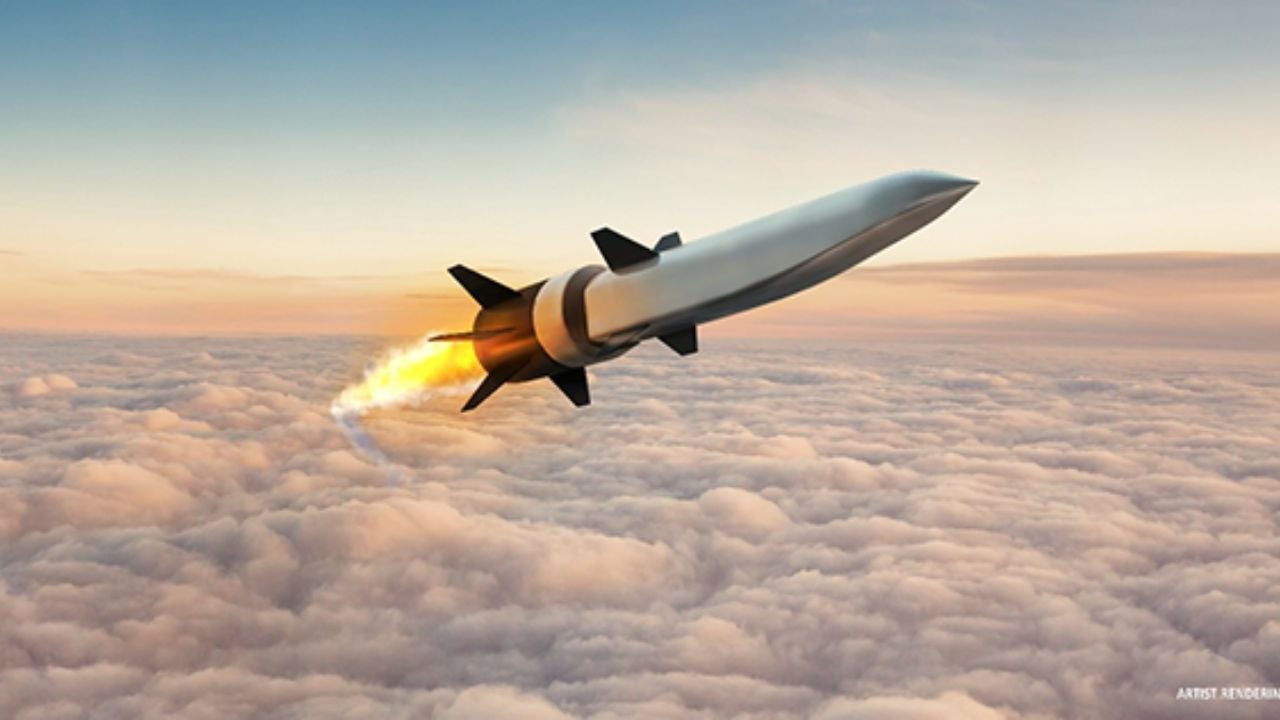

The U.S. Air Force is preparing to take a major leap into operational hypersonic weapons, and it is putting real money behind that ambition. In its FY2027 budget request, the service is asking for $404 million to begin production of the Hypersonic Attack Cruise Missile, known as HACM.
This is not another research line item buried in a long-term project. It marks the shift from development into actual fielding, meaning the Air Force wants these weapons in service and available for combat use within the next year.
So, what exactly is HACM?
At its core, it is an air-launched hypersonic cruise missile designed to travel at speeds approaching Mach 8 while remaining maneuverable throughout its flight. Unlike earlier hypersonic concepts that rely on ballistic arcs or glide phases, HACM uses a scramjet engine.
It’s a defining distinction; a scramjet allows the missile to keep its engine running while traveling at hypersonic speeds, pulling in oxygen from the atmosphere instead of carrying it onboard. That reduces weight and frees up space for payload and structural reinforcement.
Two-Stage Punch
The propulsion system is built in two stages.
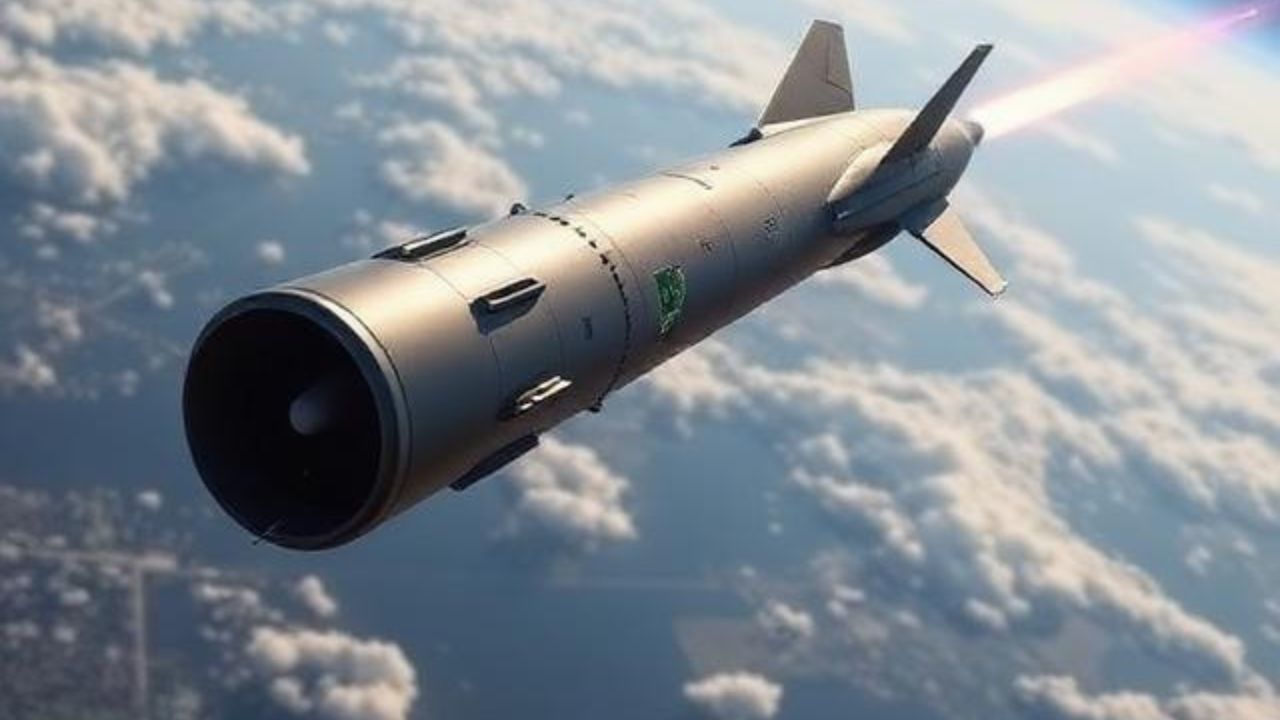
A solid rocket booster gets the missile up to speeds above Mach 4, which is the threshold needed for the scramjet to ignite. Once that transition happens, the scramjet takes over and sustains the missile’s speed for the rest of its flight.
This creates a very different flight profile compared to boost-glide systems like the AGM-183 ARRW. HACM stays lower, remains powered, and can adjust its trajectory in real time. That combination makes it far more difficult for air defense systems to track and intercept.
From those of us who live and breathe cars, think of it as the difference between a car that coasts downhill after a launch versus one that keeps applying power while also steering dynamically through a complex course. HACM is doing both at extreme speed and under intense thermal stress.
The Air Force plans to integrate HACM first on the F-15E Strike Eagle, a platform known for its payload flexibility and strike capability. Over time, compatibility is expected to expand to aircraft like the F/A-18F Super Hornet, F-35A Lightning II, and even the P-8A Poseidon.
Because HACM is smaller than many boost-glide hypersonic weapons, aircraft can carry more of them per mission. That increases strike capacity without requiring larger bombers.
Breaking Down the $404 Million

Now to the money. The $404 million request is tightly broken down. About $365.9 million is allocated to the missiles themselves, referred to as All-Up Rounds, which include the full weapon ready for deployment.
The remaining $38 million covers support costs such as logistics, engineering updates, and program management. This funding will produce the first batch of operational missiles along with the containers and infrastructure needed to handle them.
This initial investment is just the beginning.
The Air Force projects total HACM procurement spending to reach over $3 billion by 2031. Annual funding increases are already mapped out, with larger buys expected as production ramps up and manufacturing efficiencies improve.
Interestingly, the number of missiles being purchased is not publicly disclosed, likely due to classification and a flexible buy-to-budget strategy.
The HACM’s development is being led by Raytheon for system integration, with the scramjet engine coming from Northrop Grumman. The program is also a joint effort with Australia, reflecting how allied nations are pooling resources to accelerate hypersonic capabilities.
Risky But Ready
One of the more striking aspects of this program is how the Air Force is handling risk. Only about five flight tests are planned before initial deployment. That is a relatively small number for a system this complex.
Instead of waiting for a long validation cycle, the Air Force is choosing to field an early operational version and continue refining it during production. That approach prioritizes speed of deployment over complete technical maturity.
For automotive readers used to product cycles, this is closer to launching a high-performance vehicle with ongoing updates rather than waiting for a perfect final version.
The difference is that HACM operates in one of the most demanding environments imaginable, where temperatures, pressure, and speed push materials and engineering to their limits.
In simple terms, the HACM is about speed, flexibility, and survivability. The $404 million request is because the Air Force is ready to move from proving the concept to actually building and deploying the weapon.
Sources: Army Recognition