

Chinese electric vehicle and battery giant BYD has taken the unusual step of suing the U.S. federal government in the U.S. Court of International Trade. The EV global powerhouse is challenging a sweeping set of import tariff policies that currently make it economically difficult for many foreign vehicles to enter the United States.
The lawsuit, filed on January 26, 2026, and publicly revealed by the court on February 2, accuses the government of exceeding its legal authority when imposing tariffs under the International Emergency Economic Powers Act (IEEPA). A key outcome in the case could alter the economics of importing cars and commercial vehicles from abroad.
The plaintiffs are four U.S. subsidiaries of BYD that handle the company’s operations in this market. They include BYD America LLC, responsible for distribution and service, BYD Coach & Bus LLC, which manages commercial EV manufacturing, BYD Energy LLC, the battery and energy storage arm, and BYD Motors LLC, which oversees vehicle imports and retail sales.

The defendants include the United States, the Department of Homeland Security, Customs and Border Protection, the Office of the U.S. Trade Representative, and the Treasury.
A Strategic Lawsuit with a Future Market in Mind
It’s important to note BYD isn’t selling passenger cars in the U.S. right now, yet it has filed a lawsuit in the U.S. Court of International Trade. The key is that BYD does have U.S. subsidiaries and operations here, but they’re focused on other segments—like buses, trucks, and energy storage—not consumer cars.
BYD Coach & Bus LLC builds and sells electric buses in California. BYD Energy LLC handles batteries and energy storage systems. BYD Motors LLC manages imports of commercial vehicles and related products. BYD America LLC oversees distribution and service.
These entities give BYD legal standing in U.S. courts. By this lawsuits, BYD’s subsidiaries argue that tariffs imposed under the IEEPA are unlawful because the government exceeded its authority by using emergency powers to block or heavily tax imports.

So, why sue if they don’t sell cars here?
BYD wants to preserve the option of entering the U.S. passenger car market in the future. Tariffs also affect their commercial vehicles and battery products, which they already import. A favorable ruling could lower barriers for all Chinese EV makers, not just BYD, reshaping the economics of entry.
So, that’s the bigger picture:
Even though BYD doesn’t sell cars to U.S. consumers today, it’s positioning itself strategically. By challenging tariffs now, it could open the door for future passenger car sales and strengthen its existing bus and energy businesses.
Challenging the Legal Basis of Sweeping Tariffs
BYD’s complaint argues that a series of tariff executive orders issued since February 2025 are unlawful because the government lacks authority under the IEEPA to impose these trade measures. The tariffs being challenged cover a broad and diverse set of products and national origins.
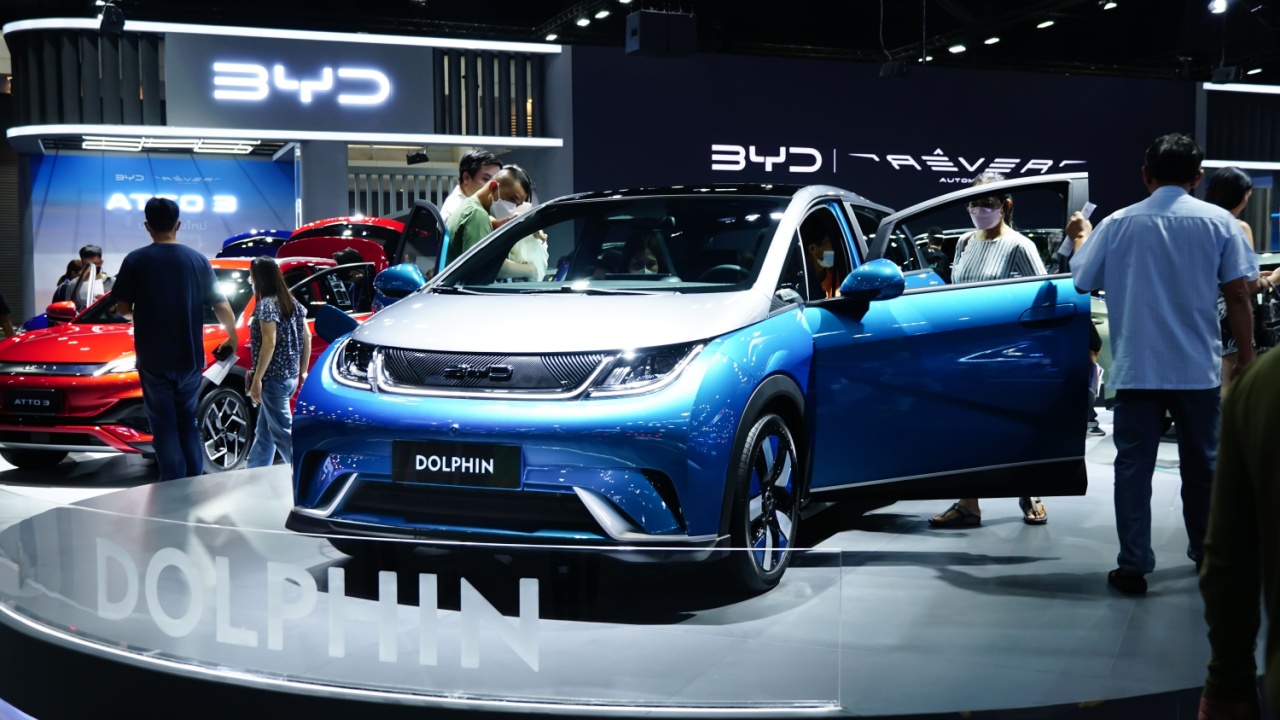
They include border adjustment tariffs on imports from Mexico and Canada, fentanyl related tariffs targeting China, “reciprocal” tariffs applied to Beijing and other countries, and additional country specific levies tied to global energy transactions.
BYD seeks to have the court declare these executive actions invalid and to issue permanent injunctions preventing enforcement. The company is also asking for refunds of tariffs collected from its subsidiaries along with interest and legal costs.
The lawsuit is part of a growing wave of litigation from importers of many types who have questioned the legality of broadly applied IEEPA tariffs. One of the earliest and most significant of these cases was brought by a small wine importer, V.O.S. Selections, Inc., which won favorable rulings at both the U.S. Court of International Trade and the Federal Circuit Court of Appeals.
Those courts concluded that the president lacked statutory authority to impose tariffs under the emergency powers law. That case has now moved to the U.S. Supreme Court, which heard oral arguments in November 2025 and is expected to issue a definitive ruling in the first half of 2026.
Because of the pending Supreme Court decision, the Court of International Trade has placed BYD’s lawsuit and thousands of similar challenges on procedural hold until the high court clarifies the law. The stay is intended to prevent conflicting judgments and to conserve judicial resources.

However, legal analysts and observers in China and elsewhere note that BYD’s action serves a strategic purpose. It preserves the company’s right to seek remedies for tariffs already paid, and it extends the legal challenge to cover more recent tariff orders that follow the original V.O.S. case.
Potential Implications for U.S. Auto Markets and Jobs
As stated earlier, BYD’s current operations in North America are concentrated in commercial vehicles and energy infrastructure rather than consumer car sales.
The company operates a large electric bus manufacturing facility in Lancaster, California, which has capacity to build roughly 1,500 vehicles per year and employs hundreds of local workers. Its U.S. revenue is estimated in the hundreds of millions of dollars annually, primarily through transit and utility sales.
A successful outcome for BYD would not only affect the company’s commercial segments, it could also have broad implications for passenger vehicle imports. Those tariffs currently make it extremely costly to bring Chinese made cars into the U.S. market.
Reducing or eliminating these duties may open a pathway for vehicles manufactured abroad, including from Mexico and Brazil, to enter more affordably. It could also transform decisions by BYD and other global automakers about where to base production for vehicles destined for the U.S. market.
Proponents of the US tariff policy have often argued that high duties protect U.S. automakers and domestic jobs and help offset what they describe as unfair subsidies enjoyed by foreign competitors.
Arguments from the other side of the aisle contend that tariffs lead to higher prices for consumers and can create legal and economic uncertainty for global supply chains.
Automotive industry groups have highlighted that tariff related costs under the IEEPA framework may amount to billions of dollars and could affect production and sales if the policies are upheld by the courts.
Sources: CarNewsChina