We’ve all done it. You see a certain car pull up, and before the driver even steps out, you’ve already written their whole life story in your head. Maybe they’re a weekend warrior with more gear than skill, or perhaps they’ve figured out the secret to looking successful without breaking the bank.
The truth is, some vehicles come with reputations that precede them, fair or not. These stereotypes stick around because there’s often a kernel of truth buried in there somewhere, even if it’s wrapped in exaggeration. From luxury sedans to rugged trucks, certain cars have become cultural shorthand for entire personality types.
Disclaimer: We’ve gathered these stereotypes based on what’s frequently discussed. We aren’t here to validate or debunk them, we’re just laying out what we’ve heard over the years.
Let’s take a lighthearted look at 12 vehicles that come with their own set of assumptions, both flattering and not-so-flattering.
BMW 3 Series: The “I Don’t Believe in Turn Signals” Special

The BMW 3 Series has earned a reputation that its drivers either embrace or desperately try to distance themselves from. With a starting price around $48,850, this compact luxury sedan attracts a mix of young professionals climbing the corporate ladder and car enthusiasts who genuinely appreciate German engineering.
The stereotype suggests 3 Series drivers view turn signals as optional equipment and merge lanes with the confidence of someone who has excellent insurance. In reality, many owners are simply enthusiasts who appreciate the balanced handling and turbocharged inline-six performance. The car itself is genuinely impressive with up to 386 horsepower in the M340i variant, but the cultural baggage is real.
BMW has sold hundreds of thousands of these in the US, so statistically, most drivers are perfectly normal people just trying to get to work.
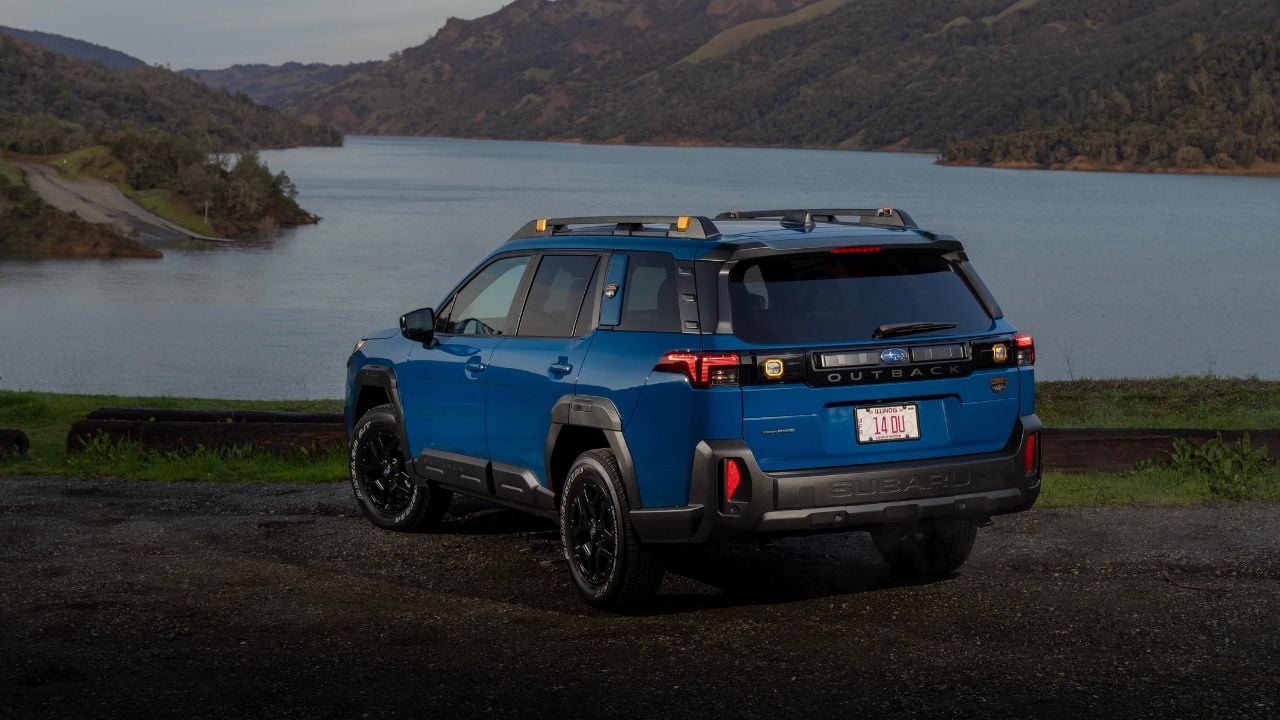
Subaru Outback: The Unofficial Car of National Parks

If you drive a Subaru Outback, people assume you own at least three reusable water bottles, have strong opinions about hiking boots, and your weekend plans involve trailheads. Starting around $29,000, the Outback has become synonymous with outdoor enthusiasts who value practicality over flash.
The stereotype paints Outback drivers as environmentally conscious adventurers who might have a kayak strapped to the roof even when they’re just going to the grocery store. Truth be told, it’s hard to argue with the logic since the Outback offers standard all-wheel drive, impressive ground clearance, and enough cargo space for camping gear. With fuel economy around 26 MPG combined, it’s efficient enough for daily commuting but capable enough for weekend adventures.
The Outback consistently ranks among the top-selling vehicles in states like Colorado and Vermont, which only reinforces the stereotype.
Ford F-150: The “I Might Need to Haul Something Someday” Truck

The Ford F-150 is America’s best-selling vehicle for over four decades, which means the stereotypes are as varied as the drivers themselves. With a starting price around $39,330 and climbing quickly with options, F 150 owners get tagged as either hardworking contractors or suburbanites who bought a truck “just in case” they need to move a couch someday.
The reality is that the F 150 is genuinely versatile, with towing capabilities up to 13,500 pounds when properly equipped, and payload that varies by configuration. Some drivers do use every bit of that capability regularly, while others enjoy sitting high and feeling secure in a vehicle that weighs over 5,000 pounds. The truck’s popularity means you’ll find everyone from ranchers to realtors behind the wheel.
The stereotype of the pristine, never-been-off-road F-150 exists because plenty of buyers genuinely just like driving trucks.
Tesla Model 3: The Tech Evangelist on Wheels

Tesla Model 3 drivers have become the modern stereotype for early adopters who can’t wait to explain how they’re saving the planet while never visiting gas stations. Starting around $38,630, the Model 3 attracts tech savvy buyers who appreciate the minimalist interior dominated by a 15 inch touchscreen.
The stereotype suggests these drivers love to mention their car’s over-the-air updates in casual conversation and might have strong opinions about Autopilot versus Full Self-Driving. In fairness, the Model 3 offers impressive acceleration with 0 to 60 times as quick as 3.1 seconds in the Performance variant and offers up to 363 miles of EPA estimated range in the single motor version. The electric sedan has genuinely revolutionized the automotive industry, making EVs desirable rather than just practical.
Tesla has sold hundreds of thousands of Model 3s in the US, creating a community that’s passionate about the brand, for better or worse.
Honda Civic: The Sensible Choice That Needs No Apology

The Honda Civic driver gets stereotyped as practical, financially responsible, and perhaps a bit boring, but that’s actually become a badge of honor for many owners. With a starting price around $25,000, the Civic represents rational decision-making in automotive form, delivering reliability, fuel economy around 33 MPG combined, and surprisingly engaging driving dynamics.
People assume Civic drivers prioritized spreadsheets over excitement when car shopping, but the reality is that sensible and satisfying aren’t mutually exclusive. The current generation offers up to 180 horsepower in the naturally aspirated model, with the sportier Si and Type R variants delivering genuine performance credentials. Honda has sold millions of these globally, and the Civic consistently tops reliability rankings, which means the stereotype of the responsible buyer is actually pretty accurate.
There’s something quietly confident about choosing substance over flash.
Jeep Wrangler: The Mall Crawler With Mud Tire Dreams

Jeep Wrangler owners get immediately sorted into two categories: those who actually take their rigs off-road and those whose most extreme terrain is a grocery store parking lot. Starting around $38,185 and climbing quickly with the popular modifications, Wranglers have become lifestyle vehicles that signal adventure even if that adventure is mostly theoretical.
The stereotype of the spotless Wrangler with $10,000 in aftermarket parts that’s never seen dirt is so common it’s spawned the term “mall crawler” in enthusiast circles. That said, the Wrangler is genuinely one of the most capable off-road vehicles available, with solid axles, available locking differentials, and approach angles that would shame most SUVs. With fuel economy that varies widely by powertrain and drivetrain, nobody’s buying a Wrangler for efficiency, but the removable doors and roof create an experience unlike anything else on the road.
The judgmental looks come because everyone knows the statistics suggest most Wranglers won’t see much more than a gravel driveway.
Nissan Altima: The Wild Card Nobody Expected

The Nissan Altima has somehow become the internet’s favorite vehicle to associate with chaotic driving behavior, and the stereotype has taken on a life of its own. Starting around $28,825, the midsize sedan seems innocuous enough with decent space, respectable fuel economy around 30 MPG combined in its most efficient configuration, and available all wheel drive.
Yet somewhere along the way, Altima drivers earned a reputation for driving like they’re late to something important, weaving through traffic with missing hubcaps and temporary tags. The stereotype paints Altima owners as having nothing to lose and driving accordingly, though this is obviously an exaggeration based on viral social media posts rather than actual statistics.
Said one Redditor: “It’s because most Nissan dealerships will give an Altima to anyone with a pulse (but jack up the interest rate). It’s a pretty much worry-free car and quite sensible. But as the years go on and it gets sold on the secondary market, the owners tend to become a little ‘downmarket,’ and with that many times comes irresponsible driving and other issues. Not saying it’s true, but that’s the background of the stereotype.”
The reality is that Nissan sold hundreds of thousands of these as affordable, practical transportation, and the vast majority of drivers are perfectly normal commuters. Still, the memes persist, and Altima drivers now carry the burden of lowered expectations wherever they merge.
Dodge Charger/Challenger: The Muscle Car Time Machine

Dodge Charger and Challenger drivers get stereotyped as living in the past, prioritizing straight-line speed and V8 rumble over corners and fuel economy. On the used market, prices can start around the mid $30,000s and climb far higher for Hellcat variants, but it is worth noting that production of the Charger and Challenger ended after the 2023 model year.
The stereotype suggests these drivers have strong opinions about “real” engines and might view electric cars with suspicion bordering on hostility. In reality, the Charger and Challenger represent the last affordable way to get genuine V8 power, with even base models offering 292 horsepower. Fuel economy hovers around 23 MPG combined for V6 models but drops into the teens for thirsty V8s that some owners wear as a badge of honor.
These cars appeal to buyers who want drama and theater from their daily driver, and the stereotype exists because the marketing literally celebrates nostalgia and raw power.
Toyota Prius: The Slow Lane Philosopher

The Toyota Prius pioneered the hybrid segment and simultaneously created one of the most persistent automotive stereotypes in modern culture. Starting around $28,000, the Prius attracts buyers who prioritize efficiency and environmental consciousness, achieving up to 57 MPG combined depending on the variant.
The stereotype paints Prius drivers as oblivious left-lane campers more focused on maximizing their MPG readout than maintaining traffic flow. Critics love to joke about Prius drivers going slow to save gas, though the reality is that hypermiling is a legitimate technique that some owners genuinely enjoy as a game. The current generation offers 196 combined horsepower from its hybrid system, making it quicker than many assume, though performance was clearly never the priority.
Toyota has sold millions of these globally, proving that for many buyers, the stereotype is a feature rather than a bug since it signals environmental values.
Volkswagen GTI: The Enthusiast’s Secret Handshake

The Volkswagen GTI occupies a special place in automotive culture as the thinking person’s sporty car, and its drivers often get stereotyped as car enthusiasts who read forums obsessively. Starting around $35,865, the GTI delivers 241 horsepower from its turbocharged four cylinder, practical hatchback versatility, and handling dynamics that justify the enthusiast reputation.
GTI drivers are assumed to have strong opinions about the perfect wheel setup, debate suspension modifications at length, and possibly own a plaid shirt that matches the iconic seats. The stereotype suggests these owners chose the GTI because they care more about driving dynamics than badge prestige, which is actually pretty accurate for many buyers. Fuel economy around 30 MPG combined means the GTI works as both a fun weekend car and a practical daily driver.
The judgmental looks here are actually approving nods from fellow enthusiasts who recognize that you did your homework.
Chevrolet Corvette: The Midlife Crisis Mobile

The Chevrolet Corvette has fought the midlife crisis stereotype for generations, despite being one of America’s best performance bargains. Starting around $70,000 for the mid engine C8 generation, the Corvette delivers supercar performance with up to 495 horsepower and available 0 to 60 in 2.9 seconds.
The stereotype assumes Corvette buyers are men of a certain age celebrating a promotion, divorce, or newfound freedom with a car they dreamed about in high school. While demographic data does show the average Corvette buyer skews older, the mid-engine redesign has attracted younger enthusiasts who recognize the incredible value proposition. The car itself is genuinely excellent with exotic looks, lightning-quick handling, and reasonable practicality with front and rear cargo areas.
The judgmental looks come from decades of cultural programming, but Corvette drivers seem mostly unbothered since they’re too busy enjoying one of the best performance cars available at any price.
Noted one Reddit user: “50’s reporting in. It isn’t so much a midlife crisis as it is a midlife ability. Kids are older. Things are stable. I was finally able to get a car I had wanted since childhood.”
Added another: “Thing is, I’m basically an empty nester and don’t need family cars anymore. So having two fun cars, after years of being a responsible dad, fits my current life. Plus, the Mrs has an Impala when we need room.”
Mercedes-Benz G-Class: The Luxury Tank for Urban Terrain

The Mercedes Benz G Class represents peak automotive judgment territory, with its boxy military styling and six figure price tag starting around $155,250. Originally designed as a serious off-road vehicle, the G-Wagon has evolved into the ultimate status symbol for affluent urban buyers who will never test its impressive capabilities.
The stereotype paints G-Class drivers as prioritizing visibility over practicality, choosing a vehicle that announces their arrival before they even enter the room. With fuel economy that is not a selling point for most buyers in this segment, efficiency was clearly never part of the equation. The nearly vertical windshield and upright seating position create an commanding view of traffic, though the view inside reveals luxury appointments that would make a Range Rover jealous.
The judgment comes because everyone knows most G-Wagons will spend their lives navigating shopping districts rather than desert trails, but for buyers in this segment, that’s entirely the point.
Conclusion: We’re All Just Driving Stereotypes Anyway

The reality is that every car comes with baggage, whether it’s a practical Civic or an extravagant G-Wagon, and none of these stereotypes tell the whole story. These assumptions persist because they’re based on observable patterns, even if they don’t apply to every individual owner.
The best response to automotive judgment is probably to embrace the stereotype, laugh about it, and enjoy whatever vehicle makes you happy regardless of what strangers assume at stoplights. After all, the people who judge you for your car choice are simultaneously being judged for their own, creating an endless cycle of automotive side-eye that makes traffic slightly more entertaining.
Choose the car that fits your needs, your budget, and your personality, and let the stereotypes fall where they may.