You’d be forgiven for thinking a car enthusiast’s favorite pastime is complaining. From keyboard warriors to classic purists, it seems like there’s no shortage of hate for certain vehicles, sometimes with good reason. But not always.
Plenty of cars have gotten a bad rap over the years, whether due to awkward styling, underwhelming performance, or being released at the wrong time. But as time has passed, many of these so-called failures have started to earn some overdue appreciation. In this list, we’re revisiting the misunderstood, the mocked, and the unfairly maligned — the cars that maybe weren’t so bad after all.
How We Chose These Cars

In order for these cars to qualify, they need to have received mostly negative reception from enthusiasts, the media, or both. They also need to have some sort of redeeming quality, or for the general consensus around them to have changed as the years have gone by.
Where possible, we also cite personal experience with these vehicles. Stuff like the AMC Gremlin and the Oldsmobile Cutlass Diesel were not considered, as they have virtually no redeeming qualities about them, and enthusiasts and the media still heavily dislike them. For example, Victoria Scott of Motor1 absolutely hated the Cutlass Diesel. For now, though, let’s have a look at some automotive oddballs that deserved better.
Fiat Multipla

Probably the most obvious choice for this particular category. Launched in the late ’90s, the Fiat Multipla was an attempt to cram as much storage and passenger room as possible within the footprint of a smaller family car.
This meant, among other things, some heinous styling. We won’t beat around the bush here; the Multipla is not a good-looking car, but it’s also a textbook example of function over form, as Adrien Clarke of The Autopian found out. Plenty of cargo room, as well as room for six passengers across only two rows of seats. Let’s not forget that the facelift also eliminated the ridiculous extra layer of lights below the windshield, making it all look a little bit better and more normal.
Chevrolet Camaro / Pontiac Firebird (Fourth Gen)

Like many muscle cars, the Chevy Camaro and Pontiac Firebird were both affected by the oil crisis in the 1970s, but they began to regain popularity by the time the 1990s rolled around. The ’90s also meant the arrival of the fourth-generation Camaro and Firebird, also known as the Catfish generation.
The styling really didn’t go over well with most people, and it’s somewhat easy to see why. The rounded design gave it a more sports car-like appearance, rather than a traditional muscle car. We’d argue that they’ve aged very well, and today, both of them represent some of the best bang for the buck muscle cars on the used market. Joe Santos of MotorBiscuit also reports that it’s not actually as bad as everyone thinks.
Ford Mustang II

Rewind the clock back about a decade, and the Ford Mustang II was a frequent guest on worst-car-ever roundups. People hated it because it wasn’t quite like the original Mustang; it didn’t offer powerful V8 powertrains in the first couple of years. Though the V8 would return for model year 1975, as reported by Nick Dellis of Mustang Specs, arguably the Mustang II’s biggest problem was that it was based on the subcompact Pinto.
As Aaron Gold of Hot Rod Magazine shares, the Mustang II was designed to appeal to a wider range of consumers due to several factors in the 1970s, including the Oil Crisis and the growing public awareness of the environmental impact of large, powerful cars. Motor Trend named it their 1973 Car of the Year, and reported that it was surprisingly nimble. It might not be worthy of the Mustang name, but in isolation, the Mustang II wasn’t all that bad.
Yugo

A lot of you know it, and a lot of you probably hate it. The Fiat 128-based Yugo was built in Yugoslavia, and as Doug DeMuro explains in his famous review, businessman Malcolm Bricklin thought of bringing it to the United States to give the country an ultra-affordable car, like a Geo or even the most basic of Hondas.
Make no mistake, the Yugo wasn’t that good of a car, but back in its home country, things were very different. I grew up and still live in a former Yugoslav country, and I can personally tell you that we swear by these Yugos. Since the Yugo was produced locally, they were easy to fix, and parts were everywhere. With good maintenance, they can be surprisingly reliable, and in a country that didn’t really deal with imports, it was a highly useful mode of transport on four wheels for the whole family. Yes, the whole family and their luggage in this tiny car.
Chrysler Town & Country

While the original Renault Espace pioneered the minivan segment in Europe, the original Chrysler Voyager, later the Town and Country, introduced most Americans to this segment. As time progressed, however, the Town and Country’s fortunes eventually began to turn.
It started its path as Plymouth Voyager, but later continued under Chrysler badge. The van developed a bit of a reputation for being driven by soccer moms and those people that the Internet disparagingly calls Karens. Having personally spent a lot of time with a Town and Country, specifically the European Voyager model, I can tell you that it has a lot of good qualities. Immensely practical and versatile, well-equipped, and while it won’t win any beauty contests, it’s certainly not an ugly vehicle.
Lexus SC430

Back in 2012, Top Gear’s Jeremy Clarkson and James May officially crowned the second-generation Lexus SC430 “the worst car in the history of the world.” While the second-gen car is a far cry from the first, and not in a good way, in reality, it’s not as bad as it may seem, as Alex Kersten of Car Throttle found out back in the day.
While the first generation SC was a grand tourer with a small shot of sportiness, the SC430 was designed to be purely a comfortable cruiser with a folding roof. Mike Duff of Pistonheads reports that Lexus’ designers claimed that it was inspired by the Cote d’Azur, which is evident in its styling and its copious use of wood trim. As long as you temper your expectations, the SC430 is a pretty good car, and it’ll last you a very long time.
Renault Vel Satis

French automakers were doing some weird things in the 2000s. We already told you about the Citroen C6, the last true Citroen, but over in camp Renault, things weren’t exactly less weird. Renault, too, decided that it needed a flagship luxury sedan, only it wouldn’t really resemble a sedan as such.
Essentially, the designers took the bottom half of a sedan, and they grafted the top half of a minivan onto it. Hey presto, the Renault Vel Satis! The styling did not go over well with most people, but we’d argue that it has aged quite well. As the Auto Express team reports, it wasn’t much fun to drive, but it was comfy, well-equipped, and we’re inclined to agree that Renault deserves a lot of brownie points for simply daring to stand out in the otherwise mundane premium segment in Europe.
Chrysler Crossfire
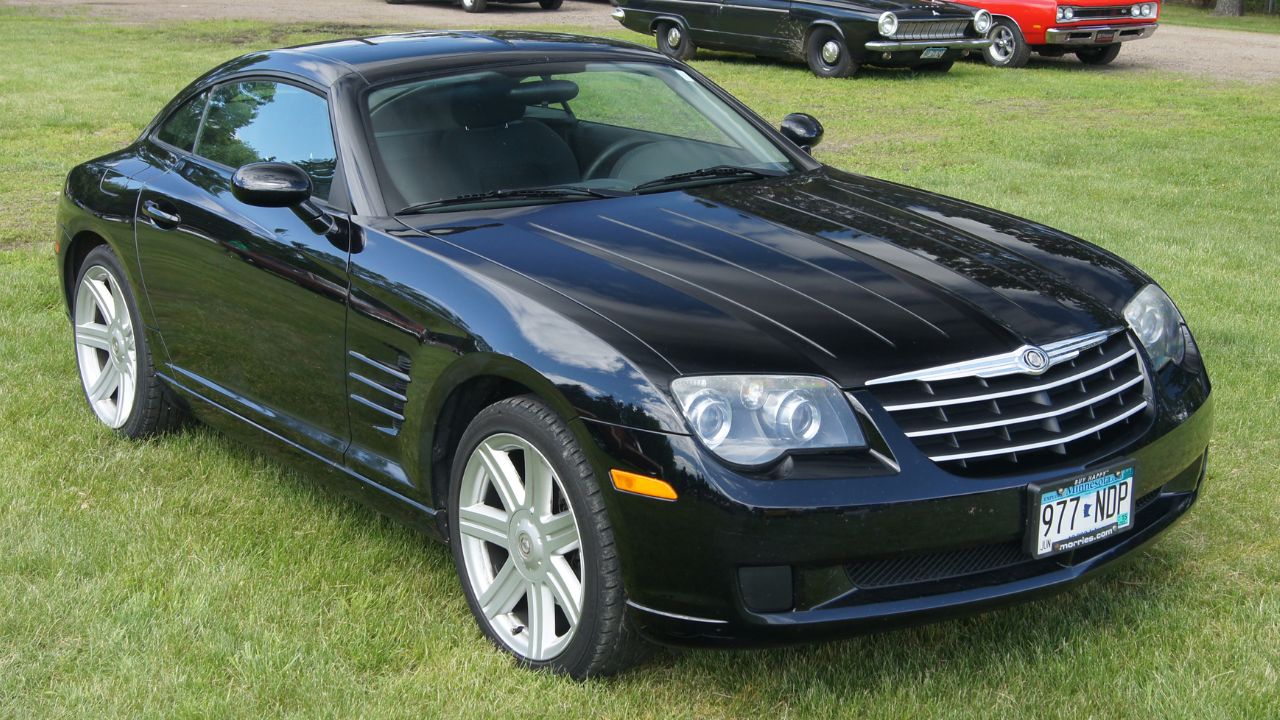
The Daimler Chrysler merger in the 1990s brought us, among other things, the Crossfire in 2004. It was Chrysler’s first real RWD sports car that didn’t have a Challenger or Charger badge, but despite outward appearances, it was a bit of a fraud.
As Doug DeMuro explains in his review, peel away the quintessentially 2000s Chrysler styling, and you’ll find that almost all the mechanicals and even the interior come straight from the R170 Mercedes-Benz SLK. Due to the Crossfire’s unusual design and the fact that most versions were automatics, people were quick to snub it.
Chrysler’s less-than-desirable reputation during this time also had a major role in that, but as the years have gone by, people have discovered the merits of the Crossfire. It’s good to drive, there was a supercharged SRT6 version, and as Doug DeMuro also explains, the V6 that powers it is one of the best to come out of Mercedes-Benz.
Smart Fortwo

One of the internet’s favorite cars to make fun of. A collaboration between Mercedes-Benz and Swiss watchmaker Swatch, the Smart Fortwo was a properly revolutionary car back in the day. While it could only seat two, it was so tiny, you could park it in just about any parking space you found. That included parking sideways in a parallel parking spot.
It was mid-engine, rear-wheel drive, and it had a funky interior and a novel, though terrible semi-automatic transmission. While everyone criticizes the Smart car for being too small and too pathetic, as someone who has had extensive experience with a first-gen Fortwo, these cars are absolutely brilliant for city commutes. Shame about the ECU issues in the early cars, which I also personally experienced.
Porsche 911 (996)

From the ’60s all the way to the late ’90s, the Porsche 911 formula was practically unchanged. The same basic design, round headlights in the front, and an air-cooled flat six in the back. When the 996 generation came along, it kept the design, but not the other two crucial things.
Doug DeMuro explains in his old review of the 996 that the earliest 996 911s had what the Porsche community calls the “fried egg” headlights, and the later 996 models did improve them, but they still weren’t actually round. What’s more, Porsche purists knocked the 996 for (finally) switching to a water-cooled engine. With all of that in mind, this didn’t make the 996 any less good, and any less of a 911, for that matter. Plus, as part of the ubiquitous dislike for this generation of everyone’s favorite sports car, the 996 has stayed relatively cheap on the used market. According to used car market valuation site Classic.com, the 996 Porsche 911 is still hovering around $46,000 on average. Buy it before the haters change their minds.
Mazda Miata (NC)

Much like the Porsche 911, the Mazda Miata story didn’t change all that much between the early ’90s and the mid-2000s. Tiny, lightweight, a small engine, RWD, and epic driving fun guaranteed. In the mid-2000s, Mazda introduced the third generation, or NC Miata, and people were upset.
As Sam Sheehan of PistonHeads notes, the biggest concern about the NC Miata, aside from its gawky, unfriendly face, was the weight figure. The NC was a little bigger and a little heavier than both of the outgoing Miatas. While we can’t knock the previous two generations of everyone’s other favorite sports car, the NC Miata isn’t exactly any less of a Miata. Far from it, it’s actually really good.
Toyota Prius

Finally, we arrive at another one of the internet’s favorite cars to absolutely lambast. Not just hate, but lambast. Amazingly enough, the most recent Prius has finally started to shake that reputation. David Gluckman of C&D absolutely loved it, but the older models were the objects of ridicule for years and years, and we’re not exactly sure why.
People got the impression that the Prius was popular among environmentally conscious people, and that it was completely against everything that being a car enthusiast stood for. Actually, as Brendan McAleer of Car and Driver confirms, the Prius was a total revolution, as it brought the hybrid powertrain into the mainstream. It’s light on the wallet in terms of fuel and shows the world that electrified automobiles are indeed viable and possible.
Saturn Ion Red Line

When people think “performance compact,” Saturn isn’t exactly the first brand that comes to mind. The Ion Red Line was supposed to change that — and while it didn’t make the splash GM hoped for, it definitely didn’t deserve the shade it got.
Based on the Saturn Ion coupe, the Red Line swapped in a supercharged 2.0-liter Ecotec four-cylinder (borrowed from the Chevy Cobalt SS), good for about 200 horsepower. It came with a five-speed manual, upgraded suspension, and Recaro seats — a legit hot hatch recipe hiding behind a plastic-paneled shell.
While the styling was polarizing (some would say plain weird), so was the driving experience. Car and Driver reported that “the Ion continues to discourage enthusiastic driving,” which doesn’t exactly scream confidence in a car marketed as a performance coupe. Others argued that, with the right driver, the Red Line version could still deliver serious fun for the money.
It might not have looked the part, but the Saturn Ion Red Line was a solid performer — and in today’s world of rising used car prices, it’s one of the more affordable ways to get into a quirky, supercharged manual coupe.
We Were Too Hard On These Cars

Car enthusiasts, for the most part, tend to have some strong opinions on new cars when they first come out, and sometimes, those opinions stay for years to come. It takes a long time before people finally start to realize the good qualities of some cars and appreciate them for what they are.
That’s the case with these machines. A lot of people were too harsh on them throughout the years, but as time goes by, we finally realize that they had so much to offer and that we should be more open-minded. Just because something is different doesn’t necessarily mean that it’s bad.