The 2026 Ford Mustang RTR has enthusiasts buzzing, and for good reason. Ford has revealed a 2026 Mustang EcoBoost RTR Package aimed at drift friendly handling upgrades, and RTR Vehicles also offers the limited production Mustang RTR Spec 5 based on the Mustang GT with a supercharged 5.0 liter V8 sent to the rear wheels.
Watching this beast slide through corners with smoke trailing from its tires got us thinking about all the legendary machines that have mastered the art of controlled chaos. Some cars just have that special something, the perfect balance of power, weight distribution, and mechanical layout that makes them drift like they were born to do it.
Whether you’re a seasoned sideways specialist or just appreciate the spectacle, these vehicles represent the cream of the crop when it comes to burning rubber at an angle. Join us as we explore the cars that have defined drift culture and continue to dominate both competitive circuits and enthusiast garages.
What Makes a Car Drift-Worthy?
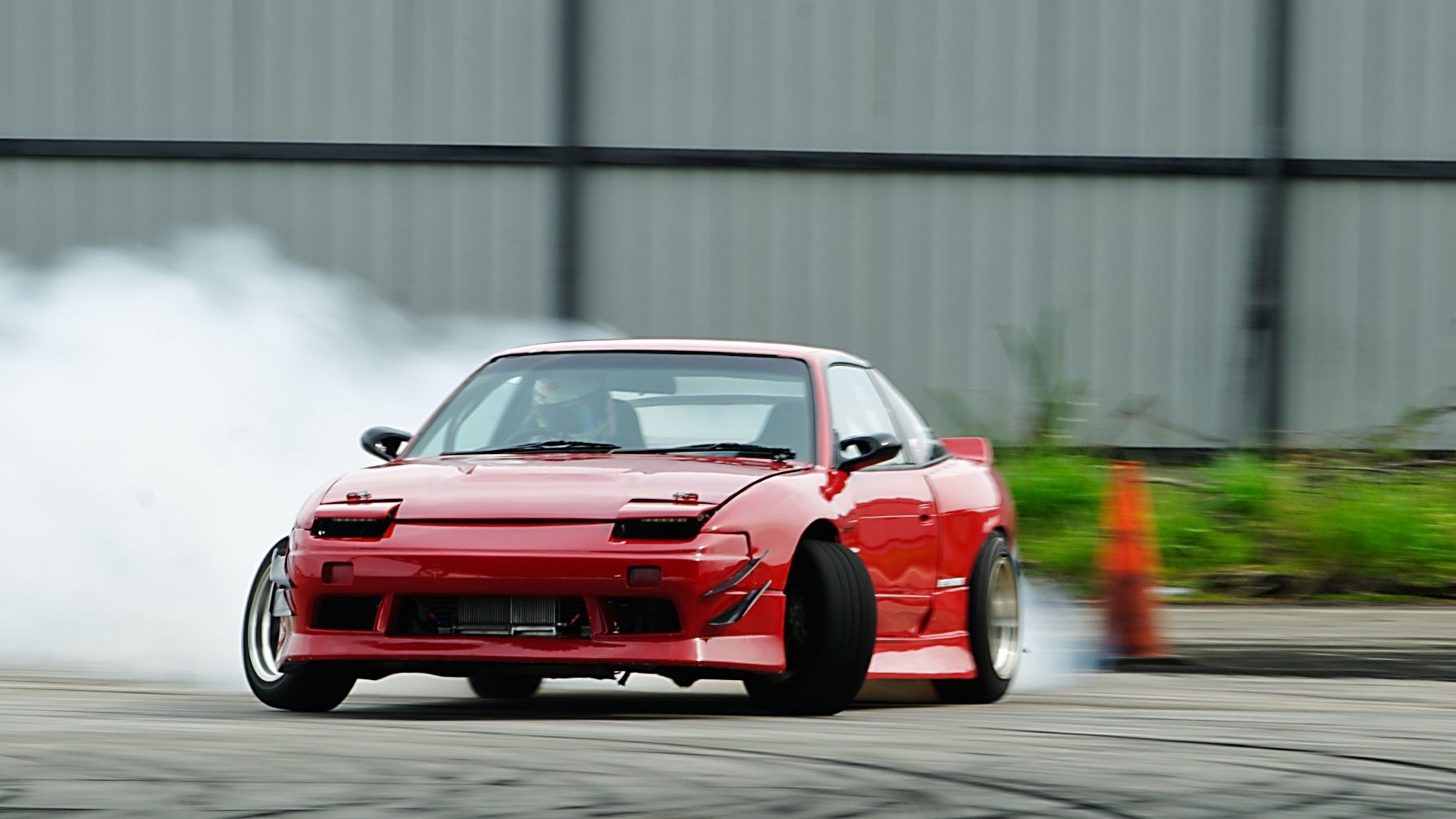
Drifting is a driving technique where the driver intentionally oversteers, causing the rear wheels to lose traction while maintaining control through a corner. The goal isn’t just to slide aimlessly, it’s about precision, control, and linking corners together in one fluid, smoke-filled motion.
For a car to excel at this sideways art form, several factors come into play that separate the naturals from the pretenders. First and foremost, a rear-wheel-drive layout is essential, as it allows the driver to break traction with the throttle while steering with the front wheels.
A balanced weight distribution, ideally close to 50/50 front-to-rear, gives the car predictable handling characteristics and makes it easier to initiate and maintain a drift. Strong power output helps too, providing the horses needed to keep those rear tires spinning through the entire corner. Other factors like a manual transmission for clutch-kick initiations, a responsive chassis, and readily available aftermarket support all contribute to a car’s drift worthiness.
The vehicles we’ve selected here either came from the factory with these characteristics or have become drift legends thanks to their potential once modified.
Mazda MX-5 Miata (NA/NB/ND)

Don’t let the cute smile fool you, the Miata is a drift weapon hiding in plain sight. With near-perfect 50/50 weight distribution and rear-wheel drive, this little roadster responds to driver inputs like it’s reading your mind.
Sure, the base models aren’t packing supercar power with their roughly 116-181 horsepower four-cylinders depending on generation and model year, but that’s actually part of the charm. The lightweight chassis, which tips the scales at about 2,100-2,400 pounds depending on generation and options, means you can maintain a drift at lower speeds without needing a drag strip’s worth of space.
Countless grassroots drifters have cut their teeth in Miatas, learning proper technique without breaking the bank on tires or repair bills. The aftermarket support is absolutely massive, offering everything from turbo kits to angle kits, making it easy to build your perfect drift machine.
Nissan 240SX (S13/S14)
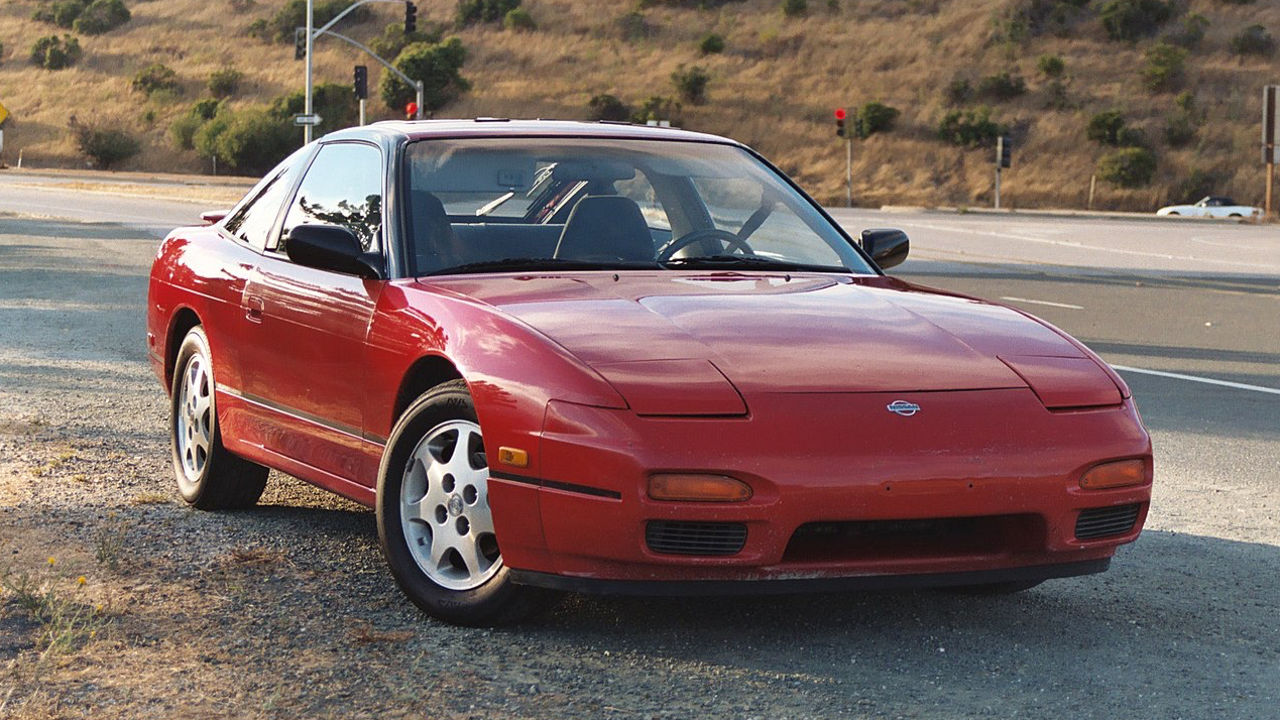
If there’s a poster child for drift culture in America, it’s the Nissan 240SX. These chassis, particularly the S13 (1989-1994) and S14 (1995-1998) generations, have become increasingly legendary in the sideways community.
Powered by the KA24DE 2.4-liter four-cylinder making 155 horsepower, they were modest performers from the factory, but that engine bay was practically designed to accept the legendary SR20DET turbocharged engine swap. The long wheelbase, neutral handling, and affordable price point made these cars accessible to anyone wanting to learn the art of drifting.
These days, finding a clean, unmodified 240SX has become a treasure hunt, with values climbing as enthusiasts recognize their importance to drift history. The aftermarket has answered with virtually unlimited modification options, from coilovers to aero kits to engine swaps that can push well over 500 horsepower.
Toyota AE86 Corolla
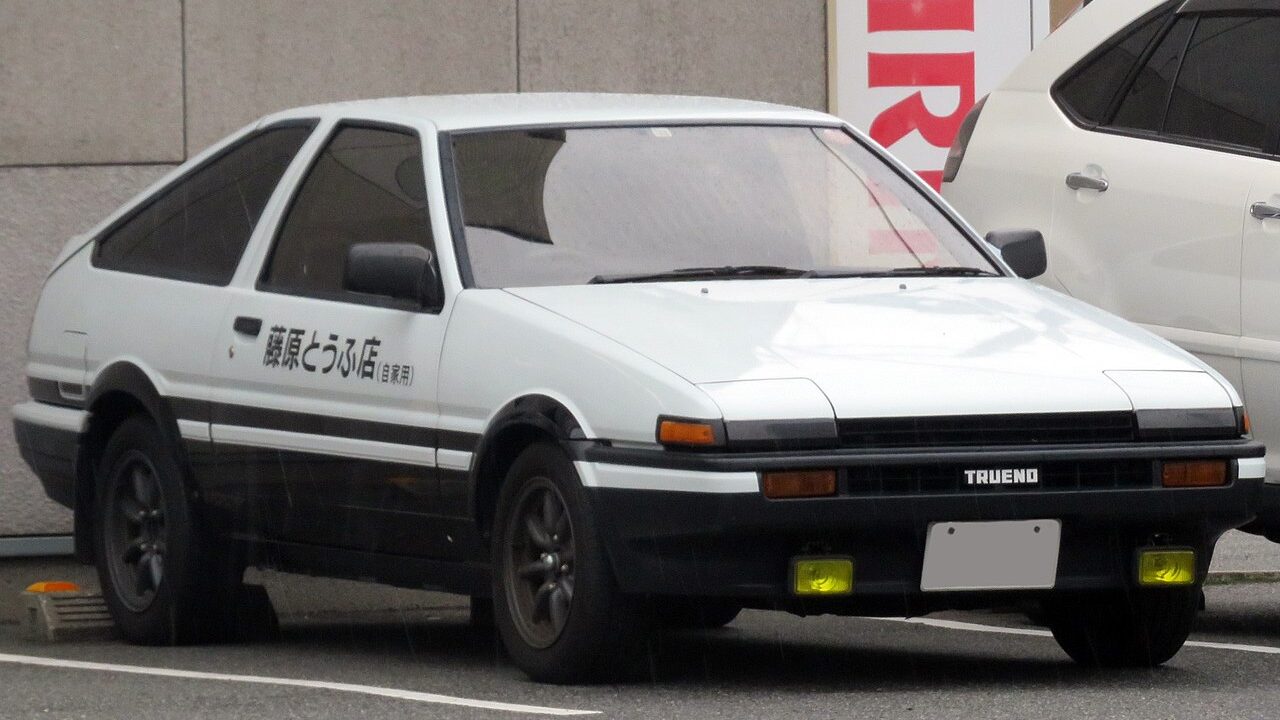
Before Initial D made it a worldwide icon, the AE86 was already earning its stripes on Japanese mountain roads. This lightweight rear-drive Corolla from the mid-1980s featured a high-revving 1.6-liter 4A-GE engine producing 112-128 horsepower depending on the market.
What it lacked in raw power, it made up for with phenomenal balance, quick steering, and a chassis that communicated every nuance of the road surface. The front-engine, rear-drive layout in a compact package created a car that rotated beautifully through corners and taught drivers to maintain momentum rather than relying on brute force.
Values have skyrocketed in recent years, with clean examples commanding prices that would have seemed absurd a decade ago. Despite the cost, the AE86 remains a bucket-list car for drifters who appreciate the purity of a lightweight, momentum-based approach to going sideways.
BMW E36 3-Series

BMW might not have intended the E36 3-Series to become a drift missile, but the aftermarket had other ideas. Produced from 1992-1999, models like the 325i and 328i offered silky-smooth inline-six engines making about 189-190 horsepower in stock form, rear-wheel drive, and that characteristic BMW balance.
The chassis is robust, the steering communicative, and the engine bay accommodates everything from turbo kits to full engine swaps with relative ease. Professional drifters have pushed these cars to incredible limits, proving their capabilities on competition circuits worldwide.
The combination of affordable entry price, parts availability from decades of production, and proven reliability has made the E36 a favorite in the grassroots and professional drift scenes alike. While newer BMWs have gotten heavier and more complex, the E36 represents a sweet spot of analog feedback and modern reliability.
Nissan Silvia S15

The S15 Silvia represents the pinnacle of Nissan’s lightweight sports car evolution, even though it never officially made it to American shores. Running from 1999-2002 in Japan, the S15 featured the turbocharged SR20DET engine producing 247 horsepower in Spec-R trim, wrapped in aggressive styling that still looks modern today.
The chassis refinements over previous generations gave it sharper handling and better feedback, while Spec-R trims used a factory helical limited-slip differential, making them drift-ready from the showroom. Its 2,730-pound curb weight and balanced chassis made it incredibly agile, capable of quick transitions and precise angle adjustments.
In the US, eligibility under the 25-year exemption depends on the car’s month and year of manufacture, so only early production S15s are currently straightforward to import under that rule, and later build dates still require waiting or other compliance paths. The combination of turbocharged power, lightweight construction, and refined handling makes it easy to understand why the S15 commands premium prices in markets where it’s legal.
Ford Mustang (S197/S550)
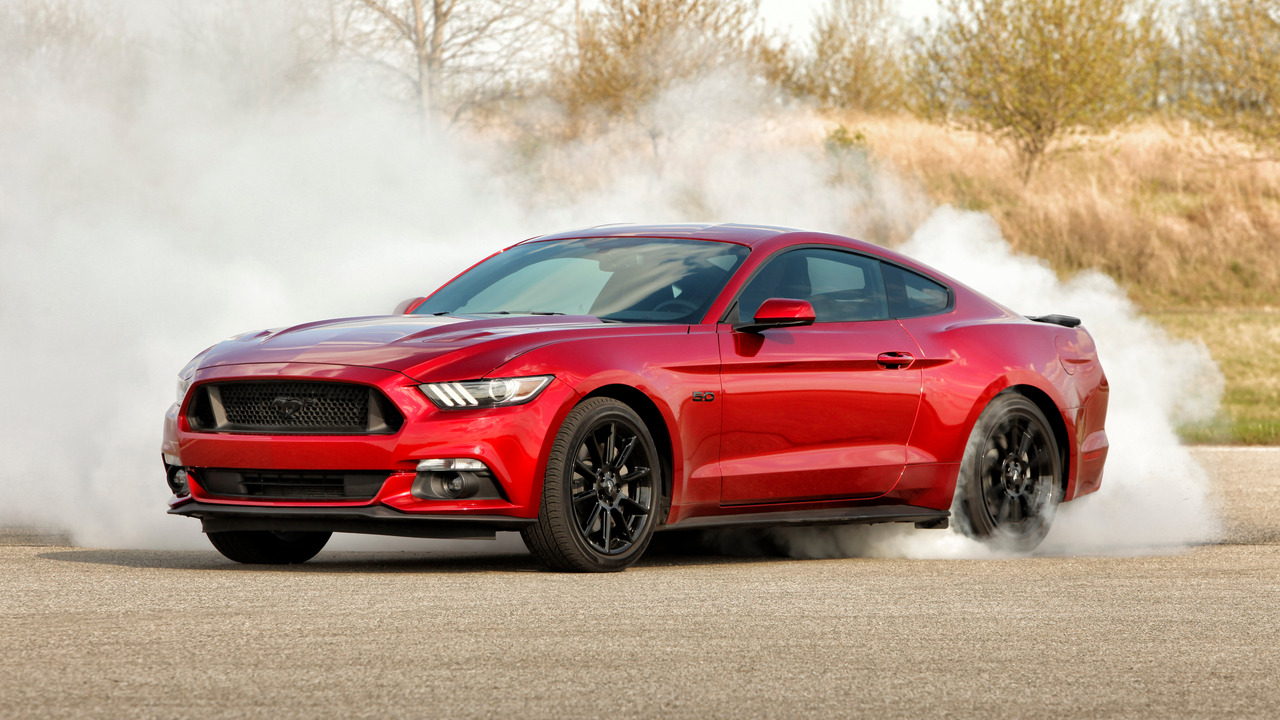
Classic pony cars have always had the power for drifting, modern Mustangs finally gave it the finesse to match. The S197 generation (2005-2014) and especially the S550 (2015-2023) transformed the Mustang from a straight-line specialist into a competent corner carver.
With V8 options ranging from about 300 horsepower in early S197 GT models to about 450-460 horsepower in later S550 Mustang GTs, plus 480-horsepower special editions like the Mach 1, there’s never been a shortage of thrust. The addition of independent rear suspension in the S550 generation dramatically improved handling characteristics, giving drivers the control needed for precise drift angles.
Formula Drift champion Vaughn Gittin Jr. has championed the Mustang platform for years, proving these cars can hang with traditional Japanese drift machines. The combination of accessible power, solid aftermarket support, and that unmistakable V8 soundtrack makes modern Mustangs a compelling choice for anyone wanting to go sideways with American flair.
Nissan 350Z/370Z

Nissan’s Z cars brought V6 power and refined handling to the drift scene in a more substantial package. The 350Z (2003-2009) and its successor the 370Z (2009-2020) featured naturally aspirated V6 engines producing 287-332 horsepower depending on the year and trim.
With their longer wheelbase, wider track, and near-50/50 weight distribution, these cars offered stability and predictability that made them forgiving for learning and devastating in experienced hands. The VQ-series engines have proven reliable even under the stress of sustained drifting, while the chassis responds well to suspension modifications.
Professional drifters like Chelsea DeNofa have campaigned these platforms successfully, demonstrating their capabilities against stiffer competition. While they’re heavier than compact Japanese sports cars at around 3,300-3,500 pounds, that heft translates to momentum that can be advantageous for maintaining longer, more committed drifts.
Toyota Supra (A80)

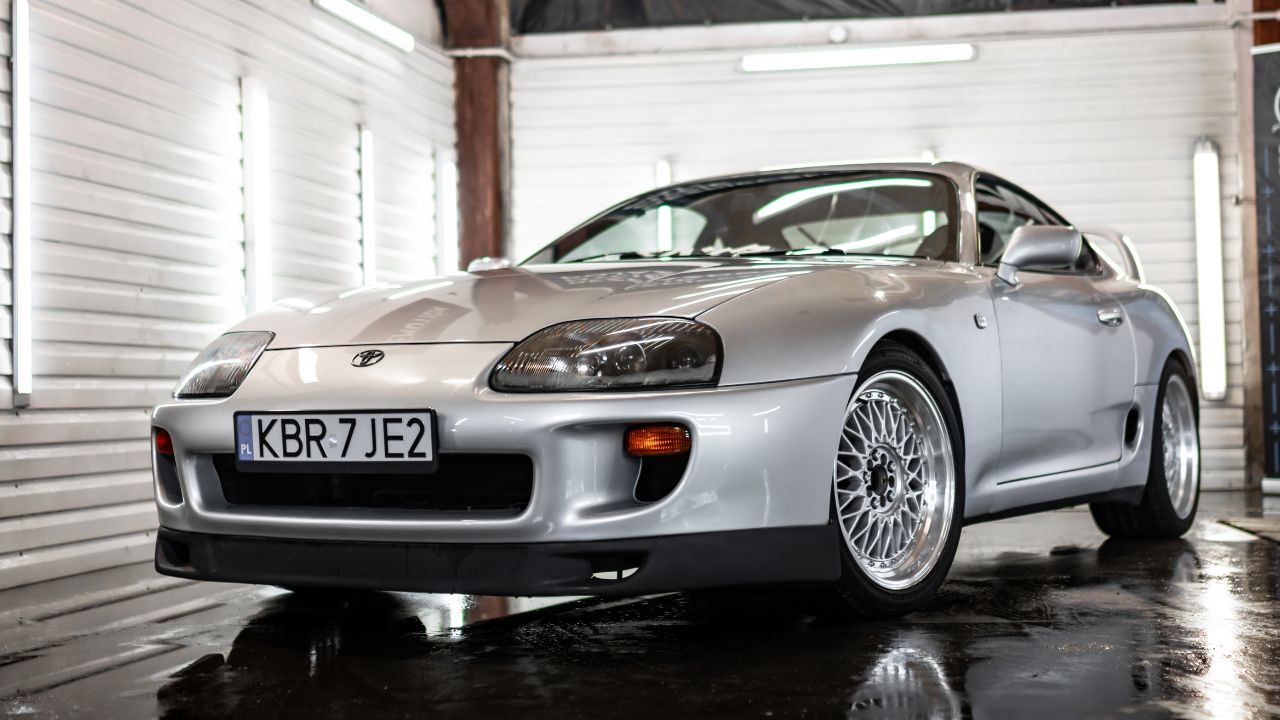
The fourth-generation Supra needs little introduction among automotive enthusiasts, having achieved legendary status well before a certain movie franchise immortalized it. Powered by the 2JZ-GTE twin-turbocharged inline-six producing 320 horsepower from the factory, this engine became famous for its ability to reliably handle massive power increases.
The robust rear-wheel-drive platform, sophisticated suspension geometry, and near-perfect weight distribution made it equally capable on road courses and drift tracks. While the Supra’s weight of around 3,400 pounds made it heavier than some drift favorites, that mass became an asset when maintaining momentum through long, sweeping corners.
The aftermarket’s devotion to the platform means virtually any performance goal is achievable, with some drift builds pushing well over 1,000 horsepower. Values have climbed into six figures for pristine examples, but for those who can afford one, the Supra represents the ultimate build platform.
Chevrolet Corvette (C5/C6)

Corvettes might seem like an unconventional choice, but their front-engine, rear-wheel-drive layout and V8 power make them surprisingly capable drift machines. The C5 generation (1997-2004) and C6 (2005-2013) started around 345 horsepower in early base form and ran through roughly 400-436 horsepower in standard C6 trims, with much higher factory outputs available in Z06 and ZR1 versions, wrapped in fiberglass bodywork that kept weight reasonable at around 3,200-3,300 pounds.
The transaxle layout, with the transmission mounted at the rear axle, creates excellent weight distribution that aids in balance during transitions. While not as common in drift competitions as Japanese cars, Corvettes have found a following among drivers who appreciate American V8 torque and the unique challenge of drifting a longer-wheelbase platform.
Parts availability is excellent thanks to GM’s massive dealer network and enthusiast community, making maintenance and modifications straightforward. For drivers wanting to stand out from the sea of Japanese imports, a Corvette offers a distinctive path to sideways excellence.
Mazda RX-7 (FC/FD)

Mazda’s rotary-powered sports cars occupy a special place in drift culture, offering unique characteristics that set them apart from piston-powered competitors. The FC generation (1986-1991) and FD generation (1993-2002) featured turbocharged rotary engines producing 182-255 horsepower, but the real magic was in the chassis.
With the compact rotary engine mounted behind the front axle, these cars achieved remarkable front-to-rear balance and extremely low polar moment of inertia. This translated to lightning-quick rotation and the ability to link corners with minimal effort, though the learning curve could be steep for those accustomed to conventional engines.
The rotary’s high-revving nature and distinctive sound became part of the RX-7’s character, though reliability concerns meant many builders eventually swapped in more conventional powerplants. Despite, or perhaps because of, their complexity, RX-7s remain highly sought after by drifters who appreciate their unique approach to going sideways.
Lexus IS300

Toyota’s luxury division might not seem like an obvious source for drift cars, but the IS300 packs a dirty little secret under its refined exterior. From 2001-2005, this sport sedan came equipped with the naturally aspirated 2JZ-GE inline-six producing 215 horsepower — the same legendary engine family as the Supra, just without the turbos.
The four-door platform weighs around 3,200 pounds but offers practical daily-driver capabilities alongside its performance potential. That 2JZ engine bay accepts turbo kits and even full 2JZ-GTE swaps with relative ease, transforming the gentleman’s sedan into a tire-shredding monster.
The combination of reliability, aftermarket support, and sleeper status has made the IS300 increasingly popular in drift circles. It’s the car you can drive to work on Monday and thrash on track Sunday, assuming you have a spare set of tires.
Subaru BRZ/Toyota 86
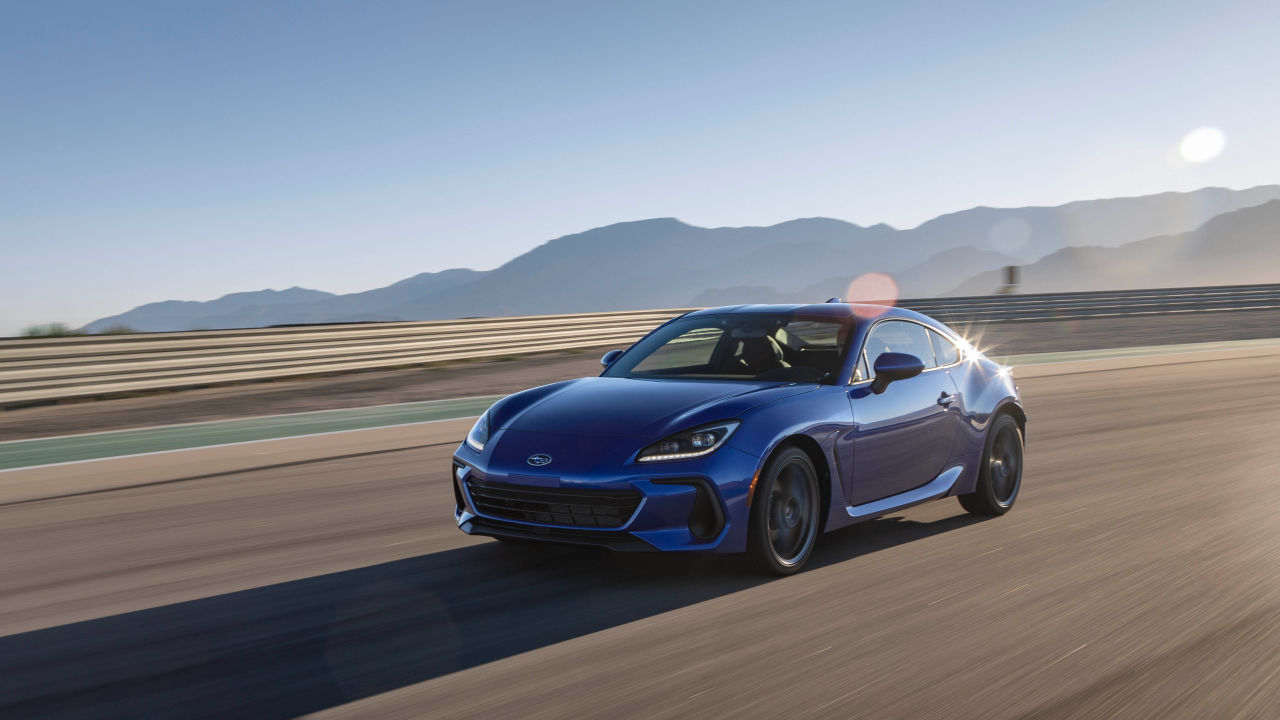
The modern interpretation of the affordable sports car formula proved that the recipe still works in the 21st century. Jointly developed by Subaru and Toyota, the BRZ and its twin the 86 (previously FR-S/GT86) feature a naturally aspirated boxer four-cylinder making 200-228 horsepower depending on generation.
With curb weights around 2,800 pounds, rear-wheel drive, and that magical 53:47 weight distribution, these cars rotate beautifully through corners. The factory-equipped stability control system even includes a “Track” mode that allows controlled slides, effectively giving drivers training wheels for learning drift technique.
While enthusiasts initially criticized the power output, that modest thrust actually makes these cars more accessible for learning proper technique without overwhelming beginners. The strong aftermarket has addressed any performance concerns with everything from supercharger kits to complete engine swaps, ensuring these modern classics will remain drift favorites for years to come.
Conclusion

From nimble roadsters to thundering V8 muscle cars, the vehicles that excel at drifting share common DNA: rear-wheel drive, balanced weight distribution, and responsive handling that rewards driver skill. What’s remarkable is how diverse this list truly is, spanning continents, decades, and approaches to performance, yet all arriving at the same sideways destination.
The 2026 Ford Mustang RTR joins this prestigious lineage, carrying forward the torch of purpose-built drift machines for a new generation. Whether you’re drawn to the affordability and simplicity of a Miata or the raw power of a Supra, there’s a drift car out there that matches your style and budget.
These machines represent more than just transportation or even performance, they’re tools for expression, where drivers paint with tire smoke and demonstrate car control at its finest. The art of drifting continues to evolve, but these legends prove that the fundamental recipe for sideways perfection remains beautifully simple.