
There was a time when Detroit ruled the asphalt and gasoline ran thicker than blood. From the mid-1960s to the early 1970s — what many still revere as the Golden Age of American Muscle — a fleet of snarling V8 beasts rolled off assembly lines with one purpose: dominate the quarter mile and make your heart race like a double shot of espresso.
This was when automakers wore horsepower on their sleeves and dared each other to push limits. This was also before emissions regulations nerfed muscle cars and put a speed bump in the race to the fastest 0-60s. These machines embodied the raw, unadulterated spirit of an oil-rich, power-hungry nation in its prime, gloriously unburdened by pesky things like fuel shortages or regulatory constraints. Ah, simpler times.
We’re heading back to the era when your dad’s garage smelled like carb cleaner and the rumble of a big block V8 could stir a soul from two counties over.
The V8 Gospel

You’ve probably noticed by now that Guessing Headlights loves to highlight American muscle cars — sometimes for their top speeds, sometimes for their performance, and sometimes because they’re ugly. It’s a time when the cars were breaking all kinds of rules, with wild looks and wilder lap times, so we love to remember all the crazy shenanigans that were happening. This time? We’re looking at muscle cars that embodied that time when power was all that mattered.
To earn a spot on this sacred list, a car had to meet some non-negotiable criteria:
- Built between 1964 and 1973: This was the sweet spot, the prime era before insurance premiums went ballistic and catalytic converters started choking the fun out of everything.
- Pack a throaty, rumbling V8 engine under the hood: No inline-six pretenders, no four-banger economy specials. We’re talking proper American iron, eight cylinders minimum. We did include some pony cars, however.
- No modern imposters: This isn’t about factory restomods or cars inspired by the originals. Just unfiltered, leaded-fuel brutes that made America’s driveways feel like Daytona.
We weighed their cultural impact, their raw performance on the street and strip, their undeniable street cred, and whether they could still make a grown man (or woman) shed a single, perfect tear when they hear that V8 fire up. These were the cars that made teenage boys instantly cooler (and probably got them into more trouble).
1964 Pontiac GTO: The Godfather of Muscle

You can’t start this list without paying homage to the original don, the car that effectively invented the term “muscle car.” The 1964 Pontiac GTO didn’t invent the V8, but it took GM’s mid-size Tempest, ripped out its sensible V6, and stuffed in a 389-cubic-inch V8 (available with 325 horsepower or a hotter 348hp Tri-Power option). It worked terrifyingly well — and birthed a revolution.
With a 0–60 mph time in the low 6-second range (which was blistering for the day) and quarter-mile times in the mid-14s, the GTO roared into high school parking lots, conquered drive-ins, and never looked back. Critics scoffed (“It’s just a Tempest with a big engine!”). Teenagers emptied savings accounts. A legend was born. It launched a horsepower arms race that made Detroit automakers collectively lose their minds, and for that glorious insanity, we’re forever thankful.
John DeLorean, the man behind it, deserves a statue made of chrome.
1970 Chevrolet Chevelle SS 454: King Kong in a Suit

By 1970, GM had finally dropped its ridiculously conservative 400-cubic-inch engine limit on intermediate-sized cars, and Chevy wasted no time going utterly bonkers. Enter the 1970 Chevrolet Chevelle SS 454, particularly the legendary LS6 variant. This beast laid down a “factory-rated” 450 hp and 500 lb-ft of torque, but everyone in the know understood that was sandbagging of epic proportions. Dyno tests routinely showed these engines pushing closer to 500 hp.
This muscle car was a brute wrapped in a surprisingly sophisticated package. It could light up the rear tires in three gears and still pull up to the country club looking respectable. It became an icon for folks who wanted both manners and enough muscle to rearrange traffic. Those dual stripes and the functional cowl induction hood are still symbols of intimidation on American roads, instantly recognizable and deeply revered. It could outrun you while also out-styling you. Just pack it up, boys.
1969 Dodge Charger R/T: The Duke of Speed

Even without the “General Lee” fame (which, let’s be honest, probably introduced more people to muscle cars than any magazine ever could), the 1969 Dodge Charger R/T would’ve been a street legend. This thing was pure menace. Equipped with either the formidable 440 Magnum (375 hp) or the ferocious 426 HEMI (425 hp), this beast combined bold, aggressive design with blistering performance. The hidden headlights and those iconic “coke-bottle” curves made it utterly seductive, while its Mopar roots made it undeniably feral. You didn’t just drive a Charger R/T; you wrangled it.
This was the car you bought if you wanted to outrun not just the cops, but maybe your own responsibilities. Its legacy is so deeply etched in American pop culture that even people who’ve never touched a carburetor recognize it by silhouette alone. It’s the car that embodies the phrase “go big or go home,” and it certainly didn’t go home often.
1968 Ford Mustang GT 390: The Bullitt Missile

Let’s get one thing straight: the Mustang may have launched the pony car craze in ’64, creating a whole new segment, but it grew serious fangs by ’68. Thanks in large part to the 390 GT fastback that Steve McQueen hurled through the streets of San Francisco in Bullitt. That Highland Green machine wasn’t just a movie prop; it was a rolling revolution, instantly cementing the Mustang’s place in automotive legend.
The 390-cubic-inch V8 (325 hp) gave it undeniable muscle, while the fastback body made it a timeless fashion statement. This Mustang perfectly paired striking looks with the kind of rubber-scorching authority that gave its bravado real substance. McQueen made it immortal. Ford made it iconic. It’s the reason countless gearheads still dream of owning a dark green fastback, even if their driving skills are more “erratic civilian” than “cool detective.”
1970 Plymouth Road Runner Superbird: The Winged Warrior
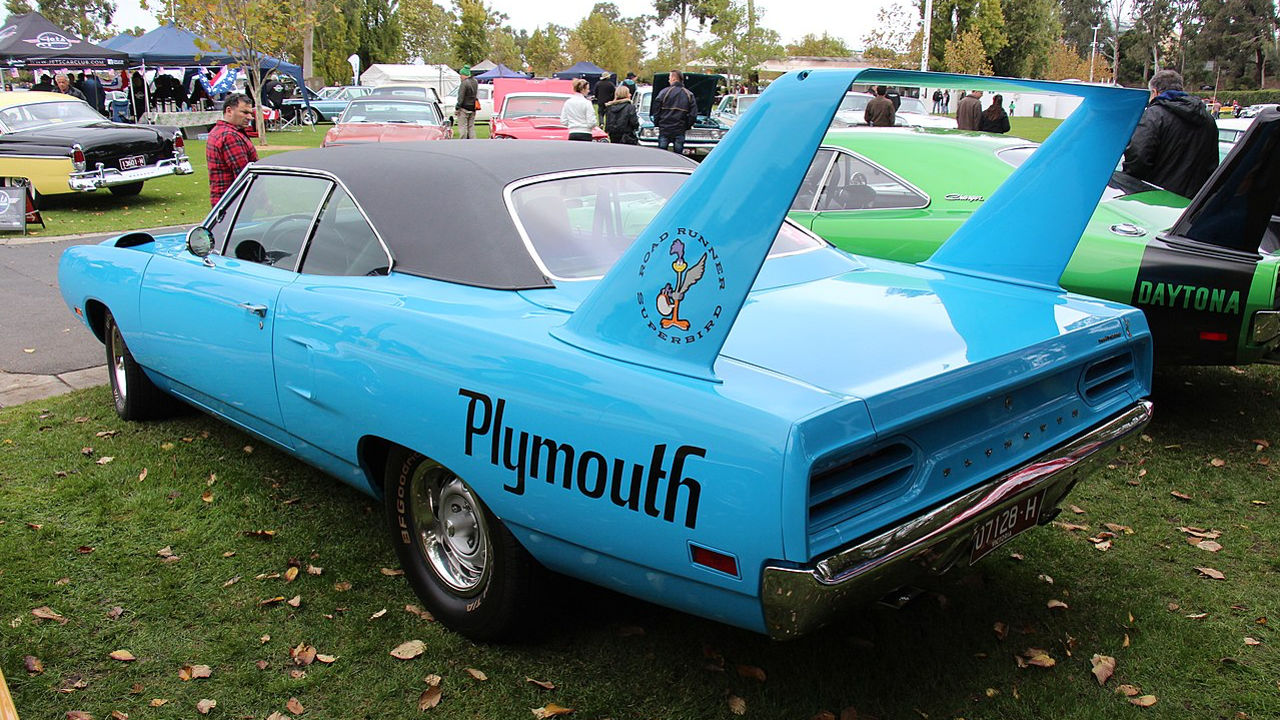
If absurdity had a horsepower rating, the 1970 Plymouth Road Runner Superbird would’ve pegged the meter and then some. Built for one reason only: to dominate NASCAR’s super speedways (specifically to lure Richard Petty back to Plymouth) and simultaneously freak out every single one of your suburban neighbors, this was Plymouth’s moonshot. That insane nosecone and towering, sky-high rear wing were born in wind tunnels, refined for maximum downforce, and scared both Ford and Chevy silly on the track.
Underneath the cartoonish skin was a serious street machine, available with either the mighty 440 Super Commando (375 hp) or the legendary 426 HEMI (425 hp). Only about 1,935 Road Runner Superbirds were made, making them literal unicorns today. But in 1970, this was the muscle car equivalent of flipping the bird to conformity, and it did it at 150+ mph.
1971 Buick GSX Stage 1: The Gentleman’s Sledgehammer

If you still think Buicks are exclusively for retirement homes and bingo nights, the 1971 Buick GSX Stage 1 is your rude awakening. This was Buick’s mic-drop moment, serving up a massive 455-cubic-inch V8 that, in Stage 1 trim, produced a mind-boggling 510 lb-ft of torque — the most of any production car at the time. (Horsepower was conservatively rated at 345 hp, but everyone knew it was much higher.)
In its iconic Saturn Yellow or Apollo White with aggressive stripes and spoilers, it looked like a Wall Street broker on a warpath. The Stage 1 tuning, with its hotter cam, revised cylinder heads, and better breathing, turned it into a street-savvy bruiser that could mop the floor with lighter, more famous competitors in a straight line. It was both a sleeper and a screamer — classy on the outside, pure chaos under the hood.
Even Car and Driver had to admit this beast could dance in a straight line better than many lighter cars, so we’re not alone in hyping this car up. Buick may have worn a velvet glove, but it was wrapped around a brass knuckle.
1970 Oldsmobile 442 W-30: The Thinking Man’s Muscle

Oldsmobile never quite got the flashy headlines of its GM siblings, but the 1970 Oldsmobile 442 W-30 was the connoisseur’s choice, the muscle car for the guy who knew what was up. Packing a serious 455 V8 (conservatively rated at 370 hp and 500 lb-ft of torque in W-30 spec) with functional ram air induction and factory blueprinted internals, it was built to embarrass more famous rivals at the strip. The W-30 was a very quick and surprisingly surgical car for its size.
Optional fiberglass hood, lighter inner fenders, and aluminum intake manifold made it lighter and more lethal than the standard 442. It was the car you bought when you didn’t need to yell to be heard. And while your neighbor was burning rubber in a flashy Chevelle, you were silently setting trap speeds he could only dream of. The 442 had the soul of a racer but the manners of a gentleman — a dual-personality masterpiece. To this day, collectors know the W-30 badge means serious business, a nod to an understated king.
1971 Dodge Challenger R/T: The Last Roar
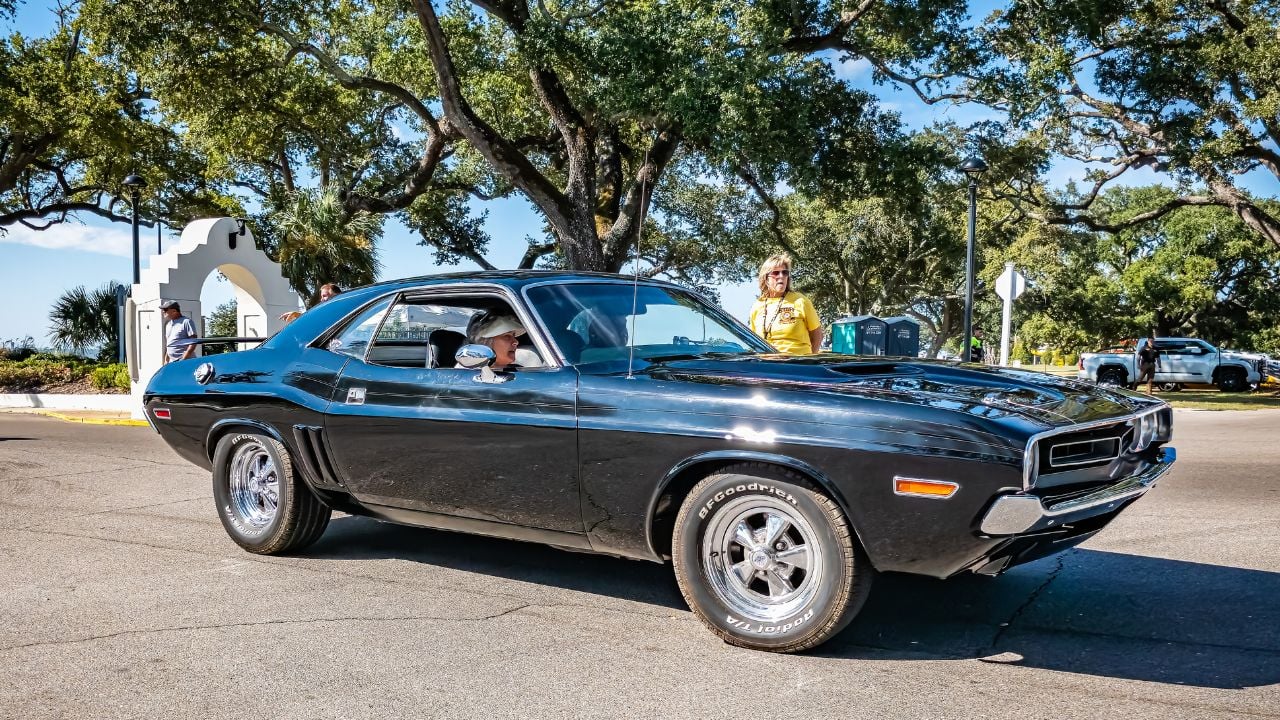
By 1971, the writing was on the wall for muscle cars — regulations were tightening, and insurance companies were getting greedy. But Dodge wasn’t going down quietly. The 1971 Dodge Challenger R/T, especially when equipped with the legendary 426 HEMI, was a glorious, defiant swan song on steroids. With its 425 hp HEMI, a functional Shaker hood that trembled with every rev, and classic E-body aggression, it was a direct punch to the establishment.
The HEMI engine was temperamental, astronomically expensive (adding nearly 50% to the car’s cost!), and arguably overkill for street use. And that’s exactly why real enthusiasts loved it. Few were sold (only 71 HEMI Challengers in 1971!), even fewer survived, but those who drove them knew they were behind the wheel of something biblical. Its wide stance and iconic coke-bottle lines gave it visual brawn to perfectly match the brute force under the hood.
This was Dodge waving a flaming flag as the muscle era burned out, reminding everyone what they’d be missing.
1969 AMC AMX: The Underdog Assassin

Everyone talks Chevy, Ford, and Mopar, but AMC was in the fight with brass knuckles and something to prove. The 1969 AMC AMX, with its unique two-seater configuration and short 97-inch wheelbase, was a surprising contender. It was light, fast, and surprisingly agile, a scrappy pitbull among Dobermans. Available with the venerable 390-cubic-inch V8 (315 hp), it could run with the big boys.
With bold paint jobs and that exclusive two-seater configuration, it felt more like an American answer to the Corvette than a traditional muscle car. Yet it absolutely belonged to the same brotherhood of burnouts and quarter-mile showdowns. If you drove an AMX, you weren’t trying to fit in; you were making a statement. Relying on neither a huge marketing budget nor flashy stripes, it made its statement through pure, unexpected performance.
The AMX was the kind of underdog that left bigger names stunned at the finish line, quietly proving that even a small company could build a mighty machine.
1970 Mercury Cougar Eliminator: The Muscle Car in a Tuxedo

If the Mustang was the wild, unruly younger brother, the 1970 Mercury Cougar Eliminator was the sharply dressed older sibling who could still throw a devastating punch. By 1970, Mercury had taken the Cougar from an upscale cruiser to a street-stalking predator. The Eliminator package added serious muscle cred with available engines like the Boss 302 (290 hp), the mighty 428 Cobra Jet (335 hp), and even the rare 429 Super Cobra Jet (370 hp) — a V8 symphony of speed and torque.
With its distinctive chin spoiler, rear wing, blacked-out grille, and hood scoop, it looked aggressive and delivered with equally fierce straight-line performance. Unlike some of its shoutier counterparts, the Cougar blended raw muscle with a sense of refinement. It had more creature comforts than a bare-bones Chevelle or Charger, making it the muscle car you could almost daily drive without rattling your teeth out. Yet, when the pedal hit the floor, it snarled like a big cat cornered.
The Mercury Cougar Eliminator may not get the same mainstream love as the Mustangs and Mopars, but for those who know, the Eliminator was Mercury’s mic drop before muscle began its slow, painful fade.
When Chrome, Gas, and Grit Ruled the Roads

The Golden Age of Muscle Cars was more than just a chapter in automotive history; it was an attitude, a rebellion on wheels. From the Pontiac GTO that kicked off the horsepower arms race to the Dodge Challenger HEMI that screamed defiance as the sun set on the era, these machines were moving, roaring monuments to American excess and ingenuity.
They were loud, proud, and unapologetically American. No traction control, no touchscreen infotainment, no hybrid badges — just a glorious V8 heartbeat, a manual shifter (if you were lucky), and a rearview mirror full of smoke.
The cars from this coveted collection defined a generation of drivers who believed in speed over subtlety, and rumble over refinement. The essence of this era was pure, unadulterated presence, beyond any considerations of efficiency or practicality. Today, they’re often museum pieces, pampered garage queens, and six-figure auction stars, but in their heyday, they were just cars you could race on Friday night.
We remember them not just for their horsepower or hood scoops, but for what they represented: freedom, raw expression, and the sheer thrill of a green light. In an age of EVs and quiet zones, the thunder of these classics still echoes, a powerful reminder that once upon a time, American roads were ruled not by algorithms, but by pure, unadulterated muscle.
Which one would you have parked in your driveway, and why would it definitely be the HEMI? Let us know!