
I have been an avid Lotus enthusiast for several years now. I bought my first one, a wrecked, rebuilt 2005 Elise, when I was 24, followed by an Evora with a blown engine a few years later. Now, I daily drive a 2010 Lotus Evora and save the Elise for track time and weekend drives, but you could say I’ve gotten a decent amount of seat time in both, including two cross-country road trips in two different Evoras.
When the Emira officially dropped, my inbox lit up with messages asking what I thought. Since then, I’ve had the chance to drive several examples and get a solid feel for what the car brings to the table. This week in Los Angeles, Lotus tossed me the keys to the first 2025 Lotus Emira, and I took full advantage of the chance to stretch it out for some mileage.
City Driving and Daily Drivability
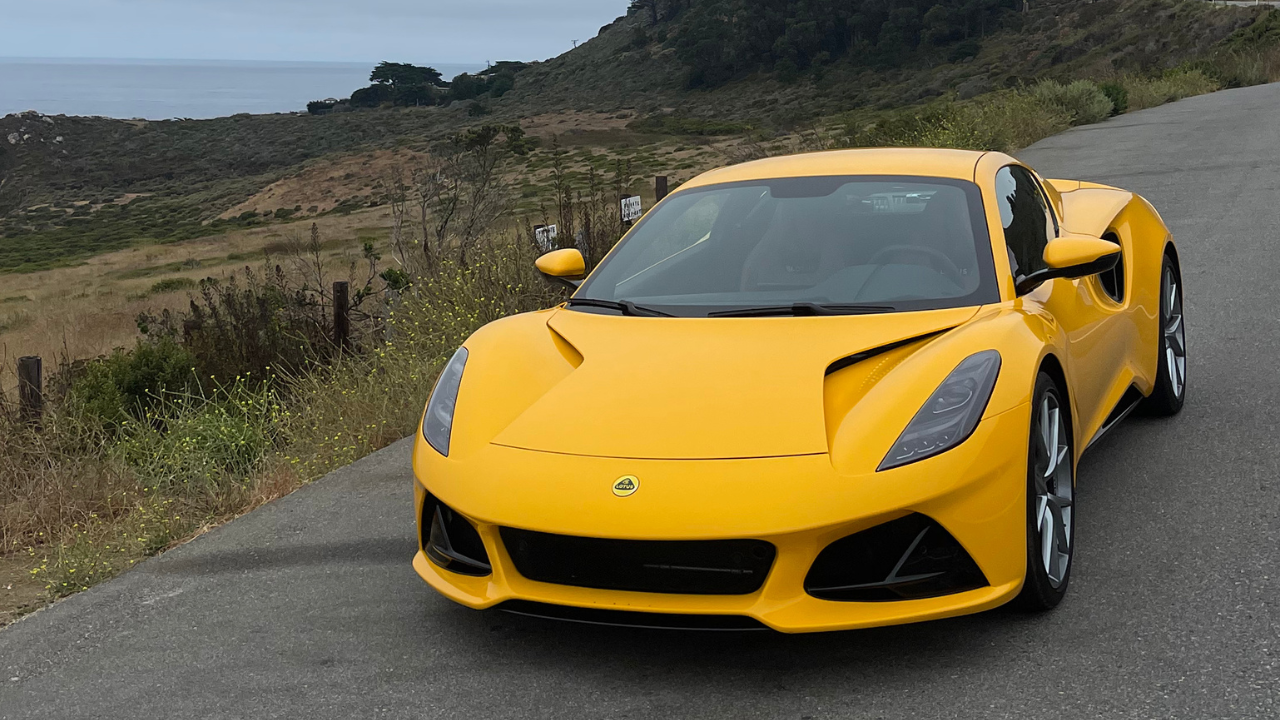
I daily drive my Evora, so that may tell you everything you need to know about my driving style and preferences. Really, why drive an SUV when I can drive my fun car every day and my sports car only when I actually need it? I live in Florida, though, so taking the Emira through the streets of LA and the curves of the Pacific Coast Highway gave me an idea of what anyone who drives the car may face in a more traffic-heavy city.
When designing the new Emira, Lotus incorporated some nice modern upgrades that enhance the driving experience and, in my opinion, also improve comfort and technology, making it a great daily driver. Similar to the Evora GT, the Emira features a lowered, slimmer door sill, making entry and exit smoother and more comfortable on a day-to-day basis. The car itself is relatively small, but the interior is spacious, with room in the passenger footwell for a small bag, even when someone is riding along, and a small amount of storage space behind the seats. There is always the trunk, too, which isn’t huge, but it’ll do for getting around.
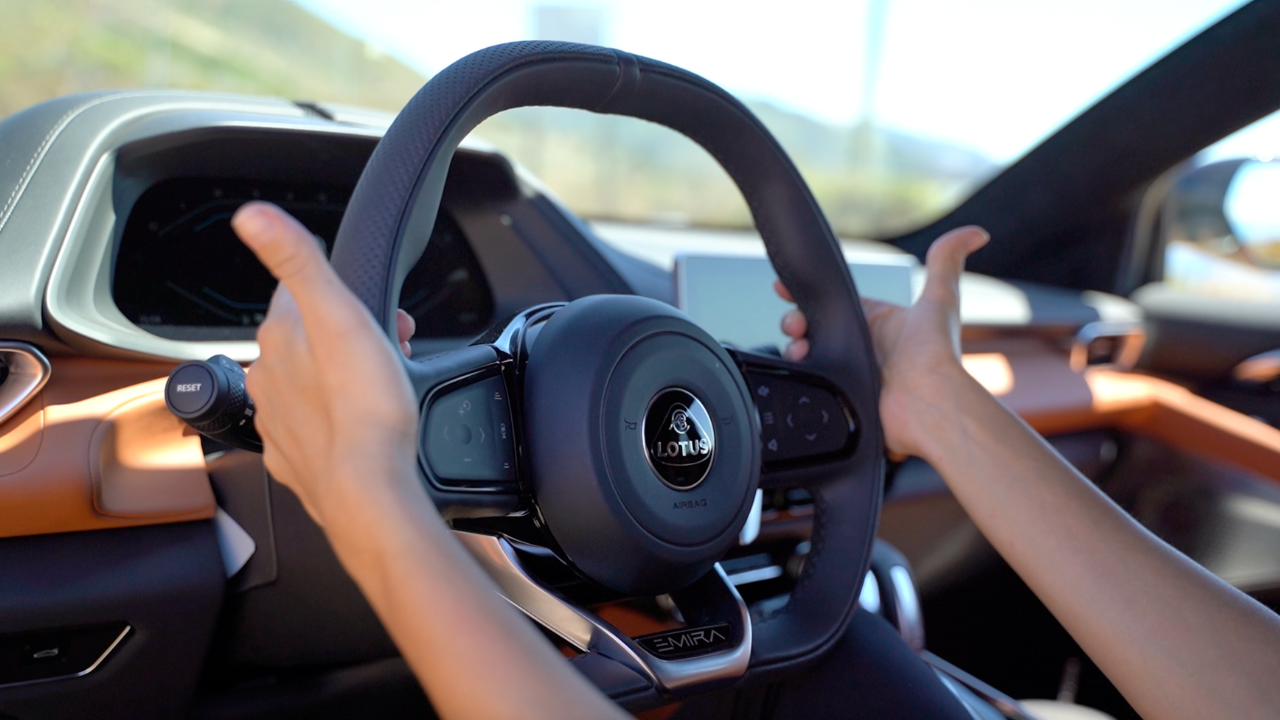
It’s equipped with Apple CarPlay and Android Auto and features a touchscreen that’s just over 10 inches. However, it doesn’t eliminate buttons and knobs for general climate control and stereo volume. I think this balances the car’s need for modern technology without completely abandoning the practicality of having easy-to-find knobs and buttons that you don’t have to glance at to use.
The Driving Experience
It’s clear that during the design process of the Emira, Lotus engineers took the time and thought to review the complaints and praises from current and previous Evora owners. The changes and upgrades implemented in the car essentially make it a better, more modern Evora, so they really couldn’t go wrong.
I’ve gained seat time in both drivetrain options, but I remain a “manual elitist jerk” despite liking the turbocharged 4-cylinder with the automatic transmission option. Unlike my S1 Evora, the Emira offers a tighter shifting mechanism with a shorter through, an engaging but comfortable factory clutch, and the exact handling around corners and bends I’ve always loved from the brand. If I had to complain about something, it’s the lack of a mechanical parking brake, which, in the scheme of things, isn’t a make-or-break factor for me.
The Emira comes with three driving modes: Tour, Sport, and Track. Of course, when I had the engine warmed up, switching to Track mode was a no-brainer. However, Tour mode was comfortable and leisurely, yet still engaging and slightly quieter, an option that may be more reasonable if you’re looking for a new daily driver.
Pricing and Reliability

The pricing for the Emira may be higher than what we’ve seen from the brand in the past, but the market has undergone significant changes in recent years. In a market where new economy cars start in the $30-40,000 range, and new SUVs from brands like Kia can range upwards of $80,000, a well-designed exotic sports car isn’t a far stretch at an MSRP of just over $100,000. By no means will I claim that to be affordable to the average household, but in this market, it isn’t the most unreasonable pricing. But here’s why I think it wins out over some of its competition…
For the V6 engine models of the Emira, the engine is a Toyota-derived, supercharged 2GR-FE engine known for its reliability and low maintenance. In fact, my best friend had the same engine in her Lexus at nearly 300,000 miles, and a quick glance at other used cars with the same platform reveals many high-mileage examples as well.
Why does this matter? For me, if I’m spending six figures on a car, I want something that will be reliable in the long term. As a DIY enthusiast who has worked on these engines, I find them truly a breeze compared to some of the other European mid-engine, rear-wheel drive platforms in the same price range.
Would I buy a Lotus Emira?
The last question is one I get often, and I go back and forth on the answer almost every time I’m asked. Would I buy a Lotus Emira? The short answer is that if it were in my price range currently, I absolutely would. I’m a tad biased towards my Evora, however, and as someone who doesn’t drive far day-to-day, I don’t mean its idiosyncrasies and quirky nature.
If you’ve never owned a Lotus before, or you’ve sold an Elise or Evora and are looking to get back into one, I genuinely don’t think you can go wrong with the Emira. For me, buying an Emira isn’t a question of “if” but rather an inevitability.