Not every standout car from the 1970s was a muscle-bound icon. The decade was full of design experiments, bold imports, and unusual coupes that still turn heads today. While many models from the era faded into obscurity, some have quietly become collector favorites or nostalgic conversation starters at local car shows.
The list below features stylish, quirky, or underappreciated cars from the 1970s, organized by their original model year.
How We Chose These Cars (Even If You Do Remember Them)

Yes, some of these cars were popular in their day. Others were rare, regional, or just plain odd. But that is exactly the point.
This list is not about finding cars no one has ever heard of. It is about revisiting the ones that stood out for reasons other than horsepower or Hollywood fame. Some had wild styling. Some were ahead of their time. Others may have once been common and simply faded from view.
To build this list, we looked for cars from the 1970s that:
- Featured distinctive design, engineering, or cultural relevance
- They are not headliners at every car show today
- Have faded from everyday memory, even if they once sold in volume
- Still offer something unusual, nostalgic, or conversation-worthy
Every car on this list was sold in the United States during the 1970s. Some came through major dealer networks, while others were imported in smaller volumes through niche distributors. If you remember them, you were paying attention. And if you don’t, they’re well worth rediscovering.
1970 Dodge Challenger R/T
Mopar’s Late-Game Muscle Star
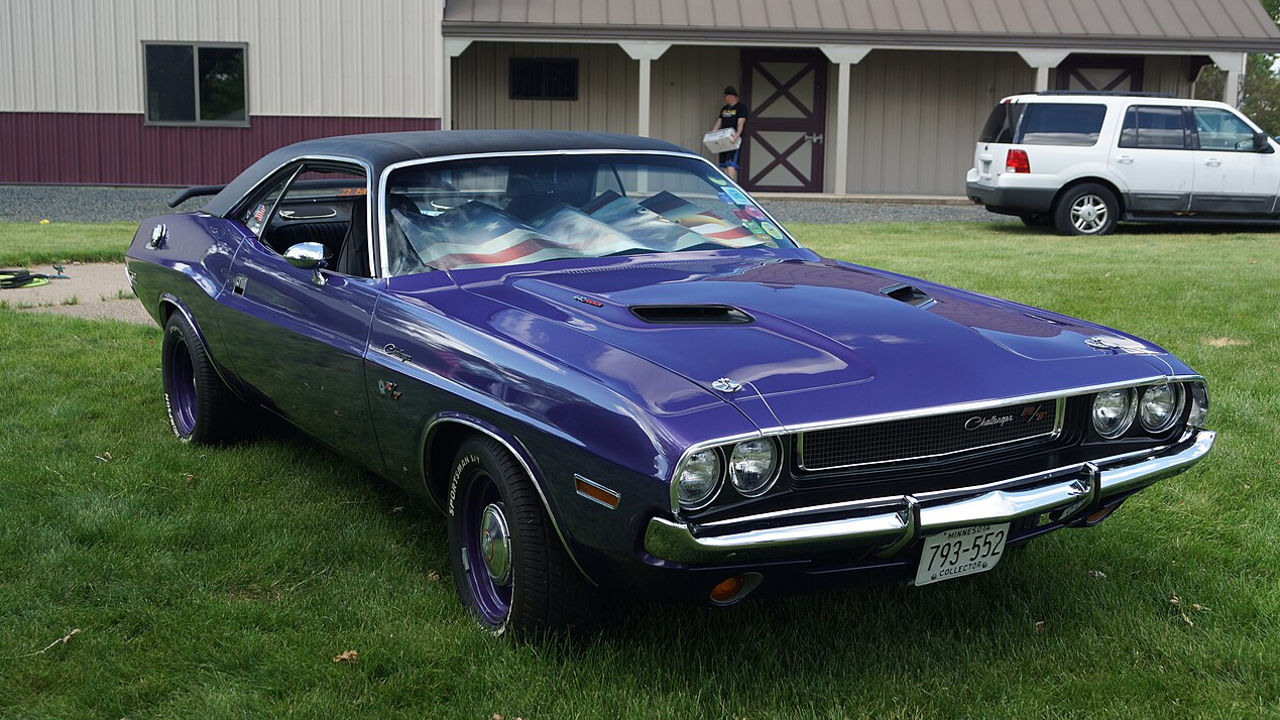
Dodge entered the pony car wars with the Challenger in 1970, aiming directly at the Mustang and Camaro crowd. The R/T version stood out with high-performance options, including the legendary 426 HEMI and 440 Six Pack.
While its styling was aggressive and well-proportioned, the Challenger only lasted in its original form through 1974 due to tightening emissions rules and a changing market. It remains a favorite among collectors but was a relative newcomer during the height of muscle car mania.
1976–1977 Toyota Celica Liftback

Japan’s Answer to the Mustang
The first-generation Toyota Celica was introduced in 1970, but the liftback body style launched in Japan in 1973 and reached North America for the 1976 model year, where it earned comparisons to American fastbacks. With its long hood, rear hatch, and lightweight construction, it offered style and efficiency.
While never a powerhouse, the Celica helped Toyota build credibility in the U.S. and brought sporty flair to the compact class at a time when fuel economy began to matter.
1971–1973 Buick Riviera “Boat Tail”

GM Styling at Its Boldest
The third-generation Riviera, designed under Bill Mitchell, featured an unmistakable “boat tail” rear inspired by 1930s Auburn speedsters. Powered by Buick’s 455 cubic inch V8, it had plenty of torque and presence.
Though controversial when new, the Riviera’s styling has since been celebrated as a brave and beautiful design move during a time when curves were giving way to boxy lines.
1971 AMC Javelin AMX

A True Underdog with Racing Pedigree
The second-generation Javelin arrived in 1971 with exaggerated fenders and a wide, aggressive stance. AMC took the car racing in Trans-Am, and the Javelin AMX became a legitimate contender against Ford and Chevrolet.
Optional engines included AMC’s 401 V8, and the car came loaded with unique color schemes and interiors. It has since become a respected oddity in the muscle car world.
1972 Datsun 240Z

The Car That Proved Japan Could Do Sports Cars
The Datsun 240Z changed perceptions of Japanese cars almost overnight. Its six-cylinder engine, independent suspension, and sleek design gave it the appeal of a European GT at a fraction of the price.
Lightweight, reliable, and a joy to drive, the 240Z built the foundation for decades of Nissan sports cars and remains a defining model in affordable performance.
1973 Citroën SM

French Luxury, Maserati Heart
The Citroën SM was a technical marvel. It used hydropneumatic suspension, power steering with zero play, and a Maserati V6 under the hood. The front-wheel-drive layout allowed for excellent traction and ride comfort. Its futuristic interior and teardrop styling looked like nothing else.
The SM was expensive and complex, but it remains one of the most ambitious grand tourers ever sold in the United States.
1973 Mazda RX-3

Rotary Power for the Masses
Before the RX-7, Mazda offered the RX-3. It was compact, light, and powered by the company’s Wankel rotary engine, which produced high revs and smooth power delivery. Available as a sedan, coupe, or wagon, the RX-3 was more than a novelty. It became a mainstay in grassroots racing and is still beloved by rotary fans.
1974 Saab 99 EMS

Quirky Looks with Serious Capability
The EMS variant of Saab’s 99 featured Bosch fuel injection and a higher-performance engine, making it one of the most engaging front-wheel-drive cars of its time. It came with a sport-tuned suspension and was originally only available as a two-door, with the three-door wagonback EMS arriving later. While not fast by modern standards, it handled well and built Saab’s reputation for safety and ingenuity.
1975–1977 Alfa Romeo Alfetta GT

Precision with Italian Flair
Designed by Giugiaro, the Alfetta GT used a transaxle layout with a rear-mounted gearbox and inboard rear brakes to achieve nearly 50/50 weight distribution. Its twin-cam four-cylinder engine revved freely and delivered an authentic European driving experience. Though prone to rust and electrical issues, the Alfetta GT was stylish, nimble, and rewarding to drive.
1975–1982 Lancia Beta Coupe

An Elegant, Affordable European Coupe
The Beta Coupe featured front-wheel drive, MacPherson strut suspension, and a DOHC engine derived from Fiat’s twin-cam design. With a coupe design credited to Centro Stile Lancia under Piero Castagnero and a comfortable interior, the Beta offered refinement at a reasonable price. Unfortunately, poor rust protection and limited dealer support in the U.S. led to early retirement for most examples.
1973 Jensen Interceptor III
British Craftsmanship, Chrysler Muscle
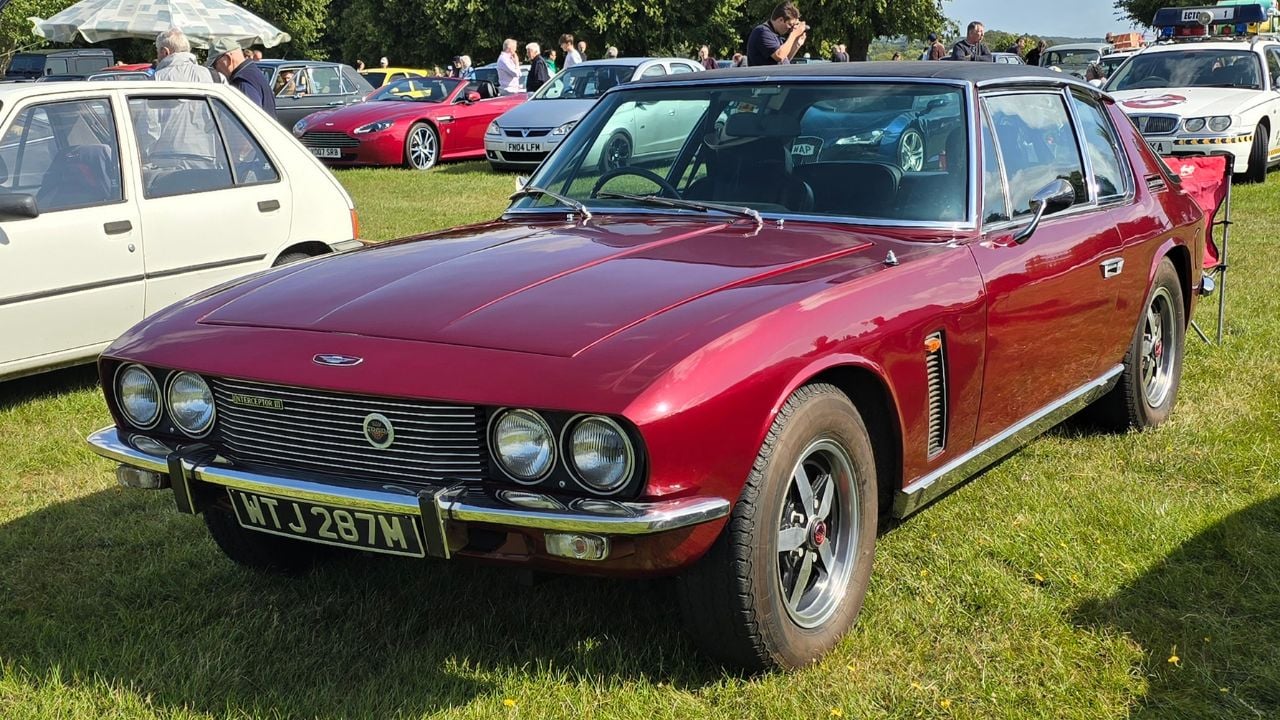
The Interceptor blended old-world craftsmanship with raw American power. This grand touring coupe was built in England and powered by a 440 cubic inch Chrysler V8. The Interceptor III updated earlier versions with improved interiors and mechanical refinement. It had seating for four, a distinctive rear hatch, and strong performance for a large luxury car.
1975 Bricklin SV-1

A Safety Car That Looked Like a Concept
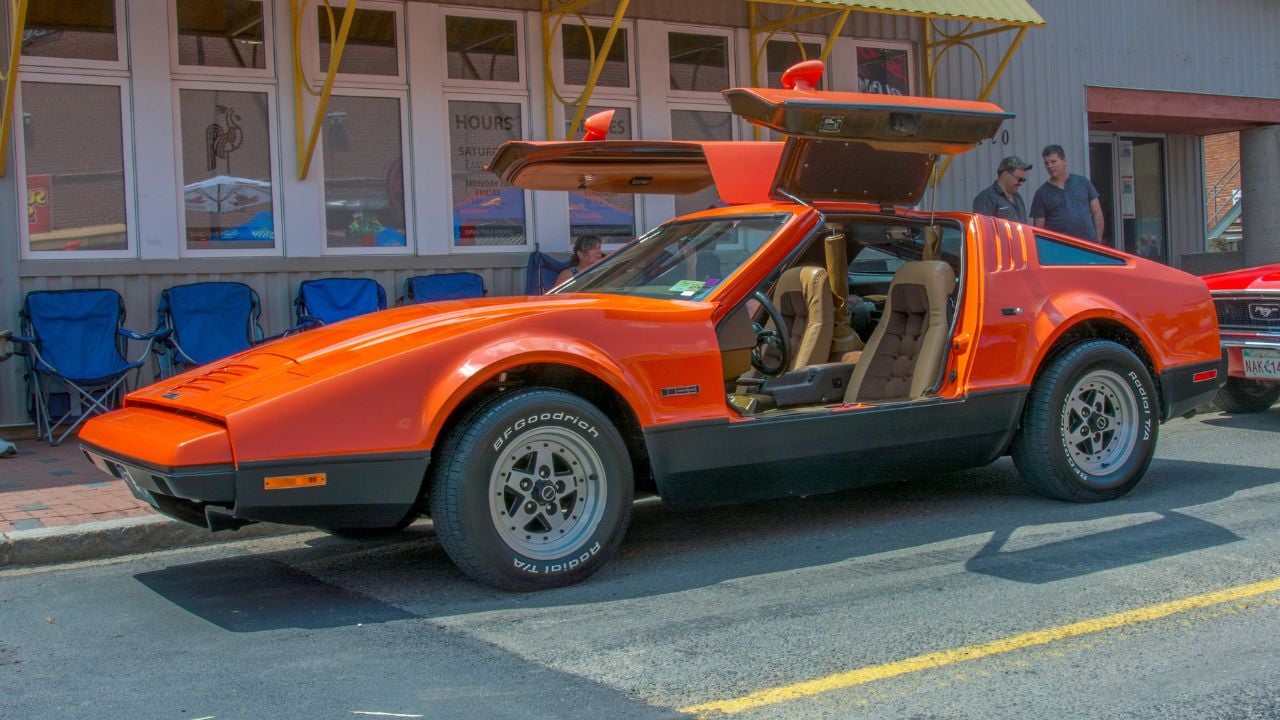
Entrepreneur Malcolm Bricklin set out to build a sports car that emphasized safety. The SV-1 used an acrylic-fiberglass body and came standard with energy-absorbing bumpers and gullwing doors. It was powered by either an AMC 360 or a Ford 351 V8. Production quality was inconsistent, and only about 2,900 were built, but its bold styling and unique mission make it a memorable experiment.
1976 Chevrolet Monza 2+2

Small Size, Surprising Power
Originally intended to house GM’s Wankel rotary engine, the Monza pivoted to traditional inline and V8 powerplants when the rotary project was shelved. The Monza 2+2 offered a sporty fastback design and could be optioned with a 5.0-liter V8, making it a legitimate small performance coupe during a time when muscle cars were fading.
1978 Subaru BRAT

The Pickup That Played by Its Own Rules
The BRAT was Subaru’s response to America’s growing demand for light-duty pickups. In a clever move to avoid the “chicken tax” on imported trucks, Subaru added rear-facing jump seats to classify it as a passenger vehicle. Quirky, capable, and charmingly odd, the BRAT built the brand’s reputation for offbeat utility.
1979 Mazda RX-7

Rotary Excellence Comes to America
Mazda refined its rotary formula with the RX-7, a sleek and balanced sports coupe that made its debut in 1979. It was light, responsive, and affordable, with an unmistakable profile and loyal fan base. The RX-7 marked the beginning of one of Japan’s most iconic enthusiast nameplates.
Final Thoughts

The 1970s were a time of change, creativity, and contradiction in the automotive world. While emissions rules and oil crises reshaped the industry, designers and engineers still found ways to build memorable cars. These vehicles may not have been the biggest sellers or the most famous names, but they all brought something special to the road.
Whether you remember seeing them new or are just discovering them now, these cars represent a rich part of automotive history that deserves another look.