If you remember the first time you saw a Lamborghini Countach poster, you already know: some doors don’t just open—they blow your mind.
Car design isn’t just about function; it’s about evoking emotion. And sometimes, that means giving the doors a little drama. From gullwing to scissor to butterfly styles, these cars don’t just let you in; they make an entrance worth remembering.
Sure, they’re not the most practical. But for those of us raised on car posters, model kits, and showroom daydreams, practicality was never the point.
Before We Open The Doors

This list is based on opinion, not lap times or auction results. These are cars chosen for their doors, not just how they open, but how they make you feel when they do.
We picked models that stand out for drama, design, and lasting impression. To keep things balanced, each brand is capped at three entries. Otherwise, the whole list would be Lamborghinis and Koenigseggs.
They’re presented in no particular order because ranking beauty is a losing game, and these cars have already won by daring to be different.
Mercedes-Benz 300 SL Gullwing

Mercedes-Benz describes the 300 SL as a sports car that “exuded elegance and innovation in equal measure.” After laying your eyes on the classic Merc for just a few seconds, everything starts to make sense.
It’s a very sophisticated and traditional Mercedes car, with a gigantic Three-Pointed Star in its grille, circular headlights, and a curvy silhouette. But once its gullwing doors opened, flapping in the wind, it looked like nothing else on the road.
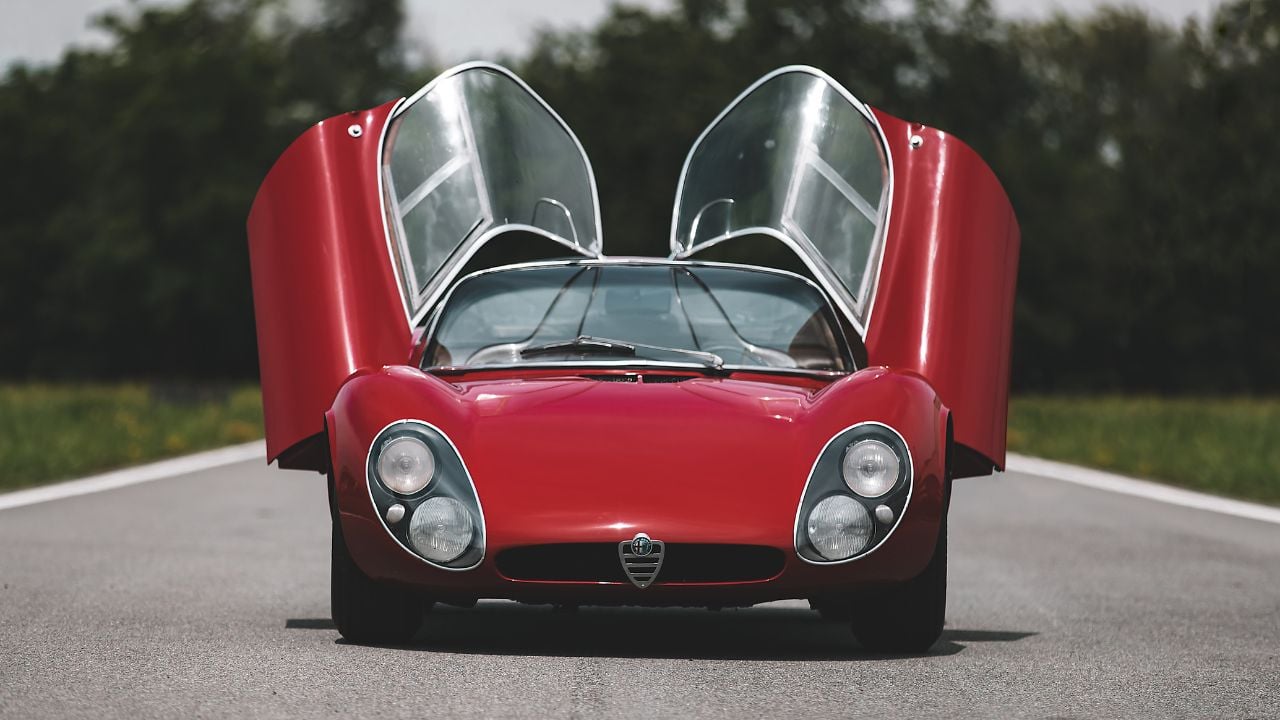
Alfa Romeo 33 Stradale

In my opinion, the Alfa Romeo 33 Stradale is one of the most beautiful classic Italian sports cars ever. According to FCA Heritage, only 18 were made. Its beauty lies in the details: tiny vents, the signature Alfa Romeo triangular grille, rounded headlights, peculiar wheels — and butterfly doors, of course.
From any angle, it’s a masterpiece. Alfa was so proud of it that they reimagined it for modern times, and honestly, they’re just as gorgeous as the original.
DeLorean DMC-12

Thanks to Back To The Future, the DMC-12 is one of the most iconic cars of all time. Designed by Giorgetto Giugiaro and engineered by Lotus, the DeLorean DMC-12 had the makings of a world-class sports car.
Unfortunately, its fiberglass body wrapped in stainless steel, alongside an underpowered V6 engine, held it back. Regardless, with those gullwing doors, the DMC-12 remains effortlessly cool.
Lamborghini Countach

The Lamborghini Countach was never subtle. For more than 15 years, all Countach models embraced its original Carrozzeria Bertone design — razor-sharp body lines, wild factory colors, and a rowdy V12 engine.
There have been countless variants like the LP 400, LP 500, and the 25th Anniversary Edition, all stuck to the same recipe. Even the modern-day reboot, LPI 800-4 has the scissor doors, too.
Vector W8
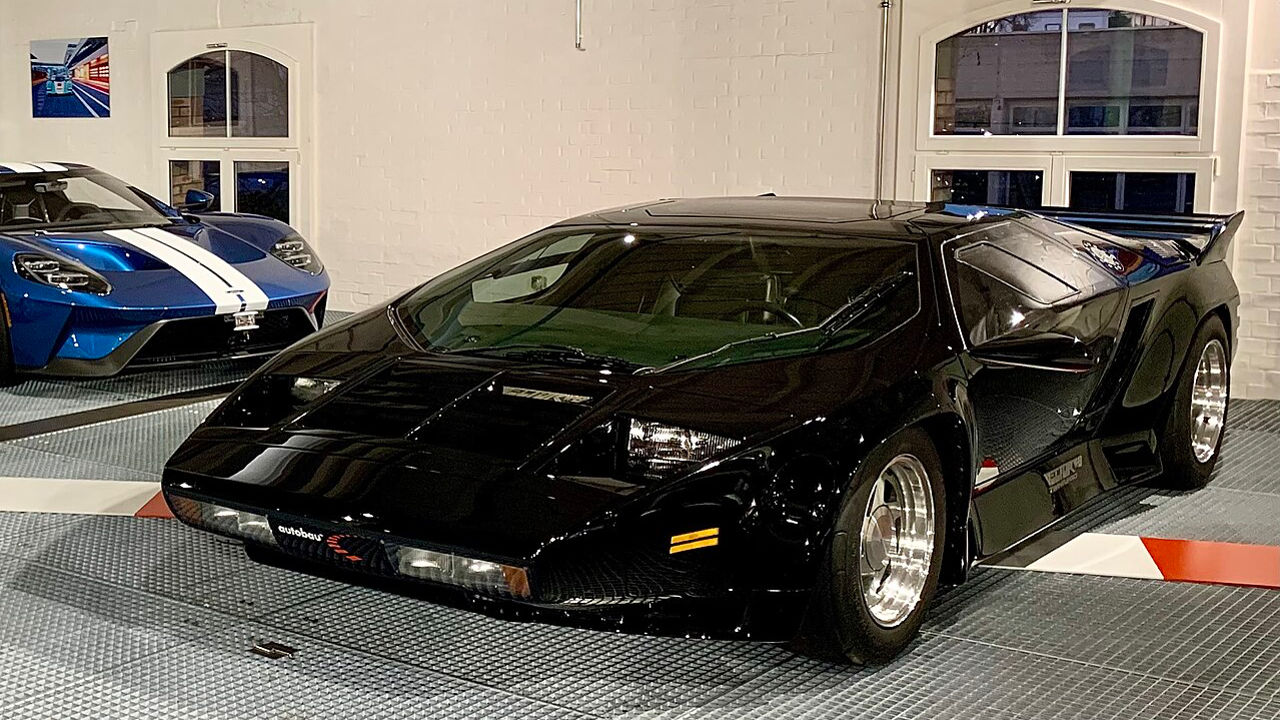
Years after the Space Race, American carmaker Vector built a bonkers supercar that shared DNA from rocketships. According to Road & Track, the W8’s body is made from Kevlar, carbon fiber, and fiberglass.
Behind the driver sat a 616-hp twin-turbo V8 that could rocket it down the quarter mile in just 12 seconds — and this was in 1991, mind you. Its scissor doors were the cherry on this sci-fi sundae. Unfortunately, Vector joined the other defunct car brands after 2021.
McLaren F1

The McLaren F1 is one of the most important cars of all time — to this day, it holds the record for being the fastest naturally aspirated car, with a top speed of 240.1 mph, according to MotorTrend.
Gordon Murray prioritized function, but somehow designed one of the best-looking cars of all time. With a central driving position, a sleek silhouette, and iconic butterfly doors, the F1 is pure supercar perfection.
Renault Sport Spider

The Renault Sport Spider is a diamond in the rough. From a brand known for practical hatchbacks came this windowless, roofless, rear-wheel-drive lunatic with scissor doors.
To make it Renault’s most extreme driver’s car, they stripped it of air conditioning, power steering, ABS, and airbags — almost like a Dodge Viper. At the end of the day, the Renault Sport Spider was a cute and weird sports car, of which just 1,800 examples exist.
Ferrari Enzo
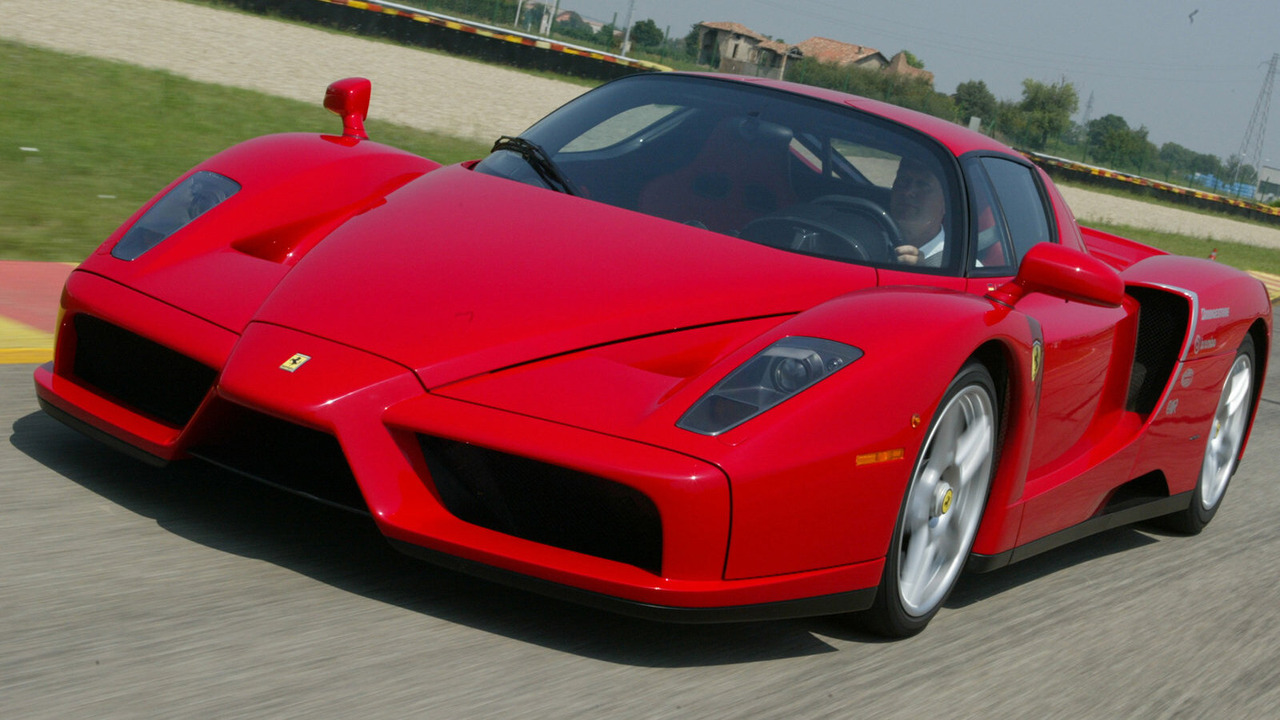
Ferrari has built a handful of halo cars over the years, spanning from the classic 288 GTO to the controversial F80. Named after the founder himself, the Ferrari Enzo is one of Maranello’s most striking creations.
Instead of utilizing countless amount of scoops and swoops, Pininfarina gave the Enzo a much more angular appearance. While more subdued than its predecessor, the F50, butterfly doors helped the Enzo reach just the right amount of outrageous.
Lamborghini Reventon

The Reventon is one of my favorite Lamborghinis ever. Lamborghini describes it as “a limited edition work of art designed to make people dream of the Lamborghinis of the future.”
Underneath it all, it’s mostly a Murcielago, but with only 20 coupes and 10 roadsters built, they’re significantly more valuable than its sibling and, unfortunately, often forgotten about. The Reventon’s design paved the way for all Lamborghini models that came after it, especially the Aventador.
Mercedes-Benz SLR McLaren Stirling Moss

The SLR was a collaboration supercar between two automotive giants, Mercedes-Benz and McLaren. During the 1990s and 2000s, the two were partners in Formula 1, with McLaren’s use of carbon fiber and Mercedes’ engines being the highlight.
This is what spawned the Mercedes-Benz SLR McLaren. A few different variants were made, all coming with scissor doors, but the most unique and best-looking example of the bunch remains the roofless, windscreenless Stirling Moss.
Mercedes-Benz SLS AMG

The SLS was the very first car Mercedes-AMG built from the ground up. At its core, the SLS is the reincarnation of the classic SL 300 Gullwing, with a massive Three-Pointed Star in its grille and gullwing doors.
But instead of it being innocently gorgeous, the SLS adopted more of a handsome, almost Tom Selleck-type of charm. While it’s easy on the eyes, its elongated hood reminds you that it hides a very capable 563-hp V8.
Koenigsegg Agera

Koenigsegg has a unique door design where the door pops out and then swivels to a 90-degree angle — they call it a dihedral synchro-helix door. All of Koenigsegg’s cars utilize this door design, and all of their cars are works of art, making choosing just two Koenigsegg entries a challenge on its own.
That said, I have to admit that the Agera range, including the Agera R, Agera S, Agera RS, and the latest Chimera, is one of the best-looking designs to ever come from Sweden.
McLaren P1

In the early 2010s, three car brands, Ferrari, Porsche, and McLaren, built the world’s very first hybrid supercars. Eventually, these three supercars became known as the Holy Trinity, with the McLaren P1 winning my heart with its spaceship-like design that doesn’t seem to age at all.
Its mind-boggling performance capabilities just sweetened the deal. Think I’m exaggerating? Have a look at Jeremy Clarkson’s Top Gear review of the P1 from back in the day.
Volkswagen XL1

I know the words Volkswagen and best-looking don’t usually belong in the same sentence — not to mention doors that go up. But here we are. What you see above isn’t a concept car but rather a road-legal sports car that Volkswagen claimed to be the world’s most economical production car.
It had a two-cylinder engine that drank diesel and an electric motor that put out a combined 74 hp. Coupled with a drag coefficient of 0.189, the Volkswagen XL1 achieved 0.9 l/100 km (261 MPG).
Pagani Huayra

Pagani doesn’t miss. The Huayra followed the Zonda and upped the ante with flashier looks, an AMG-sourced V12, and active aero. But most importantly, it gained upward-opening doors — a feature the Zonda lacked.
On the inside, the Huayra has a surprisingly stripped-down yet aesthetically pleasing cabin full of exposed gear linkages and polished metal, making it one of the most beautiful hypercars inside and out.
W Motors Lykan Hypersport

Most remember the Lykan Hypersport as the car that jumped between skyscrapers in Fast and Furious 7. In reality, it’s much more than just a movie prop. W Motors fit the Lykan with patented doors called reverse dihedral doors — they swing back at an angle, almost like the opposite of scissor doors.
Their unique door choice perfectly fits the rest of the car’s angry yet sophisticated appearance.
Maserati MC20

Maserati is no stranger to crafting jaw-droppingly gorgeous cars. But ones with doors that go up? The MC20 is the very first car to flaunt doors that stretch to the heavens while wearing the Trident badge.
Even if its doors were to open the ‘peasant’ way, the MC20 would still be neck-snappingly gorgeous, especially when specced correctly. It’s so good-looking, I’ll even forgive Maserati for not fitting it with a V8.
De Tomaso P72

With a design inspired by the De Tomaso P70 from the 1960s, a supercharged V8 that puts out 750 hp, and a six-speed manual transmission, the P72 seems to be the ultimate driver’s car.
Usually, cars that take design inspiration from something six decades old tend to be gigantic flops. But in the De Tomaso P72’s case, I don’t think it could have been designed any better. It truly is one of the most beautiful modern-day Italian cars.
Koenigsegg CC850

From one stunning car that takes design inspiration from an ancestor to another. The Koenigsegg CC850 is a modern take on Koenigsegg’s first-ever car, the CC8S. It retains the same silhouette as the old CC8S but adds modern technology like the “Engage Shift System” — a six-speed manual that can magically switch to automatic.
Its transmission alone is enough reason for me to become obsessed with it. Seems like the dihedral synchro-helix doors really were just the tip of the innovation iceberg.
BMW Z1
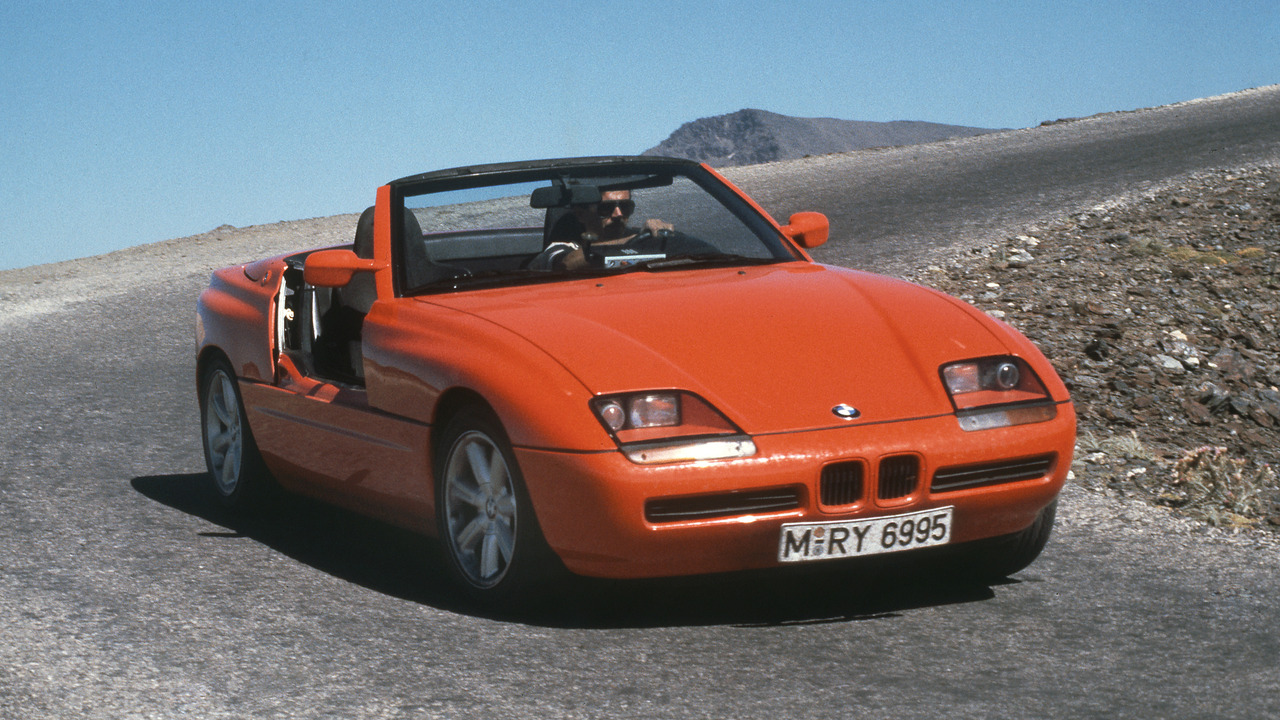
Door type: Vertical-sliding (drop-down)
Let’s be honest — the Z1 technically breaks the rules. Its doors don’t go up, out, or forward. They drop down into the body, like power windows on steroids. But the Z1 is too cool and too weird not to include.
Only about 8,000 were made, all with plastic body panels and ‘80s German futurism baked in. It’s not a supercar, but those disappearing doors are a conversation starter at any car show.
Bricklin SV-1

Door type: Gullwing
Before the DeLorean, there was the Bricklin. Canada’s attempt at a “safe” sports car resulted in something that looked like a concept sketch come to life. With a color-molded body, safety bumpers, and wild gullwing doors, the SV-1 was ahead of its time — at least in spirit, if not in execution.
Mechanical quirks and production delays killed it, but it lives on as a cult favorite among collectors who like their cars with a side of chaos.
Apollo Intensa Emozione (IE)

Door type: Butterfly
This is not a car — it’s a dragon in carbon fiber skin. The Apollo IE looks like it escaped from a video game, and its butterfly doors only add to the drama. With a screaming V12, extreme aero, and a limited run of just 10 units, it’s as rare as it is wild.
It might not have the legacy of a Ferrari or McLaren, but it absolutely earns a spot on any list of door showstoppers.
Toyota Sera

Door type: Butterfly (glass canopy)
You may not know it, but this little Toyota helped inspire the McLaren F1. The Sera’s butterfly glass canopy doors are straight out of an anime, and yet it was a real production car sold in Japan from 1990 to 1996.
Its 1.5-liter engine wasn’t fast, but with styling like that, who cares? It’s a JDM legend and one of the most accessible ways to own a car with doors that open to the sky.
Ferrari LaFerrari

Door type: Butterfly
The LaFerrari is part of the “Holy Trinity” of modern hypercars, alongside the P1 and 918 Spyder. As the Enzo’s successor, it took everything Ferrari knew and added hybrid tech and stunning butterfly doors.
Its curves are more organic than the Enzo, but it’s no less aggressive. The LaFerrari proves that even in the electric era, Maranello still knows how to make a car feel magical.
Porsche 918 Spyder

Door type: Modified swing (forward and up)
The 918 doesn’t scream for attention, which makes its exotic door mechanism even cooler. It swings upward and forward in a way that’s part Porsche logic, part theater.
With nearly 900 horsepower from a hybrid powertrain and timeless looks, the 918 is every bit as special as the P1 and LaFerrari. And yes, its door game is quietly strong.
Ford GT (2005 and 2017)

Door type: Roof-integrated swing doors
Both generations of the Ford GT have doors that slice into the roofline—a design flourish few brands even attempt. The 2005 model’s design is a direct nod to the GT40, while the 2017 version adds modern aero to the mix.
Getting in and out can be a challenge, but when the doors are open, the GT looks like it’s halfway through liftoff.
Lamborghini Diablo

Door type: Scissor
You can’t talk Lambo doors without giving the Diablo its due. As the Countach’s successor, it carried the torch with even more flair and more horsepower.
Whether it’s a VT, SV, or the bonkers GT variant, the Diablo’s scissor doors became a signature feature and a symbol of ’90s exotic excess. Loud, wide, and unapologetic — just like a proper Lamborghini should be.
Closing The Doors

I get it. Doors that go up sound counterintuitive. They need lots of space to open; they can be difficult to get in and out of, and you might bump your head if you’re not careful. But who cares? These doors aren’t about utility — they’re about theater.
Scissor, butterfly, gullwing, or any other unorthodox doors may come off as excessive or perhaps showboating. But to be honest, isn’t that the whole point?