Most car enthusiasts are familiar with the term “supercar,” which describes vehicles with exceptional design and performance — think Lamborghini, McLaren, and Porsche. A hypercar, however, is a next-level supercar with higher price tags, more horsepower, and innovative designs that push boundaries.
Not all hypercars are equal. We’ve unearthed some hypercars that seem to defy reality and push the boundaries of what we thought was possible in car design. If you want to be blown away by some of the most beautiful production cars in the world, keep reading.
How We Chose These Hypercars

I chose them because I like them! However, on a more serious note, I first had to define what a hypercar is, as there’s no official definition. Car enthusiasts generally agree that a hypercar is a name given to elite, street-legal cars that possess most of the following characteristics: They’re insanely expensive, very rare, have incredible performance, and feature outrageous design.
I then checked out lists by Goodwood, Top Gear, and similar publications to see their lists of hypercars. However, while they commonly focus on performance, this curated article is specifically dedicated to the most visually appealing hypercars available.
De Tomaso P72

The P72 appears to belong in an art gallery, not a garage. Inspired by 1960s endurance racers, it channels vintage curves and flowing lines into an impossibly elegant body. Copper trim, bulging fenders, and sculpted glass make it stand out from the usual hypercar aggression.
Underneath, there’s a supercharged 5.0-liter V8, but performance numbers aren’t the headline here. What matters is how the car makes you feel. Even the exposed shift linkage inside feels like mechanical jewelry. This is one of the most beautiful production cars ever built — period.
Aston Martin Valkyrie
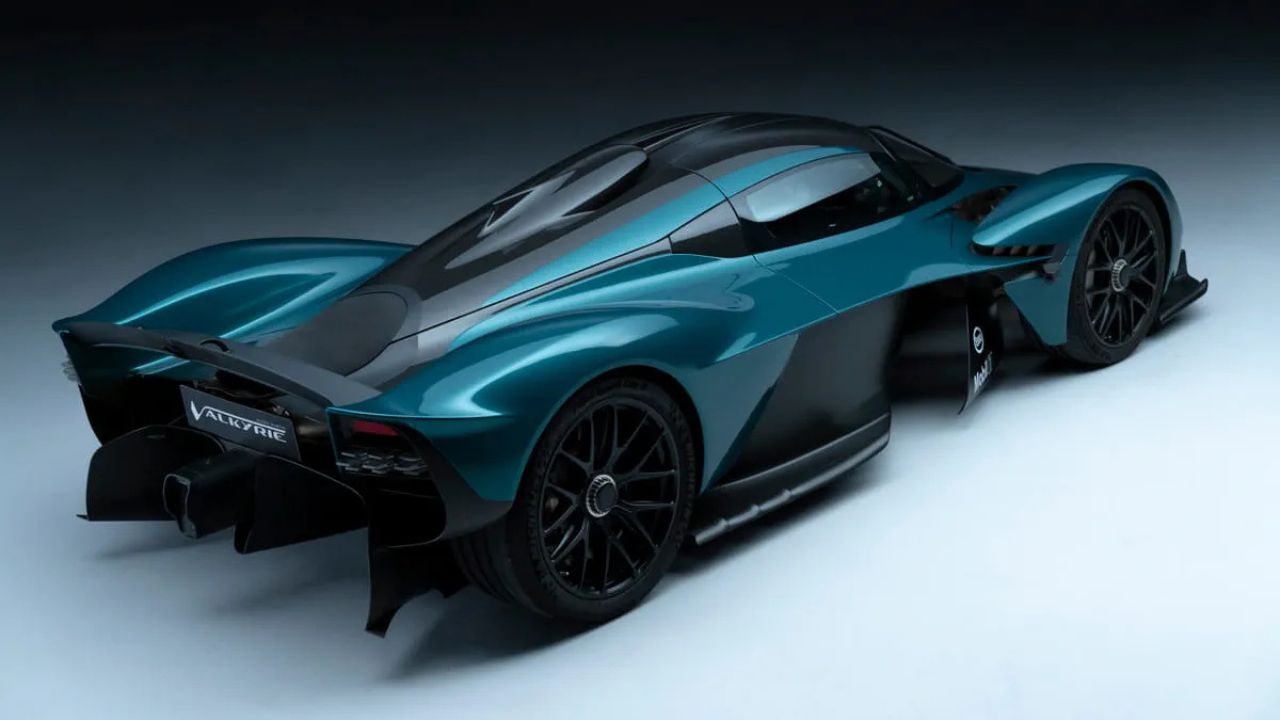
The Valkyrie was designed to bring Formula One racing to the streets, and that single-minded goal is evident in this hypercar’s uncompromising design. Made of lightweight carbon fiber with plenty of aerodynamic airways and curves, Aston Martin states that its goal was to “push the power-to-weight ratio to the max.”
Its 6.5-liter V12 engine is combined with an electric motor, generating a total of over 1,139 horsepower. It’s fair to say the Valkyrie almost flies, reaching a top speed of 250 miles per hour (mph). While the design is breathtaking, the ride is loud and uncomfortable, according to Top Gear. That’s okay; we’ll continue to look at it.
Bugatti Tourbillion

Bugatti describes the Tourbillon as “shaped by speed,” capable of reaching top speeds of over 249 mph due to its incredibly aerodynamic and thermodynamic design. The car’s every curve and line is meant to be both functional and evoke an aggressive feeling, as if it’s “ready to pounce.”
Bugatti said, “At the heart of the Tourbillon’s design ethos is the iconic horseshoe, from which all lines of the car originate, shaping the central fuselage volume.” I personally also love the door design. While opened and lifted, the Tourbillion looks poised to take off into the sky, with perfect geometric symmetry and elegant shapes, showing that every possible detail of the car was planned perfectly.
Lotus Evija

Inspired by nature, the Evija features an organic design with numerous swoops, curves, and sharp lines, extending from the front to the Venturi tunnel at the rear. Lotus states that these tunnels imitate those in the Le Mans race cars for optimized airflow, and the afterburners on fighter jets inspired the LED taillights.
To make the Evija even more streamlined, it doesn’t even have traditional door mirrors. In their place, we find fancy cameras. Its body is sleek, the carbon fiber appearing to be “shrink-wrapped” over its sharp curves. All of this, combined with nearly 2,000 electrified horses, allows the Evija to leap to 62 mph in under three seconds and reach an electronically limited top speed of 218 mph.
McLaren W1
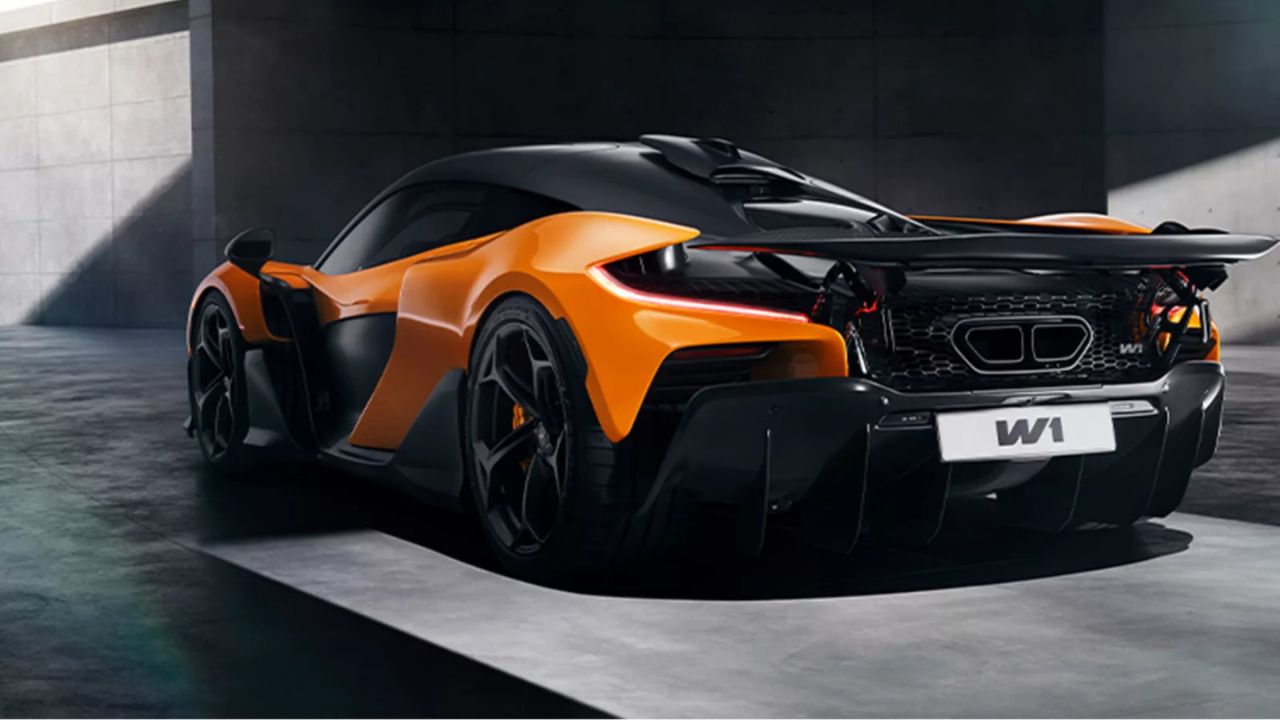
Perhaps I’m biased, as McLaren has always been my favorite luxury car brand. Still, this hypercar is bold and stunning, thanks to its sharp, aerodynamic design accentuated by two dramatic colors. McLaren points out that its carbon fiber body features a unique element, the Active Long Tail, which can extend backward by 300mm to increase the size of the diffuser, thereby creating more aerodynamic downforce. The “flow director” on the roof keeps air close to the vehicle. It’s as if the car is alive and reacting to its surroundings.
The W1 was launched on the 50th anniversary of McLaren’s first Formula 1 World Championship victory, which explains its intense focus on performance. With a top speed of 217 mph, it’s the fastest McLaren yet.
Porsche Mission X

I’ll be real — a lot of Porsche models look very similar to one another, at least to me. I get that they’re different, but they’re not different enough. But the Mission X stands out thanks to its Rocket Metallic color, as Porsche calls it, Le Mans-style doors, and extendable wing.
Interestingly, one of the standout features of this futuristic Porsche is its rapid charging capability. Car and Driver notes that it can go from a five to 80% charge in just 20 minutes. It can reach 197 mph, according to Porsche, but what sets the Mission X apart from other hypercars is Porsche’s decision to lean into the future of electric vehicle performance and design.
Apollo Project Evo

Some people may disagree strongly with me, but I firmly believe that the Evo is the most visually appealing hypercar ever. Looking like a deranged Transformer, it might’ve been imagined by a 6-year-old boy on a sugar high. The Evo features aggressively sharp angles throughout, including its X-shaped headlights and massive rear wing, giving it a nearly weapon-like appearance.
Beauty of Speed reports that the Evo features a V12 engine that produces 769 hp, propelling this sci-fi creation to 60 mph in just 2.7 seconds and reaching a top speed of 220 mph. All of its aerodynamic features make it a demon on the track as well. All that for a “mere” $3 million. TWorthit!
Czinger 21C
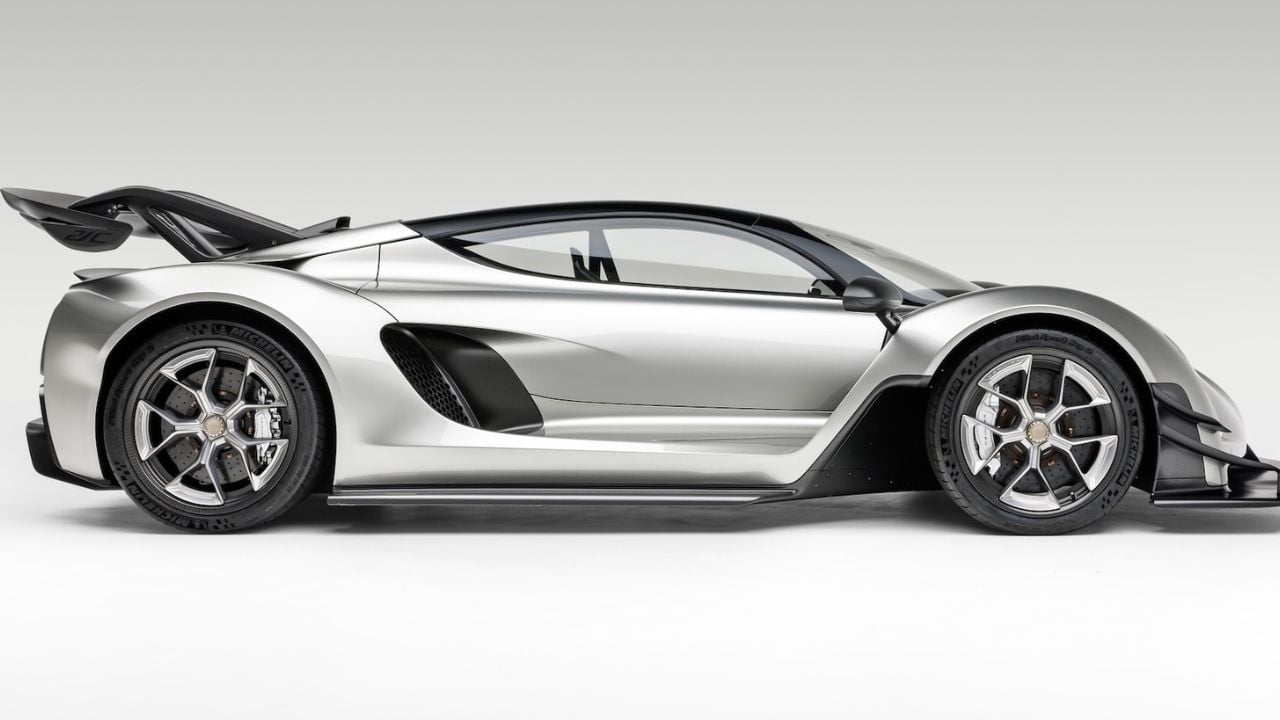
This unique hypercar utilized AI, 3D printing, and automated assembly to bring its classy and elegant design to the streets and track. It has an incredibly balanced look thanks to the massive splitter on the front and prominent wing on the back. Its aerodynamic design allows it to reach a top speed of 219 mph, according to Czinger.
Czinger also claims the 21C can reach 62 mph in just 1.9 seconds, which is mind-boggling. According to a report by Auto Car, Czinger is the fastest production car to have climbed the Goodwood hill, taking just 48.82 seconds to complete the 1.16-mile track. It also holds production records for the production car lap at Circuit of the Americas and Laguna Seca.
Koenigsegg Jesko Absolut

I’m a big fan of the ‘Egg, and the Jesko Absolut is no exception. Its twin-turbocharged V8 engine produces 1280 hp. Koenigsegg claims it has the “world’s lightest V8 crankshaft,” weighing just 12.5kg, which enables it to achieve a high 8,500 rpm rev limit.
That’s all quite impressive, but what I genuinely love about the Jesko Absolut is its design, inspired by jet fighters. It has an aggressive appearance that’s both seamless and sleek. It was designed to support its incredible performance, and according to Top Gear, Koenigsegg claims it can surpass previous records and reach a speed of 330 mph.
SSC Tuatara
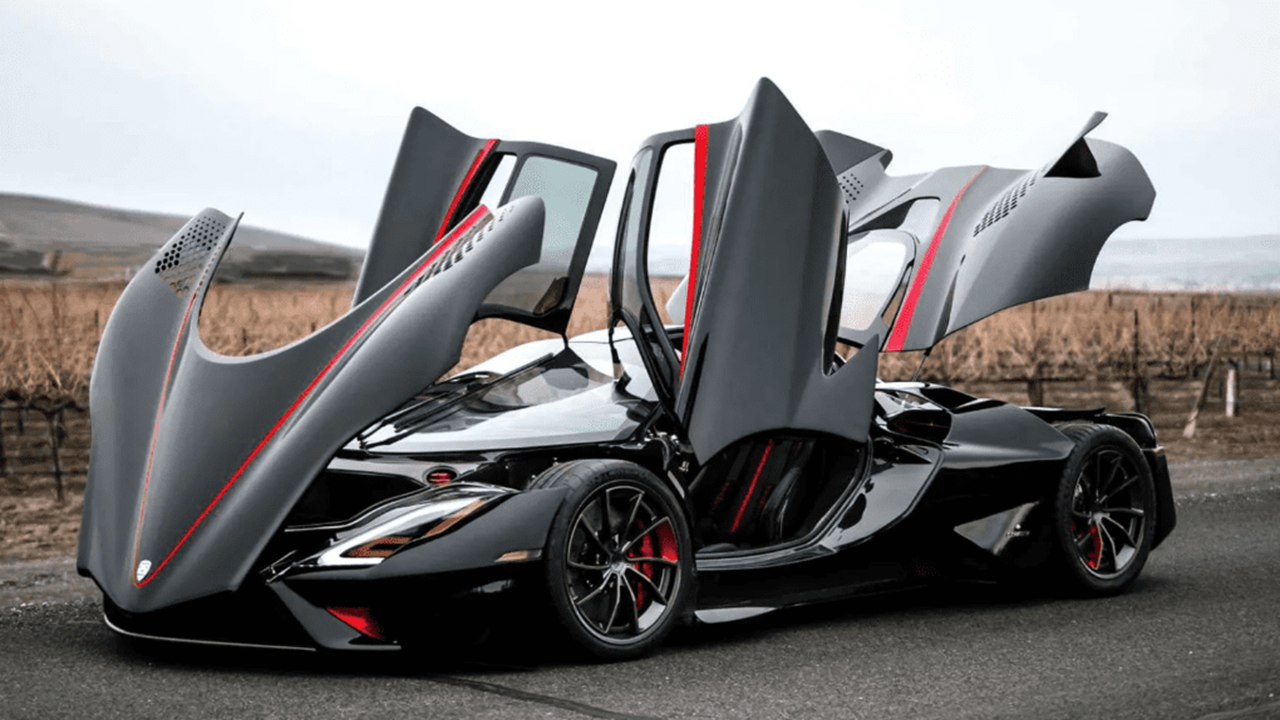
Finally, an American take on the hypercar! The SSC Tuatara proves that the United States can create jet fighter-inspired hypercars with the best of them. The expertly streamlined and aggressively styled Tuatara was made to pull in copious amounts of air and scramble to ridiculous speeds.
Let’s be honest, we all expect an American hypercar to sport a V8 engine. Talking about the twin-turbocharged V8 engine, SSC states, “The heart of the Tuatara is an engineering masterpiece in and of itself. Years of meticulous design and engineering at SSC North America culminated in unadulterated power generated from an engine built from the ground up exclusively for the Tuatara.”
Lamborghini Veneno Roadster

At first glance, I’d call this a Lamborghini on steroids. It has all the familiar shapes and stylings of a Lambo but with more aggression. It’s incredibly sharp and low to the ground, with a design that makes it appear like it’s moving at high speeds, even when standing still.
According to Lamborghini, the Veneno features a 6.5-liter V12 engine, enabling it to reach a top speed of approximately 221 mph. Thanks to its extreme proportions and razor-sharp lines, there’s no doubt that you’ll feel invincible while driving this thing on the track.
Pagani Utopia
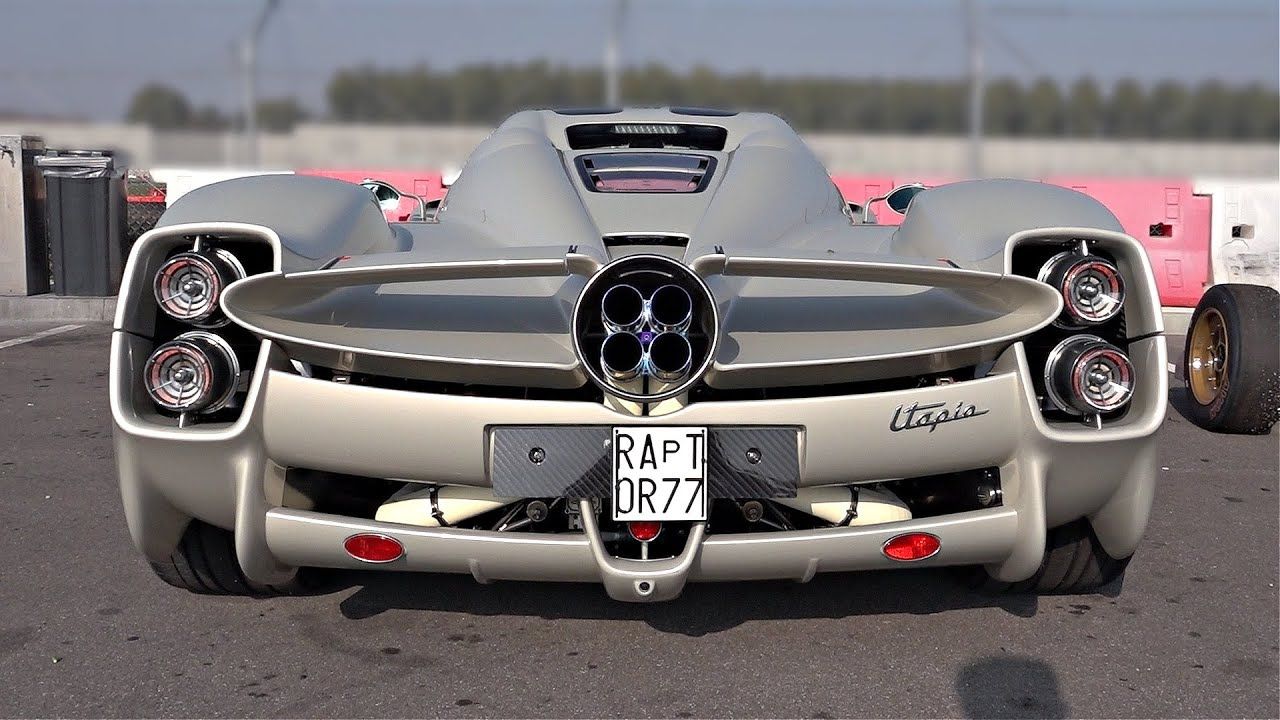
This is perhaps the most gorgeous back end of a car I’ve ever seen, with its retro-style shape and lights. Its body is made of carbon fiber and titanium, appearing like a moving sculpture from decades past. It has a unique blend of boxy and aerodynamic design, giving it a retro feel that feels so special.
The technology is anything but retro, however. It’s 864-hp V12 sends it to a top speed that’s electronically limited to 217 mph, according to Pagani. That said, the Utopia could top out at 120 mph, and I’d still include it for its distinct styling alone.
What’s Next?

Hypercars are already pushing the boundaries of performance and design, but technology continues to change and evolve.
Vehicle manufacturer Hennessey has even created a “photo-realistic hypercar configurator,” enabling you to bring your dream car to life. If you need inspiration, however, keep these gorgeous vehicles above in mind.