Badge engineering might sound like corporate jargon, but it’s one of the auto industry’s most practical—and occasionally ridiculous—ways to save money. Automakers often share platforms, parts, or entire vehicles across brands, slapping on new badges, styling tweaks, and marketing spin to create “new” models.
Sometimes, it works brilliantly, delivering sleeper hits, unexpected performance cars, or clever market plays. Other times, it produces cars that feel like inside jokes, weird experiments, or brand mismatches that make you wonder how they ever made it past the boardroom.
This article highlights some of the most fascinating, funny, and flat-out strange examples of badge engineering across decades and continents. Some are cult classics, some are cautionary tales, but all have a story.
Methodology: How We Chose These Badge-Engineered Cars
This list is a curated mix of interesting, oddball, and noteworthy examples of badge engineering and platform sharing. Some were chosen because they’re cult favorites. Others stood out for their performance, unique styling, or just the sheer novelty of how they came to be.
We’re using a broad definition of badge engineering here, including everything from outright rebadges to clever platform-sharing plays with clear DNA from another model. These aren’t necessarily the “best” in terms of sales or specs, but each one tells a story about how automakers have recycled, rebranded, or reimagined existing vehicles to serve different markets or badge identities.
Sources include automotive archives, enthusiast forums, news coverage, and manufacturer history. Ultimately, we leaned into cars that felt like fun or surprising examples of what badge engineering can produce, for better or worse.
And yes, we know Lexus could have filled half this list on its own. Toyota has never been shy about turning a well-tuned Corolla into a luxury contender with the right grille, badge, and leather trim.
Aston Martin Cygnet

When you think Aston Martin, you probably imagine a V12-powered grand tourer blasting through the Alps with Bond behind the wheel, not a rebadged Toyota city car. But in a bizarre twist of emissions compliance and branding optimism, Aston Martin decided it needed a small, fuel-efficient vehicle to offset its gas-guzzling lineup. Enter the Cygnet, a posh take on the humble Toyota iQ.
Aston added a new front fascia, quilted leather everywhere, and the kind of interior detailing you’d expect in a car worth ten times as much, which was basically the point, since the Cygnet cost around $50,000. Underneath, though, it was still a front-wheel-drive microcar with 97 horsepower.
After a couple of years, the Cygnet was discontinued, and fewer than 300 were sold in the U.S. Still, it’s since become a cult curiosity—and possibly the weirdest badge-engineered luxury car ever made.
Saab 9-2X (a.k.a. the “Saabaru”)

This quirky compact wagon earned its nickname for good reason. During General Motors’ brief ownership stake in Subaru, GM borrowed the bones of the Subaru Impreza WRX wagon; turbocharged engine, and all-wheel drive gave it a Swedish twist.
The resulting Saab 9-2X featured upgraded interior materials, additional sound insulation, and a reworked suspension for a slightly more refined ride. It wasn’t just a rebadge but a genuine attempt to Saab-ify a rally-bred Subaru.
Still, despite its solid performance and sleeper appeal, the 9-2X never found a broad audience. Sales fizzled quickly, but it has developed a loyal cult following among fans of oddball performance cars with a backstory in the years since.
Volkswagen Routan

If you ever looked at a Dodge Grand Caravan and thought, “This could really use a VW badge and a slightly different dashboard,” then the Routan was your dream come true. In the late 2000s, Volkswagen needed a minivan for the U.S. market but didn’t want to engineer one from scratch. So they partnered with Chrysler, added some Euro-inspired design cues to the aging Caravan, and called it a day.
Despite the badge, the Routan was nothing distinctly German. It used the same engines, transmission, and sliding doors as its Dodge and Chrysler counterparts. Even Volkswagen seemed unsure how to market it, launching a bizarre ad campaign featuring Brooke Shields and vague talk of “German engineering” and motherhood.
Unsurprisingly, buyers weren’t convinced. Sales fizzled, and the Routan quietly vanished from dealerships a few years later. As badge engineering goes, this wasn’t clever brand synergy. It was the automotive equivalent of a shrug.
Ford Granada / Mercury Monarch (1975–1980)

In the mid-1970s, Ford wanted an affordable, compact luxury car to compete with imports like the Mercedes-Benz 280. The result? The Ford Granada and its upscale twin, the Mercury Monarch.
Though mechanically identical, the Monarch featured fancier trim, more chrome, and slightly more refined interiors. Both models were based on the aging Ford Maverick platform but marketed as premium domestic alternatives. They were proof that badge engineering wasn’t just about cost savings in the Malaise Era but also about chasing a changing consumer perception of luxury.
Rover 400 / 45 / MG ZS

In the 1990s, Rover teamed up with Honda to create the Rover 400, a compact sedan based on the fifth-generation Honda Civic. While the underpinnings and engines were essentially Honda, Rover reworked the styling and interior to feel more British—think leather, wood trim, and a dash of formality.
One quirky and memorable feature? Some versions came with a large removable glass sunroof panel, a proto–targa top that gave the otherwise buttoned-up sedan a surprisingly open-air experience. It was very charming, very weird, and very Rover.
The 400 evolved into the Rover 45 and eventually the MG ZS, a sportier version that surprised many with its sharp handling and touring car credentials. Despite the Civic DNA, the MG ZS succeeded on British racetracks, adding a bizarre but delightful footnote to this transcontinental badge-engineering story.
Saab 9-7X

When General Motors owned Saab, it decided the quirky Swedish brand needed an SUV. But instead of designing one from scratch or borrowing from GM’s European portfolio, someone in Detroit looked at the Chevy TrailBlazer and said, “Close enough.”
The result was the Saab 9-7X. Built on GM’s GMT360 platform (shared with the TrailBlazer, GMC Envoy, Buick Rainier, and even the Isuzu Ascender), the 9-7X was reworked just enough to pass as Scandinavian. Saab gave it sleeker bodywork, a more refined interior, and—true to brand tradition—put the ignition on the center console.
It was the most car-like of its platform siblings and even offered a V8-powered Aero trim. But no amount of leather or Swedish quirks could hide its trucky roots. The 9-7X remains a rare and curious reminder that badge engineering doesn’t always blend seamlessly, especially when it’s a Saab in Chevy clothing.
Chevrolet Lumina

Most Americans remember the Chevy Lumina as a workaday mid-size sedan from the 1990s. But overseas—in places like the Middle East and South Africa—the Lumina nameplate meant something much more exciting.
In the 2000s, GM exported rebadged versions of the Holden Commodore and Monaro from Australia, selling them as the Chevy Lumina sedan and Lumina Coupe. These weren’t grocery-getters; they came with naturally aspirated V8s, rear-wheel drive, and even manual transmissions.
Essentially, they were Pontiacs without the Pontiac badges, offering serious muscle in markets that couldn’t get Holden-branded cars. The Lumina was the stealthy solution if you ever wanted a GTO or Commodore without right-hand drive.
Pontiac G8

North America was denied Australia’s brawny, V8-powered sedans for years, until GM finally brought over the VE Commodore and rebadged it as the Pontiac G8. The range-topping GXP, with its Corvette-sourced small-block V8, gave enthusiasts a true sleeper sedan with serious muscle.
Launched in 2008, the G8 arrived just as Pontiac’s fate was sealed. Despite strong reviews, the brand was shut down during GM’s bankruptcy restructuring, and the G8 was cut short. Today, it’s a rare gem—and a reminder of what could’ve been if timing had been just a little better.
Chevrolet SS

Thankfully, GM gave the Aussie Commodore one last shot in North America with the Chevrolet SS. Based on the VF Commodore, it quietly became one of the best performance car deals of the 2010s.
With understated styling, a naturally aspirated V8, and an optional six-speed manual, the SS was a true Q-car—unassuming on the outside but thrilling underneath. Unfortunately, it never gained traction with buyers and was discontinued after a short run. Today, it’s a cult favorite among those who know what they missed.
Mercury Marauder

A rare bright spot in American badge engineering, the Mercury Marauder was Ford’s unexpected attempt to inject muscle into its long-serving Panther platform. The same bones underpinned police cruisers, airport shuttles, and your grandpa’s Crown Vic.
But instead of soft springs and vinyl roofs, Mercury gave the Marauder a dose of attitude. Under the hood was a 4.6-liter DOHC Modular V8, closely related to the engine in the Mustang Mach 1, producing 302 horsepower. Paired with a beefed-up suspension and sinister styling, the Marauder was a genuine performance sedan—something few expected from the brand or the platform.
It wasn’t a sales hit, but it’s gained respect as one of the most interesting swan songs of the Panther chassis—and one of the few badge jobs that actually went faster than it looked.
Skoda Citigo

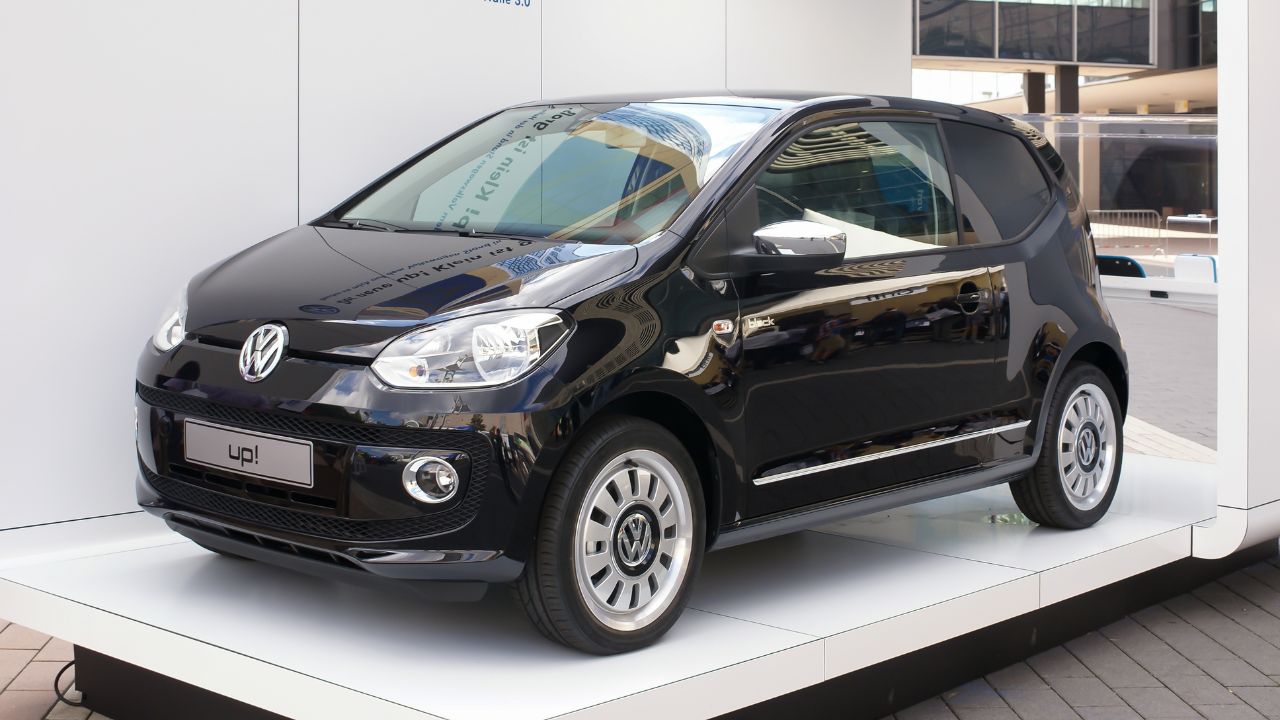
Volkswagen’s recent attempt at an A-segment city car for the European market finally paid off. After the underwhelming Fox, the VW Up! set the car market ablaze due to its grown-up nature and its ability to do basically everything, just in a much smaller form factor.
The Up! spawned two siblings, one of them being the Skoda Citigo. In almost every way, the Citigo was the same as the Up!, but with a slightly different design and even lower base price. As far as city cars go, it was basically impossible to beat.
Kia Elan

When you think of lightweight British roadsters, “Kia” probably isn’t the first name that comes to mind, but in the mid-1990s, that changed. Lotus sold the rights to its front-wheel-drive Elan (the M100 generation) to Kia, which gave it a minor facelift and rebadged it for the South Korean market.
Under the hood, the Kia Elan kept the Isuzu-sourced 1.8-liter turbocharged engine intact and most of the Lotus chassis tuning. It wasn’t quite as sharp as the original, but it was still a fun little car, especially for a Kia in the 1990s.
A few hundred were built, making it one of the rarest and most unexpected badge-engineered sports cars ever. If you ever see one in the wild, know you’re looking at a Korean-built Lotus.
Mercury Capri (1991–1994)

The early ’90s Mercury Capri is one of the more convoluted examples of badge engineering. Developed by Ford of Australia and based on Mazda 323 mechanicals, the Capri combined Ford’s global parts bin in a front-wheel-drive convertible designed to compete with the Mazda Miata.
In Australia, it was sold as the Ford Capri. In North America, it showed up with Mercury badging and left-hand drive, and not much else changed. Underneath, it shared its platform, engines, and DNA with Mazda compacts of the era—complete with a turbocharged version for extra fun.
It didn’t quite catch on, partly due to awkward styling and middling build quality. Still, Ford’s global strategy is a curious example: it was engineered in Australia, powered by Mazda, and sold as a Mercury. What could go wrong?
Cadillac Catera

Before the CTS brought Cadillac back into the performance conversation, there was the Catera—essentially a rebadged Opel Omega, sold stateside in the late 1990s.
GM hoped its German roots would inject some much-needed Euro flair into Cadillac’s aging lineup. Instead, buyers got a rear-wheel-drive sedan with decent ride quality but underwhelming performance. The 3.0-liter V6 made 200 horsepower, but at nearly 3,800 pounds, the Catera lumbered to 60 mph in about 8.5 seconds, according to MotorTrend. By comparison, a BMW 528i from the same era could do it in just over seven.
Then came the marketing. Cadillac pitched the Catera with a quirky campaign starring Zig, a cartoon duck meant to symbolize youthful energy. It backfired. Coupled with recurring reliability issues, the “Caddy that zigs” never gained traction.
The chassis had genuine promise, and the handling surprised many, but the Catera ultimately became a case study in how badge engineering can’t paper over a brand identity crisis.
Dodge Challenger / Plymouth Sapporo

In the late 1970s, the Dodge Challenger name returned, but not as the muscle car fans remembered. This time, it was a rebadged Mitsubishi Galant Lambda, also sold as the Plymouth Sapporo. Built in Japan and imported through Chrysler’s early partnership with Mitsubishi, these coupes focused on economy and comfort rather than horsepower. With four-cylinder engines and soft styling, they were a far cry from the original Challenger but remain a curious chapter in badge engineering history.
Toyota Cavalier

Yes, this really happened. In the mid-1990s, Toyota struck a deal with GM to sell the Chevrolet Cavalier in Japan, rebadged as the Toyota Cavalier.
It wasn’t just a logo swap. Toyota actually made some tweaks to suit Japanese tastes better, including a right-hand drive conversion, updated taillights, and fancier trim. But at its core, it was still a humble, underwhelming Chevy compact dropped into a market known for precision-built, reliable sedans.
Predictably, Japanese buyers weren’t impressed. The car felt foreign—literally and figuratively—and sales flopped. The Toyota Cavalier has since become a punchline in badge-engineering history. Still, it’s a fascinating example of brand experiments that probably looked better on a whiteboard than in a showroom.
Peugeot 107

Like the VW Up!, Toyota’s city car joint venture with the PSA Group spawned three nearly identical cars. Toyota’s Aygo proved to be a massive success in Europe, due to its much more innovative way of going about the engineering and design process.
The Peugeot 107 was basically the same as the original Aygo, with the only significant differences being badging and a slightly different front fascia and taillight design. That meant a super reliable, spacious, and well-equipped small car that, for many people, would be the only car they’d ever need.
Ford Ka

Ford’s second-generation Ford Ka was not developed exclusively in what can only be described as a super unlikely partnership. Underneath the characterful exterior, the Ka was based on the Fiat 500.
It also offered a bunch of Fiat powertrains, but the design clarified that the Ka wasn’t after the retro crowd. It was much more modern both inside and outside, but it didn’t lose any of its charm. The low weight and sorted chassis also made it pretty good to drive, not to mention cheap to maintain.
Opel GT

In the 2000s, General Motors finally built a genuine rival to the Mazda Miata. The Pontiac Solstice was a stylish, rear-wheel-drive roadster with genuine enthusiast appeal—and, in true GM fashion, it didn’t stay a one-off for long.
It soon gained a sibling in the Saturn Sky, which shared the same Kappa platform and powertrains but wore sleeker, more aggressive styling. Both offered an available turbocharged four-cylinder that gave them real bite. For European markets, GM gave the Sky a third identity as the Opel GT, proving once again that if a car is good enough, it can wear more than one badge.
Daewoo G2X

And if three identities weren’t enough, GM wasn’t done. Over in South Korea, the same car made one final stop as the Daewoo G2X, a direct rebadge of the Saturn Sky Red Line. It kept the turbocharged engine, aggressive styling, and everything else, except the name.
Only a few hundred were sold, making it one of the rarest and most obscure members of the Kappa-platform family. But it completes the trifecta (well, quadrifecta?) of how one little roadster lived four lives across three continents.
Saab 9-5

One of the last-ever models to be produced by the great Saab before the catastrophic bankruptcy, the 9-5 NG, as it’s known, morphed into a gorgeous mid-size sedan with styling that was ahead of its time.
The turbo four-cylinder and turbo V6 sweetened the deal even further, not to mention the fantastic experience behind the wheel. With Saab being an integral part of GM, the final 9-5 borrowed a version of the same Epsilon platform that underpinned the Opel Insignia.
Suzuki Across

This one’s a bit of a curveball. Suzuki struck a deal with Toyota to rebadge several of its hybrids to meet strict European fleet emissions targets. One result: the Suzuki Across—a lightly restyled version of the Toyota RAV4 Plug-in Hybrid.
Underneath, it’s identical to the RAV4 Prime: quick, efficient, and offering impressive electric range. But while Toyota’s version is a hit in North America, the Across is exclusive to Europe. That’s partly because Suzuki exited the U.S. market back in 2012.
It’s a smart SUV hiding in plain sight, just not one you’ll see on American roads.
Bonus: The Badge Jobs You Grew Up With

Of course, badge engineering didn’t start in the 2000s. If you were driving in the ’80s or ’90s, you probably remember seeing (or owning) one of these classic badge jobs that defined the era:
- Chevy Cavalier / Pontiac Sunfire / Oldsmobile Firenza / Buick Skyhawk
Four names, one GM compact. Pick your grille and interior trim. - Geo Prizm / Toyota Corolla
Built side-by-side in California. One wore a suit, the other wore khakis. - Dodge Omni / Plymouth Horizon
The same boxy hatch with a different badge, brought to you by Chrysler’s K-car wizardry. - Ford Escort / Mercury Lynx
You either bought it because of a rebate or inherited it from a family member who did. - Cadillac Cimarron / Chevy Cavalier
This is maybe the most infamous badge job ever. GM tried to make a luxury car out of a basic compact, and Boomers haven’t forgotten.
More Than Just a New Grille

Not every badge-engineered car is just a cynical cash grab. As this list shows, sometimes a shared chassis or familiar engine bay can lead to something unexpectedly great. Whether they were cult hits, forgotten gems, or clever ways to serve different markets, these cars prove that badge engineering can be more than just rebranding—it can be reinvention.