Military vehicles rarely become legends through style alone. The machines that last in memory usually earned their reputation by answering one brutal question better than the alternatives around them.
How do you move officers, radios, wounded soldiers, ammunition, and patrols across broken ground with one small vehicle? How do you land cargo on a beach when the port is gone? How do you carry infantry under armor without building something too heavy, too costly, or too complicated to field at scale?
The best military vehicles are not always the most powerful. They are the ones that make a horrible job repeatable. A few were crude. A few were sophisticated. Several were built in huge numbers. All of them changed what soldiers expected a vehicle to do.
The strongest designs succeed when engineering, production strategy, field repair logic, and mission fit line up at the exact moment history needs them.
Willys MB Jeep

The Willys MB became famous by solving the Army’s need for one small vehicle that could do almost everything. In 1940, the U.S. Army pushed for a quarter-ton 4×4 reconnaissance vehicle. Bantam helped establish the original concept, Willys-Overland won the key 1941 MB production contract, and Ford later built the GPW version to the same standardized wartime idea.
Its brutal job was mobility at human scale. The jeep could carry commanders, radios, stretchers, ammunition, tools, scouts, and messengers through terrain where ordinary cars and many trucks struggled. It was small enough to hide, light enough to recover, simple enough to repair, and useful enough to appear almost everywhere.
The MB did not win fame through armor or firepower. Its strength came from flexibility. Soldiers used it as a command car, ambulance, weapons carrier, liaison vehicle, reconnaissance machine, and general problem solver.
That wide mission spread turned a light utility vehicle into one of the defining machines of World War II. The jeep became legendary because it made small-unit movement possible almost anywhere an army needed people, equipment, or messages to go.
GMC CCKW

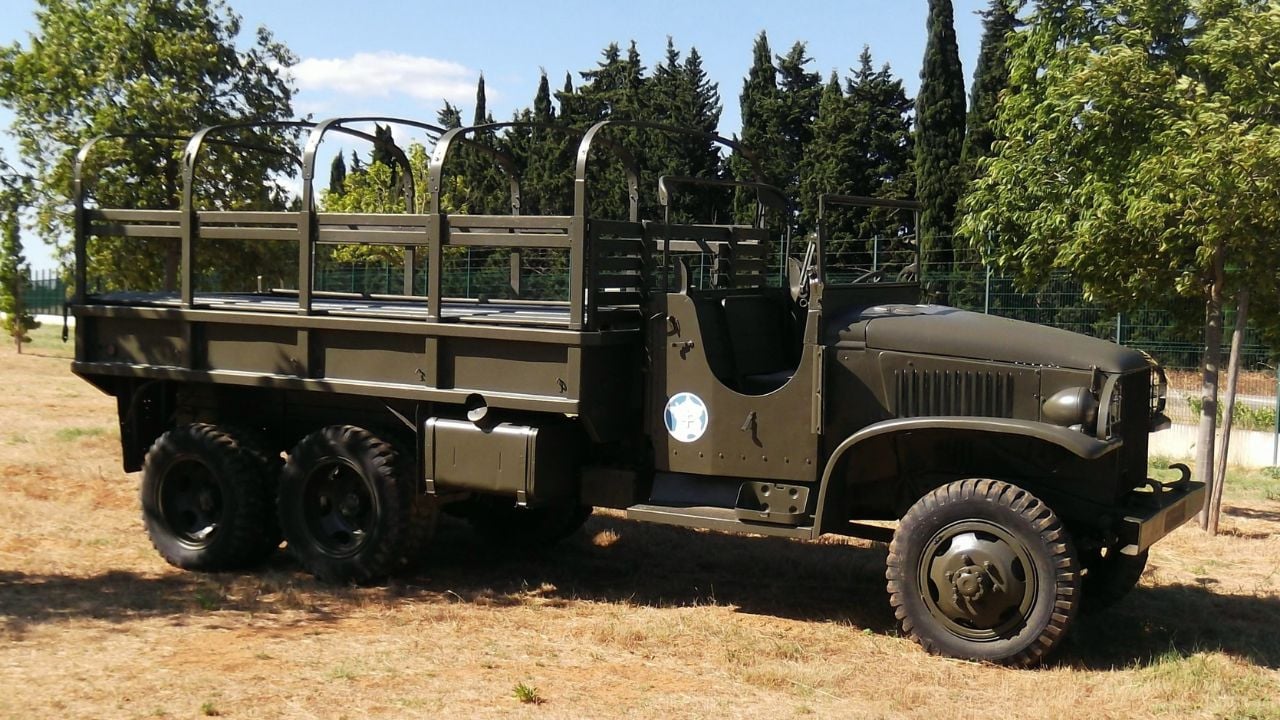
The GMC CCKW, better known as the Deuce and a Half, became famous by solving the problem every army fears most: supply. Tanks, artillery, aircraft, and infantry all depend on fuel, food, ammunition, spare parts, and medical supplies reaching the front at the right time.
The CCKW was a 2.5-ton 6×6 truck built in enormous numbers. The National WWII Museum lists 562,750 CCKW trucks produced, while broader counts that include related GMC variants can run higher. Either way, the scale made it one of the essential tools of Allied logistics.
Its job looked less dramatic than a tank duel, but the battlefield result was huge. The CCKW could haul cargo over rough roads, damaged roads, mud, snow, and improvised supply routes. It helped turn American industrial output into front-line pressure.
The genius of the CCKW was its balance. It was large enough to carry meaningful loads, rugged enough for military use, and common enough for parts, maintenance, and driver training to become manageable across an enormous force. Wars are won by movement, and this truck moved the things that kept armies alive.
DUKW
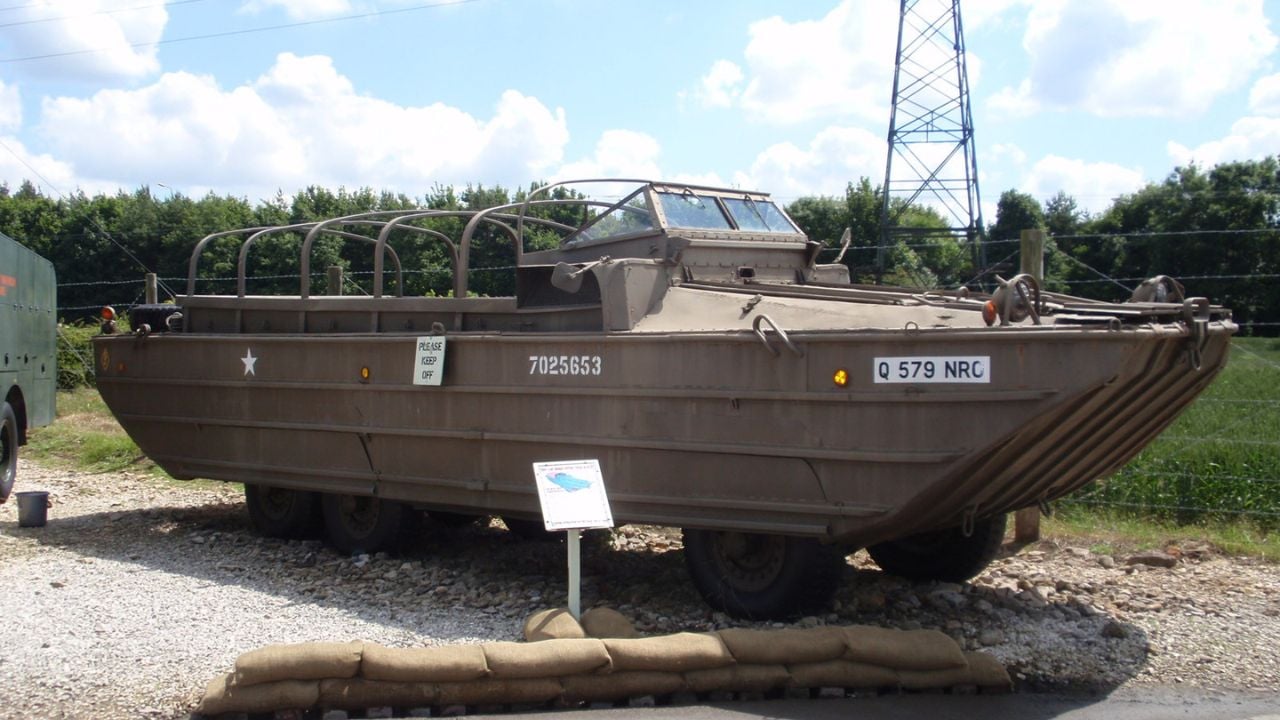
The DUKW solved one of the most awkward problems in amphibious warfare: moving cargo from ship to shore and then inland without stopping to transfer everything to another vehicle. The National WWII Museum describes the DUKW as a 2.5-ton amphibious truck with a six-wheeled truck chassis inside a hull-shaped body, a propeller, and a rudder. It could swim with 5,000 pounds of cargo and then drive inland once ashore.
That combination made the DUKW far more useful than its strange appearance suggested. A normal boat could reach the beach, but it could not keep driving. A normal truck could drive inland, but it could not unload directly from water. The DUKW joined both jobs in one machine.
Its fame came from that continuity. During operations such as Normandy and later amphibious campaigns, getting supplies across beaches mattered as much as landing troops. The DUKW carried ammunition, smaller artillery pieces, cargo, and support equipment through the messy zone between ocean and battlefield.
The vehicle was never glamorous. It was slow in water and awkward by normal truck standards. Its value came from doing a job that no ordinary truck or landing craft could handle alone.
LVT-4 Landing Vehicle, Tracked
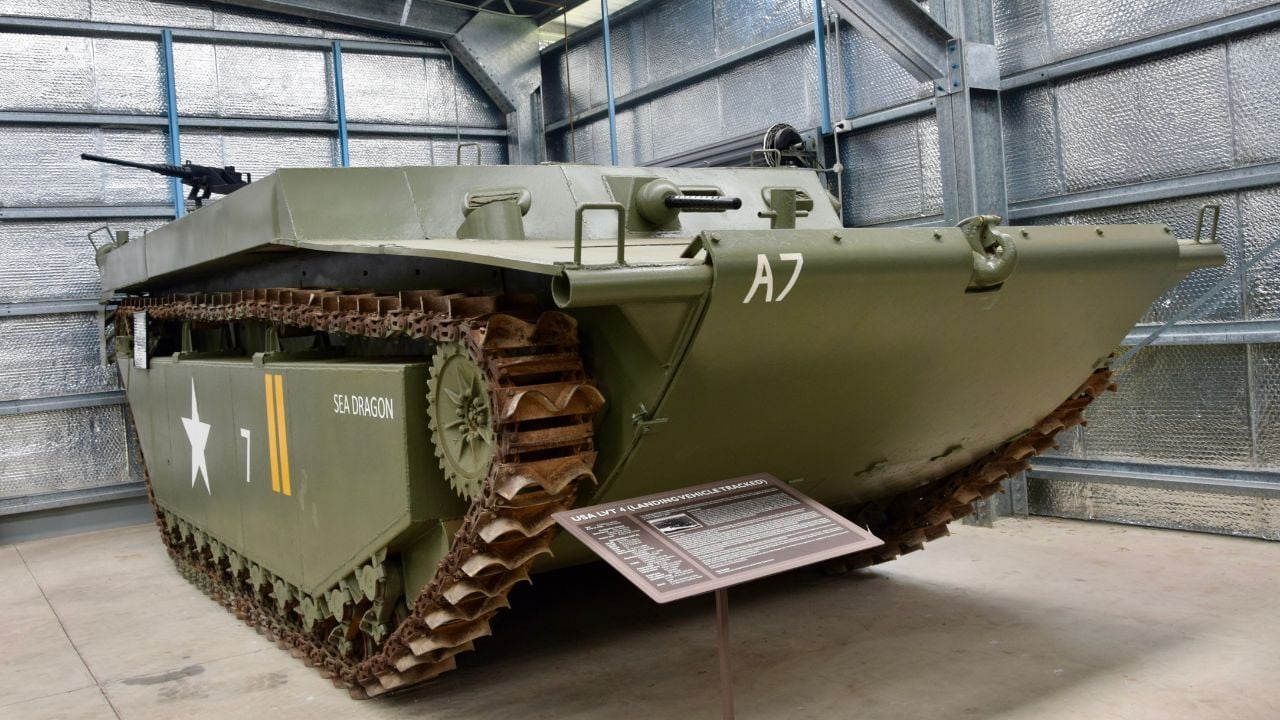
The LVT-4 became famous by helping Marines cross the most dangerous gap in Pacific island warfare. The problem was direct and deadly: troops had to move from ships, across reefs, through surf, and onto defended beaches while carrying enough men and equipment to keep fighting.
The National WWII Museum notes that the LVT-4 made its combat debut on Saipan in June 1944, moved the engine behind the crew cabin, and added a rear ramp so Marines could board and exit without climbing over the sides under enemy fire. Nearly 8,500 LVT-4s were produced by the end of the war, making it the most-produced World War II landing vehicle variant.
That rear ramp changed the vehicle’s value in combat. Troops could leave faster, with better protection during the most exposed seconds of an assault. The LVT also gave amphibious forces a tracked vehicle that could move through conditions that defeated wheels.
Its brutal job was turning water, coral, mud, sand, and enemy fire into a survivable approach route. The LVT-4 gave amphibious assault forces a practical tool for a battlefield that punished every pause.
M4 Sherman

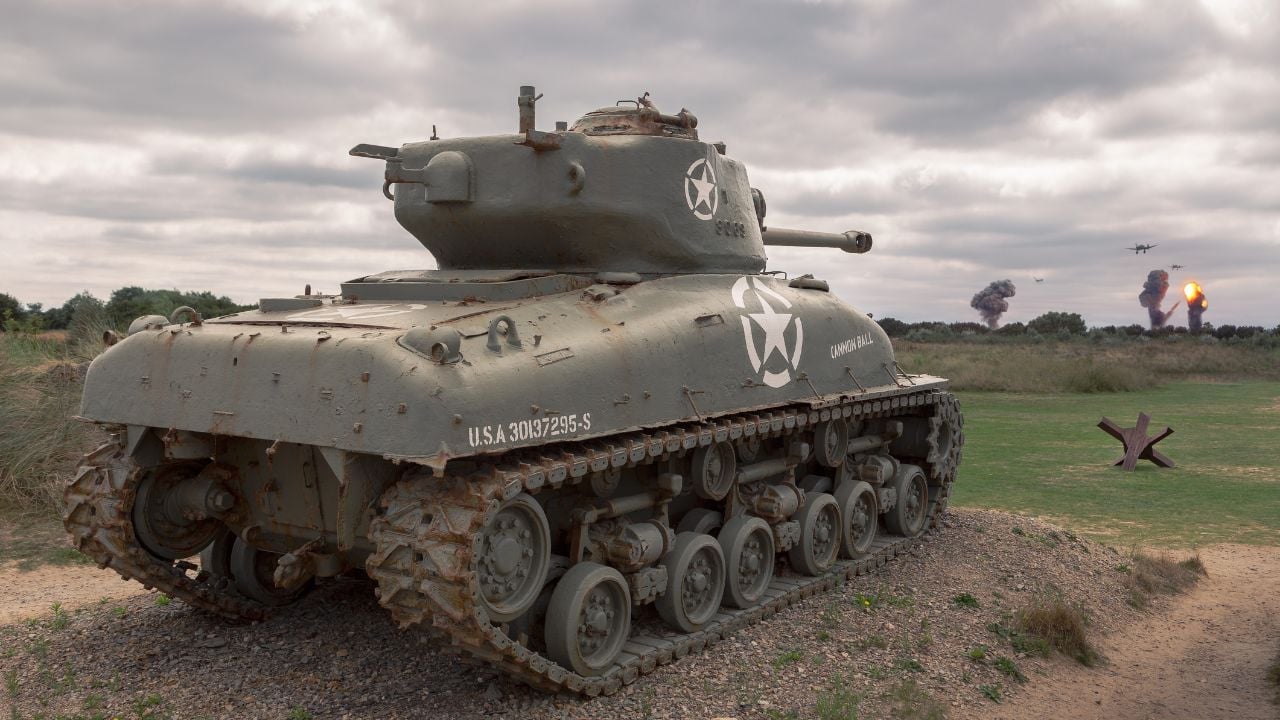
The M4 Sherman became famous by solving the industrial side of armored warfare. Its real question was not just how to build a tank. It was how to build, ship, repair, and sustain enough tanks across multiple theaters.
The Sherman was not the heaviest tank of World War II, and it was not the most intimidating one on paper. Its strength came from reliability, standardization, production scale, shipping practicality, and field serviceability. The National WWII Museum says more than 50,000 Shermans were produced between 1942 and 1945.
That mission fit mattered. A tank that could be built in huge numbers, transported overseas, repaired in the field, and supported across multiple theaters solved a different problem than a heavier tank built in smaller volume. The Sherman gave Allied forces armored mass they could actually sustain.
Its fame came from presence. Shermans appeared in North Africa, Italy, Northwest Europe, and the Pacific, often backed by a deep repair and logistics network. The vehicle’s battlefield reputation remains debated, but its core achievement is clear. It turned American manufacturing strength into a practical armored force that could keep moving.
Soviet T-34
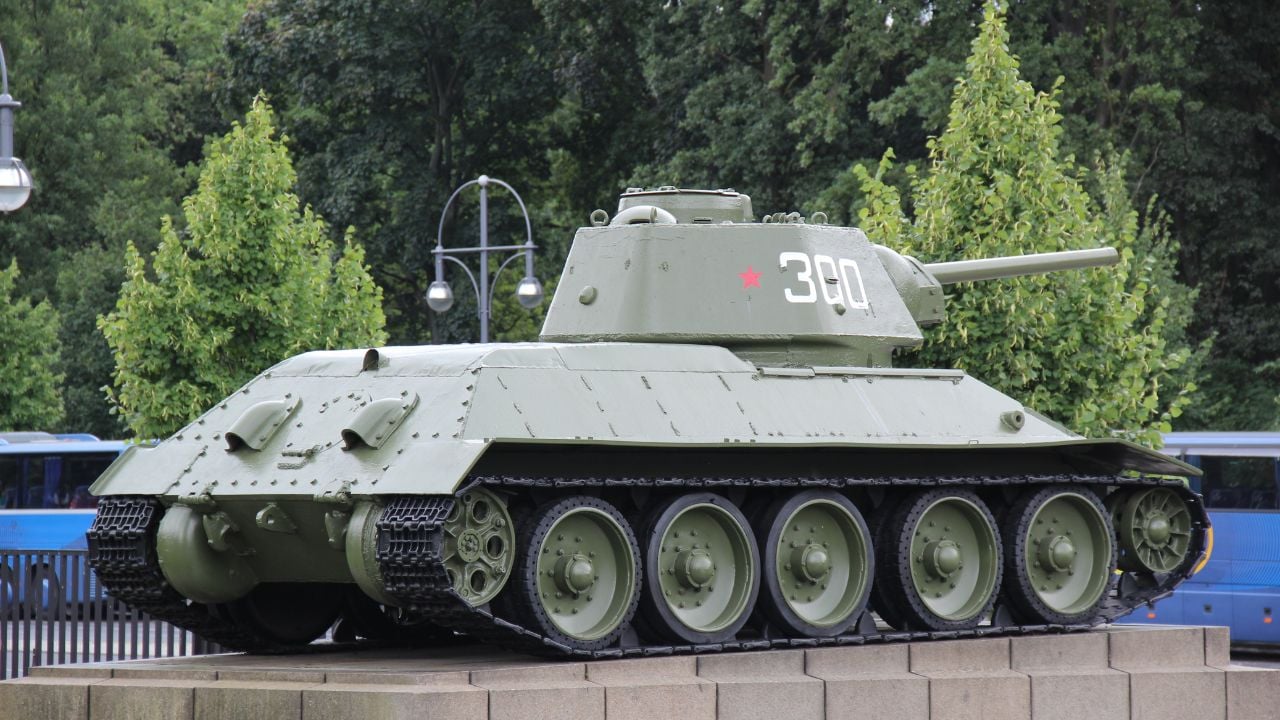
The T-34 became famous by solving the Eastern Front’s demand for a tank that could be armored, mobile, powerful enough, and producible under extreme pressure. Its sloped armor, wide tracks, diesel engine, and simplified production logic gave the Red Army a tank suited to vast distances, rough ground, brutal weather, and enormous attrition.
The T-34 served as the mainstay of Soviet armored forces during World War II. Wartime Soviet production exceeded 57,000 by the end of 1945, while total T-34 production including postwar Polish and Czechoslovak output is widely listed at about 84,070 units, making it one of the most-produced tanks in history.
The T-34’s job was not elegance. It had to be good enough in battle, simple enough to manufacture in huge numbers, and rugged enough for a front where losses, repairs, and replacement cycles were constant.
That formula made it famous. German crews respected it. Soviet industry adapted around it. Postwar armies copied, bought, used, and upgraded its descendants for decades. The T-34 showed that battlefield engineering could be measured in survivable numbers, not only in perfect specifications.
M113 Armored Personnel Carrier
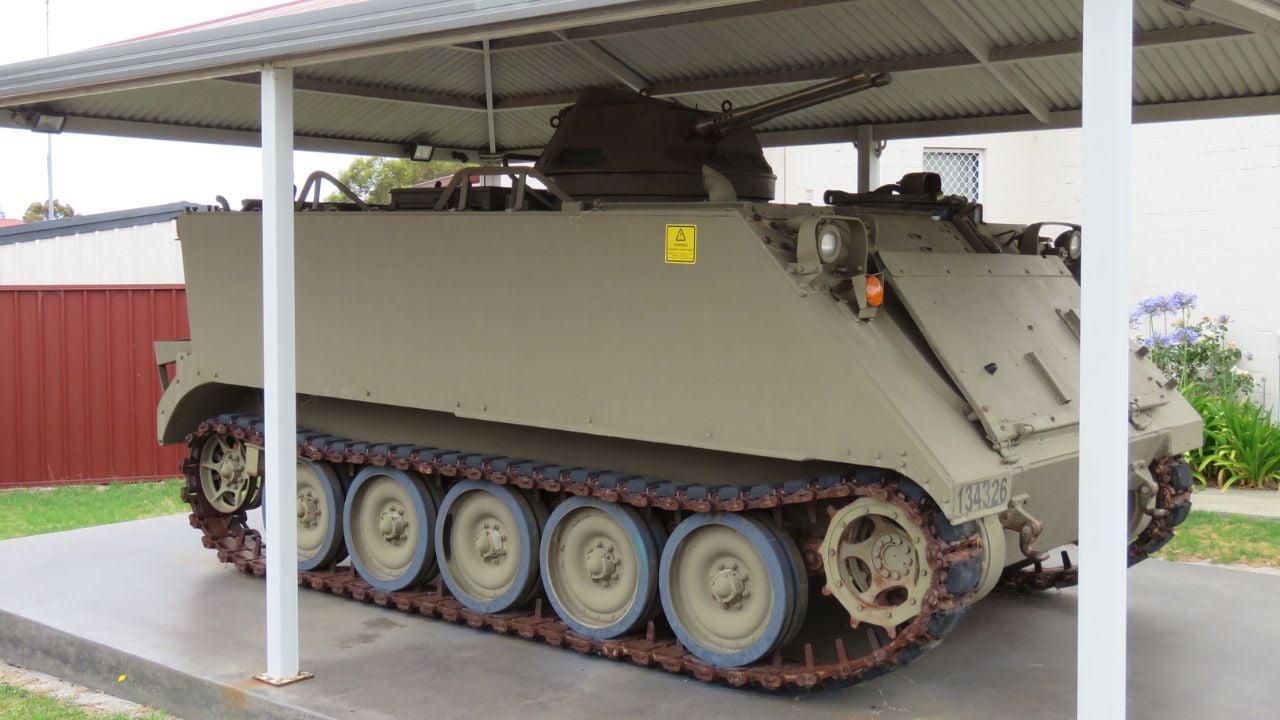
The M113 became famous by solving the problem of armored infantry mobility at scale. Armies needed a vehicle that could carry troops under protection, move with mechanized formations, accept many mission conversions, and remain affordable enough for widespread use.
BAE Systems describes the M113 family as the largest family of armored tracked vehicles in the world, with more than 80,000 vehicles worldwide and more than 40 variants. The family has served with the militaries of at least 44 countries.
Its value came from space, simplicity, and adaptability. The M113 could work as an armored personnel carrier, command vehicle, mortar carrier, ambulance, engineer vehicle, and many other specialized platforms. Its aluminum construction kept weight lower than older armored carriers, while the tracked layout gave it battlefield mobility beyond normal wheeled vehicles.
The M113 was never a heavy infantry fighting vehicle in the modern sense. Its fame came from giving armies a practical armored box that could be adapted again and again. Few vehicles have turned one basic shape into so many military jobs.
Oshkosh M-ATV
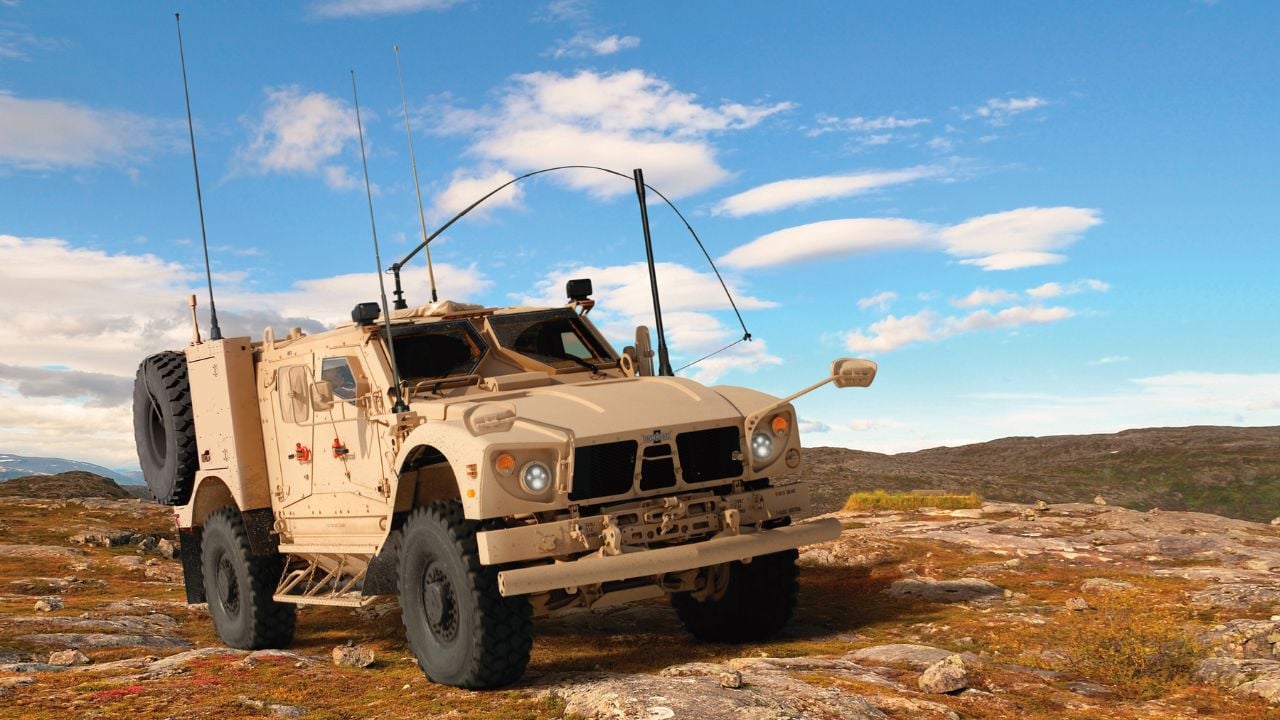
The Oshkosh M-ATV became important by addressing a modern battlefield problem that older light vehicles and heavier MRAPs could not solve cleanly: blast protection with enough mobility for Afghanistan’s terrain.
Traditional MRAPs offered major survivability advantages against mines and roadside bombs, but their size and weight created mobility challenges in rough country. Oshkosh describes MRAP vehicles as purpose-built to protect personnel against roadside bombs, mines, and ambush threats, with V-hull designs, ballistic glass, and blast-attenuating seats.
The M-ATV added a more mobile answer to that protection problem. Oshkosh lists TAK-4 independent suspension, 16 inches of ground clearance, a nearly 310-mile cruising range, and a design intended for high off-road duty.
Its job was brutally specific. Troops needed protection from improvised explosive devices without losing the ability to move through mountains, poor roads, soft ground, and remote routes. The M-ATV became important because it treated mobility and blast protection as one problem, rather than two separate compromises.
Why These Machines Became More Than Military Hardware
The most famous military vehicles usually earn that status through one clearly defined achievement. The Jeep made small-unit mobility practical. The CCKW kept armies supplied. The DUKW bridged water and land for cargo. The LVT-4 turned dangerous beach approaches into a repeatable assault system.
The Sherman and T-34 proved that tanks had to match factories and logistics as much as tactics. The M113 showed how one armored platform could serve dozens of missions. The M-ATV brought modern blast protection into terrain where earlier heavy protected vehicles struggled.
These vehicles came from different countries, wars, technologies, and doctrines, yet their reputations follow the same pattern. Each one reduced a major battlefield problem to a machine soldiers could use, repair, trust, and repeat.
Military history often celebrates the biggest gun or the thickest armor. These eight vehicles show a deeper truth. The most important machine is often the one that turns an impossible job into a repeatable one.