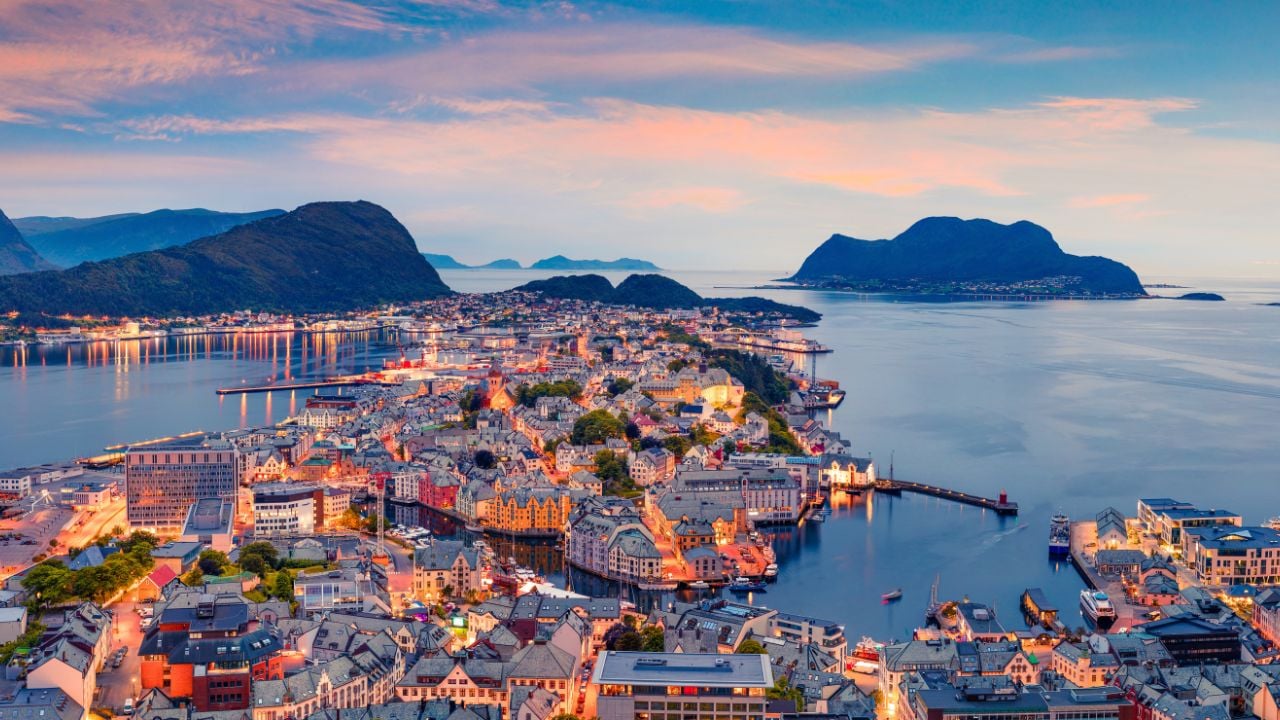
Norway’s coast is full of small places where the first impression comes from wind, wood, water, and working harbors. Boats tap against low quays, gulls cut over white roofs, and narrow lanes turn toward the sea before the walk has gone very far.
Ålesund puts Art Nouveau façades beside Brosundet and Atlantic-facing water. Risør and Mandal show the white-painted towns of southern Norway through harbors, alleys, river mouths, and old wooden houses. Skudeneshavn keeps sea stalls and white timber close to still water. Kragerø opens toward islands and skerries. Henningsvær sits in Lofoten, where bridges, fish racks, boats, rock, and mountains make the coast feel exposed and working.
These towns are strongest when the day stays close to the harbor. A visitor can follow Brosundet in Ålesund, climb narrow white-house lanes in Risør, look into the old harbor at Skudeneshavn, watch boats move around Kragerø’s docks, walk from Mandal’s small streets toward the river and shore, or cross into Henningsvær with Lofoten peaks rising behind the roofs.
For travelers who want Norway without a rushed fjord checklist, these coastal stops offer a slower rhythm: short walks, seafood stops, harbor reflections, wooden houses, weathered quays, gulls, rock, and sea air moving through the streets.
1. Ålesund
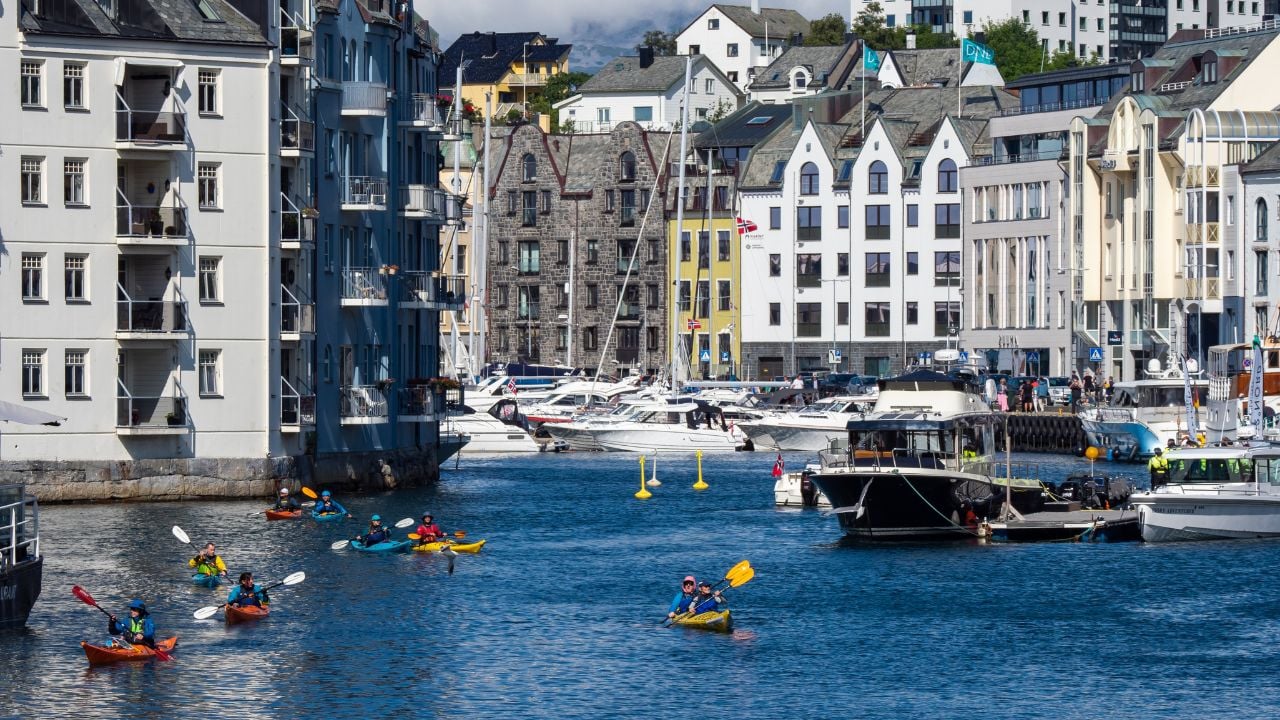
Ålesund’s harbor streets are lined with curved Art Nouveau details, turrets, pastel walls, and decorative stonework. Brosundet cuts through the center, with boats below the quays and reflections breaking across the canal between the buildings.
Visit Norway highlights Ålesund’s Art Nouveau architecture and its coastal setting on islands facing the Atlantic. The city’s look comes from that combination: ornate façades close to working water, with masts, bridges, harbor basins, and islands visible between streets.
Along Brosundet, cafés and shopfronts face the water. Boats sit below the quay, ropes lie near the edge, and the façades shift color as light moves across the canal. When wind comes through the street grid, the harbor smell reaches the buildings instead of staying down by the docks.
From Aksla, Ålesund spreads into islands, bridges, rooftops, harbor basins, and water channels stretching toward the Atlantic. Back near the waterfront, a warm meal lands better after the climb, especially when evening air comes off the sea and the harbor lights begin to show in the canal.
2. Risør
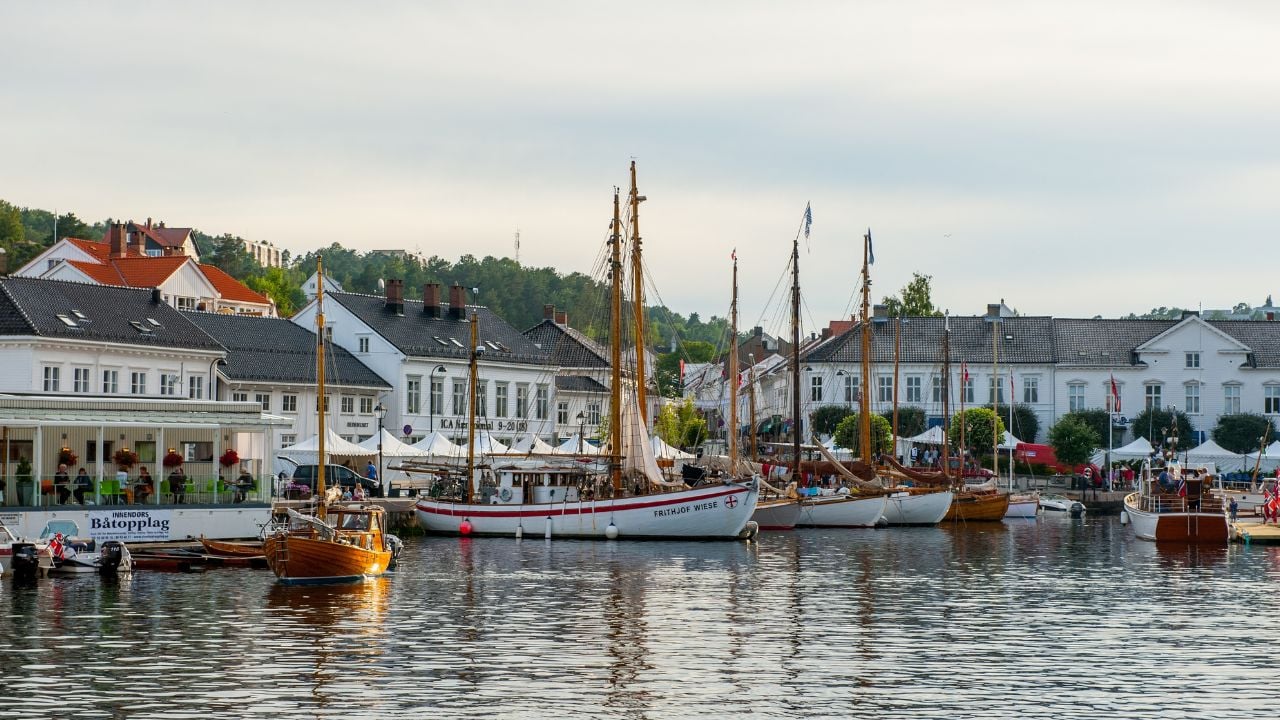
Risør’s harbor is framed by white timber houses, red roofs, dark window trim, moored boats, and rocky islets beyond the town. The palette stays clean and bright: white façades against blue water, red tile, and the gray-brown edge of the Skagerrak coast.
Visit Norway describes Risør as famous for traditional white wooden houses and a creative coastal scene. The town is also known as the White Town by the Skagerrak, with old wooden houses that are closely tied to its identity as a southern Norwegian coastal town.
By the harbor, boats sit close to the quay and old houses line the streets behind the water. Lanes climb behind the harbor toward white houses, viewpoints, and glimpses back toward masts, roofs, islands, and the Skagerrak.
Risørflekken is a chalk-painted rock above the town that has helped seafarers for more than 400 years, according to Visit Norway. From the lower streets, the white mark is more than a pretty landmark; it is a navigation sign still visible above the harbor town.
3. Skudeneshavn
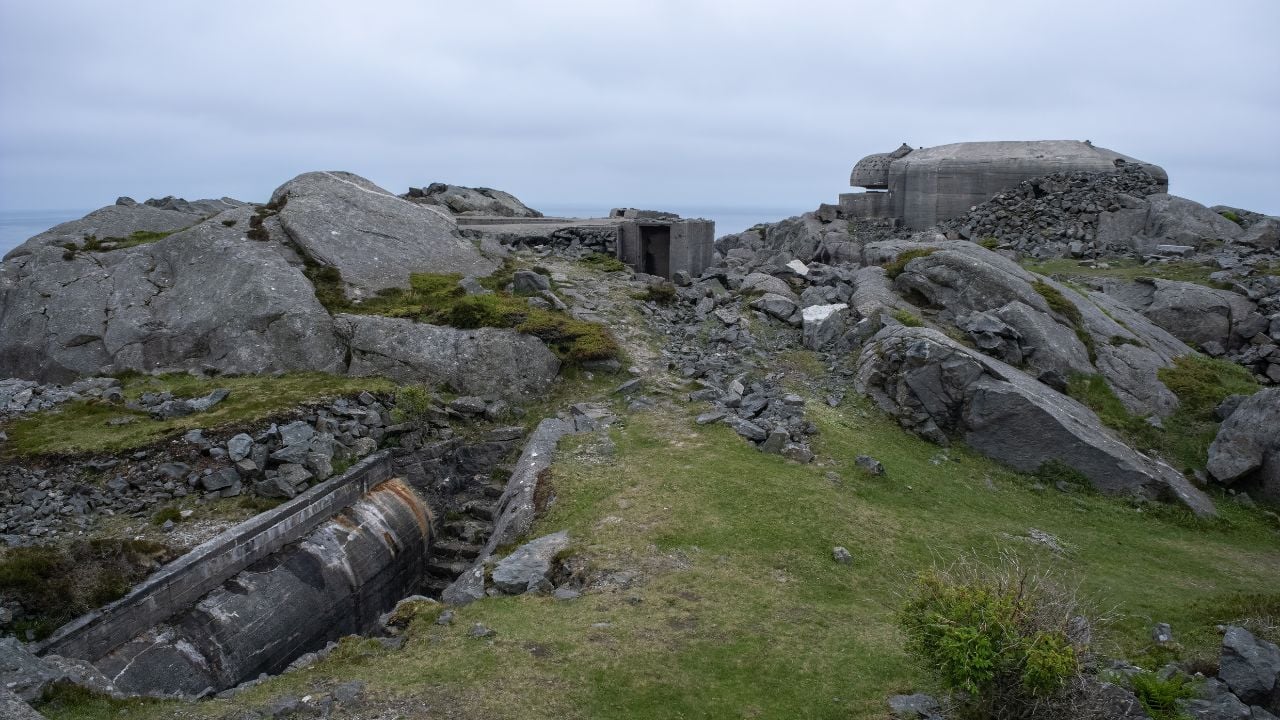
In Gamle Skudeneshavn, white wooden houses sit close to narrow lanes, tidy gardens, painted doors, small windows, and low harbor edges. The water often lies still enough to catch broken reflections of houses, boats, and old sea stalls.
Fjord Norway describes Skudeneshavn as a coastal town known for maritime history, white wooden houses, and sea stalls from the mid-19th century. It also links the town’s growth to the herring fishery of the 1800s, when Skudeneshavn became both a fishing village and a busy sailing center.
The old streets are narrow and close to the footpath. Garden gates, painted trim, wooden walls, and flower boxes sit just beside the walk. Around the harbor, boats lie low in the water and the sea houses keep fishing and trade visible in the middle of the town.
A walk here is made from small details rather than big viewpoints: a white wall beside a garden gate, a rope on a quay, a boat reflected under a window, and a harbor corner quiet enough to hear water move against the side.
4. Kragerø
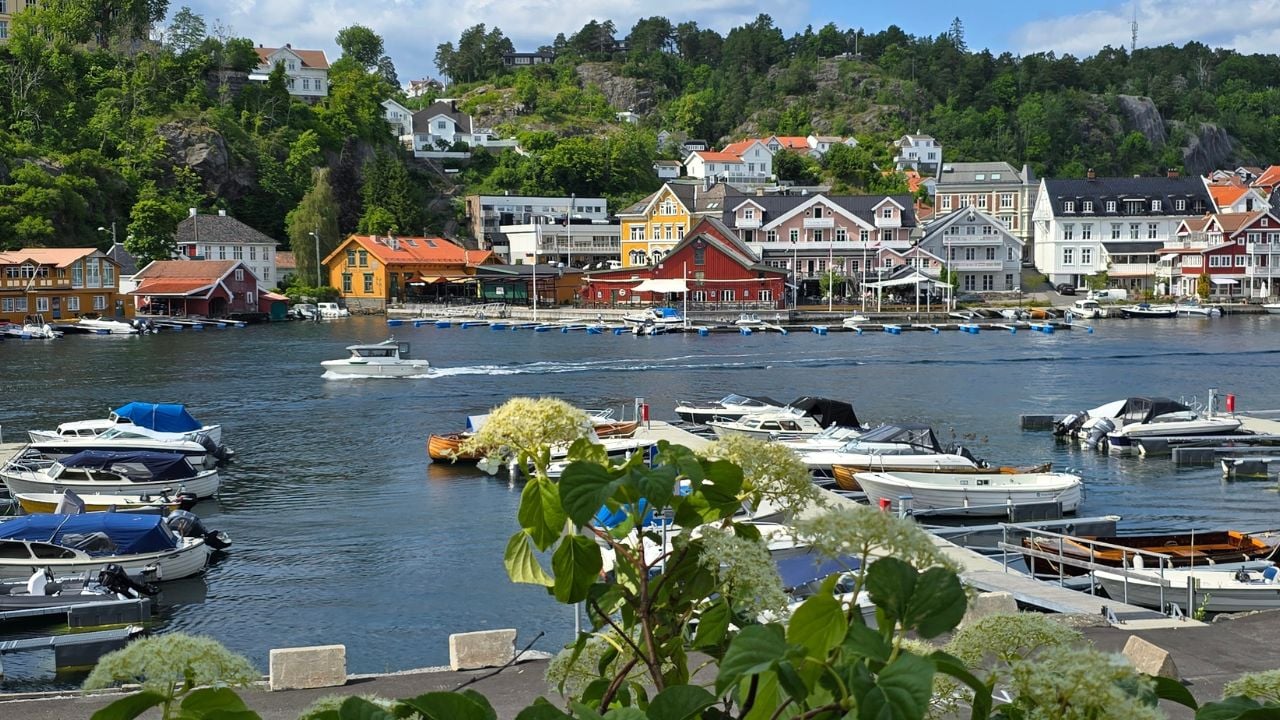
Kragerø rises from the harbor in painted houses, narrow streets, boats, wooded edges, and small islands offshore. From the quay, the view keeps opening toward skerries, inlets, and another shoreline beyond the first one.
Visit Telemark describes Kragerø as a coastal town in Southern Norway surrounded by more than 490 islands and skerries. The town also grew around harbor activity, with timber exports and shipping helping shape its older coastal identity.
Boats sit in the marina, houses climb above the water, and forested land frames the edges of the view. A short walk from the quay leads toward galleries, small shops, parks, and lanes that rise away from the waterfront.
Coffee near the harbor can turn into a longer pause when ferries and small boats keep moving across the water. Look outward from town and the islands break the horizon into pieces: rocky edges, trees, cabins, slips of open water, and routes that carry the eye away from the main harbor.
5. Mandal
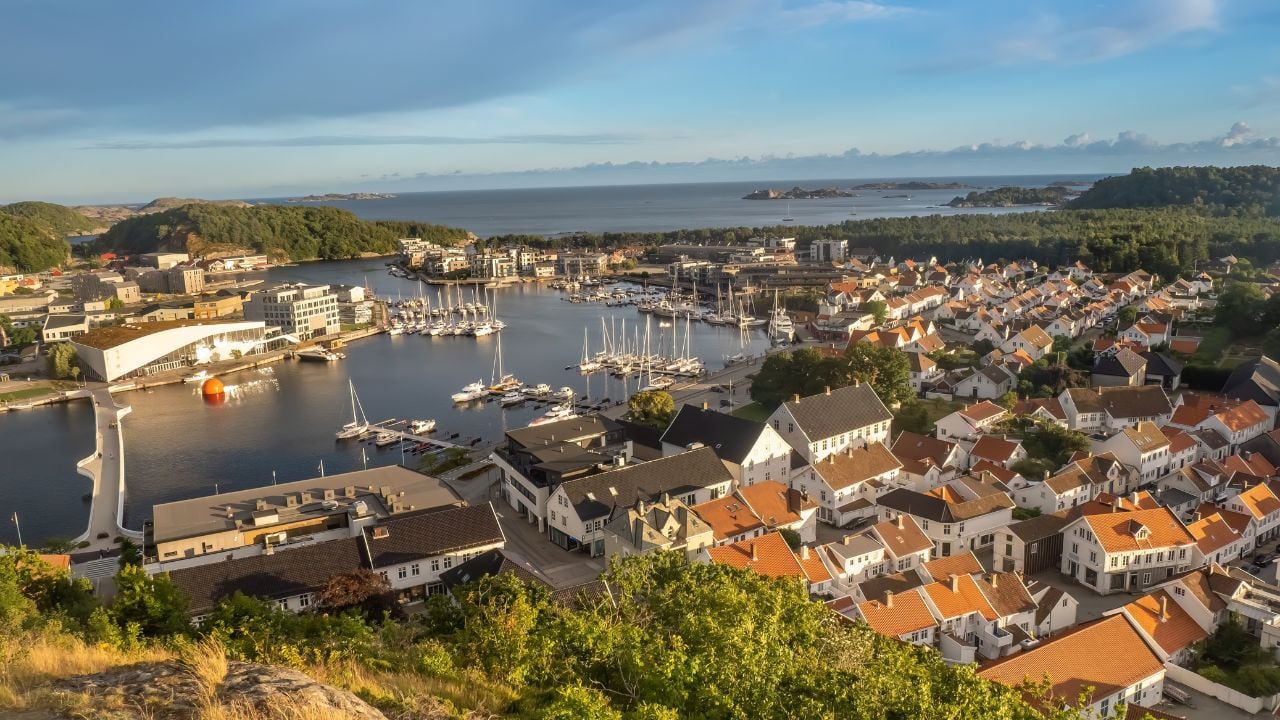
Mandal sits at the mouth of the Mandal River, with white-painted streets, narrow alleys, shopfronts, harbor edges, and sandy coastline nearby. The town is bright and low, with southern light on small houses and water close to the center.
Visit Sørlandet describes Mandal as Norway’s southernmost town, located at the mouth of the Mandal River, with narrow alleys, small houses, shops, and Kleven harbor nearby. Visit Norway also points to Mandal in the Lindesnes region and highlights narrow lanes with traditional white wooden houses.
The old center turns through small houses, shop windows, cafés, and corners where white walls catch the light. Follow the water and the walk leads toward the Mandal River, harbor areas, and the coast beyond town.
Kleven harbor brings older maritime texture into the same visit. In warmer months, the nearby beaches add sand, low dunes, and open air to a day that can begin in white-house lanes and end by boats or water.
6. Henningsvær
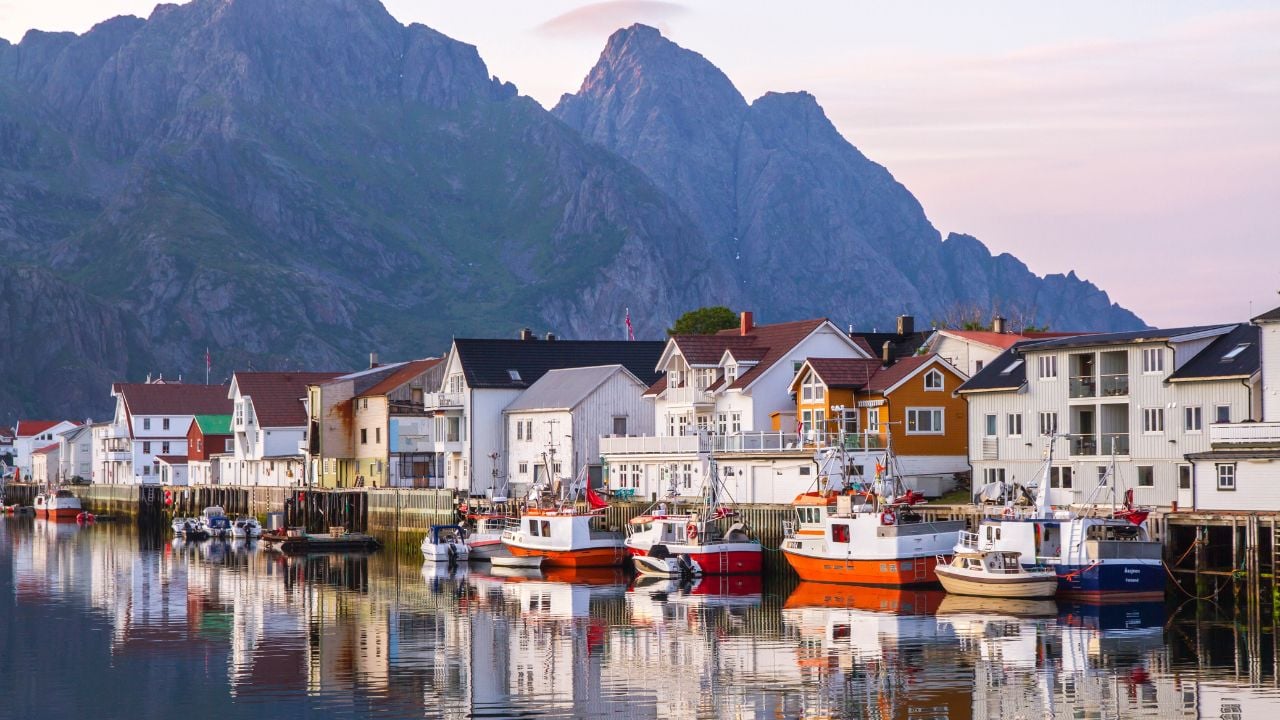
Bridges link Henningsvær’s small islands over cold water. Fishing boats sit in the harbor, racks and low buildings stand close to the sea, and Lofoten mountains rise behind the village with little softness between rock, water, and sky.
Visit Lofoten describes Henningsvær as an iconic fishing village on several small islands, connected by bridges like pearls on a string, off the southern coast of Austvågøya. The village is part of Lofoten’s fishing heritage, and the working harbor remains central to the view.
The road crosses bridges over water before reaching a harbor of boats, low buildings, weathered quays, and working edges. In clear weather, the water glitters hard against the rocks. Under cloud, the harbor turns gray and metallic, and the mountains press close behind the roofs.
Fish racks, boats, harbor sheds, wind, salt, rock, and steep peaks keep the village tied to work as much as scenery. The most memorable walk is not only along the prettiest angle; it is past the quays, racks, boats, and buildings that show how closely the village still sits against the ocean.