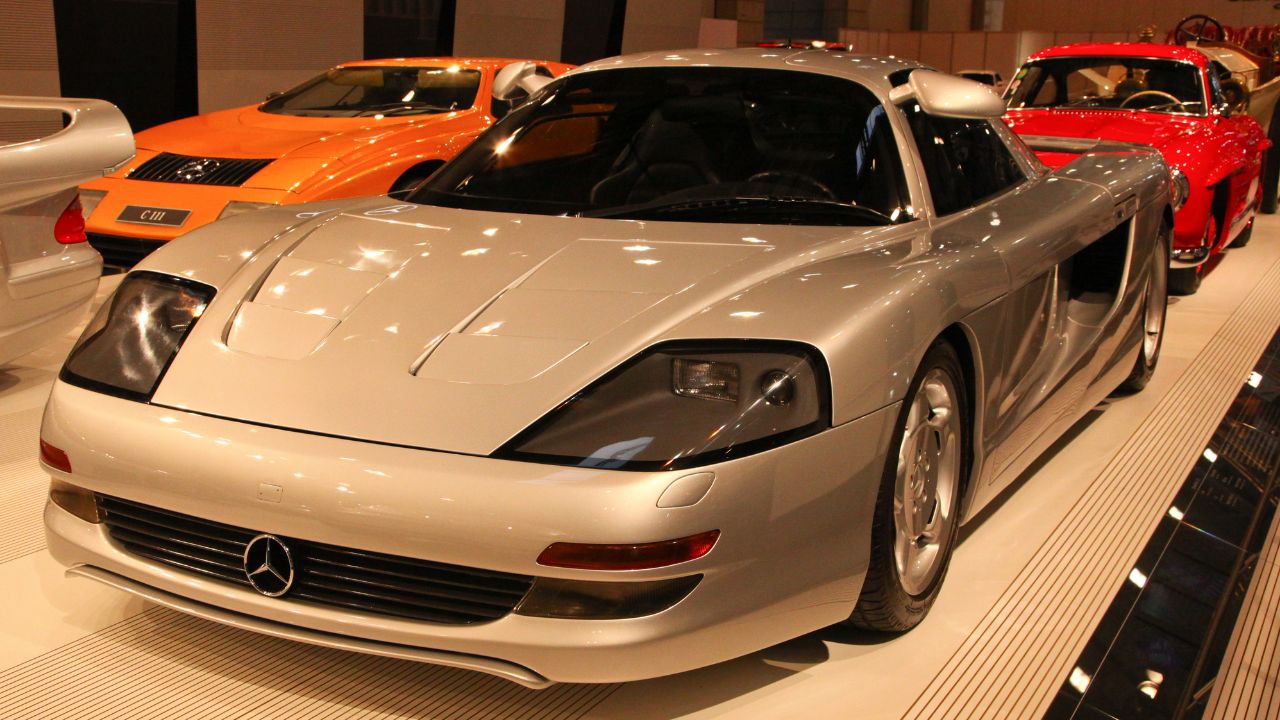
Every auto show brings a parade of wild concepts that make us dream, but most of them are destined to remain just that, dreams. Yet every once in a while, automakers unveil something that feels so right, so production-ready, that it’s almost painful when it doesn’t make it to showrooms.
These aren’t the wacky, wheels-optional design studies that are never meant for the road. These are the cars that had all the pieces in place: compelling designs, proven technology, enthusiastic reception, and genuine business cases.
They were the ones that got away, and frankly, the automotive world is a little less interesting without them.
Buick Avista
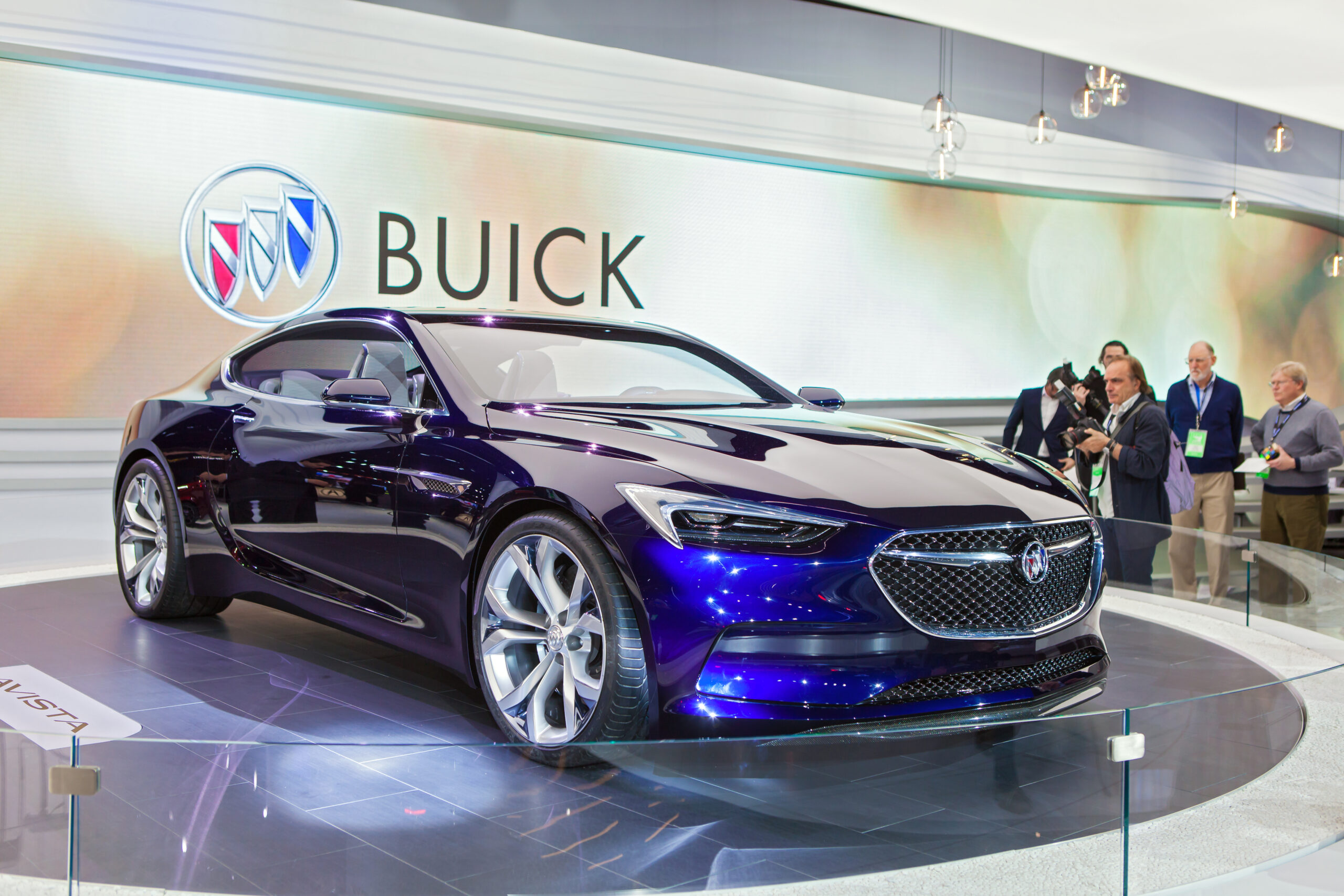
Remember when Buick made everyone do a double-take? The Avista was that moment, captured in flowing sheet metal.
This gorgeous rear-drive coupe packed a 400-horsepower twin-turbo V-6, rode on the proven Camaro platform, and looked like nothing else on the road in 2016. It won design awards, generated massive buzz at the Detroit Auto Show, and even had GM executives talking production possibilities. The platform was there, the engine existed in the Cadillac CT6, and the public response was overwhelming. Yet Buick ultimately deemed it just a design study, leaving enthusiasts to wonder what might have been.
With crossovers dominating their lineup, Buick could’ve used this halo car to prove they weren’t just about comfortable transportation for retirees.
Chrysler ME Four-Twelve

This might be the wildest “almost” in American automotive history. Chrysler took a Mercedes-AMG V-12, added four turbochargers, stuffed all 850 horsepower into a carbon-fiber chassis weighing just 2,880 pounds, and created something that could’ve given Ferrari nightmares.
The numbers were insane: zero to 60 in 2.9 seconds and an estimated 248 mph top speed. This wasn’t vapor: Chrysler built working prototypes, and the published acceleration and top speed figures were projections and simulations rather than independently verified instrumented tests. The company floated the idea of limited production, but the project never received a production green light. Then reality hit. Mercedes reportedly wasn’t thrilled about Chrysler outperforming the SLR McLaren using their engine, and the business case crumbled.
It remains the ultimate “what if” from the DaimlerChrysler era.
Audi Quattro Concept

Celebrating 30 years of Quattro all-wheel drive, Audi unveiled this stunning tribute to the original rally legend. Built loosely around the RS5 coupe, it used a shortened wheelbase and a lightweight body, weighed about 2,866 pounds, and used a 2.5-liter turbocharged five-cylinder related to the TT RS, rated at about 408 horsepower
The design perfectly captured the spirit of the Ur-Quattro while feeling thoroughly modern. Rumors swirled about limited production, and the automotive press practically begged Audi to build it. Instead, we got design cues that trickled into other Audis like the TT, but no spiritual successor to the car that made Audi’s reputation.
Given how the classic Quattro values have skyrocketed, a modern interpretation would’ve been gold for collectors and enthusiasts alike.
Nissan IDx

This retro-modern coupe was Nissan’s answer to the BRZ/FR-S twins, channeling the beloved 510 sedan from the 1970s into a contemporary rear-drive package. Nissan never confirmed final production specifications, and early company comments suggested a small displacement engine for the IDx Freeflow concept and a turbo 1.6-liter engine for the IDx NISMO concept.
Nissan flirted with production for years, generating massive interest at car shows and refusing to rule it out publicly. The problem? Nissan didn’t have the manufacturing capacity for another rear-drive model, and the business case seemed risky with established competitors already in the segment.
It’s particularly frustrating because Nissan’s sports car lineup feels incomplete without an entry-level option beneath the Z, and the IDx could’ve been that perfect gateway car.
Cadillac Elmiraj

Cadillac’s Art and Science design language reached its pinnacle with the Elmiraj, a stunning two-door coupe unveiled at Pebble Beach. This wasn’t some pie-in-the-sky fantasy: it was sized to compete with the Mercedes S-Class Coupe and could’ve worked as a flagship sedan platform too.
The design was production-feasible, the proportions were perfect, and it represented everything Cadillac aspired to be: bold, elegant, and unmistakably American. Yet despite Cadillac touting it as the future of the brand, it never influenced production models in any meaningful way.
Cadillac spent years searching for a design identity when they already had it right here, gathering dust after one spectacular weekend in California.
Mercedes-Benz C112

Fresh off World Sportscar Championship victories, Mercedes presented this mid-engine supercar with a 6.0-liter V-12, active aerodynamics, and technology that was genuinely futuristic for 1991. It was essentially a road-going counterpart to the stunning Sauber C11 race car, complete with gullwing doors and performance to match any supercar of its era.
The problem? The executive who championed the project left the company before it could reach production, and without that internal support, the expensive development program died.
Mercedes wouldn’t return to the mid-engine supercar formula until decades later, leaving a notable gap in their heritage between the classic gullwings and the modern SLS/AMG GT line.
Nissan Mid4-II

Imagine if Nissan had beaten Honda to market with a mid-engine Japanese supercar. The Mid4-II was a highly developed 1987 concept car that showcased Nissan engineering, but it was never sold, and its technologies later influenced models like the Nissan 300ZX (Z32) and Skyline GT-R (R32). It featured a mid-mounted twin-turbo V-6 making 330 horsepower, all-wheel drive, four-wheel steering, and stunning looks.
This could’ve arrived two to four years before the NSX redefined what a supercar could be. Instead, Nissan hesitated, reportedly because the car looked better than it drove in early testing. By the time they could’ve refined it, Honda had stolen their thunder, and the moment passed.
The Mid4-II remains a fascinating “what could’ve been” in the supercar timeline.
Ford Shelby GR-1

Ford developed two chassis when creating the 2004 Shelby Cobra Concept, and the GR-1 was the Daytona-inspired coupe version. Powered by a 6.4-liter V-10 making 605 horsepower, this aluminum-bodied beauty could’ve been America’s answer to European grand tourers.
With a six-speed manual sending power to the rear wheels, it had all the ingredients for a proper driver’s car. Ford was already tooled up for limited production from the Cobra Concept development, making the business case seem viable. Yet the GR-1 remained a one-off, and Ford instead focused on the 2005 GT revival.
While the GT is iconic, there was definitely room in the lineup for both, especially given the different market positions they would’ve occupied.
Lotus Eterne

When Lotus unveiled five concept cars at the 2010 Paris Motor Show, the Eterne was the most surprising: a four-door sedan with killer looks and a 5.0-liter supercharged V-8. This was Lotus saying they could do more than lightweight sports cars, and the design backed up that ambition.
The proportions were elegant, the stance was aggressive, and the idea of a Lotus sedan that could compete with Porsche’s Panamera was genuinely exciting. Unfortunately, like the other four concepts shown that day, it was wildly ambitious for a company Lotus’s size.
Financial realities meant none of them reached production, but the Eterne deserved a better fate than being remembered as part of Lotus’s most optimistic, and ultimately unfulfilled, product offensive.
Ferrari Mythos

Designed by Pininfarina using Testarossa underpinnings, the Mythos was the open-top Ferrari that almost was. Ferrari never made a proper Testarossa convertible for production, and this should’ve been it: a stunning wedge-shaped roadster with a 4.9-liter flat-12 making 390 horsepower.
Weighing just 2,756 pounds thanks to lightweight composite construction, it blended 1960s retro styling with late-1980s edge perfectly. Ferrari built multiple Mythos cars, including the original show car and additional examples commissioned for the Brunei royal family, and its design themes later echoed in Ferrari’s later work, so enthusiasts never got the production run they hoped for.
The Testarossa platform was already paid for, and a limited production run wouldn’t have been technically challenging.
Lamborghini Estoque

A four-door Lamborghini sounds commonplace today, but back in 2008, the Estoque was radical. This sedan concept featured the Gallardo’s 5.2-liter V-10 and sleek proportions that suggested motion even standing still. Lamborghini toured it around auto shows, customer response was enthusiastic, and Autocar reported Lamborghini targeted showrooms toward the end of 2011, with sales by 2012 if approvals and cost projections held.
Then… nothing.
Years passed with no Estoque, and Lamborghini eventually chose the Urus SUV route instead when they finally needed a four-door model. The Estoque would’ve competed with the Ferrari FF and Porsche Panamera in a genuinely exciting segment, and while the Urus is profitable, the Estoque would’ve been properly special.
Lamborghini Miura Concept

Celebrating 40 years of the original Miura, Lamborghini created this gorgeous green concept designed by Walter de Silva. It captured everything beautiful about the original while feeling contemporary, but CEO Stephan Winkelmann firmly stated that retro design wasn’t Lamborghini’s direction.
Fast forward to today, and Lamborghini has embraced heritage styling in various special editions, making Winkelmann’s absolute rejection of retro seem premature. A limited production run celebrating Lamborghini’s most beautiful creation would’ve been welcomed by collectors, and the car had show-stopping presence.
Sometimes honoring your history doesn’t mean living in the past, it means bringing your best ideas forward into the present.
Conclusion

These concepts represent more than just missed opportunities: they’re glimpses into alternate automotive timelines where manufacturers took different risks. What’s particularly frustrating is that many of these cars were genuinely production-feasible, not wild fantasies requiring unobtanium or physics-defying technology.
They had platforms, powertrains, and public enthusiasm, yet bureaucracy, timing, or cold calculations killed them. The automotive landscape would be more diverse and exciting if even half these concepts had made it to production. Still, they serve an important purpose: reminding us what’s possible when designers and engineers push boundaries, even if the accountants ultimately have the final word.
Who knows, maybe some of these ideas are just waiting for the right moment to return…