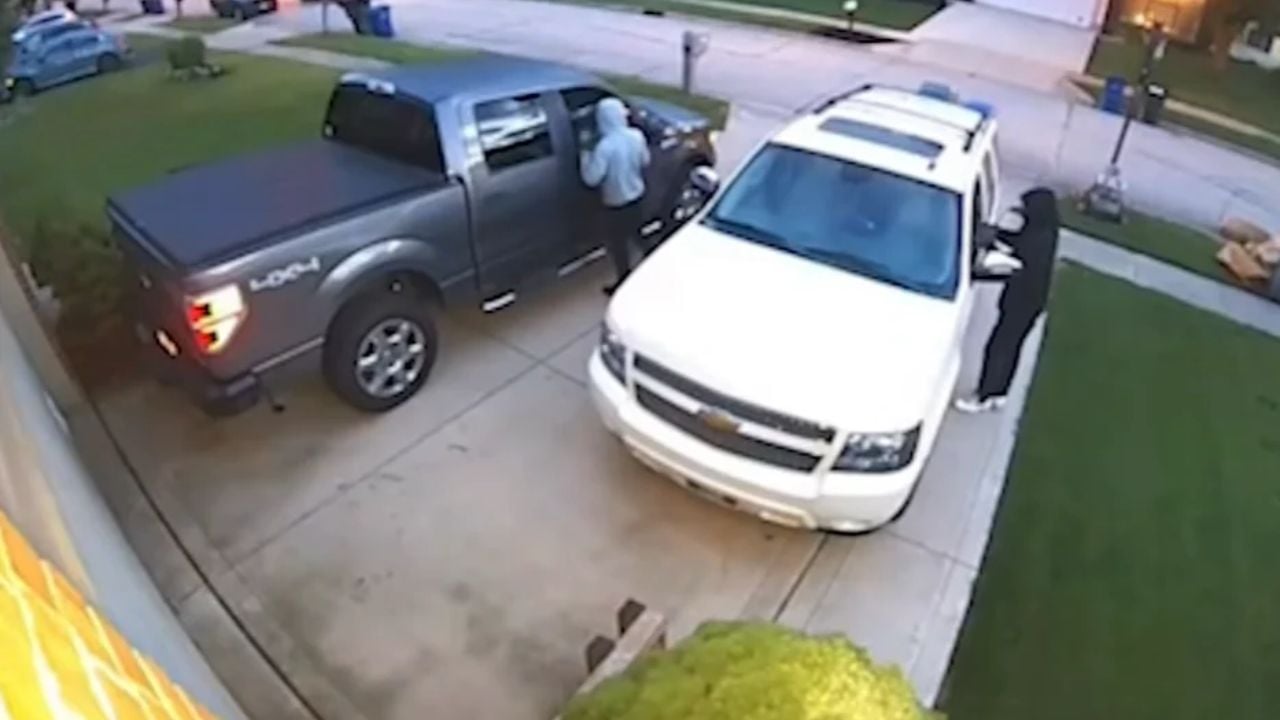
A quiet Monday morning in Hilliard, Ohio turned considerably less quiet when residents started discovering their car windows smashed in the predawn hours. Hilliard Police say roughly 35 vehicles were hit across neighborhoods near Alton and Darby Creek Road, with the bulk of the damage concentrated at Heritage Preserve Apartments.
Video captured by ABC6 shows individuals breaking into cars around 5:30 a.m. in the adjacent Wexford Green neighborhood in Columbus. It was, to put it plainly, an organized sweep through residential parking areas while most people were still asleep.
The targets were predictable by the standards of this type of crime: credit cards, purses, and clothing were taken from some vehicles, while others were rummaged through and left empty-handed. That mix of selective theft and apparently fruitless ransacking tells you something about how these incidents work in practice. The people doing this are moving fast, hitting as many cars as possible, and prioritizing whatever is visible or easy to grab. Anything left on a seat or in plain view is fair game.
Hilliard Detective Matt Hayes offered a candid assessment of the pattern. Groups running this kind of operation, he explained, are specifically hunting for high-value portable items: firearms, credit cards, cash, and anything with immediate resale potential. The window smash is not an impulsive act; it is a quick calculation about whether what is visible inside justifies the noise and the risk. If the answer is yes, the glass goes.
Residents in the area expressed the frustration that accompanies this kind of crime: the combination of violation, inconvenience, and the grim awareness that working people in ordinary apartment complexes are the ones absorbing the cost. Haley Rung, one of the victims, noted that the neighborhood rallied quickly, with residents phoning each other when the damage was discovered.
That kind of community communication is actually one of the more effective early-warning tools available when police are not yet on scene. No suspects have been identified as of this report, and Hilliard Police are asking anyone with information or usable video footage to contact them.
How This Fits the Smash-and-Grab Playbook
What happened in Hilliard is textbook smash-and-grab, and the approach has been consistent across cities for years. Thieves work in the early morning hours, target residential parking areas with minimal foot traffic, and move quickly through multiple vehicles in a single run.
The window repair alone can cost hundreds of dollars per car before the owner even begins to account for stolen items. Multiply that across 35 vehicles and you are looking at a significant collective financial hit for a neighborhood that did nothing wrong except park outside.
Detective Hayes’s point about the specific priorities of these groups is worth sitting with. Vehicle break-ins have tracked upward since 2020, rising from roughly 221 incidents per 100,000 people in 2019 to around 283 per 100,000 by 2022. The good news is that the broader vehicle theft picture has improved substantially.
The National Insurance Crime Bureau reported that vehicle thefts nationwide fell 23% in 2025, reaching historic lows and marking a clear signal that the pandemic-era surge has subsided. The less reassuring news is that break-ins, as opposed to full vehicle thefts, operate differently and are not always captured in the same headline statistics.
A car that gets ransacked and left in the same parking spot does not show up on the NICB’s outright theft numbers.
Firearms Left in Cars: The Detail That Should Not Be Buried
Detective Hayes mentioned firearms specifically when describing what these groups are targeting, and that detail deserves more than a quick mention. Guns left in unlocked or easily broken vehicles are a documented source of illegally circulating weapons.
A smash-and-grab crew moving through 35 cars is not primarily concerned with your spare change, but a firearm left under the seat or in a glovebox represents significant street value and serious downstream consequences. Authorities consistently identify vehicles as one of the leading sources of stolen firearms in the United States, and incidents like the one in Hilliard are exactly how that supply chain works.
If you keep a firearm in your vehicle, this story is a pointed reminder to reconsider that arrangement, or at minimum to invest in a proper vehicle safe. The inconvenience of retrieving a secured weapon is considerably less than dealing with the knowledge that your firearm has been stolen and is now in circulation.
What Apartment Parking Lots Have in Common With Every Other Target
Heritage Preserve Apartments in Hilliard is not a uniquely vulnerable location. It is representative of a category: a densely parked residential lot with limited overnight visibility and a population of vehicles whose owners are inside and asleep.
Shopping plazas, park-and-ride lots, and apartment complexes share these characteristics, and all of them attract the same kind of coordinated sweep when thieves decide to work a given area. The concentration of vehicles means a high reward-per-stop ratio, and residential timing means there is little risk of an owner walking out mid-attempt.
The pattern in Hilliard, where video shows activity beginning around 5:30 a.m., is consistent with the broader logic of this crime type. That window, after bar close and before the morning commute begins, offers a reasonably quiet corridor in most neighborhoods. It is not a coincidence.
What You Can Actually Do About It
Hilliard Police repeated advice that law enforcement across the country has been giving for years: do not leave valuables in your car. The repetition is warranted because the problem keeps recurring. A credit card on the passenger seat, a purse in the footwell, or a bag in the back is all it takes to move a vehicle from the “not worth bothering” column to the “worth the noise” column.
Whatever you are inclined to leave in your car, assume it is visible in a way you may not have considered, especially at night when a flashlight against glass changes what is and is not apparent from outside.
Practical steps that go beyond the basics: park under lighting whenever possible, avoid backing into spaces if it means your rear window faces away from cameras or common paths, and take note of your apartment complex or neighborhood’s camera coverage.
Residents who called one another early Monday morning in Hilliard demonstrate that a text thread or building group chat is not a trivial tool. The faster a crime is reported, the better the chance that law enforcement can respond to a suspect still in the area. If you have relevant video footage from a dashcam or doorbell camera covering the timeframe in question, Hilliard Police want to hear from you.