

A man is caught speeding in California; he gets a citation, some court fines, and points on his driver license. The same man is caught driving at the same excessive speed in Florida, and the road to jail is immediate, inconsiderate, and slippery. Why?
Apparently, at some point in every fast car story, the question stops being about horsepower and starts being about geography.
Same speed. Same driver mindset. Same stretch of open highway. Yet a clocked 148 mph in a Chevrolet Corvette can land you with a ticket in California, while in Florida it can escalate into a full arrest.
The difference isn’t a matter of inconsistency. It is two very different legal philosophies about what speed means in the eyes of the law.
That is the real story behind the question: why does one state treat extreme speeding as a civil violation and the other treats it as a crime?
California’s Approach: Speeding vs. Reckless Driving
Start with California.
The California Highway Patrol (CHP) does not automatically equate speed with criminal intent. Even at extreme speeds like 148 mph, the baseline response is often a traffic stop followed by citations, points, license action, and insurance consequences.
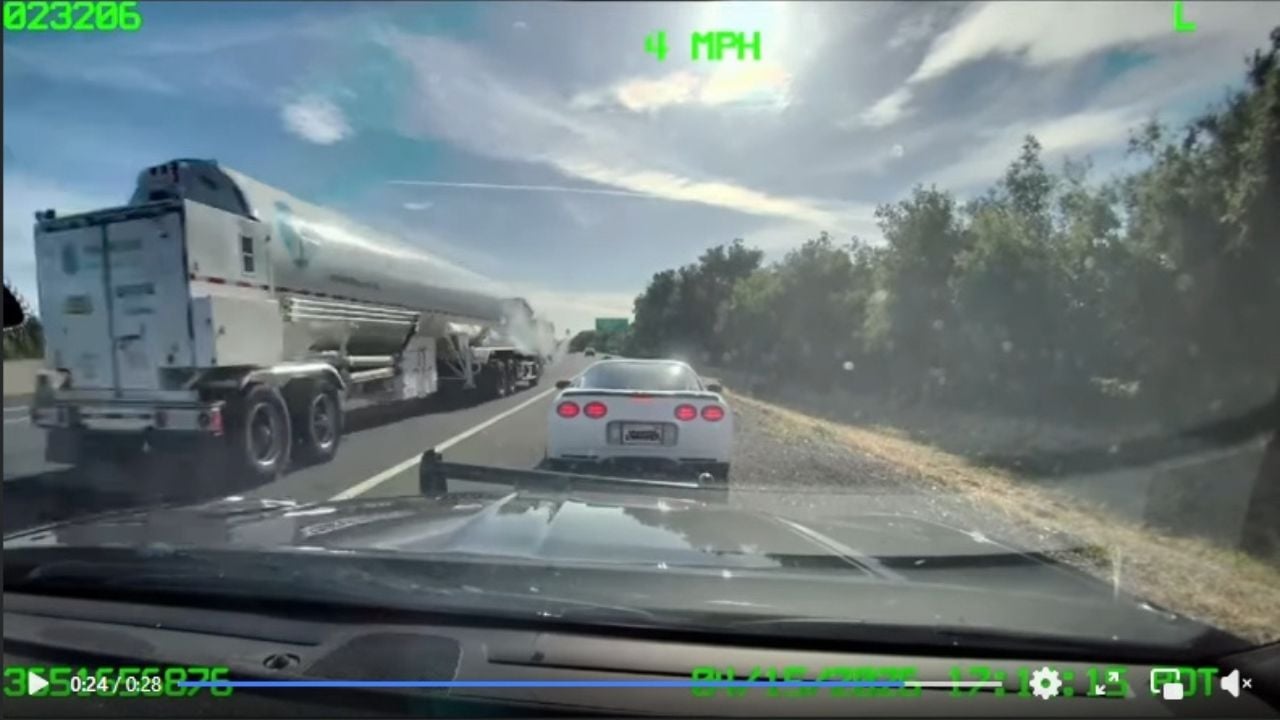
We’re talking about this today because, as CarScoops reported, the Solano division of the CHP recently posted dashcam footage that shows a C5 Corvette speed past the parked patrol car at around 148 mph.
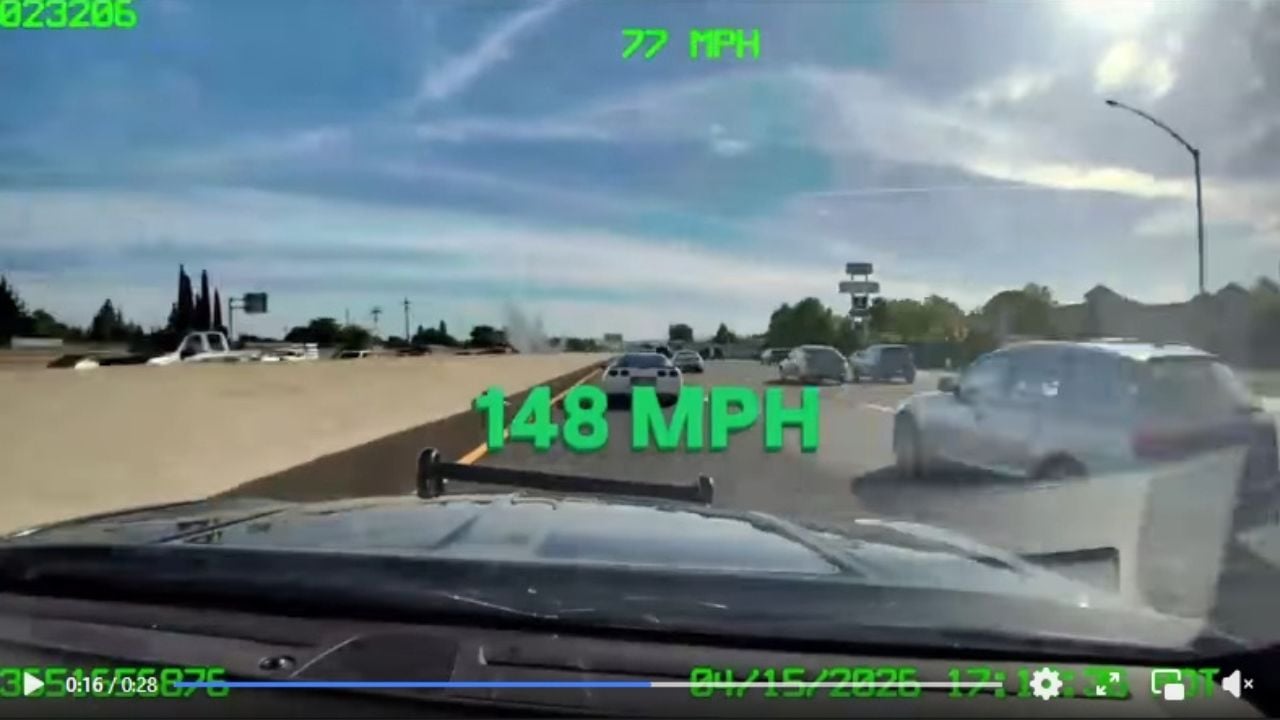
The Corvette’s driver, the CHP says, faces two points on his driver license, higher insurance rates as a result of those points, fines, and possible license suspension. CarScoops note that the driver would be immediately going to jail if this happened in states like Florida.
California law draws a sharp line between “speeding” and “reckless driving.”
Speeding, even outrageous speeding, is typically treated as a traffic infraction unless officers can prove additional behavior such as weaving through traffic, tailgating, or endangering others in a demonstrable way.
Without that extra layer, prosecutors usually stay within the traffic code. That keeps most high-speed cases in civil court rather than criminal court.
Florida’s Approach: The ‘Super Speeder’ Threshold
Now shift the map to Florida, where the philosophy is noticeably more aggressive.
Florida has been tightening its approach to what lawmakers and courts increasingly label “super speeder” behavior. In many situations, driving 50 mph or more over the posted limit, or exceeding 100 mph regardless of the zone, can elevate a stop into a criminal traffic offense.
That is the key difference.
In Florida, speed alone can be enough to cross the threshold into criminal exposure. Once that happens, the situation is no longer a simple citation. It can require a mandatory court appearance, create a criminal record risk, and in some cases open the door to jail time depending on how the charge is filed and how a judge interprets the conduct.
So why such a split between two states that both deal with the same physics on the same kind of roads?
Intent vs. Threshold: Two Legal Philosophies
It comes down to intent versus threshold.
California leans heavily on interpretation of driving behavior. Officers and prosecutors look for “recklessness” as a pattern, not just a number on a radar gun. That makes enforcement more flexible but also more dependent on officer discretion.
Florida leans more toward defined thresholds. Once you cross certain speed markers, the law itself starts to assume dangerous intent. That removes ambiguity but increases the likelihood that a driver ends up in criminal court even without weaving, racing, or visible endangerment beyond speed itself.
There is also a cultural layer underneath both systems.
California’s highways, particularly in rural and desert stretches, have long had a tolerance for isolated high-speed enforcement handled as traffic discipline.
Florida, with dense population corridors and heavy tourist traffic, has moved toward stricter deterrence, especially after a rise in extreme-speed crashes and street racing concerns.
Put simply, California often asks, “What did you do beyond speeding?” Florida often asks, “How fast were you going, and how far past the line did you go?”
The Takeaway
That is why the same Corvette at 148 mph produces two different legal outcomes depending on where the radar lock happens.
One state treats it as a very expensive mistake with long-term insurance consequences. The other may treat it as a prosecutable offense that carries the possibility of court supervision, suspension, and even custody in the most serious filings.
Neither system is soft on speed. They are just built around different definitions of danger.
And that is the real takeaway. The car does not change. The road does not change. What changes is how each state decides when speed stops being a traffic issue and starts becoming a criminal one.