Most of us fell in love with cars at a time when we couldn’t afford them, or life simply demanded something more practical. School, work, kids, and tight budgets all took priority, and the dream car stayed just that: a dream.
Now, if you’ve reached a point where you can finally turn that dream into a reality, we’re here to help you spend your money relatively wisely. Whether you’re reliving your youth or finally checking a long-standing wish off the list, these classics are absolutely worth it.
“Old, But Gold”

Let’s get one thing straight: we’re not knocking anyone’s dream car. If it moves your soul, it’s already valuable. This list is about the classics that deliver big smiles without requiring a second mortgage.
Here’s the deal:
- Price is what you pay.
- Cost is what it takes to live with it, repairs, maintenance, opportunity loss, the whole ownership equation.
- Value and worth? That’s heart talk.
If you’ve worked, saved, sacrificed, and finally found yourself in a position to buy the car you’ve always wanted, then it’s worth every penny. Sometimes, it’s smarter to “overpay” for what you really want than to settle for something you’ll never love.
Every car on this list had to clear a high bar: it’s at least 20 years old, meaning it’s stood the test of time and earned its classic stripes. It shows real or rising collector interest, not just a passing trend. It’s reasonably reliable (by vintage standards) with parts you can actually find. It holds its value or has the potential to appreciate. And above all, it has to make you grin like a fool every time you fire it up and hit the road.
1978–1982 Chevrolet Corvette (C3, Later Years)

The late C3 Corvette often gets overlooked in favor of its chrome-bumpered ancestors. But here’s the thing: while the early models are climbing out of reach, the later C3s still bring serious style, V8 charm, and that unmistakable long-hood, coke-bottle profile, all without the steep buy-in.
The 1978 refresh introduced the dramatic fastback glass hatch, and the styling tweaks of the 1980s gave it a wide, low-slung presence that screams late-night car chases and evokes classic American muscle charm. Sure, horsepower was down during this era, but the torque was still there, the small-block rumble is legit, and the T-tops make everything feel more fun.
Why it’s worth it: It’s one of the most affordable ways into classic Corvette ownership. Parts are everywhere, support is strong, and it looks like a six-figure car without the financial commitment. For $ 12,000–$ 18,000, it’s a V8 icon that still knows how to strut.
1979–1985 Mazda RX-7

The first-gen RX-7 is a lean, clean, rotary-powered coupe that its louder siblings often overshadow. But this car delivers on engagement: it’s light, tossable, and that buzzing 12A engine loves to rev. Styling holds up remarkably well, and the driving experience is pure, unfiltered fun.
Why it’s worth it: With prices still hovering around $10K–$18K, it’s one of the most affordable ways into vintage Japanese performance with real enthusiast cred and rising collector interest.
1977–1981 Chevrolet Camaro

If the later C3 isn’t quite your flavor but you still want that late-‘70s GM muscle vibe, the Camaro Z28 is another Chevy worth serious consideration.
Think of it as the original Bumblebee from Transformers, the one Sam Witwicky bought for $4,000 from that shady used lot. Same vibe here: loud graphics, scooped hoods, V8 rumble, and just enough attitude to leave a mark on the pavement. Emissions regulations limited horsepower and torque, but style remained fully intact. With strong parts support and a loyal fan base, it’s one of the easiest vintage muscle coupes to own, drive, and enjoy.
Why it’s worth it: It’s a budget-friendly slice of late-’70s cool with real V8 swagger. Visually iconic, easy to live with, and still flying under the radar, and hey, it seemed to work out just fine for Sam Witwicky.
1987 BMW M6
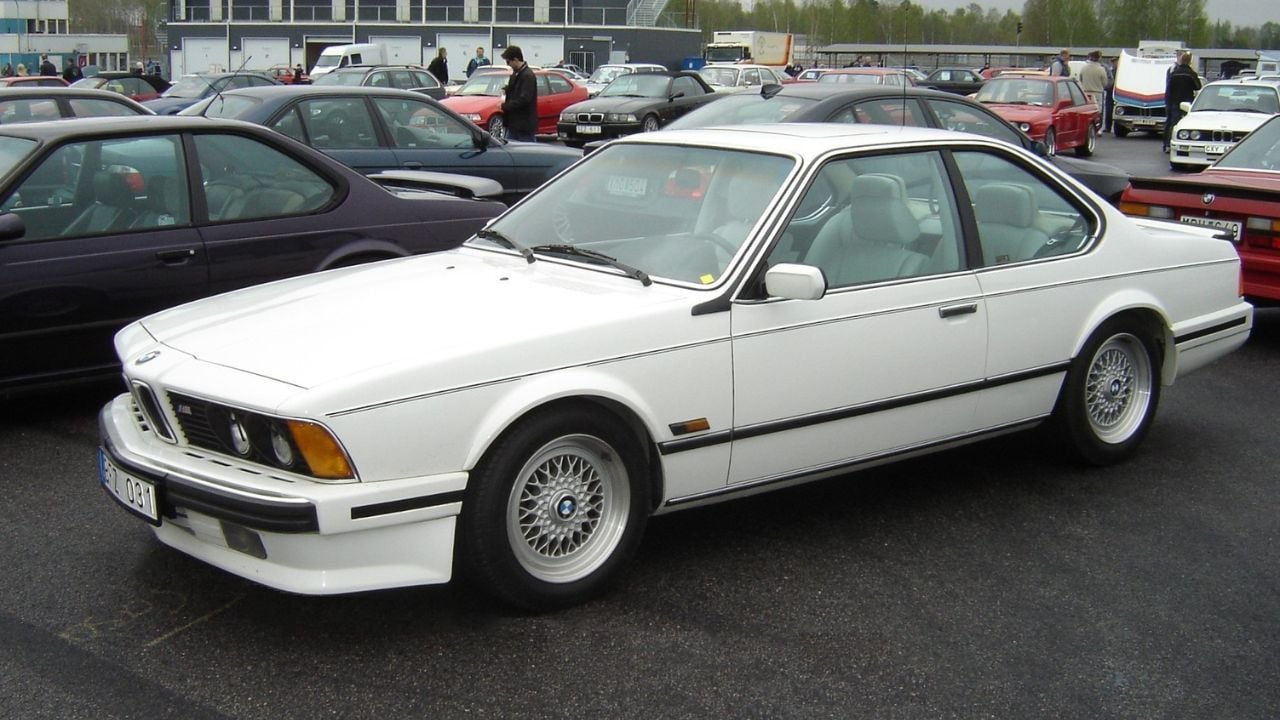
Behold the shark-nosed M6 (E24 chassis), a grand tourer that possesses both the bark and, crucially, the bite. Under its long, elegant hood, it hides a genuine mechanical masterpiece: the legendary S38B35 inline-six (closely related to the M88 used in the BMW M1 and European M635CSi), a direct descendant of the powerplant found in the iconic BMW M1 supercar. This engine loves to sing, delivering a distinctive, metallic wail as the RPMs climb.
Its styling remains aggressively elegant, a timeless design that blends sophistication with an undeniable hint of menace. The interior is pure analog luxury, complete with gauges that tell you exactly what’s going on without a single touchscreen. For under $40,000, you’re not just buying a car; you’re buying into the foundational “M” legacy with genuine collector upside.
Why it’s worth it: You’re essentially getting supercar bloodlines in a sleek, four-seat coupe that drives as good as it looks. The reliability of the engine is surprisingly robust if maintained, and it represents the peak of BMW’s “ultimate driving machine” ethos from an era when they knew how to build them.
1970–1981 Pontiac Firebird Trans Am

It’s loud, it’s brash, and it looks like it could win a bar fight (and probably did, given its ’70s heyday), welcome to the glorious Pontiac Firebird Trans Am. Whether you go full Smokey and the Bandit with a T-top and a screaming chicken on the hood or opt for a slightly less flashy color, these second-generation muscle cars deliver raw, unadulterated V8 performance with serious road presence that demands attention.
Values have surged in recent years, especially for desirable models like the WS6 performance package and those with larger 400 or 455-cubic-inch engines. However, GM’s notoriously vast parts support makes upkeep surprisingly reasonable, unlike some finicky European exotics. Values have surged, good, desirable examples often trade around the $50K mark, with the best cars (special packages, top engines, top condition) pushing into six figures, but some sell for over six figures.
Why it’s worth it: It’s quintessential classic American muscle with appreciating value and all the T-top, “bandit run” attitude you can handle. It’s an instant nostalgia hit, and everyone, from your grandpa to your nephew, will instantly recognize what it’s.
1985–1991 Porsche 944 Turbo

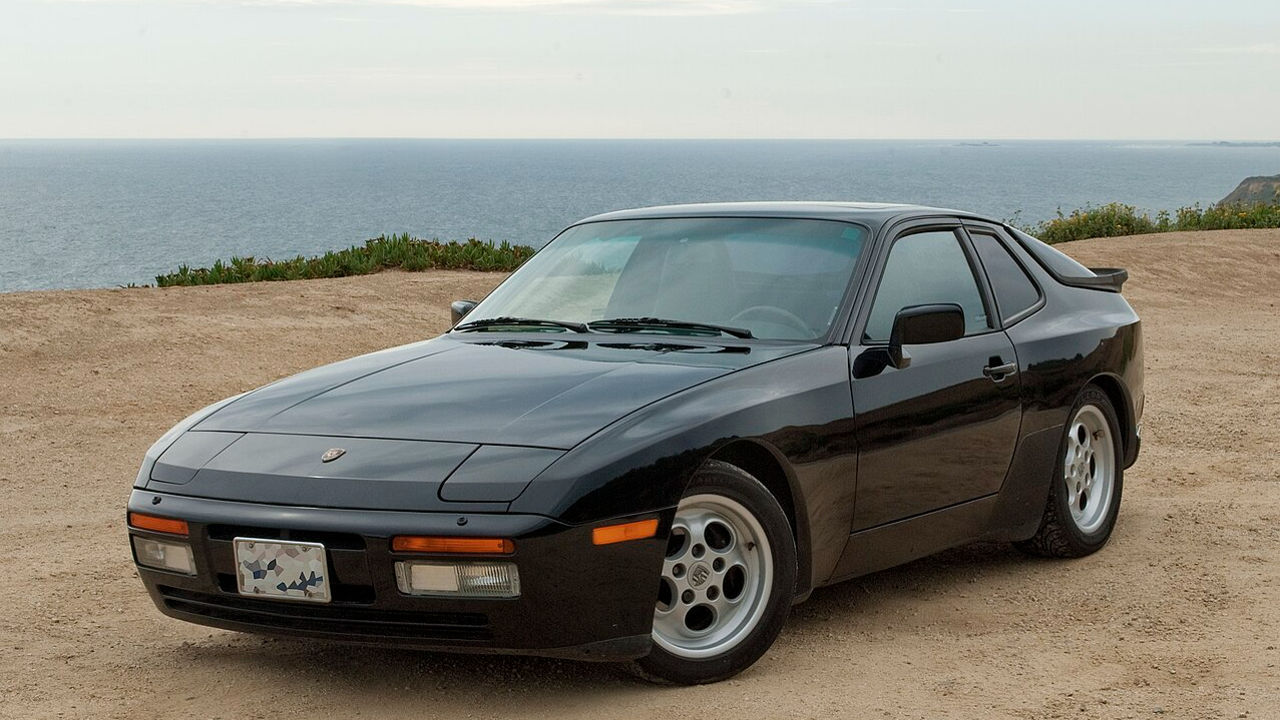
While the venerable 911s get all the glory (and stratospheric prices), the Porsche 944 Turbo is truly the connoisseur’s choice, the thinking man’s Porsche, if you will. It offers near-perfect 50:50 weight distribution (thanks to its transaxle layout), a turbocharged punch that shoves you into your seat, and a ride that’s surgical in the corners, allowing you to carve apexes with precision.
Its understated, almost elegant styling is aging beautifully, and prices, though steadily climbing, are still remarkably reasonable for a Porsche of this caliber. With an average sale price around $28K, it can still be a performance bargain. It’s a genuine performance bargain that delivers smiles without draining your savings.
Why it’s worth it: It’s arguably the best-kept secret in the Porsche world, offering real, engaging driving thrills, track capability, and genuine collector upside that’s only just starting to be fully recognized. It’s proof that front-engined Porsches can indeed be special.
1965–1970 Ford Mustang (First Generation)

The original Ford Mustang isn’t just a car; it’s a bona fide piece of rolling Americana, a cultural phenomenon that democratized style and muscle for the masses. Decades later, it’s still one of the most approachable, beloved, and endlessly customizable classics out there.
Between the sleek coupes, the cruising convertibles, and the iconic fastbacks, there’s a flavor (and a budget) for every enthusiast. Driver-quality first-gen Mustangs often land in the $30K–$50K range depending on year/body/engine, with fastbacks and performance versions far higher with this kind of cultural significance? Count me in. With a deep and expansive aftermarket parts industry that can practically build an entirely new Mustang from scratch, parts and modifications are never far away, making ownership surprisingly easy.
Why it’s worth it: It’s a classic that’s incredibly easy to own, endlessly fun to drive, and still earns an approving nod and a wave from every generation, from grizzled veterans to wide-eyed kids. It’s the ultimate canvas for customization or a perfect bone-stock cruiser.
1957 Chevrolet Bel Air

Okay, if you want to talk about true Americana, the ’57 Chevrolet Bel Air is the undisputed rock star of the Tri-Five era, a finned, chrome-draped icon of American postwar optimism and boundless energy. Its signature two-tone paint schemes, those glorious gold badges, and the panoramic wraparound windshield are instant time machines, transporting you to a simpler era of soda fountains and drive-in movies.
Whether you find a bone-stock beauty or a restomodded monster, Bel Air always draws a crowd and holds its value like a blue-chip stock in a diversified portfolio. $45,000 to own a piece of the ’50s’ rebellious side? Done. Who can forget the mayhem-heavy chase in Thunder and Lightning (1977), with the ’57 Bel Air taking a serious beating?
Why it’s worth it: It’s the very embodiment of the American dream on wheels, with styling, cultural cachet, and collectability that genuinely never go out of fashion. It’s a guaranteed conversation starter at any car show or gas station.
1981–1989 Mercedes-Benz 560SL (R107)
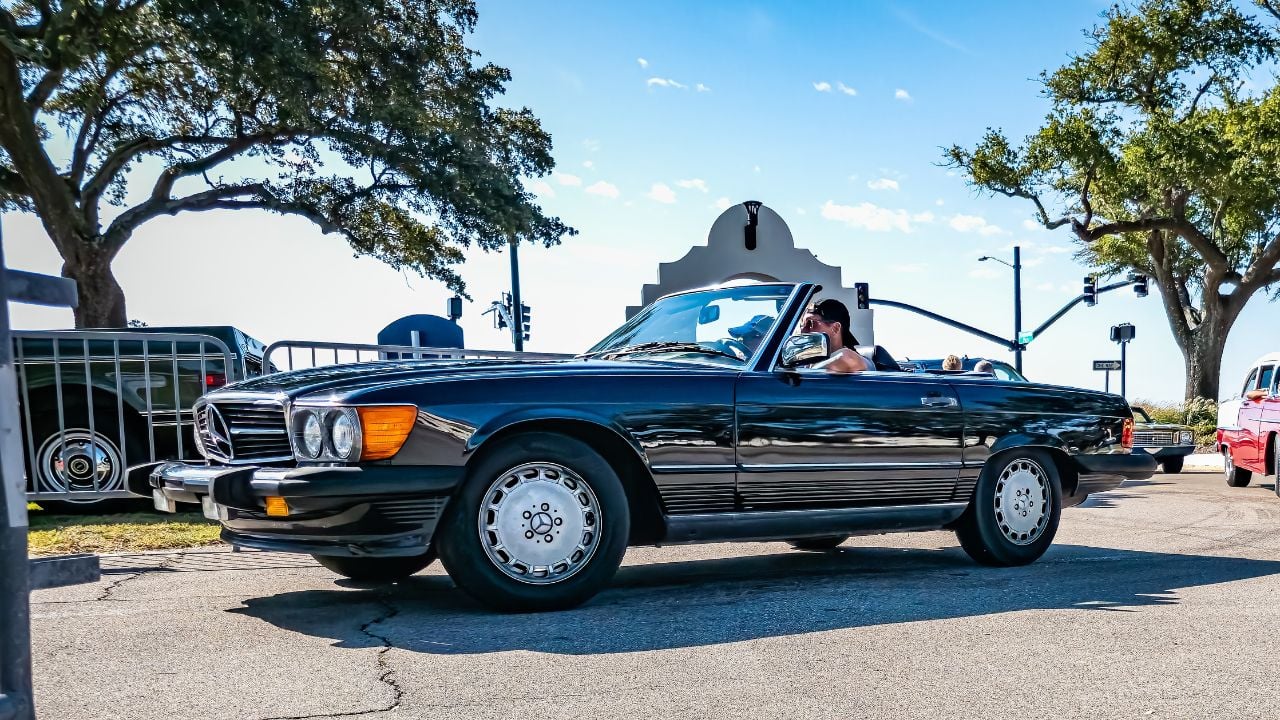
Nothing says “classic sophistication” with a dash of German engineering prowess quite like the Mercedes-Benz 560SL (R107 chassis). This V8-powered convertible feels like it was carved from a single block of granite, smooth, immensely solid, and utterly dependable. The driving experience is more that of a stately cruiser than a canyon carver, but that’s precisely its enduring charm.
It’s perfect for a leisurely Sunday drive to the country club or a spirited blast down the coast often around $30K–$35K depending on condition. They’re also relatively easy to maintain with good parts availability (it’s a Benz, after all, but a simple one by modern standards).
Why it’s worth it: It’s a timeless Mercedes design that blends luxury, unflappable reliability, and growing collector demand. It’s the perfect blend of classy open-air motoring without the complexity or astronomical prices of more modern luxury barges
1978–1983 Datsun 280ZX

Often overshadowed by its earlier, purer siblings like the 240Z and 260Z, the Datsun 280ZX is truly the dark horse of the iconic Z-car family. It’s more refined and comfortable than the original but still maintains that signature long-hood, short-deck coupe feel that defined the breed.
With rising values (now $20,000 plus for a turbo model) and a rabid, growing fan base (especially as the ’70s and ’80s JDM cars gain momentum), it’s finally earning its long-overdue respect. Its styling is pure late-‘70s futurism, part sleek sports car, part disco spaceship, and all cool.
Why it’s worth it: It offers genuine vintage Japanese charm, that coveted Z-car heritage, and a driving experience that’s still engaging, all at a price that’s currently far more reasonable than its older brothers, but likely not for long. Get in while you can
1990–1995 Chevrolet Corvette C4 ZR-1

The Corvette C4 ZR-1 was GM’s audacious moonshot, a true supercar born from American grit and international collaboration. With its Lotus-engineered, Mercury Marine-built LT5 V8 engine (a glorious 32-valve, quad-cam beast), it was capable of humiliating contemporary exotics in its day, pushing out an astonishing 375 horsepower (later 405 hp).
While its digital dash and sharp wedge shape scream the ’90s, the performance is still genuinely impressive by modern standards. Its rarity (just over 6,900 produced) and undisputed racing pedigree are now drawing serious attention from collectors. Even stock, it’s still a weapon on the track and an undeniable statement on the street, and all for just $34,000 to $44,000.
Why it’s worth it: It’s a genuine supercar sleeper that’s still remarkably attainable, offering incredible bang for your buck in terms of performance and exclusivity. But don’t expect it to stay “attainable” for much longer.
1971–1977 Toyota Celica (First Generation)

Often nicknamed the “Japanese Mustang” (and for good reason), the early Toyota Celica brought stylish sports coupe flair and bulletproof reliability to the masses. It’s lightweight, robust, and surprisingly fun to drive, offering a genuine classic car experience without the financial headaches of some American counterparts.
As interest in vintage JDM rides grows exponentially, first-generation Celicas are gaining significant traction among collectors and enthusiasts who appreciate their clean lines and inherent toughness, the average cost ranges from $ 15,000 to $ 25,000. And let’s be honest, those subtly flared rear arches, long hood, and chrome mirrors still look incredibly sharp in any driveway, making it a timeless design.
Why it’s worth it: It’s a stylish, reliable, and mechanically simple classic that’s still genuinely affordable, but its value is on a steady upward trajectory. Get one now before they become the next six-figure JDM hero.
Conclusion: Chrome, Carburetors, and Common Sense

If you love cars and you’ve worked hard, you don’t need an excuse to buy something cool. These classics deliver the experience, the look, the sound, and the feel without squandering the hard work and sacrifices that got you here.
Smart buys. Great drives. That’s the goal.