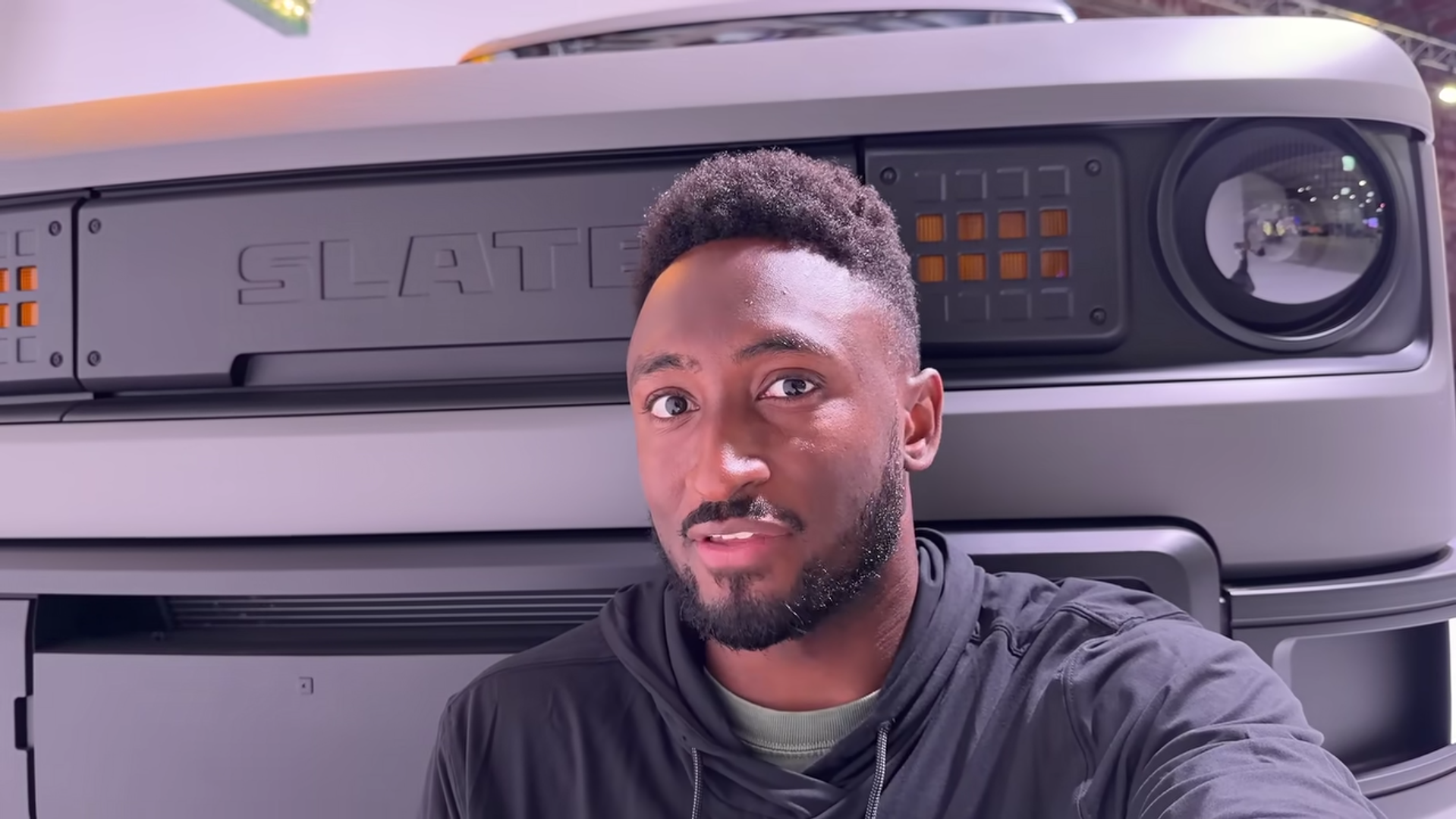
Slate Auto’s upcoming electric pickup has generated plenty of attention by promising something few automakers currently offer: an affordable EV that buyers can customize over time instead of paying for every feature upfront. Starting at just under $25,000 before incentives, the compact truck takes a radically different approach to vehicle ownership.
That philosophy recently received an early real-world evaluation when popular tech YouTuber Marques Brownlee, better known as MKBHD, became one of the first people outside the company to drive a near-production prototype. His first impressions suggest Slate’s unconventional formula may have genuine appeal.
Rather than chasing luxury features or cutting-edge technology, the Slate Truck focuses on simplicity. Buyers receive a basic electric pickup from the factory and can later add accessories, cosmetic upgrades, or even convert it into an SUV as their needs change.
Brownlee acknowledged the truck’s minimalist nature may not suit everyone. Even so, he came away surprisingly positive about both its driving experience and the flexibility offered by its modular design.
A Minimalist EV Designed Around Customization
Every Slate Truck leaves the factory in the same gray finish with steel wheels, a rear-wheel-drive powertrain, and a 65-kWh lithium iron phosphate battery. The single electric motor produces 181 horsepower and delivers an estimated driving range of approximately 205 miles, while DC fast charging is supported at up to 120 kW through a North American Charging Standard (NACS) connector.
Keeping the base vehicle simple allows Slate to offer a significantly lower entry price than most electric pickups currently on the market. Rather than selecting expensive option packages during the purchase process, owners can gradually add upgrades whenever they choose.
Exterior personalization begins with vinyl wraps instead of traditional paint options. According to Slate, complete wraps are expected to cost roughly $500 to $700, making color changes far more affordable than conventional factory paint.
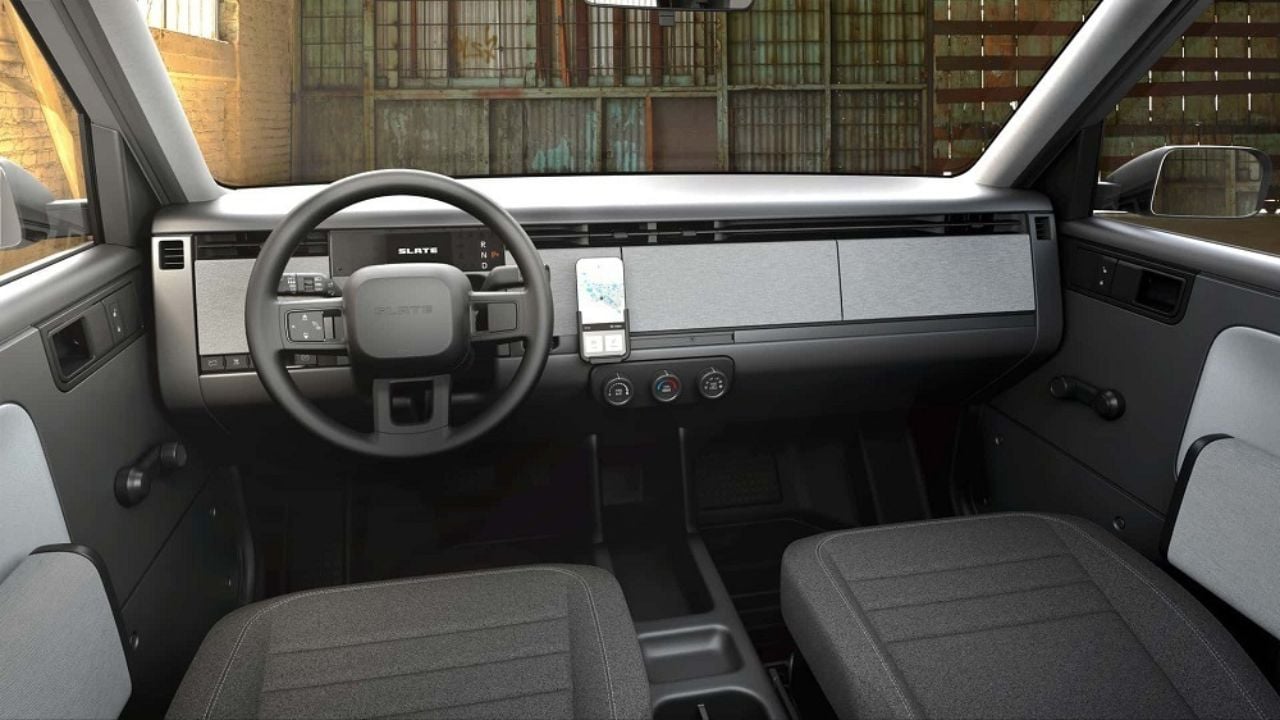
The minimalist philosophy continues inside the cabin. The standard truck features manual crank windows, cloth seats, physical climate controls, and a small digital instrument display behind the steering wheel, while a central infotainment screen is absent by default.
Instead, buyers can install optional accessories such as tablet mounts, upgraded audio systems, premium seat covers, power windows, additional storage solutions, and numerous interior customization kits. The company also plans to support a wide range of third-party accessories using built-in mounting points throughout the cabin and cargo area.
The Truck Can Become An SUV
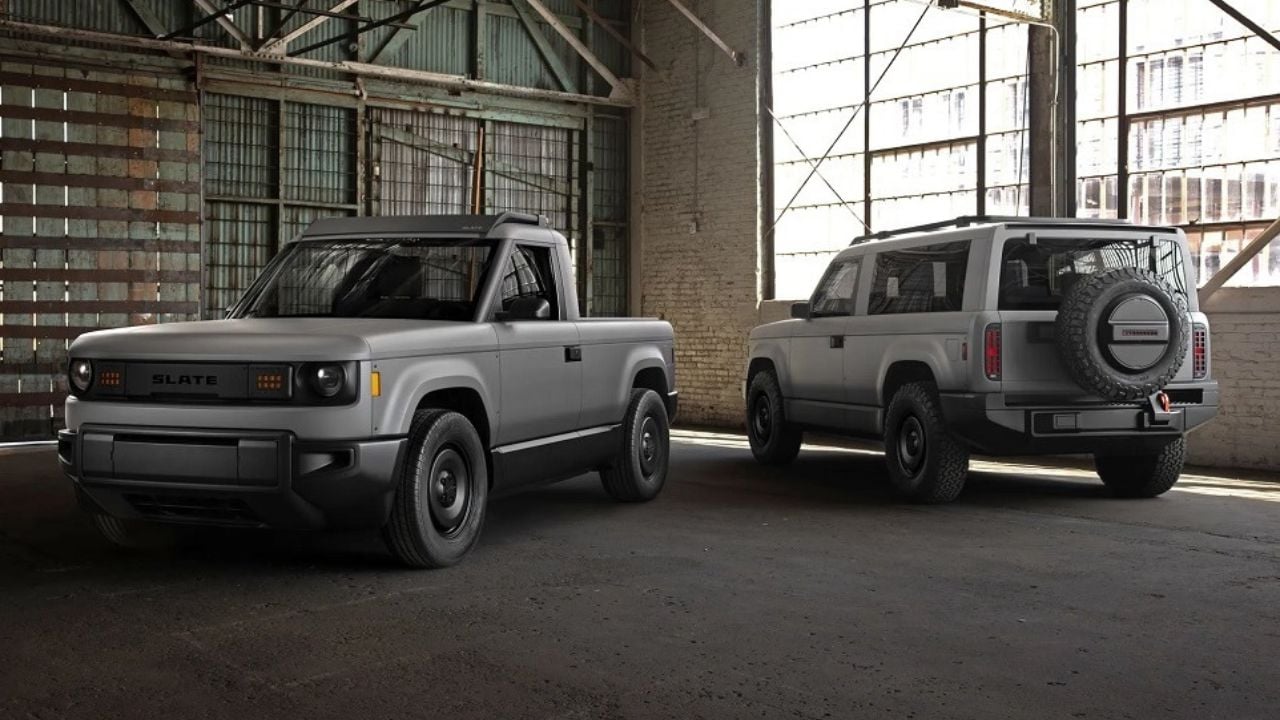
Perhaps the Slate Truck’s most distinctive feature is its ability to transform into an SUV after purchase. Rather than requiring buyers to choose between different body styles from the factory, Slate has designed bolt-on conversion kits that owners can install themselves.
The conversion includes a rear roll cage equipped with integrated airbags, a second row of seating, and a choice of fastback or squareback roof designs. Once installed, the two-seat pickup becomes a compact five-passenger SUV while retaining the same underlying chassis.
Brownlee noted that this level of modularity is unlike anything currently offered by mainstream automakers. He also believes the system could appeal to buyers who want a simple work truck today but may need additional passenger space later without replacing the entire vehicle.
The truck itself also includes practical touches despite its compact dimensions. A five-foot cargo bed is paired with a lockable front trunk that offers roughly seven cubic feet of secure storage, providing useful cargo space beyond the open bed.
Small Specs, Bigger Driving Impressions
Although the performance figures appear modest on paper, Brownlee said the Slate Truck feels noticeably quicker than expected. The compact size and instant electric torque make it responsive around town, even with only 181 horsepower driving the rear wheels.
The prototype also impressed with its one-pedal driving calibration. Regenerative braking is enabled by default and cannot currently be adjusted, but Brownlee compared its tuning favorably to Tesla’s stronger regenerative braking system, saying it brings the truck to a smooth and confident stop.
Ride quality proved slightly firmer than anticipated, especially over smaller road imperfections. Larger bumps and uneven pavement were handled well, suggesting the suspension strikes a reasonable balance between comfort and control for a budget-focused utility vehicle.
Brownlee also appreciated the distraction-free driving experience. Without a large touchscreen, multiple drive modes, or an abundance of digital menus competing for attention, the cabin encourages drivers to simply focus on the road.
His overall verdict was unexpectedly positive. While the Slate Truck is unlikely to replace a family SUV or become a long-distance road-trip machine in its base configuration, Brownlee believes its affordable price, practical design, and unique upgrade path could attract first-time EV buyers, fleet operators, and anyone looking for a simple electric work truck that can evolve over time.