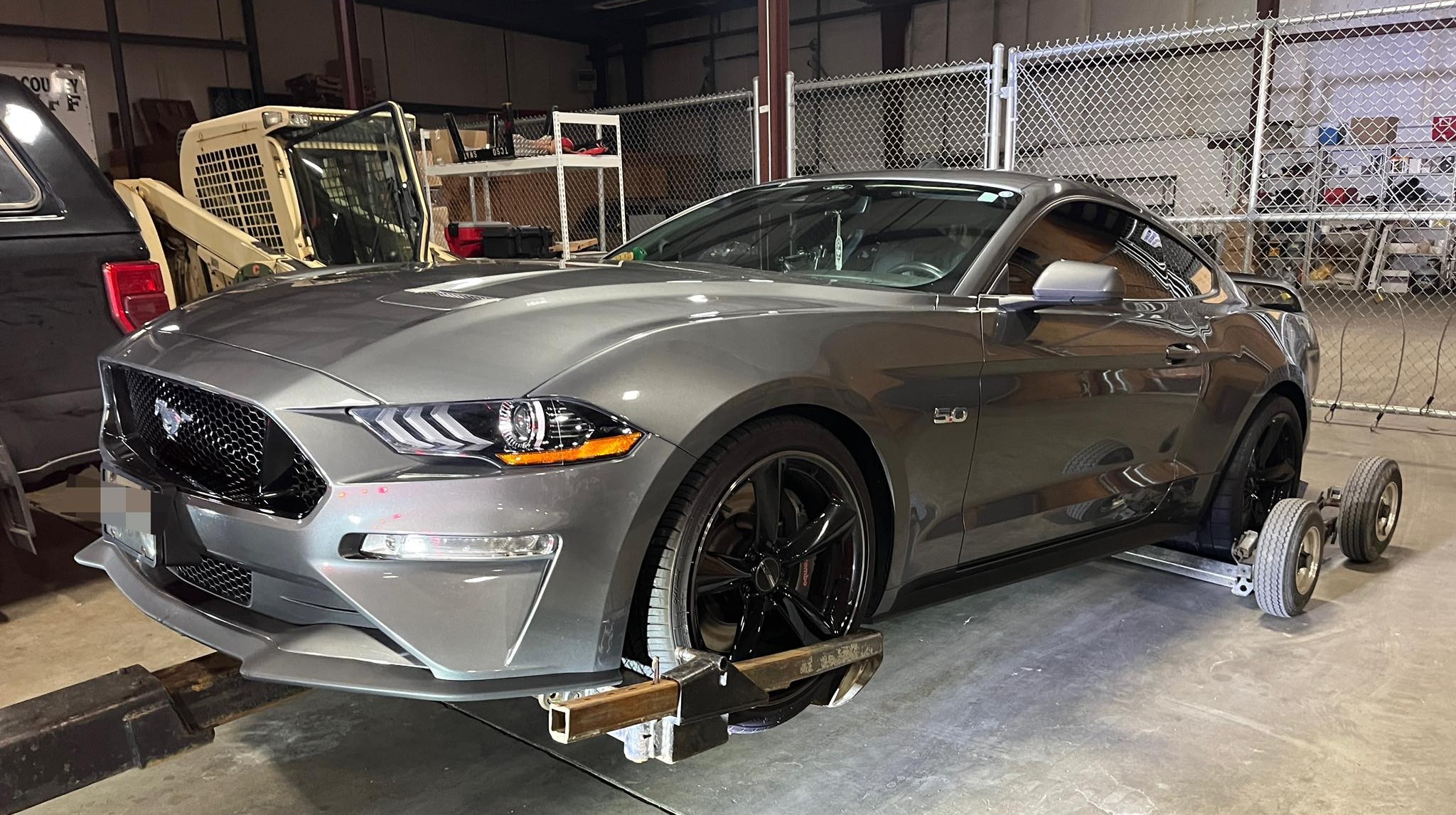
A driver in Washington state managed to outrun deputies, but not the consequences.
According to the Thurston County Sheriff’s Office, a deputy attempted to stop a Ford Mustang for speeding. Instead of pulling over, the driver fled, reportedly reaching speeds of up to 130 mph and blowing through intersections. At that point, the deputy made the call to terminate the pursuit, a decision that likely prevented something far worse.
The Mustang Didn’t Get Away
A short time later, deputies located the Mustang abandoned in DuPont, about an hour south of Seattle. They traced it back to the registered owner’s home and knocked on the door, but no one answered, so the vehicle was seized.
In a Facebook post, Thurston County Sheriff Derek Sanders didn’t leave much room for interpretation about what happens next. “If you want your car back, you can link up with us at 3491 Ferguson St SW in Tumwater,” Sanders wrote. “Otherwise, we’ll put this one to good use in our fleet.” That last line quickly turned what could have been a routine update into something a lot more viral.
Why the Pursuit Was Called Off
While the post’s tone caught attention, the underlying decision was serious. High-speed pursuits, especially at triple-digit speeds through intersections, carry a significant risk not just to officers, but to anyone else on the road.
Departments across the country have increasingly emphasized backing off when the danger outweighs the need to apprehend a suspect immediately. In this case, deputies already had what they needed: a description of the vehicle and a path to identify the owner.
Note: If anyone thinks a pursuit being called off is an opportunity to drive like a fool, it is worth remembering how visible everything is today. Between doorbell cameras, traffic cams, dashcams, and security systems, there is a good chance someone captured something. Getting away in the moment does not mean getting away at all.
Letting the driver go in the moment does not mean the situation ends there.
What Happens Next
That part is less clear. Seizing a vehicle connected to a crime is not unusual, but the circumstances here have already sparked debate. Questions around who was actually driving, whether the car was borrowed or taken, and how forfeiture laws apply could all come into play.
If the owner comes forward, they may be able to reclaim the car, potentially after fees or once the legal process plays out. If they do not, the Mustang could eventually be auctioned or, in some cases, repurposed. Turning seized vehicles into law enforcement use is not common, but it is not unheard of either.
What People Are Saying
The sheriff’s post quickly drew a flood of reactions online, ranging from jokes to real legal concerns. Some commenters leaned into the humor.
“130 mph just to donate your Mustang to the sheriff’s office is wild.” — one commenter
“Looks like a new unmarked unit.” — another commenter
“Please throw lights on it, that’d be hilarious.” — a commenter joked
Others focused on safety, noting that ending the pursuit likely prevented injuries.
“Thank God no one was hurt. Good call to call it off.” — one commenter
“Public safety comes first. You can catch up later.” — another wrote
At the same time, not everyone was on board with how this played out, with some raising legal concerns.
“Sounds like theft to me.” — one commenter
“How can you seize a car from private property without a warrant?” — another questioned
Some also pointed out that identifying the driver may be the bigger challenge.
“Are you sure the owner was even driving?” — one commenter asked
“If you can’t prove who was behind the wheel, what happens next?” — another added
Others pushed back on that line of thinking, arguing the focus should remain on the risk created by the driving itself.
“You can debate the legality, but 130 mph through intersections is the real issue.” — one commenter
The Bigger Picture
For now, no one was hurt, and that may end up being the most important part of this story. The rest of it, who was behind the wheel, whether charges are filed, and what ultimately happens to the Mustang, is still unresolved.
Running might buy you a little time. It does not solve the problem.