Ford’s Mustang has always been about more than just transportation. Since 1964, the pony car has served as Detroit’s experimental playground, where engineers and designers could flex their creative muscles and answer questions nobody asked, like “What if we made it faster?” or “Could we make it corner?”
The answer is always yes.
Throughout six decades, Ford has occasionally looked at a perfectly good Mustang and decided it needed more horsepower, better aerodynamics, or cutting-edge technology that seemed outrageous at the time. Maybe not everyone liked them. But they were bold statements that pushed boundaries and often redefined what a Mustang could be, even if traditionalists weren’t always ready for the change.
1965 Shelby GT350
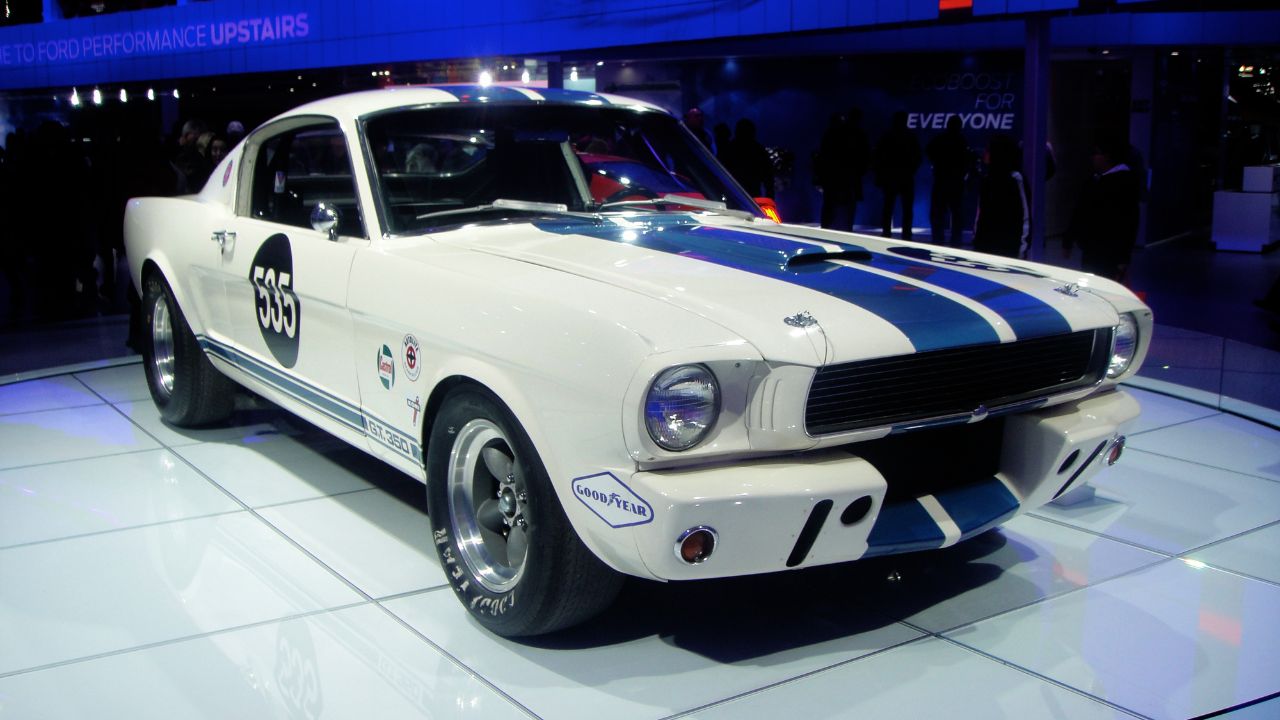
Carroll Shelby took Ford’s secretary special and transformed it into a legitimate track weapon that could embarrass European sports cars costing twice as much.
The original GT350 stripped out the back seat, added a Shelby tuned 289 High Performance V8 rated at 306 horsepower, stiffened the suspension until your kidneys filed a complaint, and proved that American muscle could actually go around corners. Ford handed Shelby the keys to their brand-new pony car and basically said “make it race-ready,” which resulted in a car that was louder, harder, and more focused than anything coming out of Dearborn at the time.
Yes, it was uncomfortable and impractical, but that was entirely the point. This wasn’t your neighbor’s commuter Mustang with the inline-six, and anyone who thinks the first Mustangs couldn’t handle needs to drive a GT350 around a road course.
The car earned its legendary status by winning SCCA championships and proving that with the right modifications, Ford’s affordable sports car could run with the best.
1969 Boss 429

Ford needed to homologate their massive 429 cubic inch semi-hemi engine for NASCAR, so they did what any rational company would do and shoehorned it into a Mustang fastback that was never designed to accommodate it. You know, the usual…
Kar Kraft had to extensively modify the shock towers, relocate the battery to the trunk, and essentially rebuild the front suspension just to make this beast fit, resulting in one of the rarest and most valuable Mustangs ever created. With 375 horsepower on paper, the Boss 429 is widely described as conservatively rated for its era, and period testing and later dyno discussions often suggest it could make more than the official figure in stock form.
Only 1,359 were built across 1969 and 1970, making them instant collectibles that now command six-figure prices at auction. Before you complain about the S650’s price tag, remember that the Boss 429 cost $4,798 in 1969, which is about $42,000 in today’s money for what was essentially a hand built homologation special.
This was Ford engineering at its most audacious, proving they’d go to absurd lengths to dominate on Sunday and sell on Monday.
1993 SVT Cobra

The Fox-body Mustang’s final act was this properly developed performance car that finally gave enthusiasts a factory Mustang with both power and refinement.
Ford’s Special Vehicle Team massaged the 5.0-liter V8 to produce 235 horsepower, which doesn’t sound earth-shattering today but represented a significant bump over the standard GT in an era when emissions regulations were strangling performance. More importantly, SVT added a real performance suspension, upgraded brakes, limited-slip differential, and interior touches that made the Cobra feel like a legitimate sports car rather than a muscle car cosplaying as one.
This was Ford acknowledging that buyers wanted more than straight-line speed and that a proper performance Mustang needed to be a complete package. The 1993 Cobra proved you could have a Mustang that handled well without sacrificing the tire-shredding V8 character, laying the groundwork for every SVT and Shelby model that followed.
Anyone who dismisses the Fox-body generation clearly never experienced how revolutionary it felt to have a Mustang that could actually keep up with Corvettes in the corners.
2000 Cobra R

Ford built exactly 300 of these stripped-down, track-focused monsters and didn’t even pretend they were street-friendly daily drivers.
The Cobra R came without air conditioning, without a radio, without a back seat, and with a naturally aspirated 5.4-liter V8 pumping out 385 horsepower through a Tremec six-speed manual transmission. At $54,995, it cost nearly twice what a regular GT went for, but you got a turnkey race car that could lap tracks faster than Mustangs with significantly more power thanks to serious suspension work and weight reduction.
The Cobra R represented Ford’s willingness to build a Mustang for the hardcore two percent of buyers who actually knew what brake fade meant and had strong opinions about damper settings. The Cobra R represented Ford’s willingness to build a Mustang for the hardcore two percent of buyers who actually knew what brake fade meant and had strong opinions about damper settings.
Sure, it wasn’t practical, but neither is a motorcycle, and that hasn’t stopped millions of people from owning those either.
2003-2004 SVT Cobra (Terminator)

Sometimes called the Terminator, this supercharged beast was SVT’s mic drop moment for the aging SN-95 platform.
Ford bolted an Eaton supercharger to the 4.6-liter modular V8 and extracted an underrated 390 horsepower and 390 lb-ft of torque, making it the most powerful production Mustang ever built at that point. The independent rear suspension, introduced on the 1999 SVT Cobra and strengthened over time, finally gave Mustang buyers a factory IRS setup that could better manage bumps and corners than the traditional solid axle.
These cars were absolute monsters when they were new and have only gotten more insane as the aftermarket figured out that the iron-block DOHC engine could handle obscene amounts of boost. Before you lecture anyone about “real” Mustangs needing solid rear axles, consider that the Terminator proved independent suspension could work beautifully while still maintaining that visceral V8 character.
This generation transformed what modified Mustangs could achieve and remains a favorite among enthusiasts who want a platform that can grow with their horsepower addiction.
2007-2009 Shelby GT500

Shelby branded Mustangs returned in the mid 2000s, and Ford celebrated with the Shelby GT500 by cramming a supercharged 5.4-liter V8 under the hood that made 500 horsepower.
The new S197 platform finally gave Mustang the retro-modern styling that acknowledged its heritage without looking like a rolling museum piece, and the GT500 took that formula and dialed everything to eleven. Yes, the solid rear axle and somewhat crude suspension tuning meant it wasn’t as refined as European sports cars costing twice as much, but that raw, unfiltered character was exactly what made it special.
For around $45,000, you got supercar levels of straight-line performance in a package that didn’t require selling organs to maintain or insure. The GT500 proved that Ford could honor the past while pushing into the future, creating a modern muscle car that old-school enthusiasts and newcomers could both appreciate.
Anyone who complains about the interior materials or ride quality is missing the point entirely, which was half-second quarter-miles and tire smoke thick enough to set off smoke detectors three blocks away.
2012-2013 Boss 302

Ford revived one of their most legendary nameplates and actually did it justice, creating a track-focused Mustang that prioritized handling and high-revving thrills over brute-force horsepower.
The naturally aspirated 5.0-liter Coyote V8 was tuned to produce 444 horsepower at 7,400 RPM, giving it a top-end punch that felt more exotic than expected from a pushrod muscle car (which, for the record, the Coyote wasn’t, being a thoroughly modern DOHC design). Ford added unique suspension tuning, a Torsen limited-slip differential, aerodynamic improvements, and an optional TracKey that unlocked even more aggressive settings for track use.
The Boss 302 Laguna Seca edition took things further with adjustable suspension, a bigger rear spoiler, and a front splitter large enough to worry about driveway entrances. This wasn’t about having the biggest horsepower number in magazine comparisons but about creating a balanced, engaging driving experience that rewarded skill over throttle mashing.
Before dismissing it for having “only” 444 horsepower, remember that driving a car at nine-tenths through a challenging road course is infinitely more satisfying than doing burnouts in a parking lot.
2013 Shelby GT500
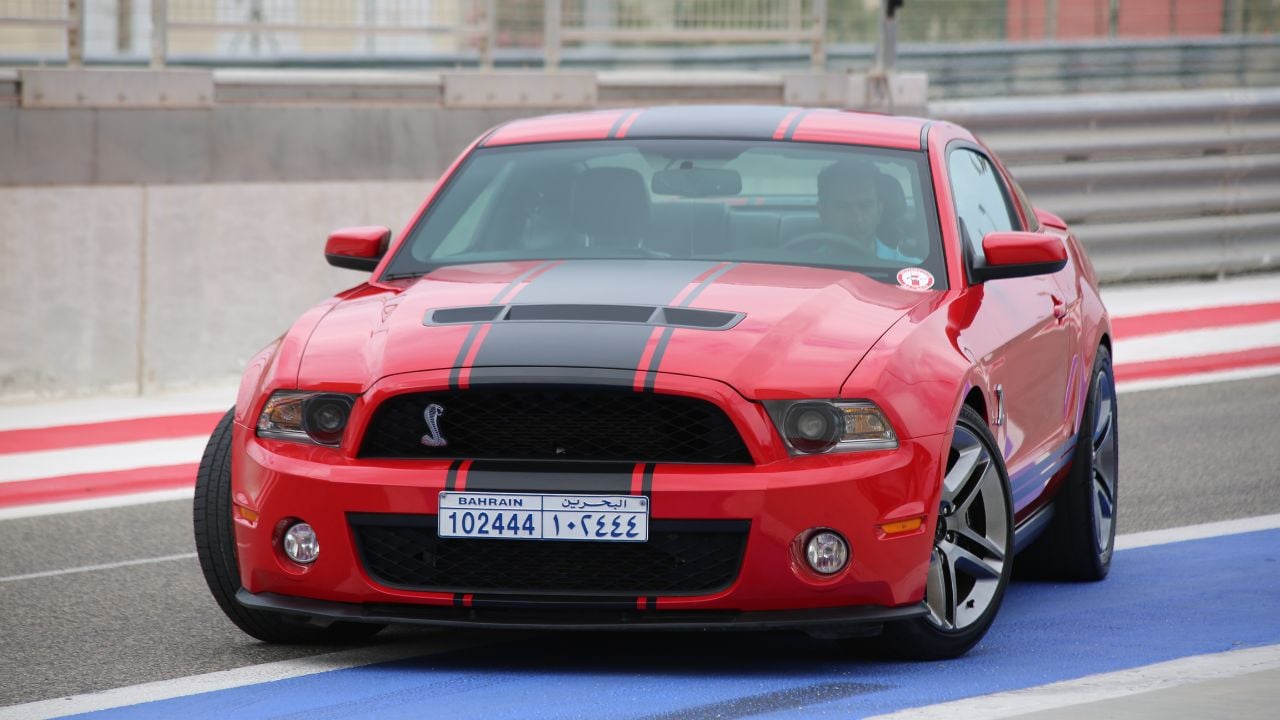
With 662 horsepower and 631 lb-ft of torque, Ford billed the 2013 GT500’s 5.8-liter as the most powerful production V8 in the world at the time, and watched the internet lose its collective mind.
The 5.8-liter supercharged V8 was so powerful that Ford had to significantly upgrade the transmission, driveshaft, and axle shafts just to handle the torque, while the cooling systems worked overtime to prevent everything from melting under sustained use. A top speed of 202 mph made it the fastest production Mustang ever and gave American muscle car credibility in top-speed conversations previously dominated by European exotics.
Sure, the chassis struggled to manage all that power with a solid rear axle, but that slight wildness was part of the appeal for enthusiasts who didn’t want everything sanitized by stability control. For $55,000, you got nearly 700 horsepower and could still drive it to work every day, which remains one of the best performance bargains in automotive history.
Anyone who claims this much power is “too much” has clearly never experienced the addictive rush of supercharger whine followed by tire smoke and acceleration that pins you to the seat. We say, MORE! MORE! MORE!
2015 Mustang GT (S550 Platform)

The sixth-generation Mustang was Ford’s declaration that they could build a world-class sports car without abandoning the characteristics that made Mustangs special.
Independent rear suspension finally became standard across the lineup, giving even base models handling capabilities that would have embarrassed previous Shelby variants. The 5.0-liter Coyote V8 produced 435 horsepower in the GT, but more impressive was how the new chassis could actually use that power through corners without drama.
Ford benchmarked European sports cars during development, and it showed in the improved interior quality, refined ride, and suspension tuning that could handle both track days and daily commuting. This was Ford’s answer to decades of criticism that Mustangs couldn’t compete with global sports cars, and the automotive press responded by actually comparing Mustangs favorably against BMWs and Camaros.
To anyone still mourning the solid rear axle, drive an S550 back-to-back with a Fox-body and then explain with a straight face why independent suspension is somehow inferior.
2016 Shelby GT350 and GT350R

Ford built a flat-plane crank V8 that revved to 8,250 RPM, put it in a Mustang, and created something that sounded like it escaped from Maranello rather than Dearborn.
The 5.2-liter Voodoo engine produced 526 horsepower, but the real magic was how it delivered that power with a linear urgency and soundtrack that gave traditional cross-plane V8s an identity crisis. MagneRide adaptive dampers, Michelin Pilot Sport Cup 2 tires (on the R model), and aerodynamic enhancements created a track weapon that lapped faster than Mustangs with significantly more horsepower.
The GT350R went even further (Ford, you’re killing us), deleting the back seat, adding carbon fiber wheels, and proving Ford could build a Mustang that prioritized handling finesse over straight-line brutality. This wasn’t about winning stoplight drag races but about creating driving experiences where the journey mattered more than arrival times.
Yes, it “only” has 526 horsepower, but consider that driving a GT350 at seven-tenths on a winding road is more engaging than any 700-horsepower car on a straight highway.
2022 Shelby GT500 (S550)

Ford looked at the previous GT500’s 662 horsepower and said “that’s cute” before building a supercharged 5.2-liter V8 that made 760 horsepower and 625 lb-ft of torque.
The seven-speed dual-clutch transmission was a controversial choice for purists who wanted a manual, but it shifted faster than any human could and handled the tremendous torque without complaint. Ford added adaptive dampers, electronically controlled differential, sophisticated aerodynamics, and enough cooling capacity to handle track use without the car going into limp mode after three laps.
Ford claimed a 10.7-second quarter mile on a prepped strip, and independent instrumented tests have typically landed in the low 11-second range at about 132 mph, putting it firmly in supercar territory for acceleration. For $73,995, you got performance that would have cost $200,000 from European manufacturers, along with the practicality of four seats and a trunk.
Sure, there’s the lack of a manual option, but purists sometimes have to accept that technology can make things better. And a DCT that shifts in 80 milliseconds while you’re at full throttle is objectively superior for performance, even if it’s not as romantically engaging.
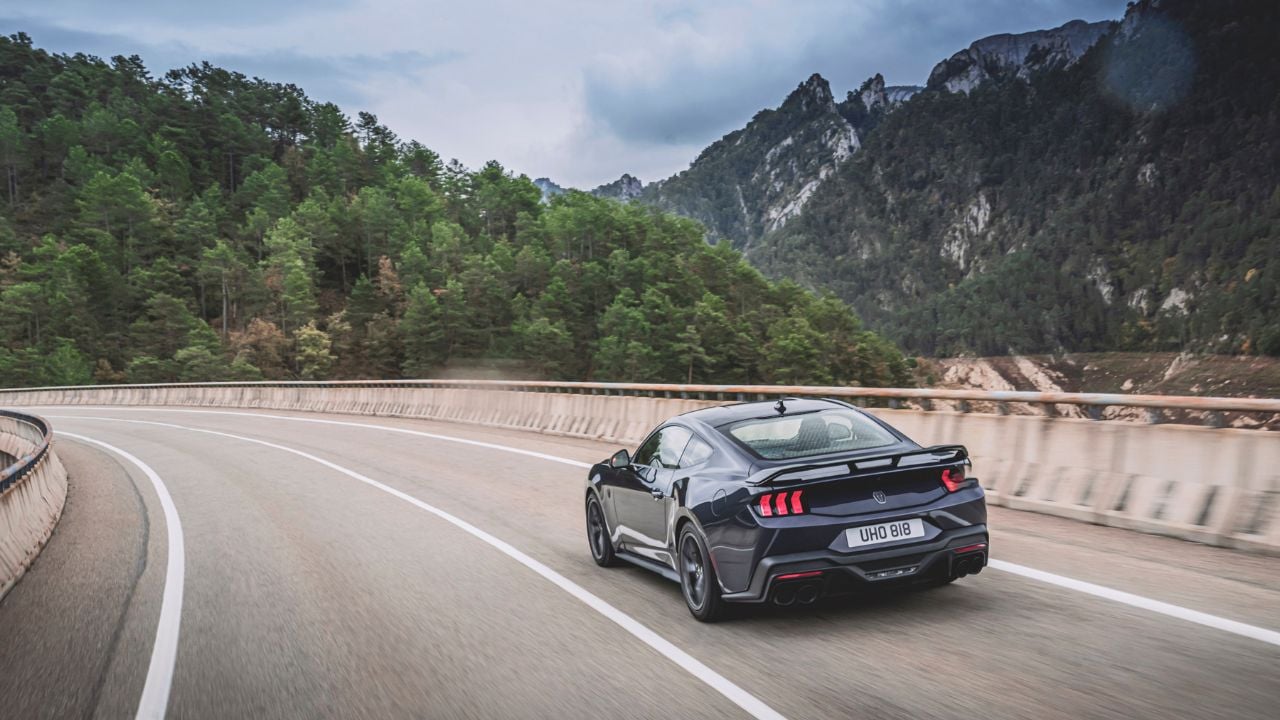
2024 Mustang Dark Horse

The seventh-generation Mustang’s track-focused variant proves Ford hasn’t lost the plot in an era of electrification and crossover proliferation.
With 500 horsepower from a revised 5.0-liter Coyote V8, uprated cooling, a Tremec six-speed manual transmission, available MagneRide dampers, and aggressive aerodynamics, the Dark Horse is Ford’s statement that naturally aspirated V8s still have relevance. The available handling package adds even more track-oriented upgrades like stiffer springs, unique anti-roll bars, and aerodynamic elements that generate real downforce rather than just looking aggressive.
At roughly $60,865 including destination for 2024, it undercuts many European sports cars by tens of thousands while delivering comparable performance and more character. This is Ford acknowledging that enthusiasts still want driver-focused cars in an industry increasingly dominated by autonomous driving features and electrification mandates.
Before writing it off as “just another Mustang,” consider that Ford could have taken the easy route and slapped more screens and driver assists into their sports car but instead doubled down on mechanical engagement and driver involvement.
Conclusion

These twelve Mustangs represent Ford’s willingness to experiment, take risks, and occasionally ignore the accountants who probably questioned the business case for building 300 stripped-out Cobra Rs or developing flat-plane crank V8s. Each one pushed the Mustang formula in different directions, whether that meant brute horsepower, sophisticated handling, cutting-edge technology, or stripped-down track focus.
The common thread wasn’t always the biggest engine or the highest horsepower but rather Ford’s commitment to building cars that enthusiasts actually wanted rather than what market research suggested they should want. From Carroll Shelby’s original GT350 to the modern Dark Horse, these special Mustangs kept the nameplate relevant across six decades by refusing to simply repeat what came before.
The Mustang’s ability to evolve while maintaining its essential character proves that heritage doesn’t mean stagnation, and the best way to honor the past is by building something worth getting excited about in the present.