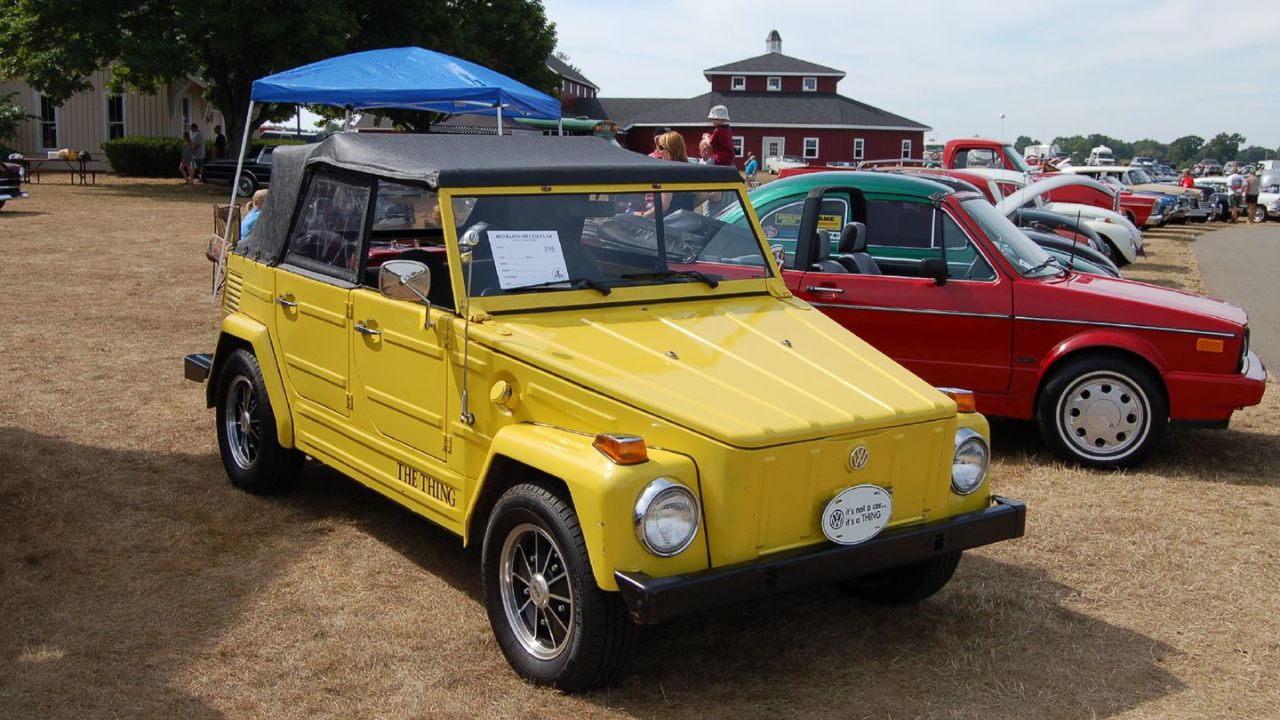
It’s 1973, and you’re cruising down the Pacific Coast Highway in what looks like a military jeep that got lost at Woodstock. Welcome to the world of the Volkswagen Thing: a vehicle so wonderfully weird that it made the already quirky VW Bus look mainstream by comparison.
The Thing landed on American shores like a friendly alien spacecraft, sporting the kind of boxy design that would make a Minecraft player pause their game to look. Here was a car that didn’t just march to its own drummer: it brought the whole percussion section with it.
From Battlefield to Beach Party
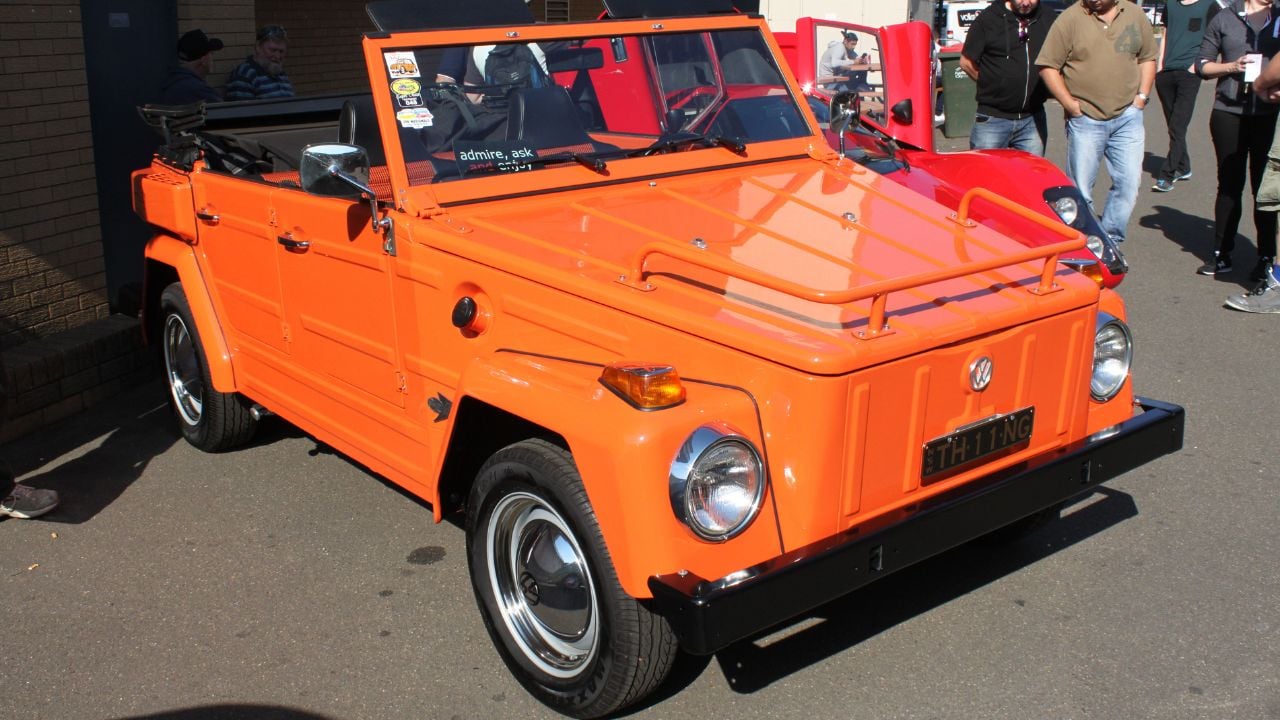
Let’s talk origins, because this story starts in the most German way possible: with military precision and a NATO contract. The Type 181, as the engineers called it (because “Thing” wasn’t quite technical enough for the guys in lab coats), began life in 1968 as a lightweight utility vehicle developed primarily for the West German military.
The brilliant part? Volkswagen basically grabbed the Beetle’s proven drivetrain, that trusty air-cooled flat-four engine, and Beetle-based mechanicals (including the air-cooled flat-four and VW torsion-bar suspension) and built a completely different body around it. It was like taking a reliable friend and giving them a complete makeover. The military version, called the Kurierwagen in Germany, proved it could handle everything from Alpine mountain passes to North African deserts.
Here’s where civilians enter the picture. Someone at Volkswagen looked at this tough little box on wheels and thought, “You know what? Americans might actually buy this thing.” And boy, were they right.
The Thing Arrives in America

When the Thing debuted as a 1973 model, its base MSRP was $2,750 (with as-tested prices often higher). That placed it between a basic Beetle sedan (about $2,299) and a Karmann Ghia convertible (about $3,450) in VW’s lineup. Not exactly cheap, but you weren’t buying transportation; you were buying a conversation starter with four wheels.
The engineering specs tell the story of beautifully simple German thinking. That air-cooled 1.6-liter flat-four pumped out a whopping 46 horsepower in U.S. trim – enough to get you there, just not in any particular hurry. With a four-speed manual transmission (automatics were for softies), the Thing’s top speed was roughly in the high-60s to low-70s mph range, depending on conditions, assuming you had the patience and a long enough runway.
The real magic happened in the details. Those doors? They lifted clean off and were stored in the rear cargo area. The windshield folded flat forward, turning your daily driver into something that felt more like a dune buggy. The canvas top could roll back or come off entirely, and the vinyl seats hosed off easier than your patio furniture.
The Driving Experience: As Basic as It Gets

Driving a Thing was an experience that required recalibrating your expectations. It felt nimble in ways that surprised people. The high seating position gave you a commanding view of traffic, and those flat, vertical fenders made parking a breeze; you could see exactly where the corners were.
The engine sat out back, just like its Beetle cousin, which meant you got decent traction in sand and snow. Ground clearance was respectable, and the approach and departure angles would make modern SUV owners jealous. Beach access roads? No problem. Mountain fire roads? Piece of cake. Grocery store parking lots? Well, now you were just showing off.
The steering was direct and unassisted (power steering was a luxury for uptight drivers). The ride was bouncy but honest, thanks to that torsion bar suspension setup that VW had perfected over decades. It wasn’t harsh, just… purposeful.
The Numbers Game

Volkswagen sold about 25,000 Things in the U.S. during its brief official run from 1973 to 1974. That might sound modest, but it was enough to give the Thing a real footprint in U.S. beach towns and college cities, suddenly the Thing doesn’t seem like such a niche player.
Fuel economy was genuinely impressive for the era. Owners regularly reported 25-30 mpg, which meant you could drive from Los Angeles to San Francisco for roughly $5–$8 in gas money at early-’70s fuel prices.
The End Of an Era (Sort Of)

After taking over beach towns and college campuses everywhere, the Thing’s American adventure ended after just two model years, done in by changing safety regulations and emissions requirements. The simple charm that made it special, those removable doors, that fold-flat windshield, that basic interior, didn’t align with the increasing complexity of federal motor vehicle standards.
But it’s not all sad, of course: while production ended in the U.S., the Thing continued its journey in other markets. Mexico kept building them until 1983, and they remained popular in Europe and South America throughout the 1970s. Total worldwide production reached 90,883 units, making them rare but not impossible to find.
The Thing Today

Fast-forward to 2024, and the Thing has achieved something special: it’s become a legitimate collectible without losing its sense of fun. Clean examples regularly sell for $15,000 to $25,000, with show-quality restorations commanding even more. Not bad for a car that critics once dismissed as a novelty.
The appeal makes perfect sense when you think about it. In our current world of 400-horsepower family sedans and SUVs that drive themselves, there’s something refreshing about a vehicle that makes no promises except to be honest, simple, and fun. The Thing doesn’t pretend to be faster than it is, more refined than it needs to be, or more complex than necessary.