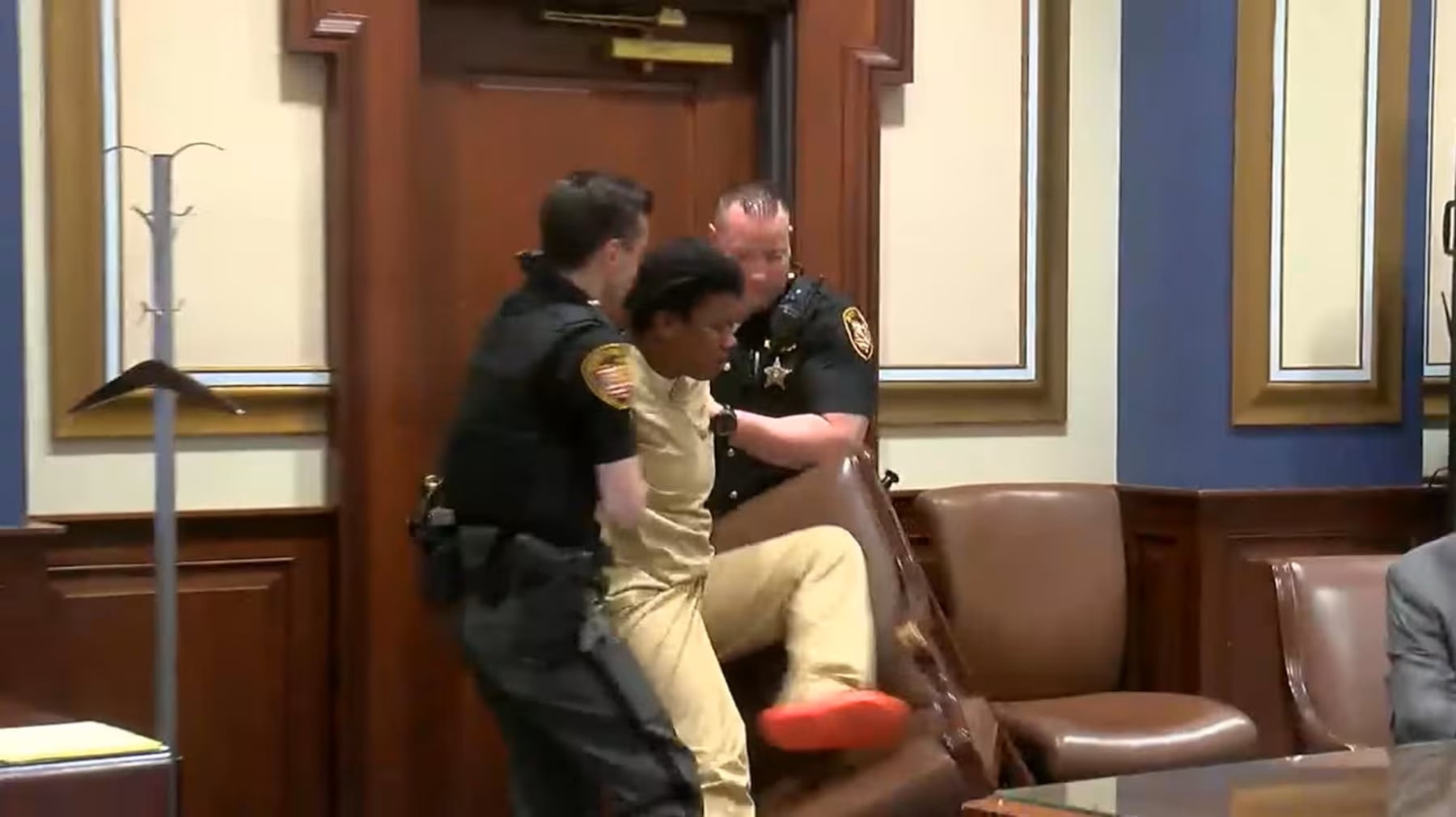
Iesha Harris has now made it a habit of getting thrown out of the same courtroom, and each time the stakes get higher for her.
A Cincinnati woman at the center of one of the most dramatic police chases in recent Hamilton County history was physically removed from court yet again on Tuesday, May 26, making it three separate courtroom ejections in a matter of weeks. Iesha Harris, 34, of Winton Hills, screamed, yelled profanities, and kicked the defense table so hard that her chair nearly toppled all the way backward. Hamilton County deputies had seen enough, and escorted her out of Judge Christopher McDowell’s courtroom before proceedings could continue.
What makes this latest outburst particularly notable is the timing. Harris did not kick furniture before getting sentenced. She kicked furniture while being sentenced. Judge McDowell had just handed down 90 days in jail, the maximum penalty allowed, specifically for her previous two courtroom meltdowns. Harris also received the maximum fine of $250 for destroying a trash can during an earlier hearing. Apparently, neither the sentence nor the fine landed quietly.
As a result of Tuesday’s behavior, Judge McDowell revoked her original bond from her March arrest and ordered that she be held with no bond at all. She will remain in the Hamilton County jail until her trial date of August 23. If convicted on the most serious charges against her, including felonious assault on a police officer, she could spend more than four decades behind bars.
The Police Chase That Started It All
The reason Harris is in court at all goes back to February 28, when Norwood police spotted a tan Chevy Tahoe connected to outstanding warrants for felonious assault and weapons under disability. A Flock license plate camera initially flagged the vehicle, and from there, things escalated fast.
Harris led Norwood and Cincinnati police on a 90-minute pursuit that spanned Hamilton County from Norwood to Harrison, crossed into Indiana, and then looped back into Hamilton County. Officers deployed stop sticks and attempted multiple PIT maneuvers to stop the vehicle. During one attempt, a Cincinnati police officer’s SUV struck the trailer being towed behind Harris’s vehicle, causing the cruiser to end up sitting on top of the flatbed. Moments later, a second PIT maneuver caused the cruiser on the trailer to flip and roll off. Harris’s Tahoe then crashed into a tree and caught fire. Both Harris and one officer were taken to the hospital with minor injuries.
The Cincinnati Fraternal Order of Police did not stay quiet about the incident. “Vehicle pursuits are dangerous. Not as dangerous as allowing a felonious assault suspect to wander the streets to locate their next victim,” the organization wrote on Facebook following the pursuit. “Policing is dangerous and sometimes messy. It’s a danger that less than 1% of Americans choose to accept.”
She Fled the State, Then Came Back Fighting
If the chase itself was not enough, Harris made the situation considerably worse afterward. She was initially released on bond, but court records allege she cut off her electronic ankle monitor in March and never came back to court when her case moved to indictment. A nationwide fugitive alert was issued, and the FBI ultimately tracked her down in Macon, Georgia, where she was arrested in early April in coordination with U.S. Marshals and local gang and drug units.
Harris waived extradition and was returned to the Hamilton County jail on April 29. Her explanation, delivered angrily to the judge, was that her boyfriend had cut off the ankle monitor and taken her out of state against her will. Prosecutors were not convinced. Assistant Prosecutor Elyse Deters told the court that Harris has repeatedly disobeyed both police and court orders, making her a clear risk to the public. “She doesn’t care about the law. She doesn’t care about orders,” Deters said. “She doesn’t care about the police. She doesn’t care if she kills somebody.” Judge McDowell agreed, stating that no release conditions could reasonably protect the community.
What Contempt of Court Actually Means for a Defendant
Most people understand that judges can hold someone in contempt for bad behavior in the courtroom, but the legal consequences are often more serious than people realize. Contempt is not simply a courtroom sanction attached to an existing case. It creates its own separate criminal exposure and functions as a standalone misdemeanor. That means every outburst Harris has had carries its own legal weight, completely independent of the felony charges she is already facing.
Legal experts note that the roots of courtroom outbursts are often deeply emotional and psychological. Criminal proceedings involving the real possibility of imprisonment can trigger intense reactions, and some defendants may have underlying mental health conditions that affect their ability to maintain composure. It is worth noting that Judge McDowell had ordered a mental health evaluation for Harris, and was waiting on that report before finalizing earlier contempt sentencing decisions. That context does not excuse the behavior, but it does add a layer of complexity to what has played out in his courtroom.
Judges have the authority to respond to direct contempt, which occurs in their presence, almost immediately, since the conduct is personally observed and leaves little room for factual dispute. Harris has now given Judge McDowell plenty to observe firsthand, three separate times.
What This Case Teaches Us About the System Working As Intended
Unusual as this case may appear, it actually demonstrates several parts of the justice system functioning the way they are supposed to. A Flock camera flagged a wanted vehicle. Officers pursued despite serious risk. Body camera footage captured what happened and was later shown in court. When Harris fled to another state, federal agencies stepped in and brought her back. When she violated courtroom decorum repeatedly, a judge imposed consequences each time.
The bond revocation is the clearest sign that the system recalibrated based on her demonstrated behavior. Prosecutors in Hamilton County typically reserve no-bond requests for the most serious charges, such as murder cases. The fact that Harris earned that designation through a combination of the original charges, cutting off her monitor, fleeing to Georgia, and three courtroom ejections speaks to just how many chances were extended and declined.
Her trial is set for August 23. Between now and then, she will remain in custody, without bond, having already collected 90 days of jail time from contempt charges alone. Whatever happens at trial, this case has already become a case study in what happens when someone treats every boundary, whether it is a police barricade, a state line, a courtroom order, or a defense table, as something to push against.