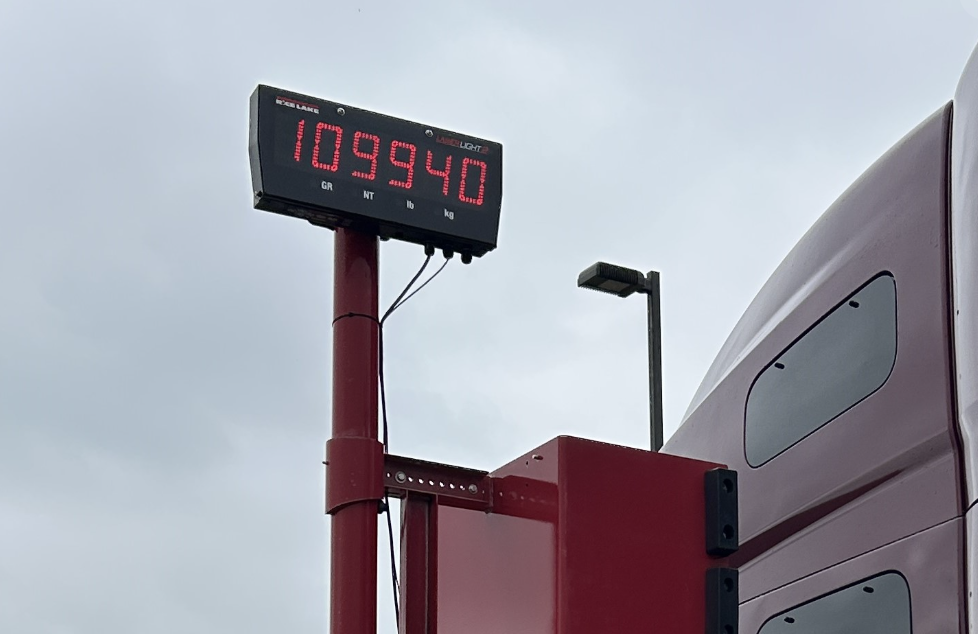
The Wisconsin State Patrol recently flagged a semi-truck and trailer combination during a routine spot check and found something that should give any road-aware driver pause. The rig weighed in at nearly 110,000 pounds – about 30,000 pounds over the federally recognized limit of 80,000 pounds for commercial vehicle combinations operating without a special permit. That’s not a rounding error. That’s an extra 15 tons riding down public roads, bridges, and highways that were engineered with a very specific load in mind.
For most people, weight limits on trucks are background noise – something printed on a sign under an overpass. But for those who have spent time around commercial vehicles, heavy equipment, or road construction, those numbers are anything but arbitrary. They reflect decades of civil engineering research, material science, and hard lessons learned from infrastructure failures. When a truck is 37 percent over the legal weight threshold, the conversation shifts pretty quickly from a paperwork issue to a public safety concern.
It is worth noting that overweight loads are not automatically illegal – Wisconsin, like every other state, does allow trucks to haul heavier cargo under an oversize/overweight permit system. The Wisconsin DOT administers these permits, which outline specific routes, time restrictions, and conditions under which heavy vehicles may operate. The key phrase there is “with a permit.” Without one, 80,000 pounds is the hard ceiling, full stop.
What makes a situation like this worth paying attention to is not just the legal violation, but the cumulative effect of overweight vehicles on infrastructure that taxpayers fund and drivers depend on every day. Roads and bridges have a finite tolerance for stress. A single overloaded pass does measurable damage – and fleets of them, day after day, quietly accelerate the deterioration of the same roads that light vehicles and motorcycles rely on. It is not an abstract problem.
Why 80,000 Pounds Is the Number
The 80,000-pound gross vehicle weight limit for commercial trucks in the United States was standardized under the Federal Highway Act and has been a baseline for road and bridge design ever since. It is not a number that was pulled out of thin air. It reflects the load-bearing thresholds of the interstate highway system and the bridges built to support it. States can allow heavier loads on non-interstate roads or under permit conditions, but 80,000 pounds is the national benchmark that infrastructure is designed around.
Bridge ratings, in particular, are directly tied to these limits. When an overweight vehicle crosses a bridge repeatedly, it accelerates fatigue in the structural steel and concrete – the kind of wear that does not always show up visually until the problem is already serious. Engineers refer to this as cyclic loading damage, and it shortens the useful service life of infrastructure significantly.
The Braking Problem Nobody Talks About Enough
Here is something that does not always make the news but should: a vehicle carrying 30,000 extra pounds does not stop like a legal-weight truck. Physics does not negotiate. The Wisconsin State Patrol specifically flagged stopping distance as one of the consequences of overweight vehicles, and that is not a minor footnote. At highway speeds, the difference in stopping distance between a properly loaded semi and one running 37 percent over gross weight can mean dozens of extra feet — the kind of gap that determines whether a close call becomes a collision.
For anyone who has spent time driving near large commercial vehicles on the highway – watching them merge, brake, or navigate construction zones – this is not theoretical. Brake fade, axle stress, and tire load ratings all become variables when a vehicle is pushed well beyond its rated capacity.
What the Permit System Is Actually For
Wisconsin’s oversize and overweight permit system exists because legitimate industries sometimes require it. Construction equipment, wind turbine components, prefabricated bridge sections, and industrial machinery often cannot be broken down to fit within standard legal limits. The permit process routes these loads carefully, often restricting travel to certain hours, specific roads, and requiring pilot vehicles or law enforcement escorts.
The system works when it is used correctly. The problem arises when loads that should go through the permit process simply… do not. Whether that is a matter of cost, scheduling pressure, or the gamble that a spot check will not happen, the result is the same: roads, bridges, and other drivers absorb the consequences.
What Drivers Should Know
For everyday drivers, this kind of enforcement story is a useful reminder that commercial vehicle oversight is ongoing – and that when it catches something, the numbers can be striking. The Wisconsin State Patrol’s post was not alarmist, just factual: nearly 110,000 pounds, 80,000 is the limit, here is where to learn more about the permit process. That kind of transparency from a law enforcement agency is genuinely useful, and it puts concrete weight – no pun intended – behind rules that can otherwise feel abstract.
If you drive frequently around commercial corridors or spend time on interstates with heavy truck traffic, knowing that enforcement exists and that weight limits carry real engineering rationale is worth keeping in mind. The roads you drive on were not built to absorb unlimited loads, and the agencies responsible for keeping those roads safe are, at least on occasions like this, doing exactly what they are supposed to do.