
The Jeep Cherokee XJ arrived at a pivotal moment in American automotive history. Between 1984 and 2001, families were seeking a vehicle that could handle daily responsibilities, including school runs, weekend errands, and road trips, without sacrificing style or capability. The XJ met that need with a confident presence and a design that felt both rugged and refined.
Its unibody construction was ahead of its time, offering a lighter, more efficient build without compromising durability. The angular lines suggested a readiness for adventure, inviting drivers to imagine life beyond the daily commute. It was a vehicle that looked equally at home in a suburban driveway or on a remote trail.
The Cherokee’s design stood out in an era dominated by softer, more rounded silhouettes. Its straightforward styling conveyed purpose and capability, appealing to those who valued practicality with a touch of boldness. Owners appreciated not just where the XJ could take them, but how it made them feel competent, prepared, and ready for anything.
In many ways, the XJ became a symbol of American pragmatism. It was versatile enough for everyday use, yet adventurous enough to inspire weekend getaways. Its approachable price point and reliable performance made it accessible to a wide range of drivers. Jeep created a platform for lifestyle, exploration, and identity.
How This Story Was Driven

The story of the Jeep Cherokee XJ is told with the same clarity and purpose that defined the vehicle itself: no unnecessary complexity, just honest capability in an accessible package. Research for this article draws from production records spanning 1984 to 2001, insights from owner forums where maintenance debates remain lively, and the collective experience of mechanics who’ve kept these vehicles running well beyond their expected lifespan.
Each element of the Cherokee’s legacy was selected based on what mattered most to the people who lived with it on a day-to-day basis. The design, ride quality, interior practicality, the renowned 4.0L inline-six engine, and its cultural resonance weren’t just features. They were foundational to what would become the blueprint for the modern SUV.
This article reflects the voices of those who remember the Cherokee as a balance between capability and everyday usability, before SUVs evolved into larger, more complex machines. Rather than focusing on performance metrics that rarely influence daily driving, we’re exploring why this iconic, boxy silhouette became the benchmark for everything that followed.
The Shape That Made Every Other SUV Look Like It Was Trying Too Hard

The Jeep Cherokee XJ wore its shape like a badge of honor. It was minimalist, functional, and unmistakably square. Today’s designers might call it “retro-industrial” while consultants charge six figures to declare that rectangles are the new curves. Every panel looked like it was sliced with a straight razor: no swoops, no flourishes, no trendy character lines destined to age like tribal tattoos.
Measuring 168.3 inches in length and 64.5 inches in height, the Cherokee’s proportions conveyed capability without excess. Its wide 103.5-inch wheelbase gave it a stable, grounded stance, even when parked, suggesting readiness for whatever came next. Tall, upright windows offered exceptional visibility, a feature that’s become increasingly rare in today’s SUV landscape.
Rear passengers enjoyed a commanding view, not just of the scenery, but also of being in something built with intention. Parents valued the Cherokee’s substantial presence; solid without being oversized. The iconic seven-slot grille served as a clear signal of Jeep’s heritage, a reminder that this vehicle was designed with off-road credibility at its core.
The tailgate opened with a reassuring sound, revealing a cargo space that handled everything from weekend gear to furniture hauls with ease. The Cherokee’s simplicity wasn’t a limitation; it was a design ethos. Its clean lines and practical layout became the architectural foundation for the modern SUV. Today’s crossovers may offer more polish, but the XJ remains the blueprint: a vehicle that prioritized capability, clarity, and timeless design.
The Ride That Proved Comfort Didn’t Require Air Suspension and a PhD

Climbing into a Cherokee felt refreshingly intentional. The seats weren’t sculpted by committee or optimized for showroom aesthetics. They were built by people who understood what it meant to drive, and drive far. The unibody construction delivered a composed ride, absorbing road imperfections without the jittery, disconnected feel that plagued body-on-frame trucks masquerading as family vehicles.
Its independent front suspension paired with a live rear axle struck a rare harmony between comfort and capability. Where modern SUVs rely on adaptive dampers and algorithmic finesse, the Cherokee achieved balance through straightforward engineering and mechanical honesty. Families quickly discovered that kids could sleep through long drives—a minor miracle compared to the spine-rattling experience offered by most trucks of the era.
In 1985, Jeep introduced a two-wheel-drive variant for the Cherokee. It was the first since 1967, a nod to the reality that not every driver needed to conquer rivers en route to the grocery store. Steering feedback was direct and communicative, a trait that would later become a nostalgic luxury. Whether threading through tight urban garages or tackling weekend trails, the Cherokee felt confident and manageable, never demanding more than a driver’s license and a sense of adventure.
Its ride quality became the benchmark: smooth enough for daily errands, rugged enough for backcountry escapes, and practical enough to keep your insurance agent calm.
The Interior That Defined “Practical Luxury” Before Anyone Knew They Wanted It

Step inside the Cherokee and you enter a cabin designed by people who understood that real life happens inside vehicles. The dashboard layout prioritized function over flash, featuring gauges that could be read at a glance and controls placed within reach of human hands. The design philosophy seemed to be “make everything work properly” rather than “make everything look expensive,” which resulted in an interior that aged gracefully.
The front seats offered support that didn’t require a chiropractor consultation, while the rear bench accommodated actual human beings rather than serving as decorative storage space. Fold down those rear seats and the Cherokee revealed cargo capacity that put most modern crossovers to shame, turning the vehicle into a practical hauler for everything from lumber to camping gear.
Climate control worked without requiring an engineering degree to operate: heat in winter, air conditioning in summer, fan speeds that made sense. The radio delivered clear reception without needing a subscription service or software updates. Storage compartments appeared where people actually needed them, designed by engineers who apparently understood that humans carry things like maps, sunglasses, and the occasional emergency snack.
The Cherokee’s interior accepted real life with grace: spills cleaned up, scuffs added character, and everything kept working year after year. The cabin became a rolling command center for family adventures, equally comfortable during 20-minute commutes or cross-country road trips. This was automotive design focused on living with the vehicle rather than impressing people at the country club.
The Engine That Became a Legend (Despite Chrysler’s Best Efforts To Screw It Up)

Under the Cherokee’s hood lived what would become one of the most beloved powerplants in SUV history: the 4.0L AMC 242 inline-six engine. This iron-block straight-six produced between 173-190 horsepower depending on the year, which sounds modest by today’s standards but delivered the kind of reliable, linear torque that actually moved vehicles in the real world.
The 4.0L earned its reputation the hard way — by refusing to die despite decades of abuse from owners who treated maintenance schedules as gentle suggestions. While high-mileage examples might develop oil seepage around the head gasket or rear main seal, catastrophic failures were rare enough to become noteworthy. The engine’s cast-iron block and robust internals meant that killing an XJ Cherokee required “ridiculously hard-core off-road hoonage” rather than normal neglect.
The 4.0L paired with the bulletproof Aisin-Warner AW-4 four-speed automatic transmission from 1987-2001, creating a powertrain combination that became legendary for durability. Earlier models suffered from troublesome cylinder heads and fuel injection issues through the late 1980s, but once Chrysler worked out the bugs, the combination became nearly unstoppable.
The engine pulled boats to lakes, hauled trailers up mountain passes, and started reliably in conditions that left lesser powerplants whimpering. Gas stations became launching points for adventures because owners trusted their Cherokees to bring them home again. Common issues involved peripherals like exhaust manifolds, sensors, and gaskets rather than core engine problems – the kind of maintenance items that competent owners could address without mortgaging their homes.
This powerplant created the reliability standard that modern SUVs still struggle to match, proving that sometimes the old ways work better than the new complications.
The Legacy That Accidentally Created an Entire Industry

The Cherokee XJ created a market that we didn’t know we needed. The formula seemed almost too simple: take a truck, make it comfortable enough for daily driving, price it reasonably, and watch soccer parents abandon their minivans in droves. The Cherokee proved that Americans wanted the capability of a truck without the compromises that traditionally came with truck ownership.
Competitors took notice and started scrambling to catch up, launching the SUV arms race that eventually gave us everything from compact crossovers to three-row behemoths that require their own zip codes. The Cherokee’s success spawned imitators faster than a viral TikTok dance, each trying to capture the XJ’s magic formula of capability, comfort, and common sense.
Production ran from 1984 to 2001, an impressive 17-year run that saw the Cherokee evolve from a niche alternative to the foundation of Jeep’s success. Used XJ Cherokees became the enthusiast’s choice for budget-friendly adventure machines, developing a cult following that continues today. Children who grew up in Cherokee back seats returned as adults, seeking that same combination of practicality and possibility.
Collectors now recognize early Cherokees as historical markers — the vehicles that defined what an SUV should be before the segment lost its way in a maze of luxury features and mall-crawler pretensions. The XJ appeared in movies, television shows, and government fleets, embedding itself so deeply in American culture that its absence seemed unthinkable.
The Cherokee established the SUV blueprint that every manufacturer still follows: reasonable size, comfortable ride, capable handling, reliable operation, and enough personality to avoid being mistaken for appliance-grade transportation. Its influence stretches through every modern SUV, even the ones that forgot why the formula worked in the first place.
Rolling Into the History Books (Where It Belongs)
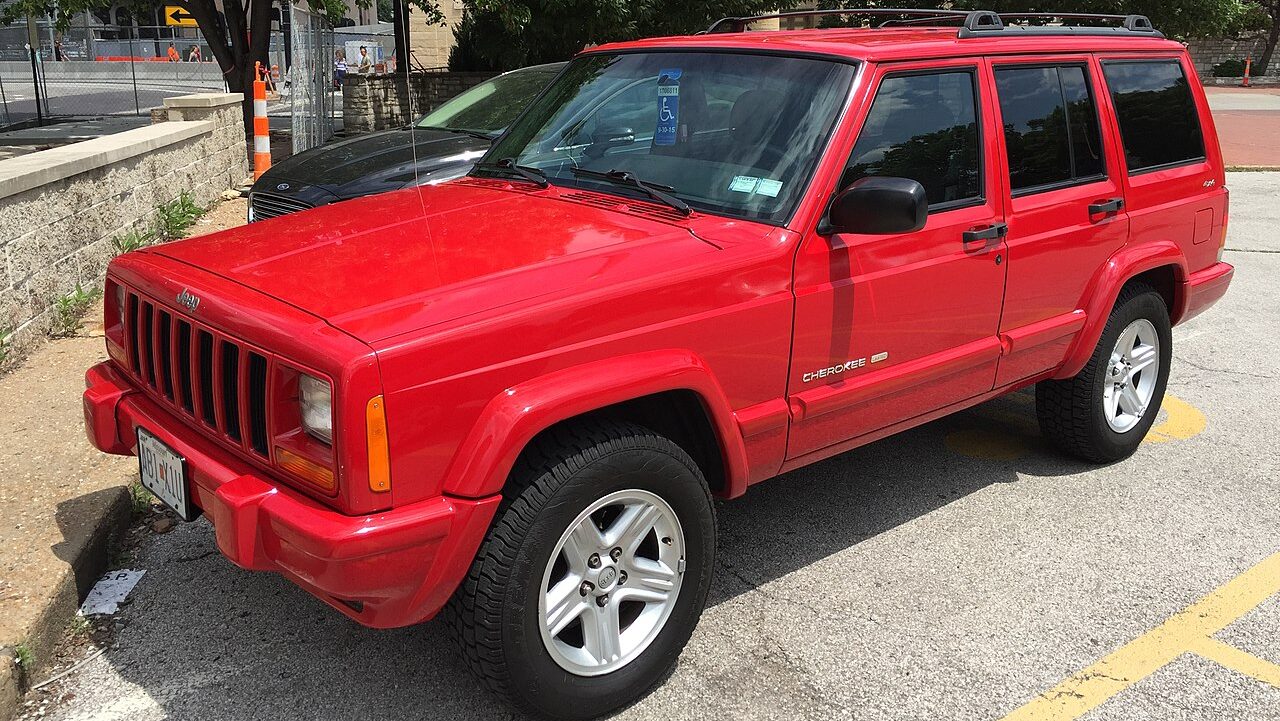
The Jeep Cherokee XJ accomplished something remarkable in the automotive world: it got the formula right on the first try and stayed relevant for nearly two decades. While other manufacturers chased trends and redesigned their vehicles every few years to stay fresh, the Cherokee proved that good design transcends fashion. Its honest, functional approach created a template that the entire industry still follows, even when they don’t realize it.
The XJ became the bridge between the utility vehicles of the past and the lifestyle vehicles of the future, proving that capability and comfort weren’t mutually exclusive. Its legacy lives on in every SUV that prioritizes substance over style, in every vehicle that starts reliably after years of faithful service, and in every design that chooses function over flash.
The name still sparks recognition among anyone who lived through the SUV revolution, and the memories rise like the reliable rumble of that 4.0L straight-six on a cold morning. The Cherokee XJ created the modern SUV segment and then showed everyone else how it should be done: a lesson that apparently needed repeating every few years as manufacturers forgot what made the original formula so effective.