
The 2026 FIFA World Cup already has one obvious advantage: scale. FIFA says it will be the biggest men’s World Cup yet, with 48 teams, 104 matches, 16 host cities, and a tournament window running from June 11 through July 19 across Canada, Mexico, and the United States.
That size might sound like a reason to book flights, not fill a tank. In practice, it creates the opposite opportunity for many travelers, because the event is spread across enough cities to reward a regional driving plan instead of one giant, frantic dash.
The timing also helps. On the U.S. side, the tournament overlaps with America250’s July 1–5 celebration window, and the National Park Service says U.S. residents will not be charged entrance fees at national parks from July 3 through 5, 2026.
Put those pieces together and the World Cup starts to look less like a single-event vacation and more like a summer framework for a broader journey. For travelers who like big moments but hate being trapped inside one rigid itinerary, that makes the road-trip angle unusually strong.
1. The Host Map Naturally Breaks Into Road-Trip Corridors
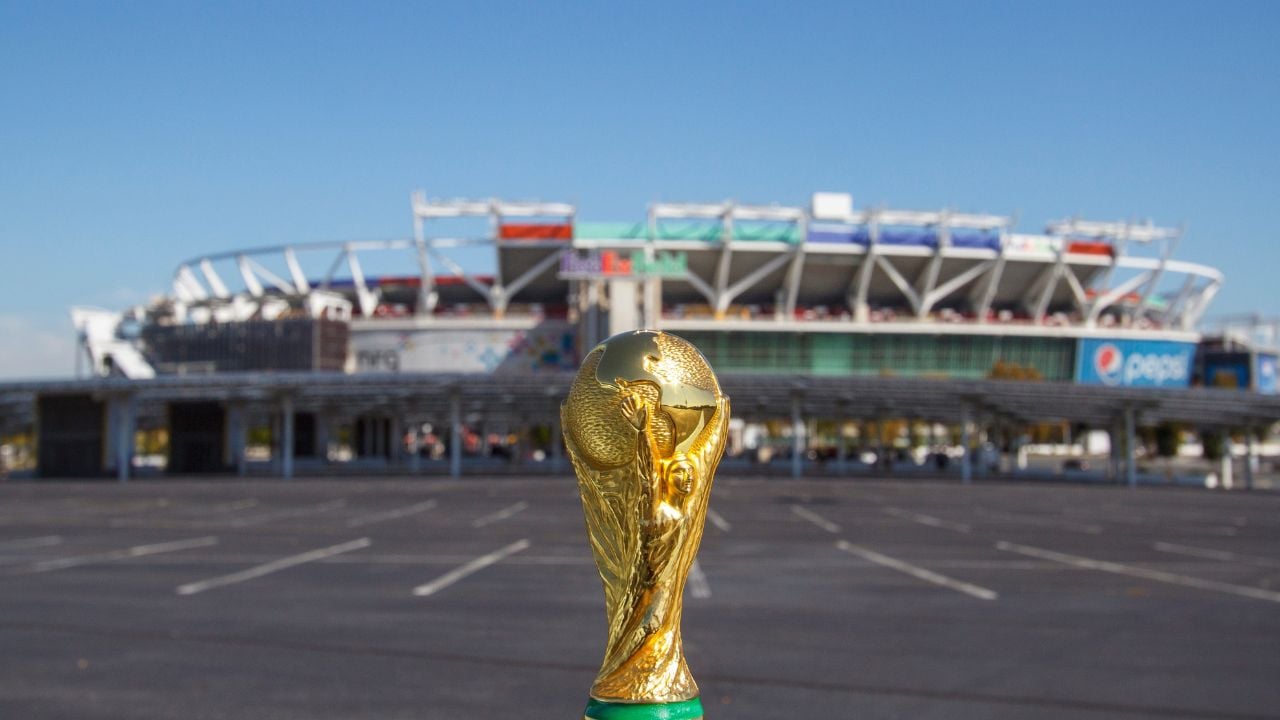
This tournament is huge, but it is not shapeless. FIFA’s host-city map spans three countries and 16 cities, including Toronto and Vancouver in Canada, Guadalajara, Mexico City, and Monterrey in Mexico, and 11 U.S. stops from Seattle and Los Angeles to Boston, Philadelphia, Miami, and New York New Jersey.
That distribution makes it easy to see smaller corridors instead of one impossible mega-itinerary. A traveler does not need to “do the World Cup.” A traveler needs to choose a lane.
That is why the car starts to make sense. The northeastern run can link Toronto, Boston, New York New Jersey, and Philadelphia, while a western version can lean into Vancouver, Seattle, San Francisco Bay Area, and Los Angeles.
None of those routes requires pretending the whole continent is one neat loop. That is exactly what makes the idea practical rather than romantic nonsense.
2. The Calendar Is Long Enough To Reward Lingering Instead of Rushing

The second reason 2026 suits the road is simple: time. FIFA’s current schedule runs from June 11 to July 19, with the opener in Mexico City and the final in New York New Jersey.
Canada’s opening match is set for Toronto on June 12, and the United States will also open on June 12 in Los Angeles. That immediately spreads the early tournament energy across multiple regions instead of concentrating everything in one place.
The longer span changes the feel of the trip. You are not being forced into a three-day sprint where every missed connection ruins the plan.
You can build a week around one host city, then drive onward for the next stop, or mix stadium days with scenic detours and slower overnights. For a global event that usually feels expensive and compressed, that is a major travel advantage.
3. The Trip Still Works Even When You Do Not Have Match Tickets

One of the smartest reasons to think in road-trip terms is that the World Cup experience will not live only inside the stadiums. FIFA describes the Fan Festival as the central fan destination for local communities and traveling supporters.
Host-city plans already show how substantial those sites can be. In Kansas City, the official festival is being framed as the region’s gathering place with no match ticket required, while Atlanta’s version is set for Centennial Olympic Park as a major public celebration around the tournament.
That lowers the pressure on the itinerary. A road trip built around one match can still feel worthwhile on the days before and after, since official fan zones will be screening games, hosting live entertainment, and giving each city its own public center of gravity.
For travelers, that makes the drive feel less like a gamble tied to one ninety-minute event. The tournament atmosphere keeps working even when you are outside the turnstiles.
4. In the United States, the World Cup Lands Inside a Summer That Was Already Built for the Car

A World Cup road trip in 2026 gets an extra layer that most tournaments never have. The U.S. Department of Transportation’s Freedom 250 page is explicitly promoting the Great American Road Trip, while America250 is already framing July 1 through 5 as a shared national celebration window.
The National Park Service adds another useful detail. Its entrance-pass page says U.S. residents will not be charged entrance fees at national parks from July 3 through 5, 2026.
So a soccer-driven itinerary can naturally become a broader American summer route. That might mean pairing Philadelphia with nearby history sites, linking Seattle or the Bay Area with western parks, or breaking up long drives with places that have nothing to do with football at all.
This is unusually neat timing for a sports event that will already be pulling travelers across the country. The calendar is doing some of the itinerary work for you.
5. The Best World Cup Road Trip Will Be Selective, Not Exhaustive

The mistake will be trying to conquer the whole thing. A three-country tournament with 16 host cities sounds thrilling until you remember what that means in real travel terms.
The strongest version of this trip is not a chaotic attempt to collect stamps everywhere. It is a focused corridor with enough flexibility to absorb weather, traffic, ticket luck, and the simple desire to stay longer somewhere that turns out to be fun.
That is exactly why 2026 is shaping up so well for the road. The event is big enough to offer choices, long enough to support a real journey, and layered enough that you can build days around fan festivals, history, food, scenery, or parks instead of chasing only kickoff times.
Add in the America250 backdrop and the July 3 through 5 national-park perk, and the tournament starts to look like one of those rare travel moments where the infrastructure, the calendar, and the theme are all pointing in the same direction. For anyone who likes major events but hates feeling trapped by them, that is an unusually strong reason to drive.