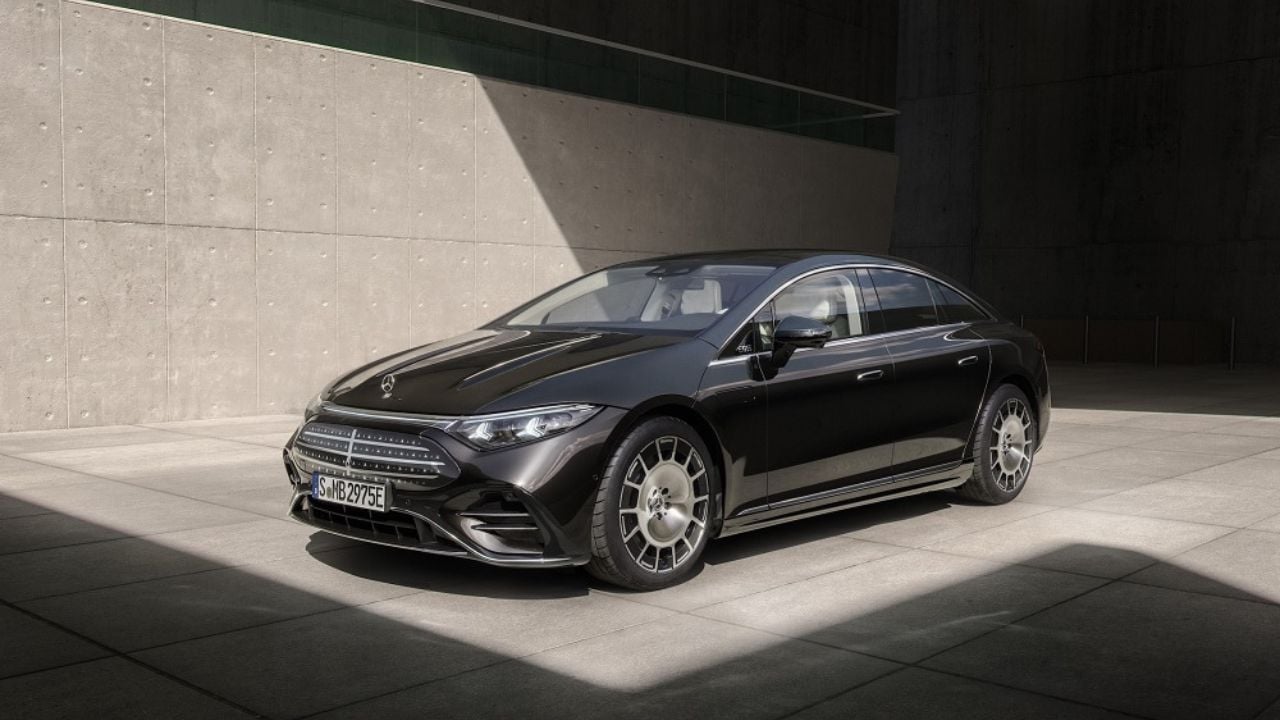
Mercedes-Benz is using its 140th anniversary year to make one of its clearest electric statements yet. The company has framed 2026 around that legacy, tracing its history back to Carl Benz’s 1886 Patent Motorwagen while rolling out one of the biggest product offensives in its history.
The updated EQS is a major part of that push. Mercedes says more than a quarter of the car’s components are new, reworked, or refined, which makes this feel far bigger than a normal mid-cycle refresh.
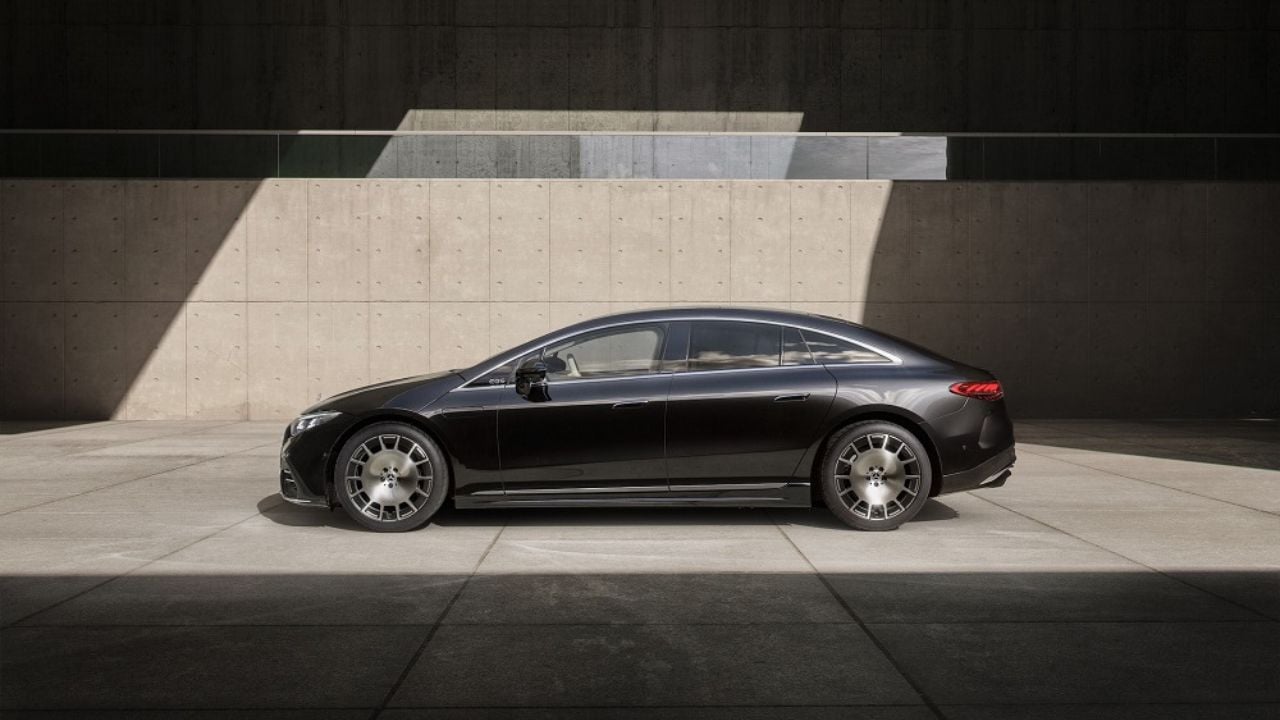
Its shape still chases efficiency above all else, and the drag coefficient remains an ultra-low 0.20. That keeps the EQS among the slipperiest production cars on sale today.
The headline number is the range. In EQS 450+ form, Mercedes now claims up to 575 miles on the WLTP cycle, along with a new 800-volt architecture, faster charging, and the brand’s first production steer-by-wire system from a German automaker.
Range Now Leads The Story
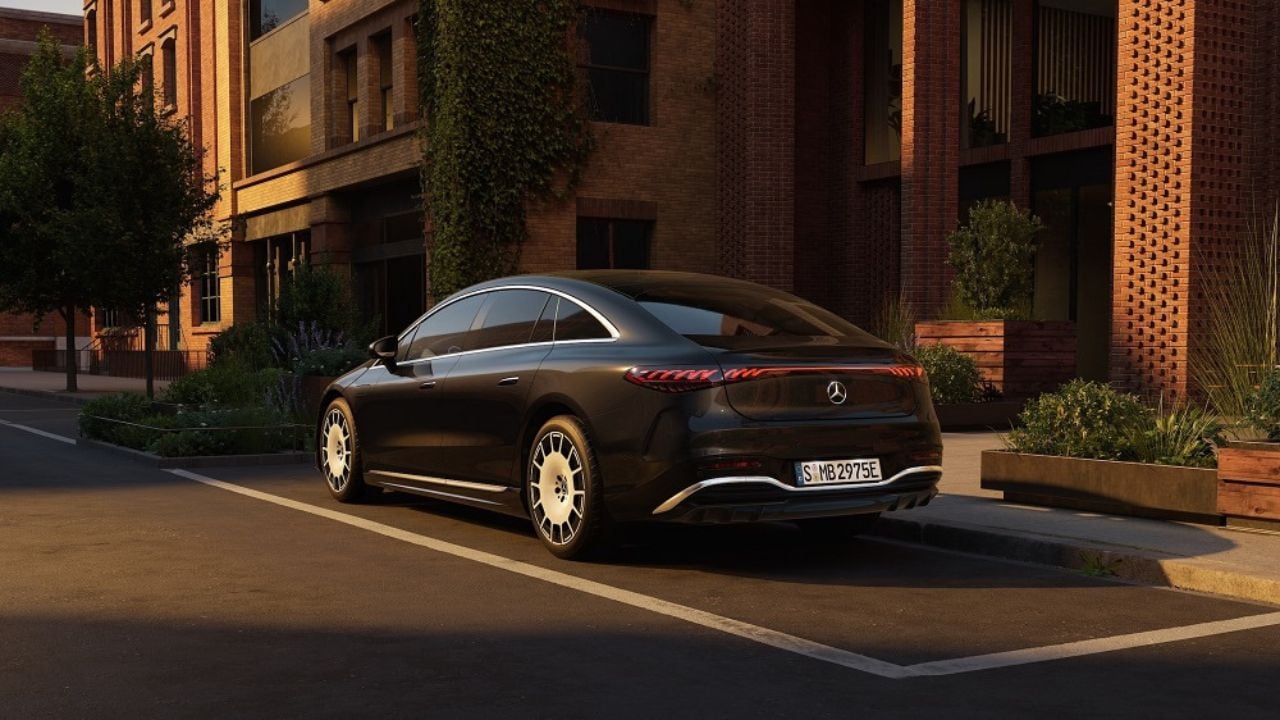
Mercedes has clearly aimed this update at the EQS’s biggest talking point. The new 122 kWh battery, revised cell chemistry, in-house drive units, and stronger energy recovery push the EQS 450+ to a claimed 575 miles of WLTP range, which is about a 13% gain over the previous version.
That figure also changes the conversation around long-distance electric luxury. On paper, the new EQS now sits above the Lucid Air Grand Touring’s official 512-mile EPA estimate, although the two numbers come from different test cycles and should not be treated as directly equivalent.
Even with that important caveat, the improvement is real. Mercedes is no longer asking buyers to admire the EQS only for its technology and comfort but also for genuine flagship-level range that now stands near the top of the EV market.
Charging And Hardware Move Upmarket
The charging story is almost as important as the range figure itself. Mercedes says the EQS now uses an 800-volt electrical system and can charge at up to 350 kW, enough to add about 199 miles of WLTP range in 10 minutes under the right conditions.
Energy recovery has also taken a big step forward. Recuperation now rises to as much as 385 kW, which helps the car reclaim more energy during deceleration and plays a real role in the improved overall efficiency.
Mercedes also used this update to introduce its first production steer-by-wire system, with an optional yoke-style steering control available alongside a conventional wheel. That is a bold move for a luxury sedan, but it fits the EQS’s role as the company’s rolling technology flagship.
The Cabin Stays Focused On Software
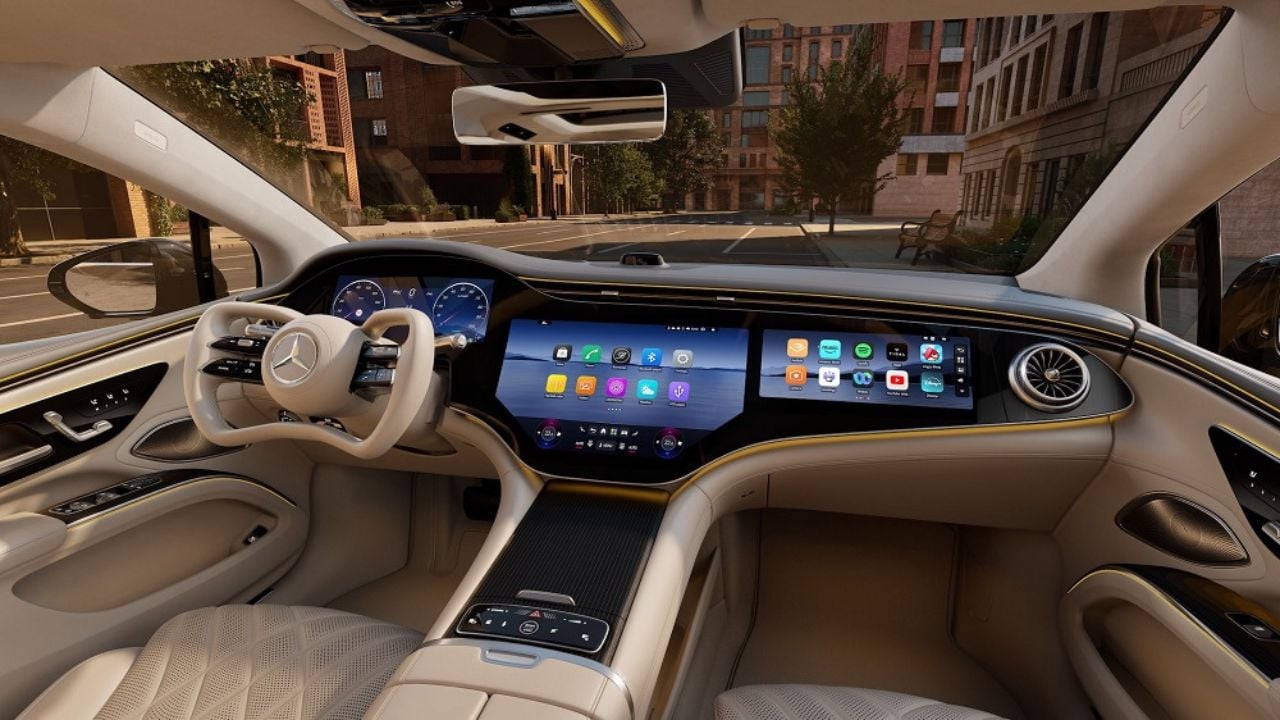
Inside, the EQS continues to lean heavily into screens and software, but the setup is now more mature than before. The 55-inch MBUX Hyperscreen remains the visual centerpiece, while rear passengers can get two 13.1-inch displays of their own.
The bigger change is under the surface. Mercedes has moved the EQS to MB.OS, its new operating system, which links the car more deeply to the Mercedes Intelligent Cloud and expands the role of artificial intelligence in navigation, infotainment, and the MBUX virtual assistant.
Luxury details have not been forgotten either. Mercedes has added front seatbelt heating, upgraded rear entertainment, and a revised DIGITAL LIGHT system that creates a larger high-resolution light field while cutting energy use, with the Ultra Range high beam stretching to about 1,969 feet.
What It Means For The EQS
This update is also a response to reality. The EQS has always been technically ambitious, but buyers often wanted more range, faster charging, and a stronger sense that the car’s software and hardware belonged to the same next generation. Mercedes has now tried to answer all three at once.
Production is already underway at Factory 56 in Sindelfingen, and Mercedes says the 2027 EQS will reach U.S. dealers in the second half of 2026. In Germany, orders have opened with the EQS 400 starting at about $111,000 after tax, using the European Central Bank’s April 15 reference rate of €1 to $1.178.
That leaves the new EQS in a much stronger position than before. It is still unmistakably an EQS, still unapologetically aerodynamic, and still deeply digital, but now it also feels more convincing as a real long-distance luxury EV rather than just a showcase of ideas.
This article originally appeared on Autorepublika.com and has been republished with permission by Guessing Headlights. AI-assisted translation was used, followed by human editing and review.