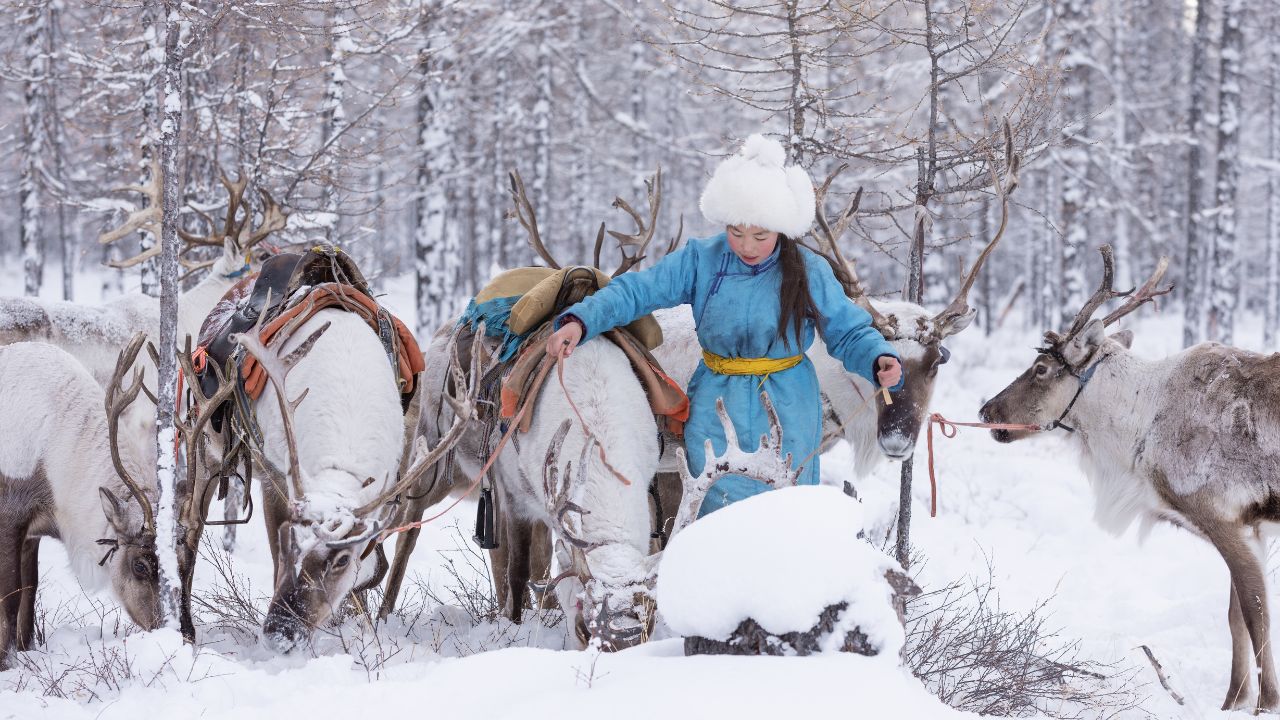
Northern Mongolia’s taiga does not look much like the country many travelers picture first. Instead of open steppe and wide brown grasslands, this is a colder, wetter world of larch forest, marsh, mountain valleys, and narrow tracks running toward the Russian border. It is here, in Khövsgöl Aimag, that the Dukha live, a small Tuvan-speaking Indigenous community of about 200 semi-nomadic reindeer herders. The setting matters because nearly every easy cliché about Mongolia starts to fall apart once you get this far north.
The people many outsiders call the Tsaatan are not some “lost tribe” waiting to be discovered by camera-happy visitors. National Geographic’s reporting notes that “Tsaatan” means “people with reindeer” in Mongolian, not their native language, and that the herders call themselves Dukha. The same reporting makes another useful corrective point: they are a modern people who have hosted visitors before, not a frozen museum exhibit at the edge of the forest. That distinction matters, because travel writing about remote communities too often becomes a performance of outsider amazement instead of a serious attempt to understand how people actually live.
1. This Is a Forest Life, Not a Steppe One
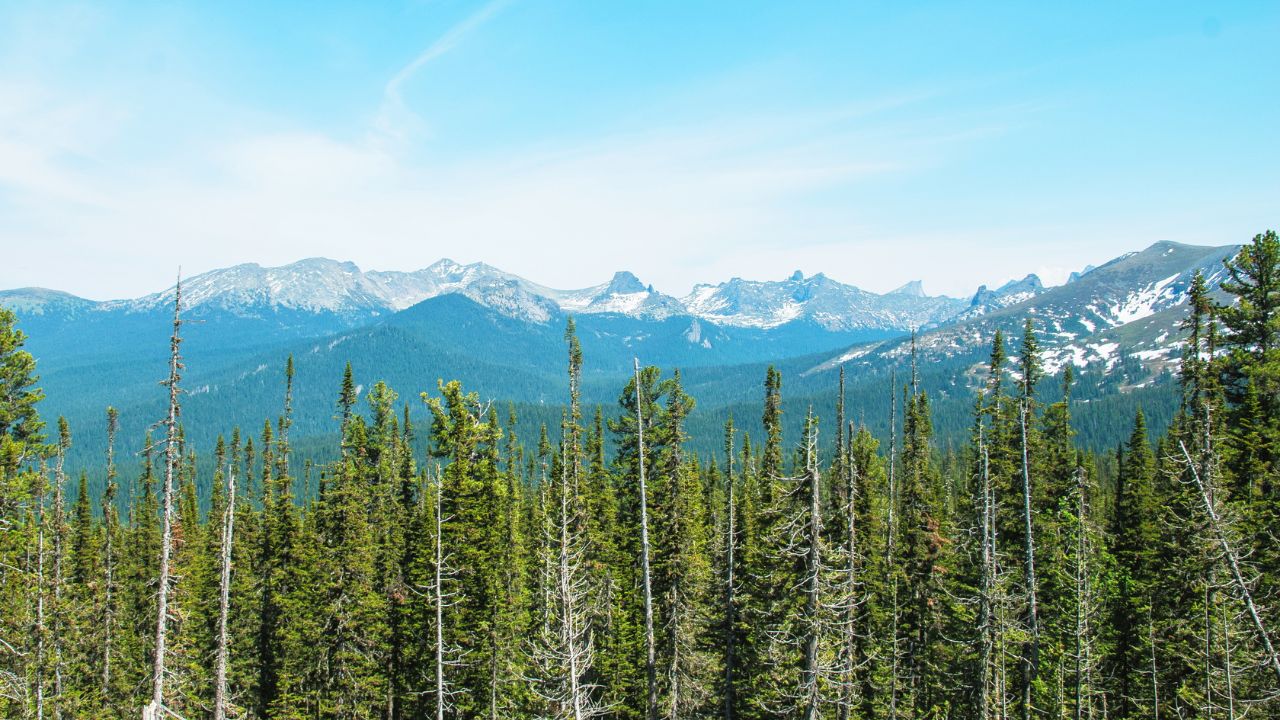
The first thing worth understanding is how much the landscape shapes everything. Research on northern Mongolia describes Khövsgöl as a province of taiga, tundra, and mountain terrain, with Dukha communities living in the northwestern mountains and moving through a region where pasture, moss, lichen, rivers, and elevation all matter. In other words, this is not nomadism spread across a smooth plain. It is mobility negotiated through a colder, harsher, more intricate environment where the forest itself sets the terms.
That geography helps explain why the place feels so remote even by Mongolian standards. National Geographic notes that reaching the taiga usually involves long overland travel followed by horseback movement into the forest, which is part of why the journey has become so alluring to outsiders. Yet the remoteness is not scenic decoration. It is the reason the rhythm of life there still depends on movement, weather, forage, and the practical limits of the land itself.
2. Reindeer Are Not Just Livestock Here
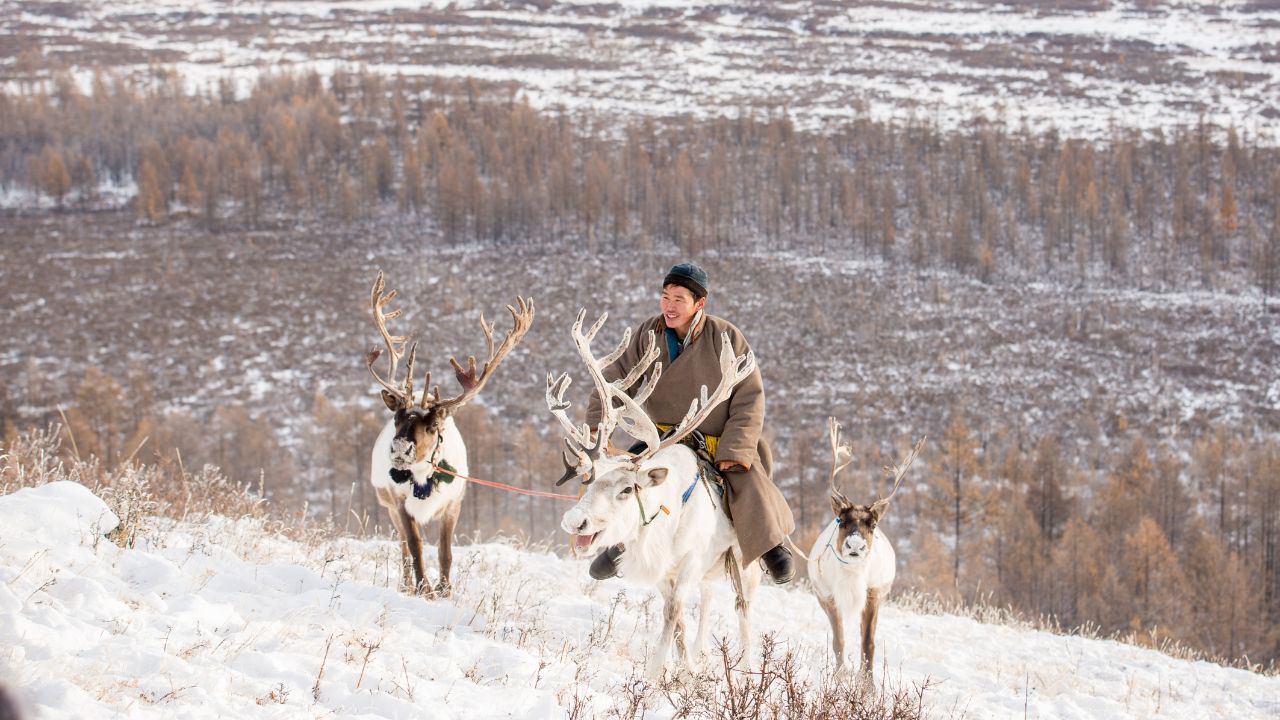
For the Dukha, reindeer are not a scenic accessory added to a romantic wilderness story. Research on the community notes that the animals provide dairy products, meat, hides, and transportation while also carrying cultural and spiritual importance. That makes the herd central in a way that goes far beyond simple economics. Reindeer shape food, movement, camp life, and identity all at once.
That centrality shows up in the details of everyday life. National Geographic reports that visitors may see milking, cheese-making, and reindeer riding in camp, which helps explain why the animals sit at the center of both daily routine and the outside world’s fascination with the Dukha. The image can look magical from a distance, but the underlying structure is practical. Everything is organized around what the herd needs in order to stay healthy and mobile in a difficult environment.
3. Movement Is the System, Not the Interruption
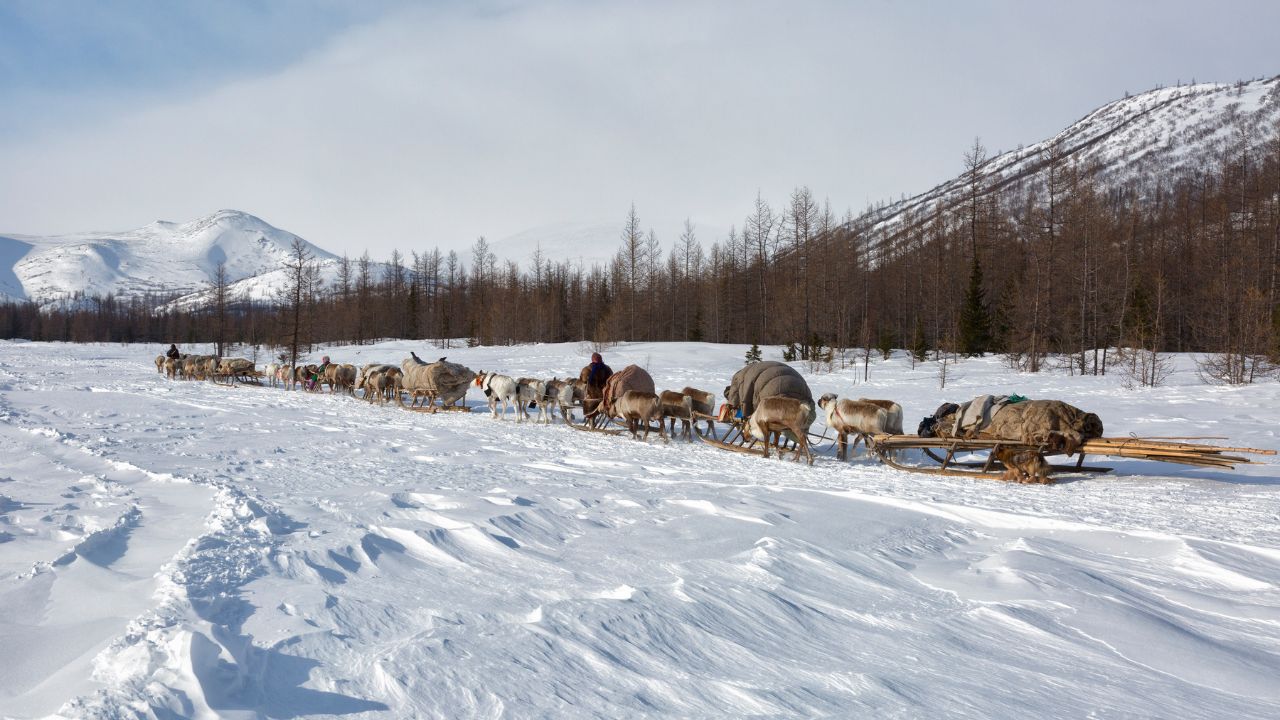
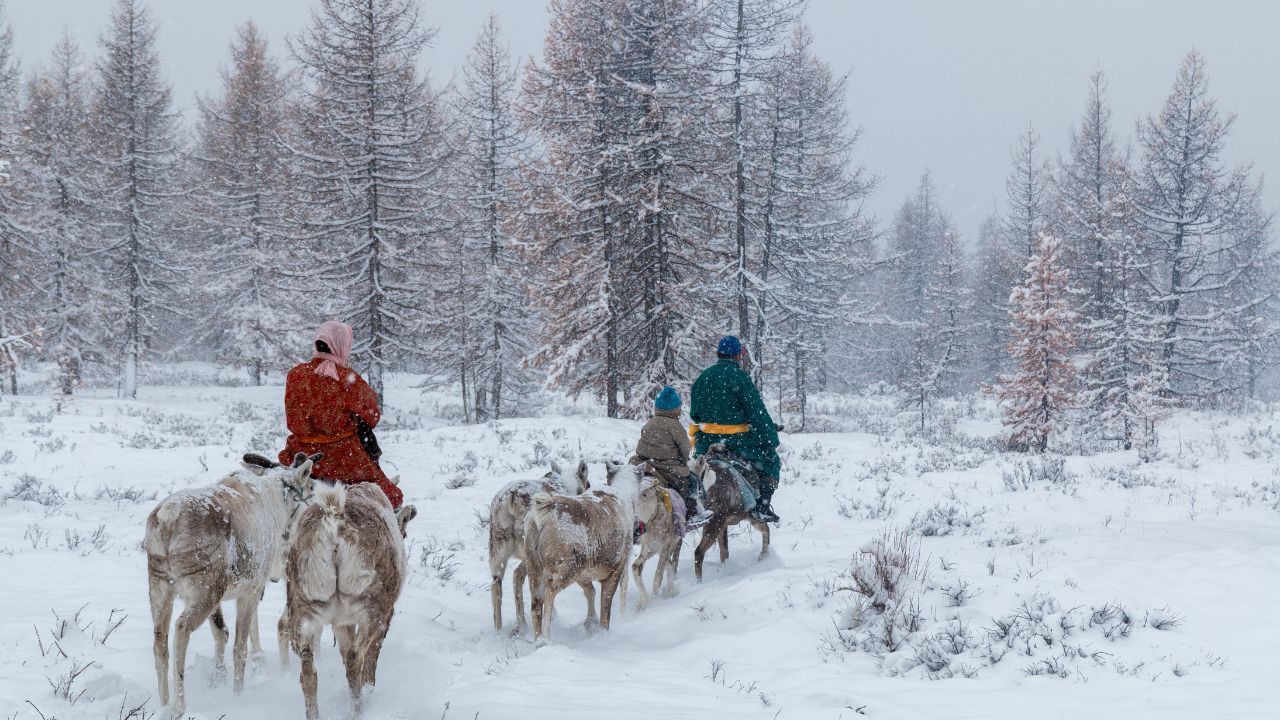
One of the easiest mistakes outsiders make is to imagine nomadic life as random wandering. The Dukha’s movement is anything but random. Research on the community says they move camp two or more times a year to follow forage conditions, especially the quality and availability of moss and lichen, and that the herders are broadly divided between West Taiga and East Taiga groups. Seasonal movement is not a charming old custom preserved for tourism. It is the operating logic of reindeer husbandry in that environment.
The seasonal pattern has its own internal order. The same research says camps tend to become larger and denser in summer as herders move to higher, cooler ground, while fall and winter bring smaller, more mobile encampments and movement toward lower elevations near Tsagaannuur. Life there may look simple from far away, but on the ground it is highly tuned to terrain, weather, and herd health. What appears simple is often just complicated expertise viewed from too much distance.
4. Tourism Has Brought Money, Attention, and Tension
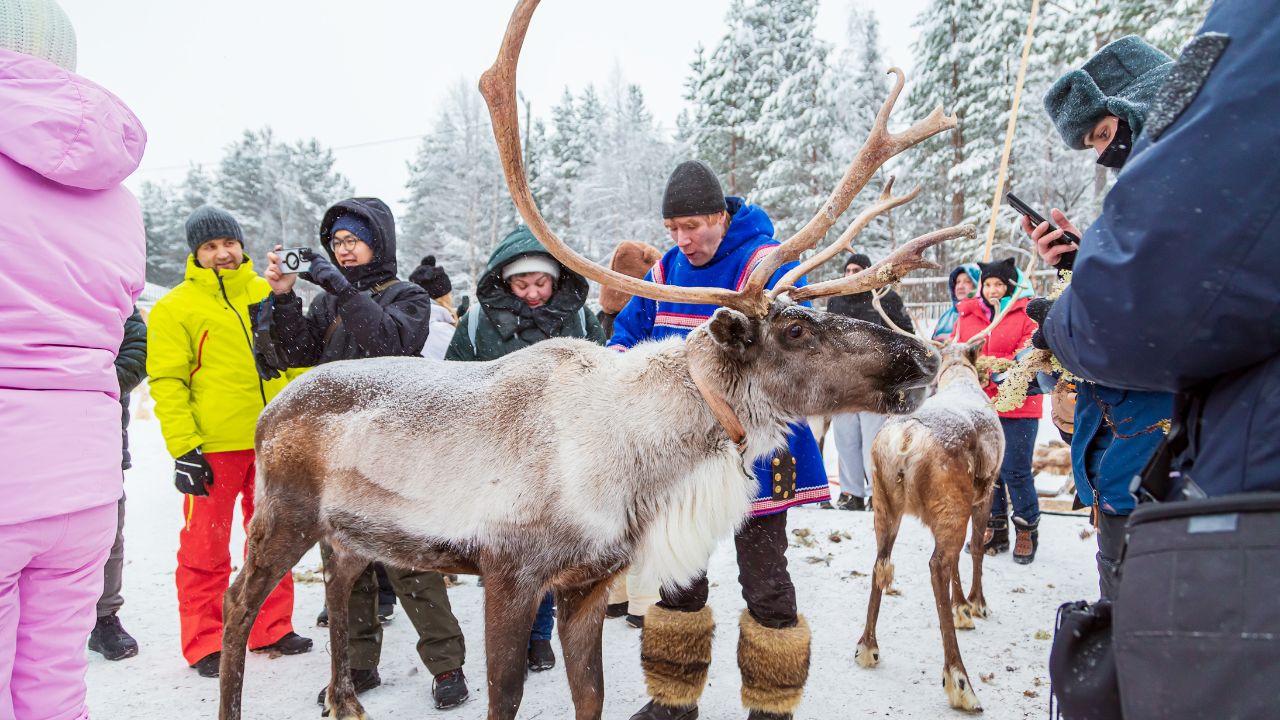
The Dukha are no longer hidden from the outside world, and tourism has become part of the story whether anyone likes the framing or not. National Geographic notes that only a few hundred people still follow the traditional lifestyle and that internet-fueled curiosity has turned the taiga into an attraction, with tour companies offering visits centered on camp life. That visibility has brought income, but it has also created an obvious risk: real people can get flattened into a fantasy of purity, remoteness, and “last chance” travel.
Research published in Open Agriculture makes the trade-off clearer. The study says visits can bolster the local economy, and that those most involved with tourists often report a positive attitude toward them, yet it also warns that unregulated year-round tourism can disrupt cultural identities, migration patterns, and egalitarian norms. Its conclusion is especially useful: as visits increase, taiga tourism would benefit from Dukha-owned and Dukha-controlled initiatives. Respectful travel is not just about admiration. It is also about who shapes the encounter and who benefits from it.
5. A Simpler Life Is Not the Same as an Easier One
The most misleading thing about romantic coverage of Mongolia’s reindeer herders is the suggestion that their lives exist outside modern pressures. They do not. A UNEP-linked report says the taiga is both a biodiversity hotspot and one of the Mongolian regions likely to suffer heavily from climate change in the coming decades, while also warning that resource extraction activities are undermining Dukha livelihoods. The forest may feel far from global systems, but it is still exposed to them.
Recent research adds another layer of pressure. A 2023 study found that an estimated 23% of Khövsgöl Aimag is at high to very high risk for localized geohazards such as flooding, mass wasting, and permafrost thaw, while also suggesting that communities maintaining higher mobility are more resilient to those risks. That is one of the most revealing truths in the whole story. The Dukha way of life is often presented as fragile because it is old. In reality, part of its strength lies precisely in its mobility, its close reading of land, and its refusal to treat fixed infrastructure as the only form of security.
That is what makes life among Mongolia’s reindeer herders so compelling. It is beautiful, yes, but not because it floats above history or hardship. It is compelling because it shows a community still organizing life around animals, weather, season, and movement in a century that keeps pushing people toward fixed roads and fixed assumptions. The reindeer roam, and the people move with them, not as a fantasy from the past, but as a living culture trying to hold its ground in the present.