
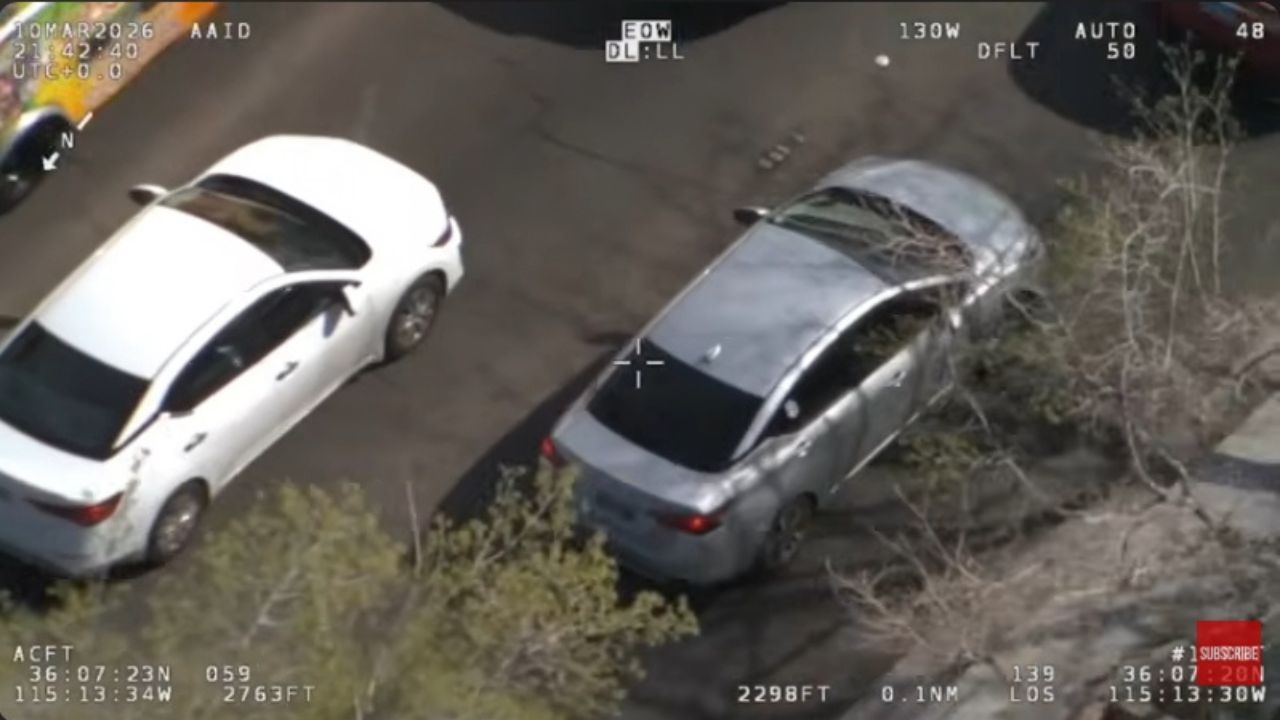
Sirens never pierced the air, yet urgency filled every second. The unfolding drama didn’t play out through a traditional police chase, but through the calm, watchful narration of an aerial unit tracking a silver Nissan Sentra darting through traffic with growing aggression.
From Spring Valley to Jones and Twain, the driver’s behavior raised immediate concern. Dispatch relayed fragmented but telling updates. A female occupant had exited the vehicle earlier, leaving a lone driver whose agitation was visible even from above.
The vehicle weaved erratically, slipping between lanes with calculated recklessness. Witness accounts from the aerial perspective described a driver gesturing wildly, shouting, and accelerating beyond the natural flow of traffic. Each movement suggested instability and escalating risk.

The car surged northbound, cutting across lanes and forcing surrounding drivers to react in real time. There were no patrol cars directly engaging, only surveillance from above, documenting every decision the driver made.
Speed quickly became a defining factor. The Sentra pushed past 85 miles per hour, nearing 90, a dangerous threshold on urban roads. The absence of ground pursuit highlighted a strategic restraint often used by law enforcement.
In many jurisdictions, officers weigh the danger of a high-speed chase against the threat posed by the suspect. When the risk to the public outweighs the need for immediate apprehension, surveillance becomes the preferred option. This appeared to be one of those moments.
The Showdown
Then came the real showdown. The vehicle slowed abruptly near Decatur and Frontier. The passenger side door opened, and the driver bolted. The transition from vehicular danger to a foot pursuit happened in seconds.
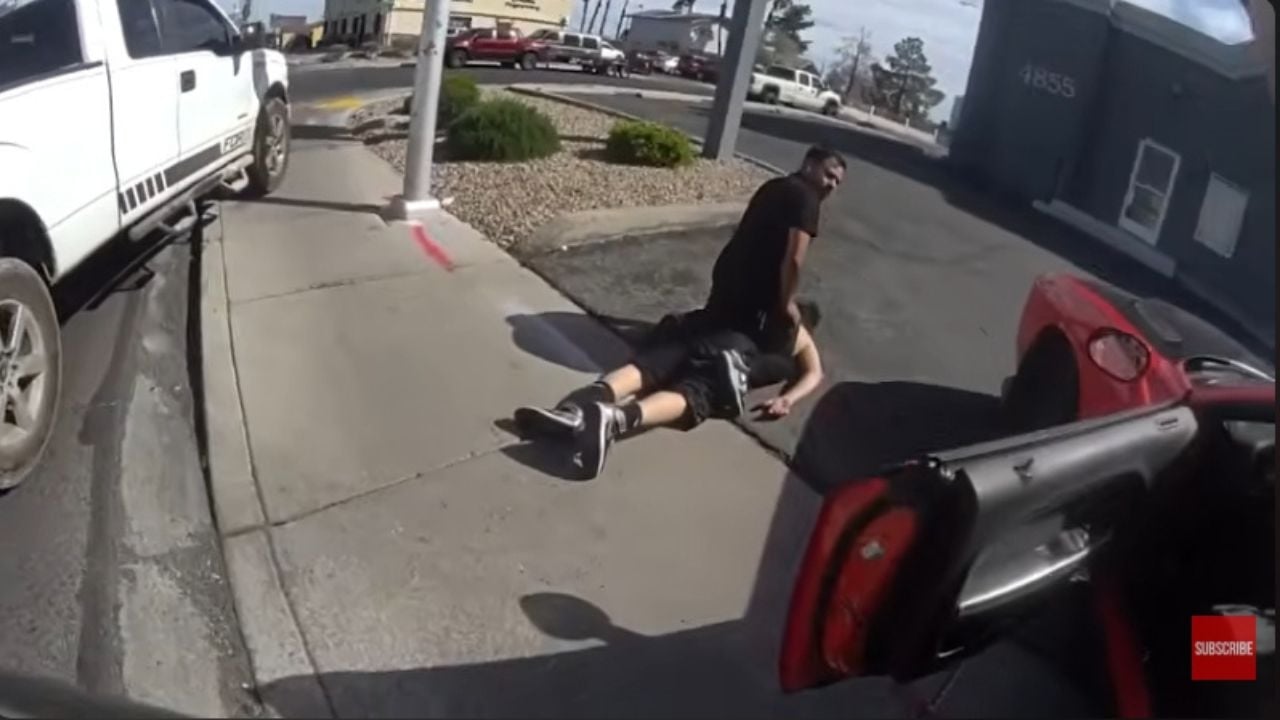
It was here that the most unexpected element emerged. A civilian, seemingly acting on instinct, intervened. The individual pulled over, exited their own vehicle, and physically restrained the fleeing suspect.
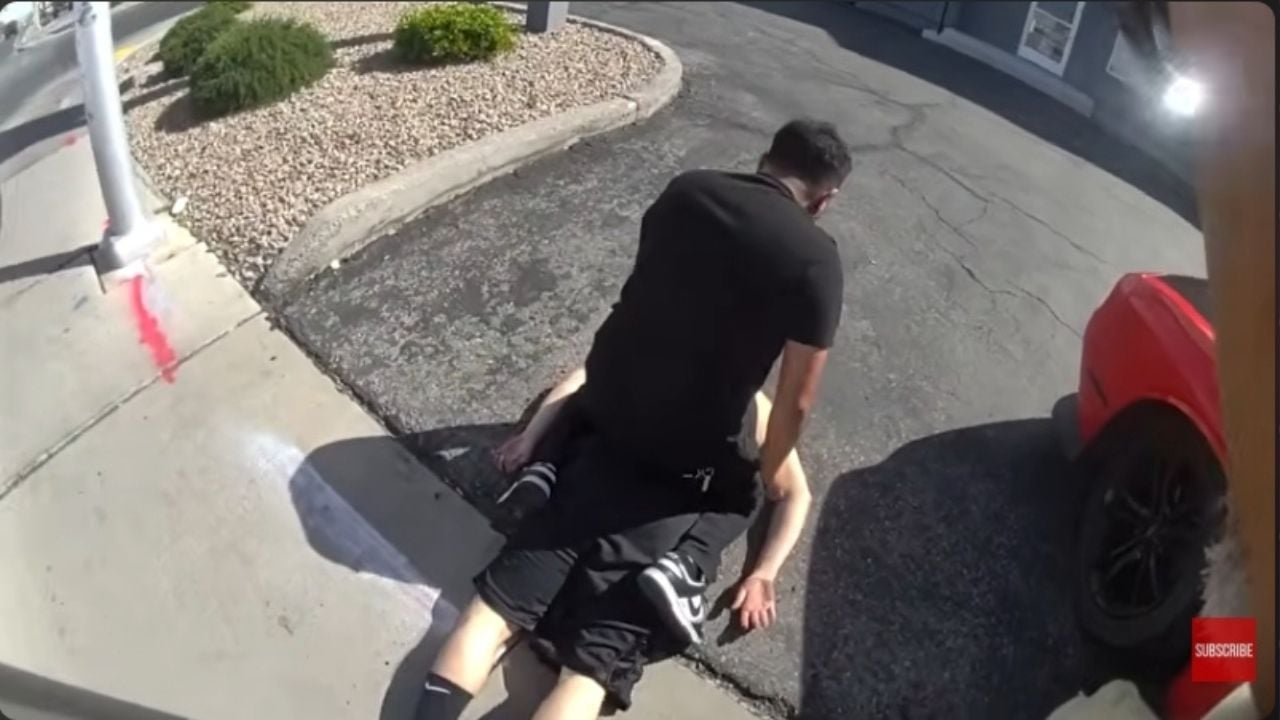
This action raises complex legal questions. In many parts of the United States, the concept of a citizen’s arrest exists. Private individuals could detain someone they reasonably believe has committed a felony.
However, this authority is narrowly defined and carries significant risk. The legality often depends on whether the crime is clearly identifiable and whether the force used is proportionate.
In this scenario, the suspect’s driving behavior could qualify as reckless endangerment or felony evasion, depending on local statutes. A bystander witnessing such conduct might argue they had reasonable grounds to intervene.
Yet, the law does not broadly protect civilians who place themselves in harm’s way. If the suspect had been injured during the restraint, or if the situation escalated, the civilian could face legal consequences ranging from civil liability to criminal charges.
Instinct vs. Training
Now, the big one: The issue of personal safety. Law enforcement officers are trained to handle unpredictable suspects, assess threats, and use force within strict guidelines. Civilians lack this training.
Intervening in an active incident, especially one involving a potentially volatile individual, can lead to serious injury or worse. Authorities generally advise witnesses to observe and report rather than engage directly.
Still, moments like this reveal a tension between instinct and law. The urge to act, to stop danger in its tracks, can override caution. In this case, the intervention appeared to succeed without immediate harm, but it exemplifies a decision that could have ended very differently.
The Bottom Line
It has not been clearly established why the silver Nissan Sentra was being tracked by police. Dispatch audio only flagged it as “suspicious activity,” and no official report has confirmed the underlying reason for the pursuit.
The available information comes from live dispatch monitoring, which is preliminary and unverified. What we do know is that the pursuit originated from a license plate alert and suspicious activity report.
The scene did not close with a dramatic takedown by officers, but with an ordinary citizen stepping into an extraordinary situation. Yes, it is a powerful image; one that invites admiration and concern in equal measure.
The law may allow limited intervention, but it rarely encourages it. In the balance between courage and caution, the safer path remains clear: let trained professionals handle the pursuit, while the public keeps a safe distance.
Source: US Crime Radar