
There was a time, not so long ago, when American roads were defined by the cars that drove on them. It was a glorious era of power, chrome that could blind a low-flying aircraft, and swagger that would make a rock star blush. This was when the Motor City did more than just lead the way; it was the highway.
From the post-war boom, when America put its foot down and said, “We’re going cruising!”, right through the golden age of muscle cars, where horsepower was a religion and tire smoke was incense, Detroit’s automakers produced vehicles that became cultural icons, defining what it means to be an American. These magnificent machines came roaring off assembly lines with bold styling that could stop traffic, innovative features that made your jaw drop, and a distinctly American attitude that turned heads everywhere it went and captured imaginations around the world. Forget subtlety; these cars were designed to be noticed.
We’re talking about the kind of cars that graced every garage calendar, rumbled ominously in drive-in movie lots while teenagers tried to get some privacy (good luck with that loud exhaust), and demanded attention at every red light, daring anyone to try and beat them off the line. They were built to leave a mark, preferably a set of glorious black stripes on the asphalt. Whether it was their sleek fins that could double as landing gear, an aggressive stance that looked ready to eat small foreign cars for breakfast, or just pure, unfiltered, unadulterated cool, these cars told the world that American engineering wasn’t just about practicality — it was about pride, passion, and pushing the boundaries.
In this piece, we’re taking a joyride back in time to look at 13 classic cars that owned Detroit’s heydey. These are the legends that made Americans stand a little taller, dream a little bigger, and maybe, just maybe, spend a little too much on premium fuel.
How We Chose the Kings of the Road
To create this definitive list, we focused on vehicles that left a permanent impression, not just on us automotive obsessives, but on the broader American psyche. We prioritized cultural impact (did it show up in movies? Did it make kids draw it on their school notebooks?), iconic design (could you spot it a mile away, even if it was covered in mud?), and the lasting influence of each model (did it inspire a generation of imitators, or just a few confused engineers?).
Some of these cars were groundbreaking in their aesthetics, looking like they’d arrived from the future. Others were trailblazers in their raw performance, turning suburban streets into drag strips. Many, in their purest form, perfectly captured the spirit of the era, from post-war optimism to rebellious muscle. We also heavily considered their enduring popularity, how collectible they are today (some of these will cost you an arm, a leg, and maybe your firstborn), and their undeniable legacy in the automotive community.
Our goal wasn’t to compile a list of the fastest quarter-mile times or the most expensive auction results, but the ones that made Detroit proud and made Americans genuinely take notice. These 13 models reflect moments when the U.S. auto industry wasn’t just following global trends — it was setting them, usually with a V8 rumble.
1957 Chevrolet Bel Air
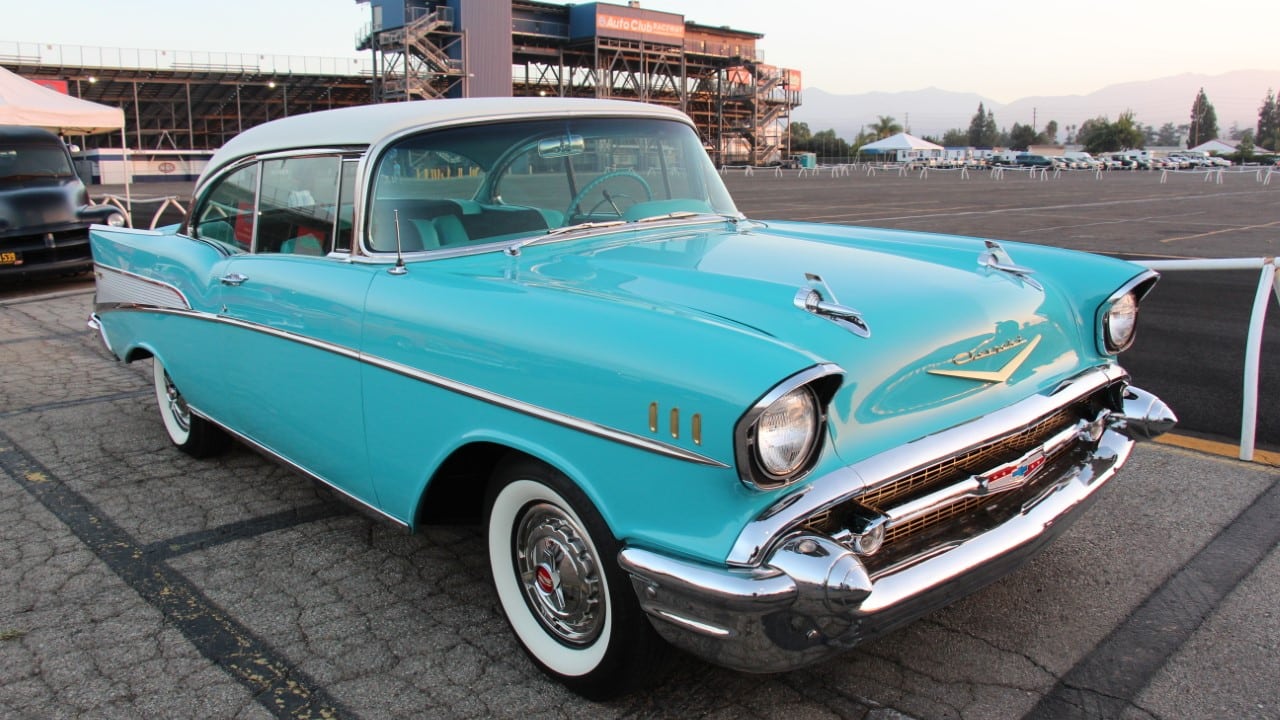
Few cars scream “1950s Americana” quite like the ’57 Chevy Bel Air. It’s a rolling time capsule that embodies the decade’s flamboyant, space-obsessed style. With its pronounced tailfins that looked ready for liftoff, enough chrome trim to blind a co-pilot, and an unmistakable grille that smiled wider than a lottery winner, this car became an instant icon of post-war optimism and prosperity. You practically hear rock and roll music just by looking at it and can immediately envision teenagers hanging out at a diner, drinking milkshakes in the parking lot.
It wasn’t just the looks, though; it was the sheer presence. The Bel Air was stylish yet accessible, making it a favorite for everyone from families heading to Sunday picnics, to rebellious teens cruising the drive-in, and now, dedicated collectors who treat them like museum pieces. It perfectly captured the feeling of prosperity and endless possibilities of the era, where gas was cheap and the future was bright. It remains, arguably, one of the most beloved and instantly recognizable classics in automotive history.
If you don’t nod approvingly when you see a ’57 Bel Air, you might want to check your pulse.
1965 Ford Mustang

When the Mustang launched in April 1964, it created an entirely new category: the pony car. Suddenly, every other automaker was scrambling to catch up. Sleek, sporty, and with a starting price that was shockingly affordable for the average American ($2,368, which was about $23,000 in today’s money, that’s less then a new Miata), it instantly became a sensation among young drivers craving freedom, flair, and something that didn’t feel like their dad’s sedan.
Its iconic long hood, short deck proportions, and seemingly endless customizable options made it feel like a personal extension of one’s style. You could get it as a mild-mannered six-cylinder grocery-getter or a tire-smoking V8 street machine. For many Americans, this wasn’t just a car; it was the car that marked the start of a lifelong love affair with driving, speed, and looking good doing it. It was, and still is, a legitimate cultural phenomenon.
Take that, bland economy cars!
1959 Cadillac Eldorado

If you had to point to one car that perfectly embodied the phrase “bigger is better,” and then added “more is even betterer,” this would be it: the ’59 Cadillac Eldorado. Specifically, the Biarritz convertible or Seville hardtop. With its ridiculously soaring tailfins and twin bullet taillights, the ’59 Eldorado became the symbol of American automotive excess. Its dramatic styling that practically announced its arrival ten minutes before it turned the corner, this car was a statement. A spaceship-inspired statement.
It was peak American luxury, unadulterated flash, and supreme confidence, all wrapped up in a four-wheeled, mile-long package. More than a car, it was a rolling testament to post-war American excess and prosperity, and it helped cement Cadillac’s image as the undisputed king of American elegance and audacious design. They say it was designed by a committee, and that committee apparently said, “More!”
It’s still a head-turner, and frankly, it still looks like it’s going 100 miles per hour standing still even if parked next to a modern supercar.
1969 Dodge Charger

The 1969 Dodge Charger is practically a movie star. It combined aggressive, no-nonsense looks with an undeniable cool factor that’s transcended generations. Immortalized in pop culture through television (namely The Dukes of Hazzard‘s “General Lee”), its iconic fastback profile, hidden headlights, and imposing stance gave it a look that meant serious business. This was no polite cruiser that got by on its looks; this was a street brawler. It was more stunt double than A-list actor.
Whether it was tearing down backroads with a cloud of tire smoke or just parked menacingly at the local diner, the Charger made its mark. It stood as the very symbol of muscle car bravado, a two-door menace that dared you to challenge it. Today, it remains a collector favorite, driving auction prices sky-high.
If you hear a distant rumble, look around, because a ’69 Charger might just be about to lay down some rubber, and then probably some more.
1963 Chevrolet Corvette Sting Ray
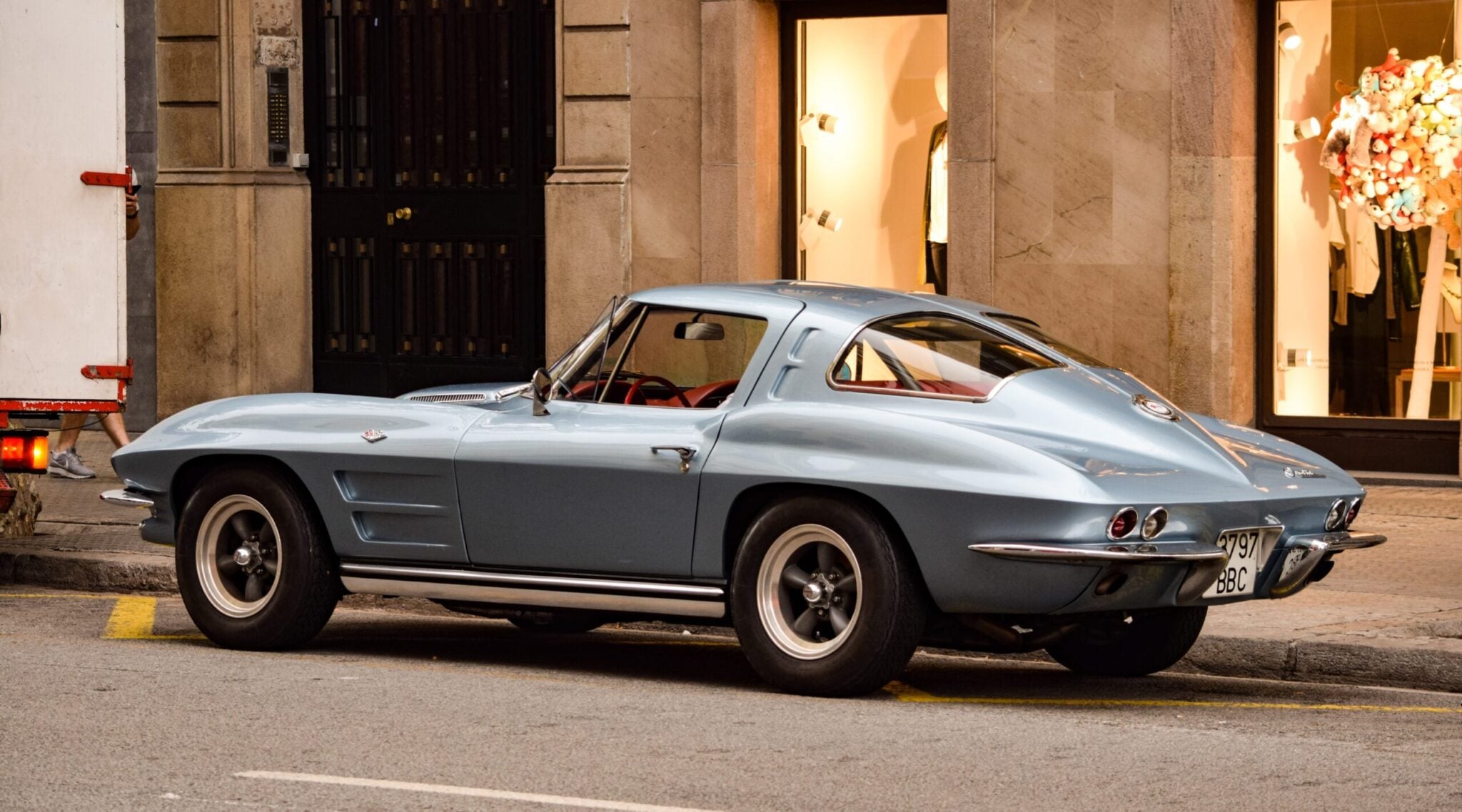
The 1963 Chevrolet Corvette Sting Ray didn’t just redefine American sports cars; it put them on the global map. It’s utterly breathtaking design, highlighted by the famously controversial (and unique-to-’63) split rear window and gorgeously sculpted body, introduced a level of sophistication and athleticism not often seen in domestic models at the time. It looked like it was going fast even when sitting still.
This wasn’t just for show, though; drivers could absolutely feel the performance edge. With independent rear suspension for the first time, it actually handled a corner without trying to launch itself into orbit. This generation marked the Corvette’s true transition from a stylish boulevard cruiser to a serious, track-capable driving machine, all while remaining unmistakably, proudly American.
It’s a masterpiece of automotive design, even if Zora Arkus-Duntov hated that split window.
1949 Ford Coupe
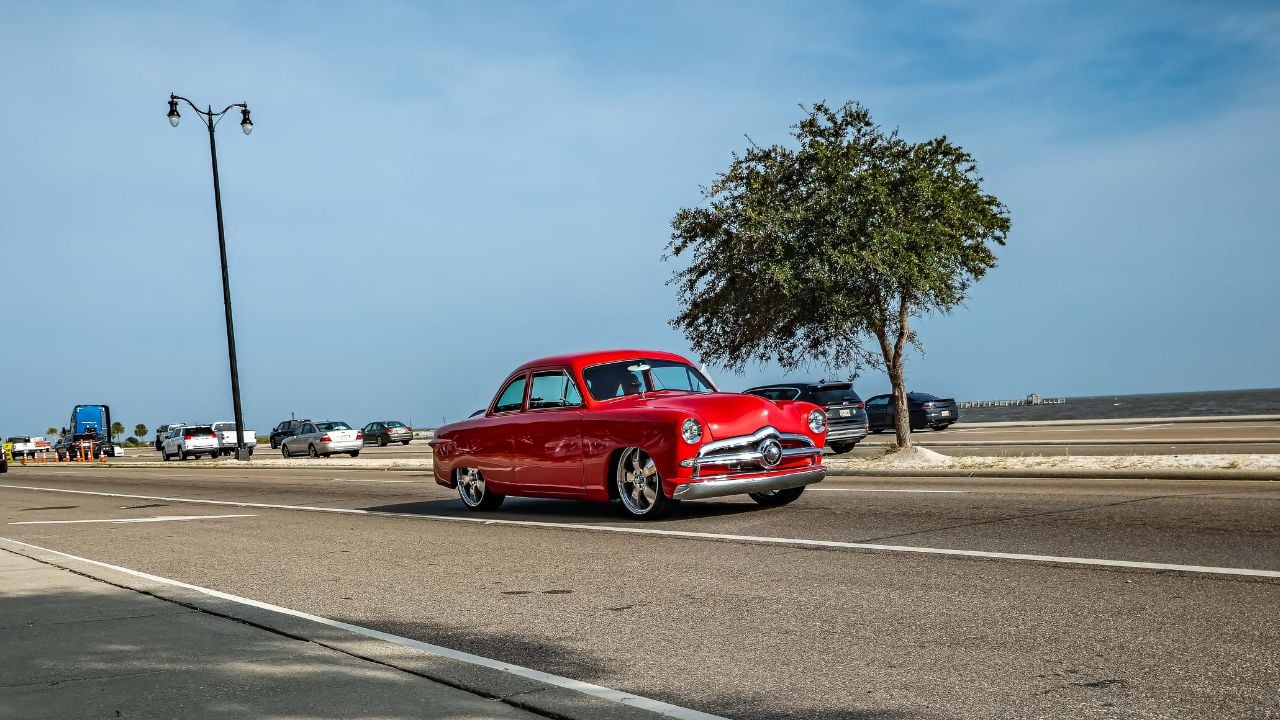
The 1949 Ford Coupe, affectionately known as the “shoebox” Ford, marked Ford’s true post-war revival and a complete stylistic reset for American cars. It bravely ditched the pre-war “pontoon” fender look for something clean, integrated, and incredibly forward-thinking. This car was a breath of fresh air in an automotive landscape still clinging to pre-war designs. It was sleek, uncluttered, and looked fast even though its flathead V8 might have disagreed.
It quickly became a favorite among hot rodders and custom builders precisely because of its clean lines and accessible price. If you wanted to chop, channel, or shave a car, this was your canvas. This Ford was truly the people’s car that kickstarted a new, modern era in American automotive design, paving the way for all the chrome and fins that would follow.
It was the original “blank slate” for automotive artistry.
1970 Chevrolet Chevelle SS
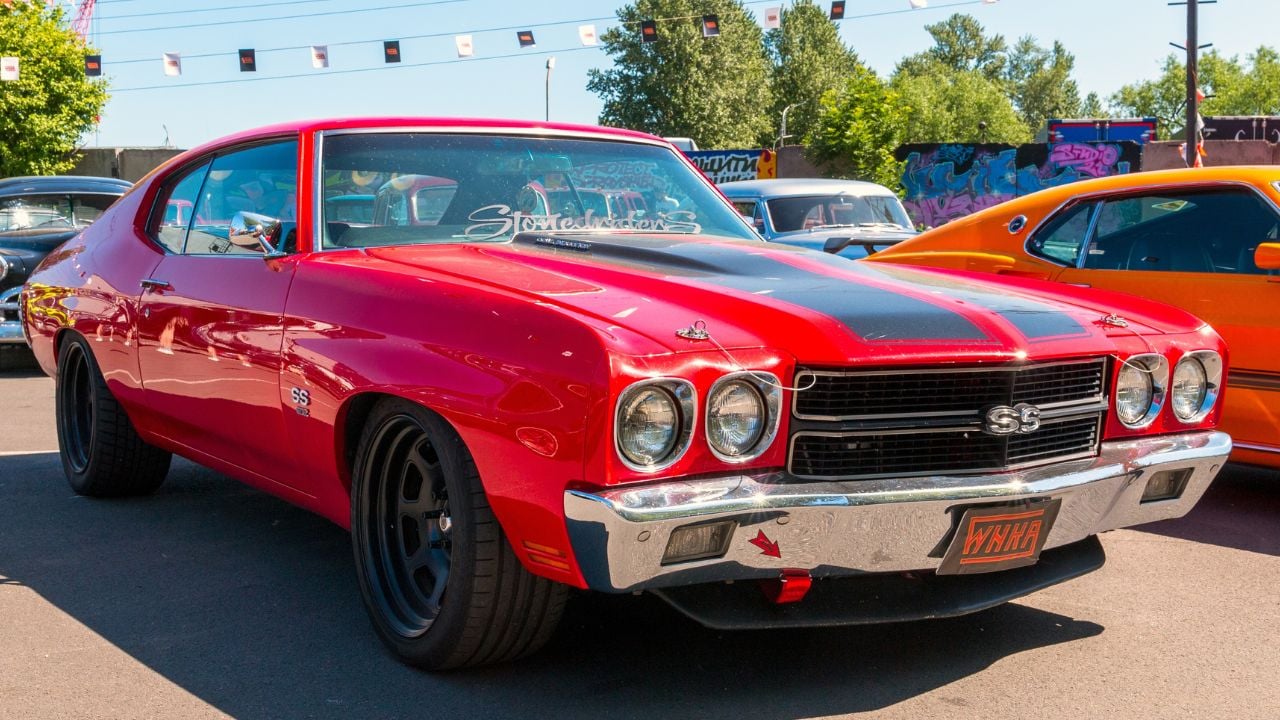
The 1970 Chevrolet Chevelle SS (especially with the fabled LS6 454 V8) represented peak muscle car prowess, an era before emissions regulations turned powerful engines into asthmatic whispers. Bold stripes that looked like war paint, a commanding stance that dared you to look away, and a thunderous performance that could shake the foundations of your house made it a legend of the street and the drag strip. This wasn’t just a car; it was a rolling statement of pure, unadulterated American power.
But beyond brute force, the Chevelle struck a beautiful balance. It could genuinely be a daily driver (if you could afford the gas) or a weekend warrior. Either way, it gave drivers a taste of raw, unbridled American power, straight from the factory. It was tough, it was fast, and it looked like it was ready to win every street race it entered.
Few cars encapsulate the spirit of the muscle car era quite like the ’70 Chevelle SS.
1955 Chrysler C-300

Dubbed “America’s first muscle car” by some historians (this could be argued), the 1955 Chrysler C-300 brought serious, no-joke performance into a surprisingly refined and luxurious package. This wasn’t just a brute; it was a sophisticated brute. It came with the mighty 300-horsepower, 331 cubic-inch HEMI V8, making it the most powerful American production car of its time. This was a high-performance luxury car that didn’t compromise on either front. It was fast, elegant, and exclusive.
This was Chrysler showing that power didn’t have to be loud and uncouth; it could wear a suit, albeit a very fast, very heavy one. The C-300’s blend of speed and sophistication helped kick off the infamous horsepower wars of the late ’50s and beyond, proving that Detroit was willing to put massive engines into anything.
It set a new standard for performance, wrapped in a tuxedo.
1967 Pontiac GTO

The 1967 Pontiac GTO carried forward the muscle-car movement that began in 1964, when Pontiac shocked the industry by dropping a 389-cid V8 into the mid-size Tempest. By 1967, the GTO was using a new 400-cid V8, delivering even more refined performance while cementing its status as a true American icon.
Nicknamed “The Goat” (and sometimes “Goat-ee” by affectionate owners), it had both the iconic image and the raw attitude to back it up. The GTO brought tire-shredding performance to the masses, proving that you didn’t need to be a millionaire to own a seriously powerful, good-looking car.
It started a trend that defined a generation, and for that, we salute it. It’s truly a legend that lives up to the hype.
1953 Buick Skylark

With its sweeping, elegant lines, cut-down fender openings, and a convertible-only build, the 1953 Buick Skylark wasn’t just a car; it was a limited-edition showcase of what Buick could do when it really put its mind to it. It combined sheer elegance with a flamboyant flair at a time when Americans wanted to drive in unmistakable style, not just get from A to B. This was GM’s statement on luxury and exclusivity.
Though it wasn’t mass-produced (only 1,690 were built, making them rarer than an honest politician), its design cues, especially the “sweepspear” side trim and those unique wheel cutouts, influenced many cars that followed for years .It was priced like a true luxury car — over $5,000, putting it above most Cadillacs except the ultra-premium Eldorado but also for how boldly it represented American luxury and design ambition.
It’s a classic that quietly demanded attention. Turn up your hearing aids, it’s worth it!
1971 Plymouth HEMI ‘Cuda
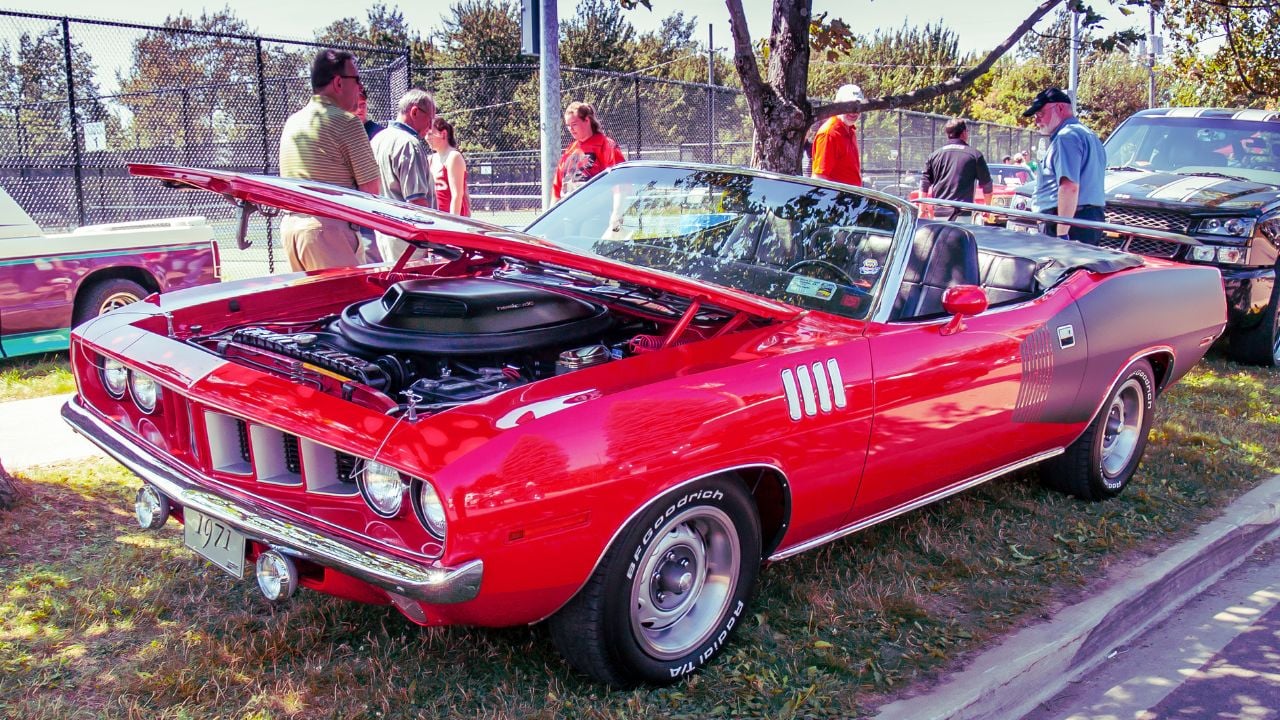
Few cars capture pure, unadulterated muscle car menace like the 1971 Plymouth HEMI ‘Cuda. This wasn’t a subtle car; it was a full-blown assault on the senses. With bold “high impact” colors like “Sassy Grass Green” and “In-Violet,” functional (and massive) shaker hoods that vibrated with every engine thump, and aggressive styling that screamed “get out of my way,” it was unapologetically wild and incredibly proud of it. This car had attitude, but it also was the attitude.
The HEMI badge alone carried more weight than a small elephant, instantly signaling serious, big-block power. But the car’s overall aggressive demeanor and raucous exhaust note sealed its legendary reputation. Today, the ’71 HEMI ‘Cuda is one of the most sought-after, highly collectible, and utterly insane American classics ever built, commanding prices that would make your accountant weep.
It’s loud, proud, and unapologetically American.
1948 Tucker 48

Though only 51 examples were ever built (and 47 still survive today), the Tucker 48’s impact on automotive history was absolutely immense, and it made a massive, revolutionary impact on America’s car scene. It introduced forward-thinking safety and design features years, even decades, ahead of its time, like a padded dashboard (imagine that!), a pop-out safety windshield, and that famous, centrally mounted “cyclops” headlight that actually turned with the front wheels to illuminate corners. It was basically a car from the future, dropped into 1948.
Preston Tucker’s vision was bold, brilliant, and ultimately, too radical and disruptive for the powerful established automakers who allegedly conspired to shut him down. The car’s brief, turbulent history is the stuff of legends and Hollywood movies (Tucker: The Man and His Dream).
But the car’s legacy lives on as a shining symbol of American innovation, what might have been, and the often-brutal realities of taking on the status quo. It’s the ultimate “what if?” car.
1956 Ford Thunderbird
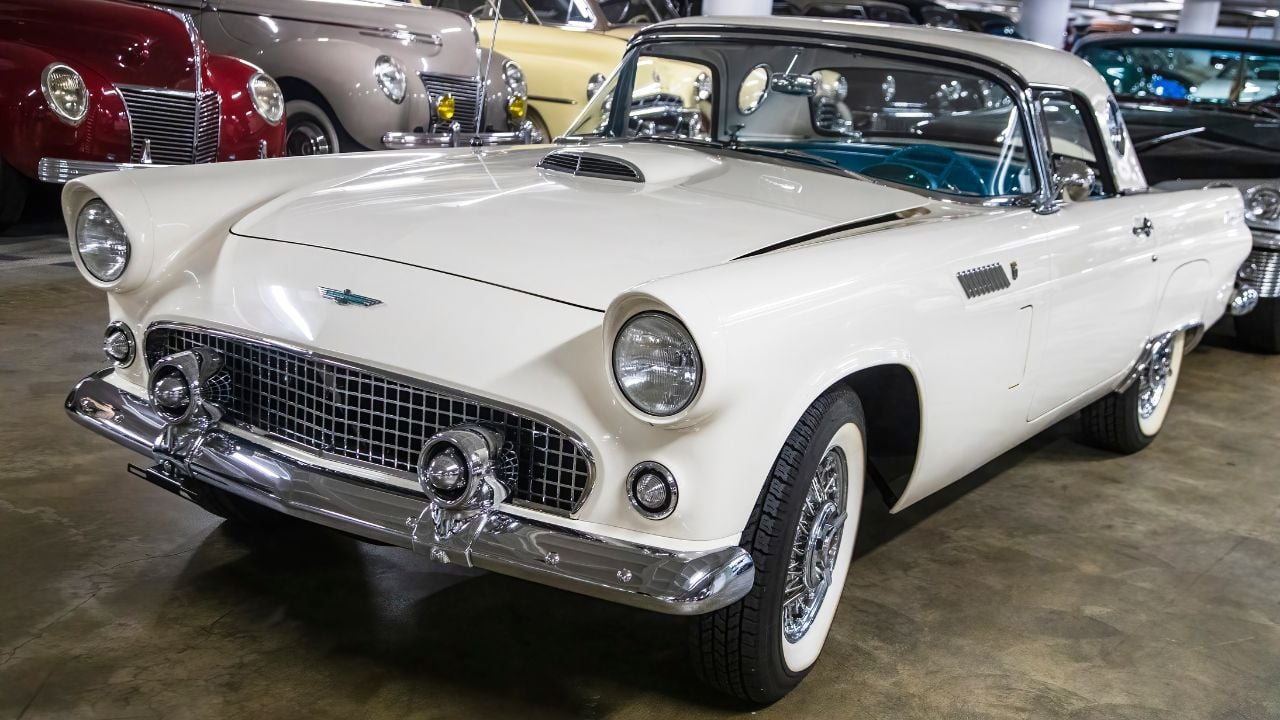
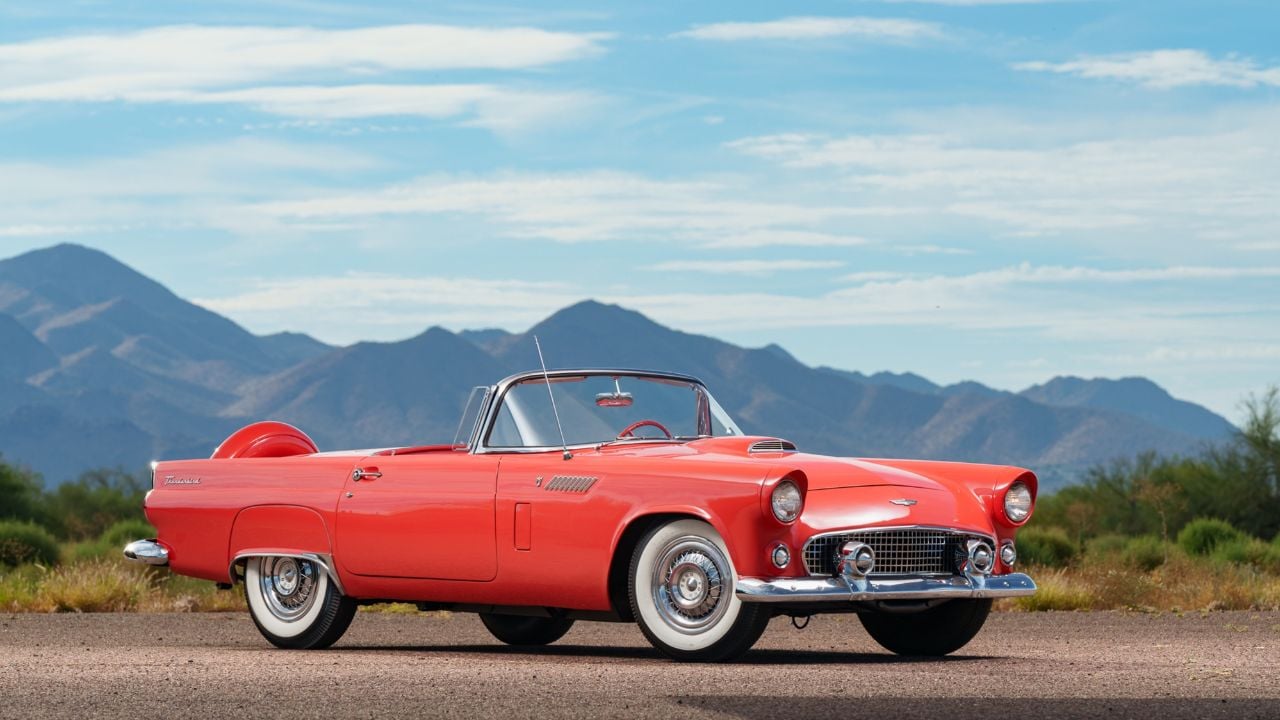
The original 1956 Ford Thunderbird (we’re specifically ignoring the later, bloated models that lost their way) was Ford’s direct answer to Chevrolet’s Corvette, but with a crucial twist. Instead of pure, raw performance (though it was no slouch), the T-Bird focused squarely on personal luxury, style, and comfort. It was less “sports car” and more “sophisticated boulevard cruiser for the discerning individual.” This was a car designed for leisurely drives, not lap times.
Its iconic styling, from the distinctive porthole windows on the optional hardtop to its low-slung design and elegant chrome, gave it an instantly recognizable look that still turns heads today. The Thunderbird proved that American cars could be both fun, refined, and incredibly chic. It wasn’t about raw power; it was about presence and effortless cool.
It was the perfect car for pulling up to a fancy dinner, or just cruising the coast, looking good doing it.
Detroit’s Timeless Legacy

These 13 vehicles are more than just relics of a bygone era. To many of us, they’re glorious snapshots of American ambition, creativity, and unapologetic confidence. Each one represents a unique chapter when Detroit’s automakers led with boldness, building cars that weren’t just functional, but deeply emotional. They were cars with character, attitude, and a healthy dose of showmanship.
They rolled off assembly lines at a time when innovation was king, design had personality (sometimes a lot of it, sometimes too much), and engineering was about brute force and elegant solutions. These cars announced it with a thunderous rumble, gleaming chrome, and undeniable style. Even today, their distinctive silhouettes and compelling performance innovations live on in movies, in garages across the country, and at every local car show, commanding respect and admiration.
We chose these models because they each represent something deeper than mere specifications or horsepower numbers; they embody moments when the American spirit was cast in steel, chrome, and a generous splash of V8 power.