
Remember when concept cars actually looked like they came from the future instead of just being slightly angrier versions of next year’s model? BMW sure does. Back in the day, the folks in Munich weren’t afraid to let their engineers and designers go completely off the rails, and thank goodness for that. These six prototypes prove that sometimes the best ideas come from asking, “What if we just ignore what’s practical for a minute?”
BMW often built prototypes that carried visions far ahead of their time, packed with tech we haven’t yet imagined in cars and designs that the NHTSA would never approve of. These were creations born from imagination, shaped by skilled hands in quiet workshops under the glow of fluorescent lights. They existed as dreams on wheels, glimpses of a future filled with daring ideas and mechanical poetry. When these prototypes rolled onto show stands or test tracks, they drew people close like moths to a flame. Each one offered a promise, a story of what might come next, and they left memories that endured long after their engines cooled.
BMW Turbo E25
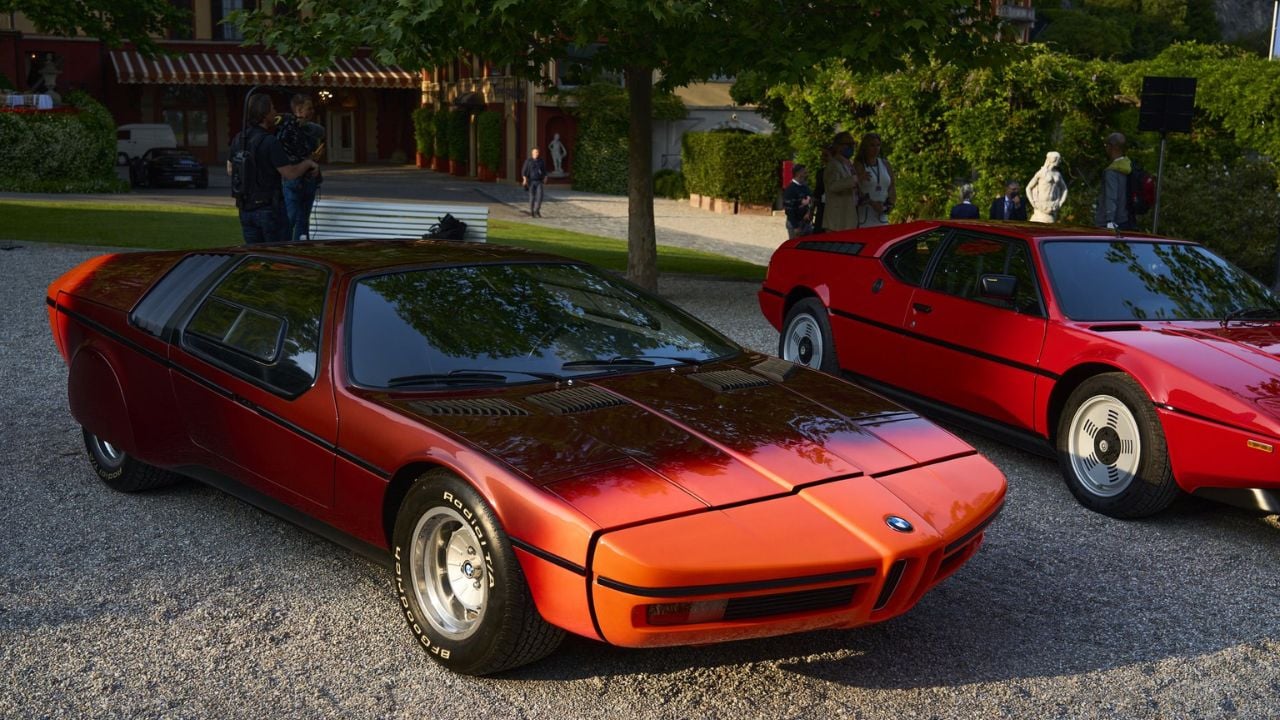
Let’s start with the granddaddy of BMW concept design, and we mean that in the best possible way. The BMW Turbo looked like someone took a 1970s kitchen appliance, painted it safety orange, and taught it to go really, really fast.
Paul Bracq’s design was so futuristic that it made the space shuttle look retro. The 2.0-liter turbocharged four-cylinder engine produced 276 horsepower, which in 1972 was equivalent to strapping a Saturn V to your daily commuter. For perspective, that’s more power than a modern MINI Cooper S, and this vehicle was built when Nixon was still grappling with the Watergate scandal.
Open the gullwing doors, and you can see an interior wrapped in red leather that would make a Ferrari envious; the dashboard resembles Mission Control at NASA. BMW even added a radar-based braking distance warning system, an early ancestor of modern distance alert and adaptive cruise systems, while the rest of us were still figuring out 8-track players.
Fun fact: The Turbo’s influence led directly to the M1, proving that sometimes the craziest ideas make the most sense in hindsight. It’s like that friend who suggested Bitcoin back in 2010; sure, they sounded nuts at the time, but now you wish you’d listened.
BMW Nazca C2

Picture this: Italdesign, led by Giorgetto Giugiaro, builds a concept around BMW’s 5.0-liter V12 from the 8 Series, with Alpina involved in tuning. The result was the Nazca C2, a carbon fiber missile that appeared to have been carved from a single block of automotive desire.
That V12 sang opera with a dozen cylinders singing in perfect harmony, all while wrapped in automotive design excellence. The transparent canopy made the driver feel like they were piloting a fighter jet, which is probably exactly what Giugiaro intended.
Period specs credit the Nazca C2 with a claimed top speed of about 193 mph, making it faster than most people’s common sense would dictate. The stance was so low and wide that it made other supercars look like they were standing on their tippy-toes. Every line flowed with purpose, every curve had a reason for being there beyond just looking good (though looking absolutely spectacular was clearly a priority).
Here’s the kicker: while everyone was drooling over the Nazca at car shows, BMW was quietly taking notes for future designs. You can see its DNA in cars that came years later, proving that sometimes the best concepts are the ones that teach you what’s possible.
BMW Z18

Just when everyone thought BMW had forgotten how to have fun, along came the Z18. This wasn’t just another pretty concept; it was a roadster with a serious case of wanderlust and the mechanical capability to back it up.
The 4.4-liter V8 sent power to all four wheels, because why should Audi have all the all-wheel-drive fun? The composite body panels were designed for abuse, and BMW built the cabin with waterproof materials and rubber mats so it could handle mud and water without drama. Try that with your leather-wrapped luxury roadster.
The proportions hit that sweet spot between elegant and purposeful. Long hood? Check. Confident stance? Double-check. Ability to tackle mountain passes and beach runs with equal enthusiasm? Triple check with a side of “why didn’t this make it to production?” BMW, if you’re reading this…reconsider…
The retractable roof opened up to let in everything from alpine air to ocean breezes, while the suspension could handle anything from highway cruising to fire road exploring. This was BMW saying that adventure doesn’t have to mean compromise, which is a lesson more automakers should learn.
BMW Garmisch

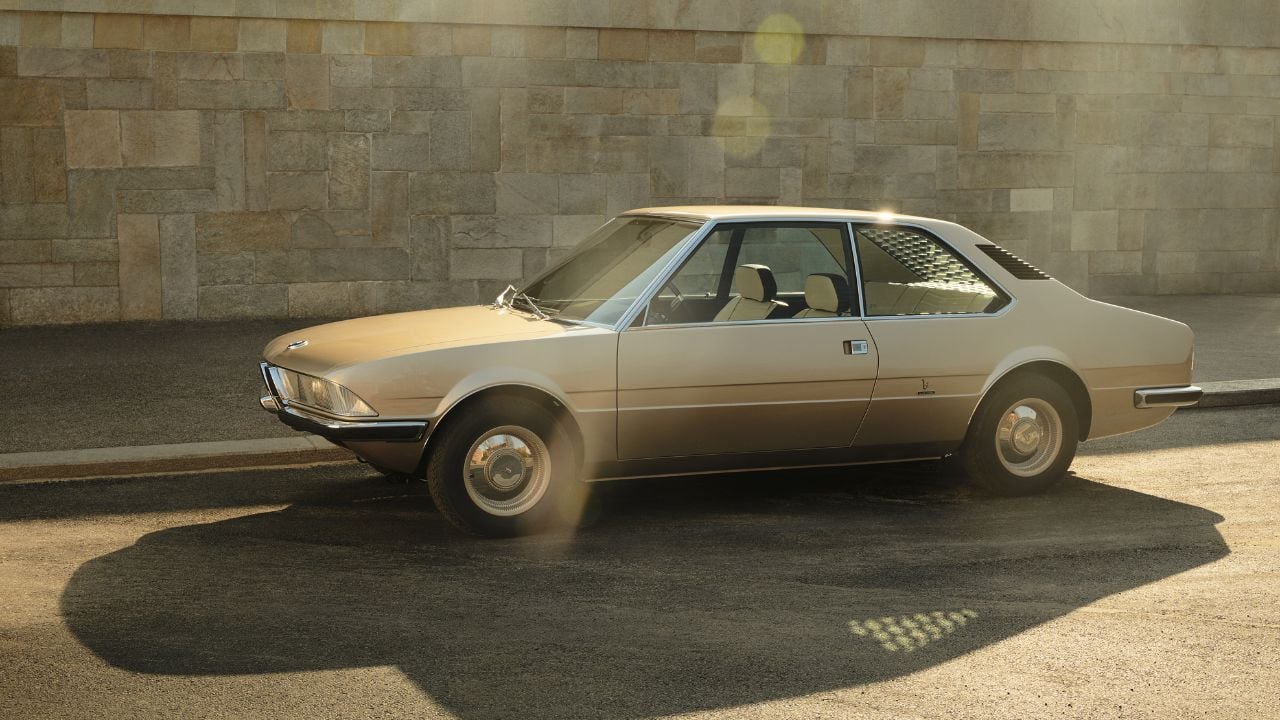
The Garmisch was the result of a very civilized conversation between BMW’s engineers and Marcello Gandini at Bertone. The result was a sedan that looked as if it were designed with a ruler and a great deal of confidence.
Those sharp, angular lines hinted at the design language that would eventually birth the 5 Series. The concept featured an angular take on the BMW kidney grille plus Gandini’s trademark honeycomb-patterned rear window mesh, and that upright, purposeful stance looked ready to work, yet worked while being unbearably handsome.
Inside, the geometric upholstery patterns appeared to be influenced by the best of 1970s modernist design, and the vertical radio placement in the center console was the kind of detail that made you realize someone was truly thinking outside the box. It was different enough to be interesting but familiar enough to feel like a BMW.
The genius of the Garmisch wasn’t just in its appearance; it was in how it previewed the future. When BMW revealed the E12 5 Series a few years later, the family resemblance was evident. Sometimes the best concepts are the ones that don’t try to reinvent the wheel; they just figure out how to make it roll a little smoother.
BMW even recreated the Garmisch in 2019, proving that good design is timeless and that sometimes it’s worth looking backward to move forward.
BMW M8 E31 Prototype

Here’s where things get serious. The M8 prototype wasn’t just a concept car; it was BMW Motorsport flexing its engineering muscles so hard that it probably pulled something.
That 6.0-liter V12 was quoted at 640 hp and 650 Nm of torque at a time when most cars were happy to break 200. This wasn’t just powerful; it was “redefine your relationship with the laws of physics” powerful. The body was widened to accommodate tires that could theoretically handle all that fury, and the aerodynamics were designed by people who understood that air resistance is the enemy of speed.
Inside, everything was focused on one thing: going very fast, very well. Racing-inspired materials, purposeful instrumentation, and the kind of no-nonsense layout that says, “We’re here to set lap times, not win interior design awards.”
The tragic part? This monster could have been the German response to supercars from Italy and Britain. Instead, it remained a prototype, leaving us to wonder what might have been. On the bright side, the lessons learned from the M8 prototype influenced every M car that followed, so its legacy lives on in the cars you can actually buy.
BMW Z22

The Z22 was BMW’s way of showcasing its engineering prowess. This was their laboratory on wheels, packed with technology that wouldn’t become commonplace for another decade.
Steer-by-wire and brake-by-wire replaced conventional mechanical steering and hydraulic braking, pointing toward a future where key driver inputs are translated by electronics rather than mechanical linkages. Cameras replaced mirrors because, apparently, someone at BMW had been watching too much sci-fi and decided to make it a reality.
The Z22 showcased cameras in place of mirrors, a head-up display, fingerprint-based authorization in place of a conventional key, and adaptive headlights, all years ahead of showroom norms. The Z22 was basically BMW’s crystal ball into the future.
The clean, smooth styling adhered to the “form follows function” philosophy, but in this case, function also included showcasing every cutting-edge technology they could think of. It wasn’t the prettiest concept BMW ever built, but it was possibly the most important for predicting where the industry was headed.
Echoes of a Bavarian Dream

These prototypes represent a special moment in automotive history: instances when BMW let their imagination run wild and created machines that still capture our attention decades later. They remind us that the best cars aren’t just transportation; they’re expressions of possibility.
The Turbo’s pioneering spirit, the Nazca C2’s Italian elegance, the Z18’s adventurous capability, the Garmisch’s design foresight, the M8’s raw performance potential, and the Z22’s technological vision all contributed to making BMW the company it is today. They’re proof that sometimes the craziest ideas turn out to be the smartest ones.
The next time you’re driving your sensible, practical BMW, remember that somewhere in Munich, there are probably engineers and designers working on something that will make us all a little crazy with want. And honestly? That’s exactly how it should be.