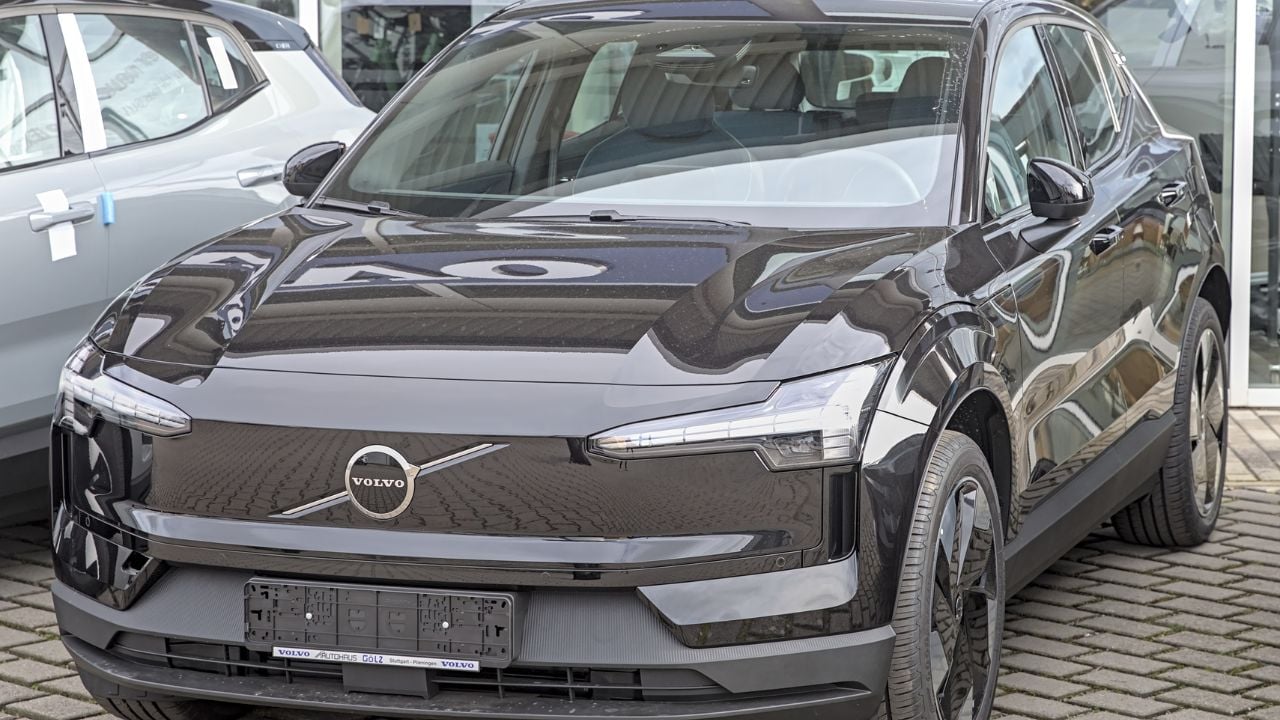
Swedish automaker Volvo Cars is recalling more than 40,000 units of the Volvo EX30 after identifying a potential fire risk linked to the vehicle’s high-voltage battery system. The recall applies to specific Single Motor Extended Range and Twin Motor Performance variants produced between 2024 and 2026.
The issue centers on battery modules that may overheat under certain conditions, particularly at higher charge levels. In worst-case scenarios, overheating could trigger a fire within the battery pack.
This recall affects 40,323 vehicles, making it one of the most significant safety actions tied to Volvo’s expanding electric lineup. The EX30 is a crucial model for Volvo as it targets the more affordable end of the EV market and competes with lower-cost rivals, particularly from China.
Battery Defect and Interim Safety Measures
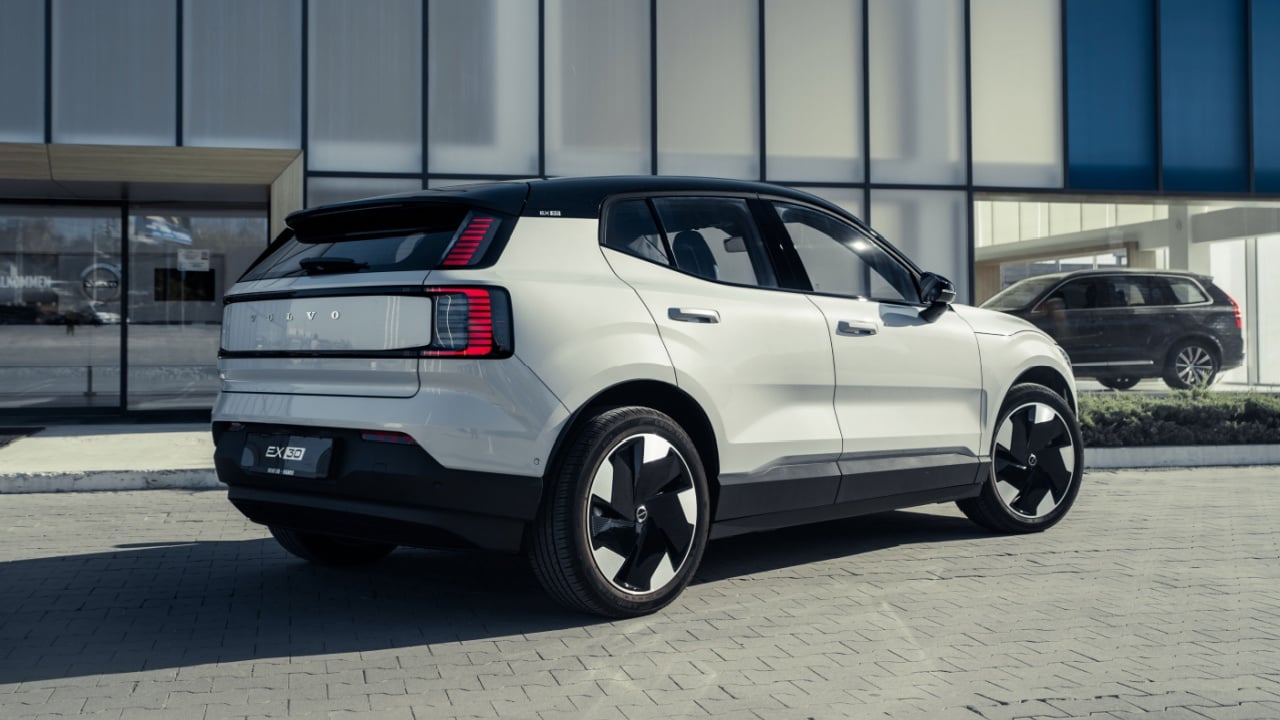
Investigations traced the problem to battery cells supplied by a Geely-backed joint venture, which are installed in the EX30’s high-voltage battery packs. Volvo has said that in rare cases, these cells can overheat when the battery is charged to higher levels, increasing the risk of fires.
As a precaution, the company has issued interim guidance to owners. Drivers have been told to limit charging to 70% and avoid charging the vehicle in enclosed or covered spaces until repairs are completed.
This temporary measure is designed to reduce stress on the battery cells and lower the likelihood of overheating. Similar warnings have been issued across multiple markets, including Europe, Australia, and South Africa. Volvo has emphasized that the issue is rare and that no widespread incidents or injuries have been reported.
To resolve the defect, the company plans to replace the affected battery modules at no cost to customers. Updated components from the supplier are expected to eliminate the fault.
Cost, Reputation, and Industry Context

The recall is expected to carry a significant financial impact. Estimates suggest the cost of replacement parts alone could approach $195 million, though Volvo has described such projections as speculative.
Beyond cost, the situation poses a reputational challenge.
Volvo has long positioned itself as a leader in automotive safety, and any fire-related defect runs counter to that identity. The timing is also critical. The EX30 plays a central role in Volvo’s electrification strategy, aimed at boosting EV adoption and competing in a crowded global market.
Battery-related recalls are not unique to Volvo. Other automakers have also faced similar issues as the industry scales up EV production, highlighting the technical challenges associated with high-density lithium-ion battery systems.
Repair Rollout and Customer Impact
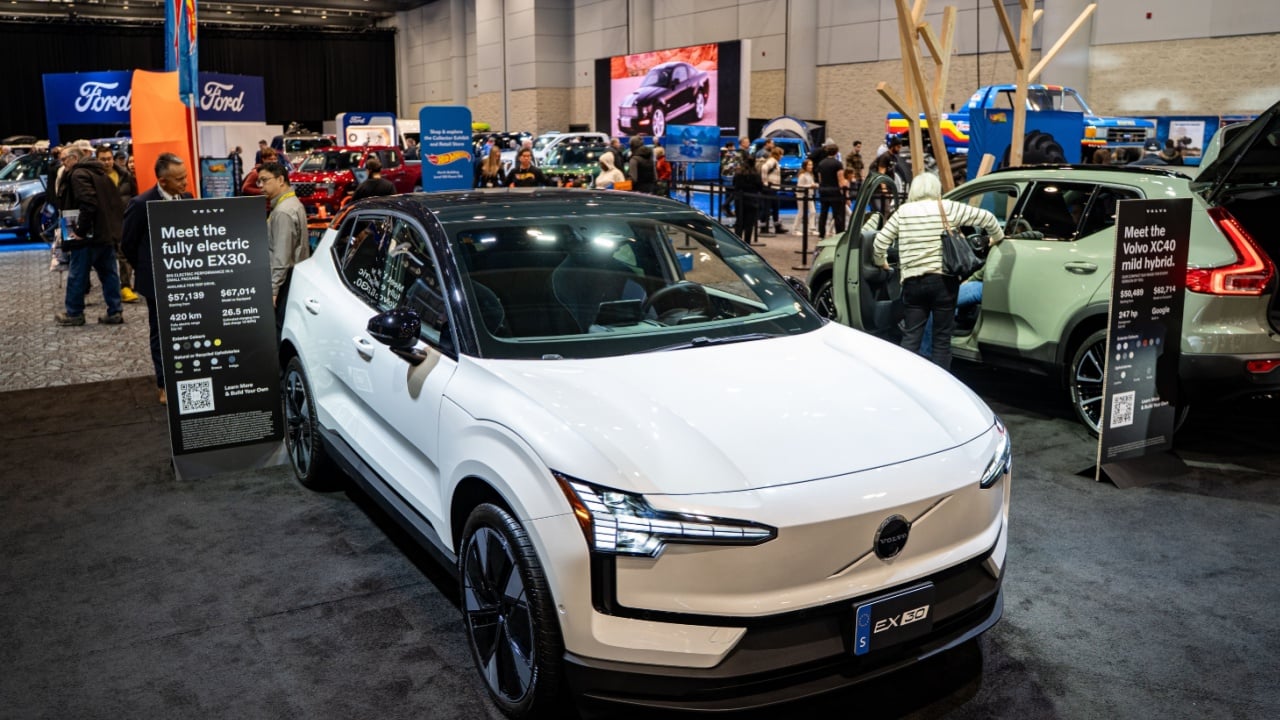
A further complication lies in how the fix will be deployed. Volvo is expected to roll out replacement battery modules in phases across different markets, meaning some owners could face delays before permanent repairs are completed.
During this period, vehicles remain usable but with limitations. Reduced charging capacity and guidance to park away from buildings introduce practical challenges for daily use, especially for drivers who rely on a full battery range.
The staggered rollout also places pressure on Volvo’s supply chain and dealer network to deliver updated components efficiently. Any bottlenecks in sourcing or installation could extend waiting times and increase customer frustration.
How Volvo manages logistics and communication will determine whether the recall remains a contained issue or develops into a broader concern for buyers. For now, the situation underscores a wider tension in the EV transition: balancing rapid technological progress with the strict safety expectations that define the automotive industry.