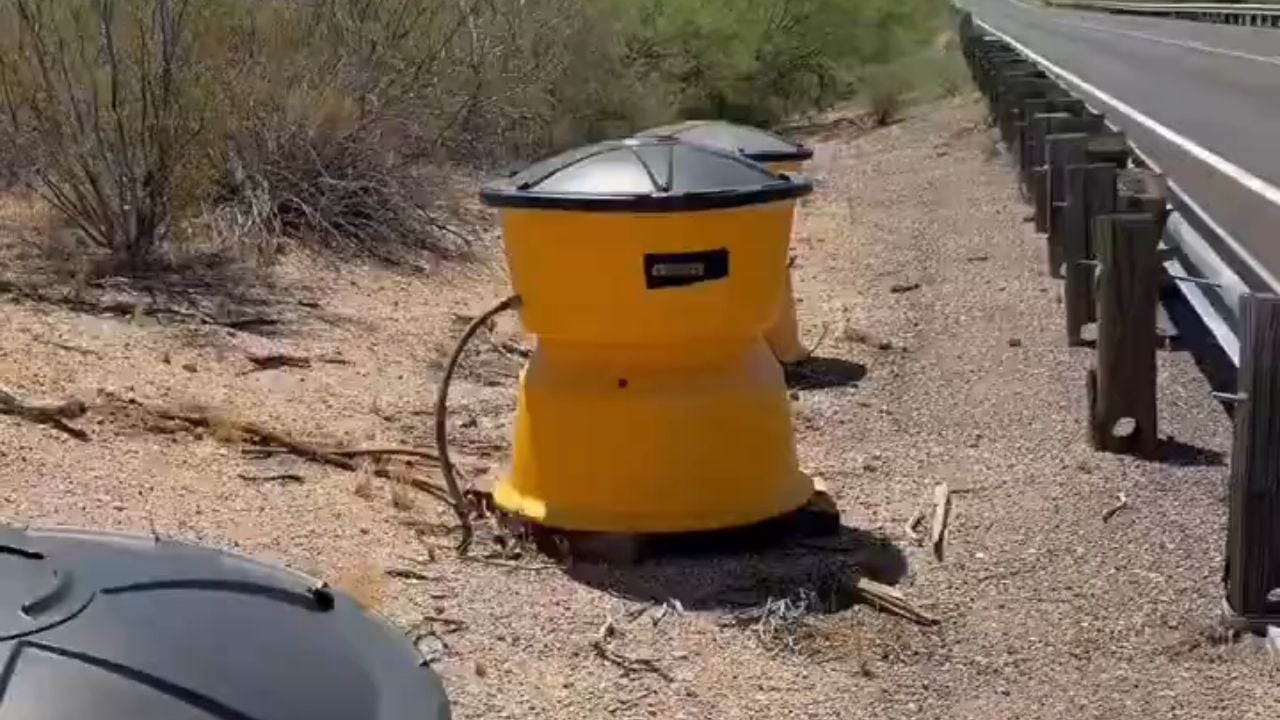

Drivers traveling through remote highways in Arizona are taking a second look at yellow roadside barrels. A viral video claimed some of them are not traffic safety devices at all, but hidden surveillance cameras designed to track vehicles passing through the desert.
The footage, shared by X account WallStreetApes on June 1, pulled millions of views after showing what appeared to be concealed Automated License Plate Reader systems built into yellow plastic highway barrels. The original video was filmed and posted by content creator “dadsgonelive,” who stopped along a desert road to inspect the devices up close.
In the video, the man points out camera lenses visible through openings cut into the sides of the barrels. He also films cables, hardware, and mounted equipment hidden inside the containers, arguing the devices were intentionally designed to resemble crash barriers or construction equipment sitting along the roadside.
The post triggered debate across X and other platforms. Many users questioned how long the surveillance systems had been operating and whether drivers were aware their movements were being logged as they crossed remote sections of Arizona highways.
Technology Used for Years
According to the post, the devices were located along highways in desert regions east and south of Phoenix, including areas near U.S. Route 60 outside Apache Junction. These corridors sit near routes frequently monitored by federal and state authorities because of drug trafficking, migrant smuggling, and cross-border criminal activity connected to the southern border.
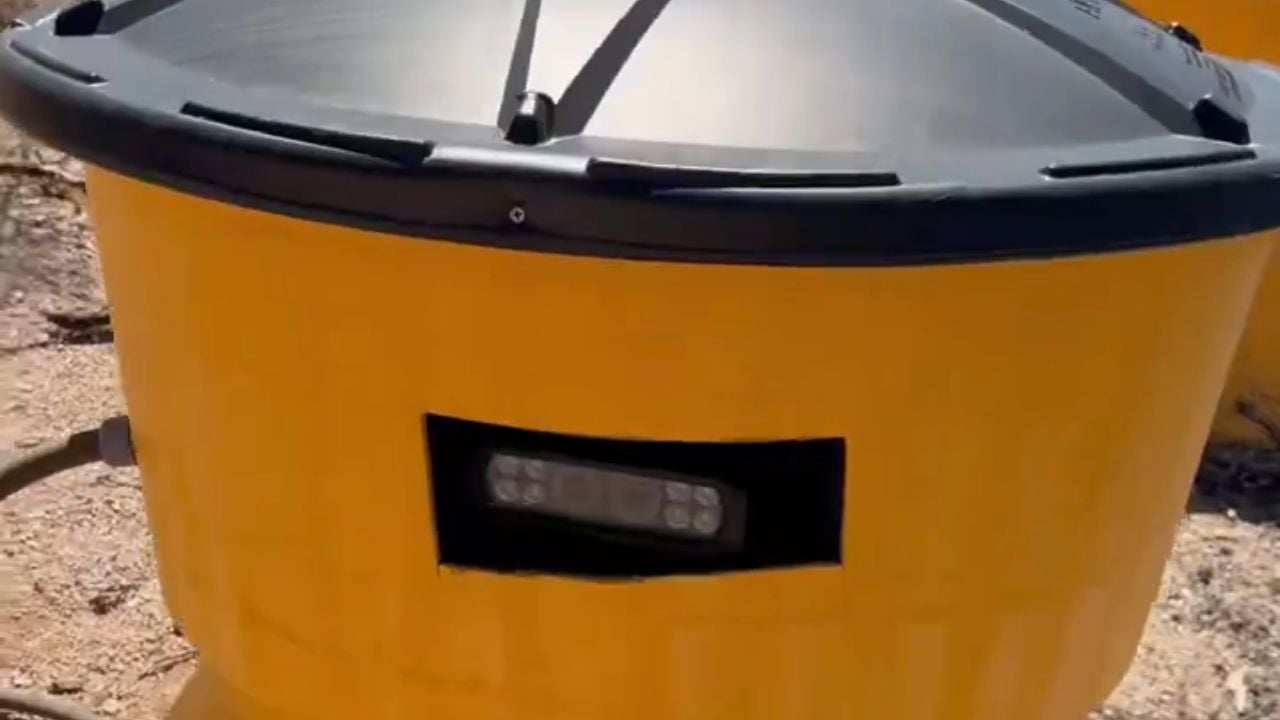
Automated License Plate Reader systems, commonly referred to as ALPRs, are not new. Law enforcement agencies across the United States have used the technology for years to capture license plate numbers, vehicle descriptions, timestamps, and travel locations. Agencies use the data to search for stolen vehicles, investigate crimes, locate suspects, and track vehicle movement patterns.
The systems work through high-speed cameras equipped with infrared imaging and artificial intelligence software capable of reading plates during both day and night conditions. Many systems also record vehicle color, body style, manufacturer, and other identifying details. Data is then uploaded to cloud databases where agencies can conduct historical searches or receive alerts when certain vehicles pass specific checkpoints.
Arizona has become one of the country’s largest testing grounds for expanded ALPR use because of its long border with Mexico and its extensive desert highway network. Customs and Border Protection has invested heavily in roadside monitoring infrastructure across the state over the last decade, combining towers, drones, sensors, and vehicle tracking systems to monitor movement through isolated areas.
The barrel-style systems shown in the viral clip represent a newer form of concealment. Previous deployments around the country have hidden ALPR cameras inside traffic cones, utility poles, highway signs, and trailer-mounted units. Critics argue the disguises prevent the public from understanding where surveillance infrastructure exists or how much data is being collected.
Massive Data Collections
Companies such as Flock Safety have played a major role in the spread of ALPR networks nationwide. The company supplies camera systems to police departments, local governments, and neighborhood associations across the United States. Supporters say the technology helps solve crimes and locate dangerous suspects. Critics argue the systems create massive databases capable of tracking innocent drivers without warrants.
Privacy concerns surrounding ALPR systems have intensified over the last several years as deployments expanded into cities, suburbs, and rural highways. Civil liberties organizations have raised concerns about long-term data retention, information sharing between agencies, and the possibility of vehicle movement histories being abused or leaked.
These are the brand new disguised Automated License Plate Reader cameras in Arizona
The large yellow plastic barrels are camouflaged housings designed to look like construction equipment
They are being deployed in remote desert areas along highways
These new camouflaged… pic.twitter.com/JuU2NXMvxu
— Wall Street Apes (@WallStreetApes) June 1, 2026
Several cities and counties across the country have debated or canceled contracts tied to license plate reader systems after protests from residents and privacy groups. Other jurisdictions moved in the opposite direction, expanding networks and increasing cooperation with federal agencies.
The Arizona video reignited those debates almost immediately. Many users on X described the hidden barrel systems as evidence of expanding government surveillance, while others defended the technology as necessary for border enforcement and criminal investigations.
It’s Still Quiet
Neither the original video nor the WallStreetApes post showed any confrontation with authorities or interference with the devices themselves. The footage consisted entirely of roadside documentation and commentary filmed by a passing driver.
Still, the images left a strong impression online. For many viewers, the sight of surveillance hardware concealed inside barrels beside isolated highways raised new questions about how much monitoring infrastructure now exists across American roads and how visible that infrastructure is meant to be.