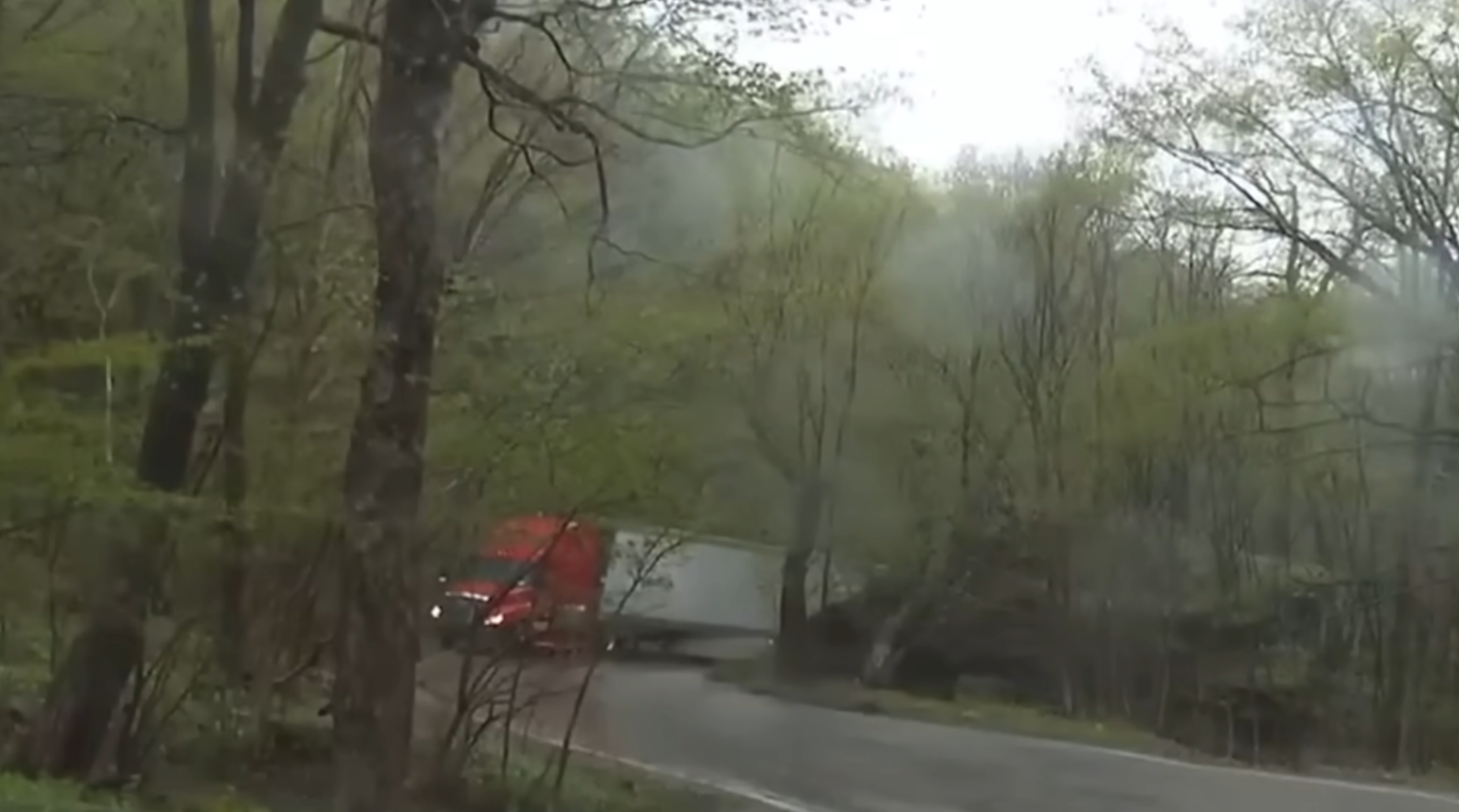
There are roads that humble experienced drivers, and then there is Vermont’s Route 108 through Smugglers’ Notch. The 3.5-mile mountain pass connecting Stowe and Cambridge is scenic, narrow, and has an almost legendary track record of swallowing oversized trucks whole. For years, the state has tried warning signs, flashing beacons, and physical barriers to keep big rigs off the road. The message apparently needed a dollar sign to go with it.
Governor Phil Scott signed legislation this week that raises the fine for operating a prohibited vehicle through Smugglers’ Notch from $1,000 to $10,000. If that truck ends up blocking traffic, which tends to happen when a 48-foot tractor-trailer gets wedged into a mountain pass, the penalty doubles to $20,000. A second offense within three years doubles it again. The new fines take effect July 1.
Critically, under the new law the fine lands on the employer when the driver was working within the scope of employment, not necessarily on the driver sitting behind the wheel. That distinction matters more than it might appear, because the problem at the Notch has never been primarily a driver problem. It has increasingly been a routing problem, with GPS navigation apps and dispatch systems sending commercial vehicles into a pass that Vermont’s own transportation agency describes as having “no physical way for large vehicles to fit.” Vermontdailychronicle
Vermont’s Agency of Transportation has spent years escalating its approach to this problem, spending real money on infrastructure to communicate what the signage could not. The fine increase is the latest chapter in a saga that is equal parts infrastructure management and a long argument with GPS algorithms.
A Road That Has Defeated Every Warning
Vermont’s history of trying to stop trucks from entering Smugglers’ Notch reads like a very frustrated checklist. About a decade ago, lawmakers bumped the fine from $162 to $1,000, with a $2,000 penalty if the stuck truck caused major delays.
Trucks kept coming.
The state then added digital warning signs and solar-powered flashing beacons at each entrance, alongside physical signs that already read, in plain English, “TRACTOR TRAILERS PROHIBITED.” Still, trucks kept coming.
Chicanes: When Signs Are Not Enough
Two years ago, Vermont installed chicanes at both ends of the Notch segment, physical barriers that force vehicles into a tight S-curve before they commit to the pass. The idea was that no amount of signage communicates danger the way a wall in the road does.
The state had seen, on average, about seven or eight stuck vehicles in the decade before the chicanes were put in place. Since installation, that number has dropped to roughly one or two per year. Progress, though not a solved problem.
The first chicane opened on May 14, 2024. A trucker tried to drive through it on May 16, 2024. Two days.
Who Actually Decides Which Route Gets Taken
The employer liability provision in the new law reflects something state officials have acknowledged for years. Commercial drivers are not always the ones deciding which route to take, with many following routes assigned by employers or relying on mapping systems that do not recognize the challenges posed by the narrow mountain road.
As VTrans official Todd Sears put it after the chicanes were installed, “Our signage was very clear, saying that you will get stuck. Do not attempt to drive through the Notch, and don’t trust your GPS, but they would try anyway. I mean, it’s a mystery.”
Freight navigation packages do flag the Notch as a restricted route, but most drivers who have gotten stuck were not using freight-specific navigation. They were using the same consumer apps the rest of us use: Apple Maps, Google Maps, and similar tools designed for passenger vehicles.
What a $20,000 Fine Actually Changes
Whether steeper fines accomplish what physical barriers and multilingual signage could not remains to be seen. The five-point CDL penalty provision that appeared in an earlier version of the bill was ultimately removed from the final legislation, leaving the increased civil penalties aimed primarily at employers of commercial drivers. The structural gap, where a dispatcher in another state assigns a route without knowing the local road, remains.
What has clearly worked is the chicanes. The fine increase, taking effect July 1, is designed to reinforce that. For any carrier that sends a truck up Route 108 anyway, Vermont is now prepared to make the lesson considerably more expensive.