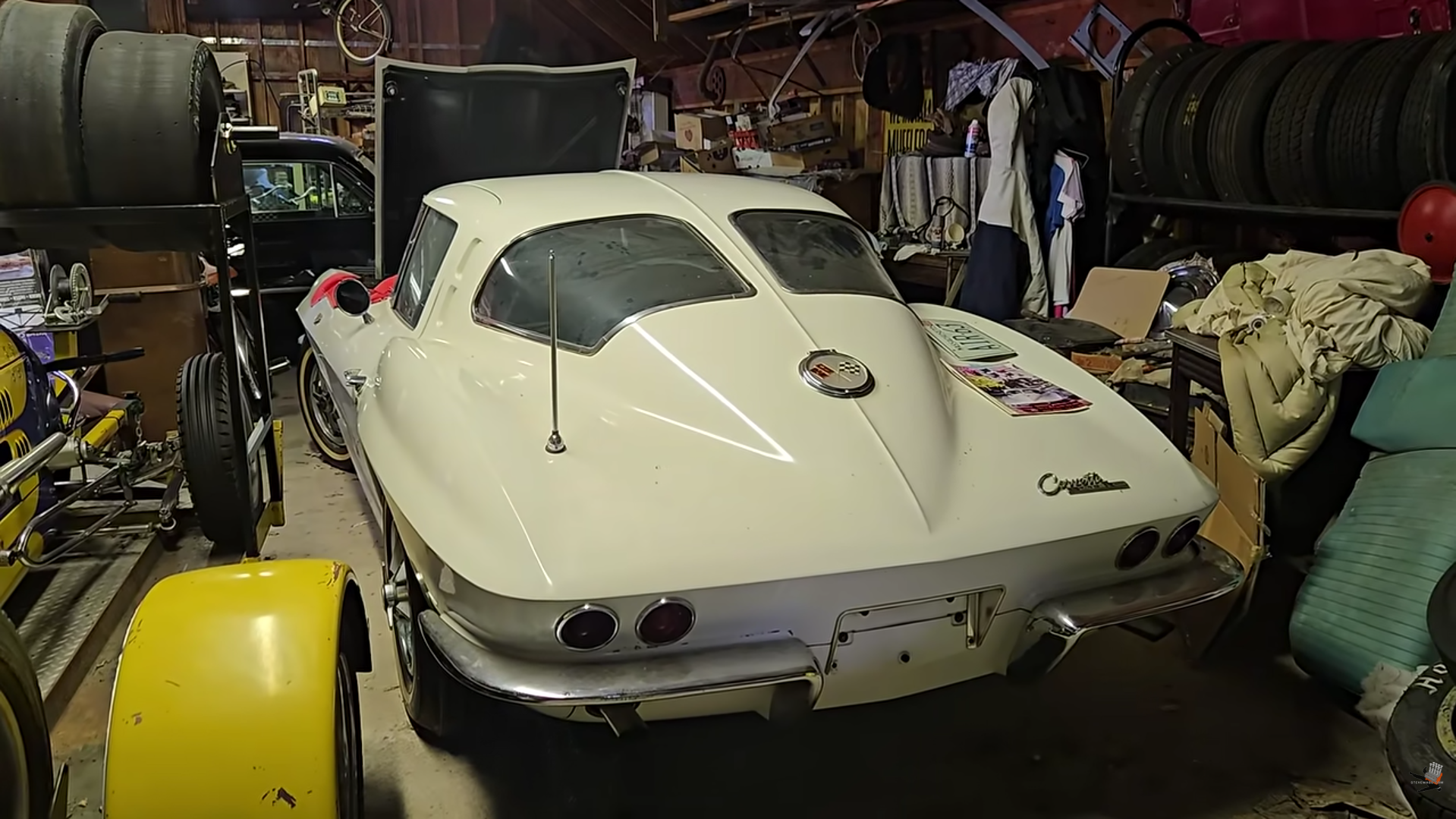
A 1963 Corvette split-window coupe doesn’t need much help attracting attention, especially when it has survived for more than six decades without undergoing a full restoration. This Ermine White example has the sort of originality that is becoming increasingly difficult to find.
Its body, interior, and mechanical details remain remarkably intact, giving it the appearance of a carefully preserved snapshot from Chevrolet’s first year of the second-generation Corvette. Look a little closer, however, and its specification becomes considerably more interesting.
Steve Magnante recently examined the car for his YouTube channel while visiting the Happy Days Collection in Massachusetts. What initially looks like an unusually clean survivor reveals several factory options that make it a particularly uncommon 1963 Sting Ray.
One of them was expensive enough that very few buyers checked the box when these cars were new. Combined with the Corvette’s other equipment and unrestored condition, it creates a specification that would be extremely difficult to duplicate today.
Only 278 Corvettes Got Factory Air Conditioning
The standout option is Chevrolet’s C60 factory air-conditioning system. It cost $421.80 in 1963, a substantial premium at the time, and Magnante says only 278 Corvettes were equipped with it that year.
The hardware is still present under the hood, along with one of the less obvious changes required to accommodate it. Chevrolet relocated the battery from the passenger side to the driver’s side because the air-conditioning equipment occupied the space where it would normally have been mounted.
Factory A/C is particularly interesting in a split-window coupe because the enclosed cabin could become considerably warmer than the earlier open Corvettes. Considering how few buyers ordered it, finding the system still installed on an unrestored car makes this example stand apart.
It Also Has A Powerglide Automatic
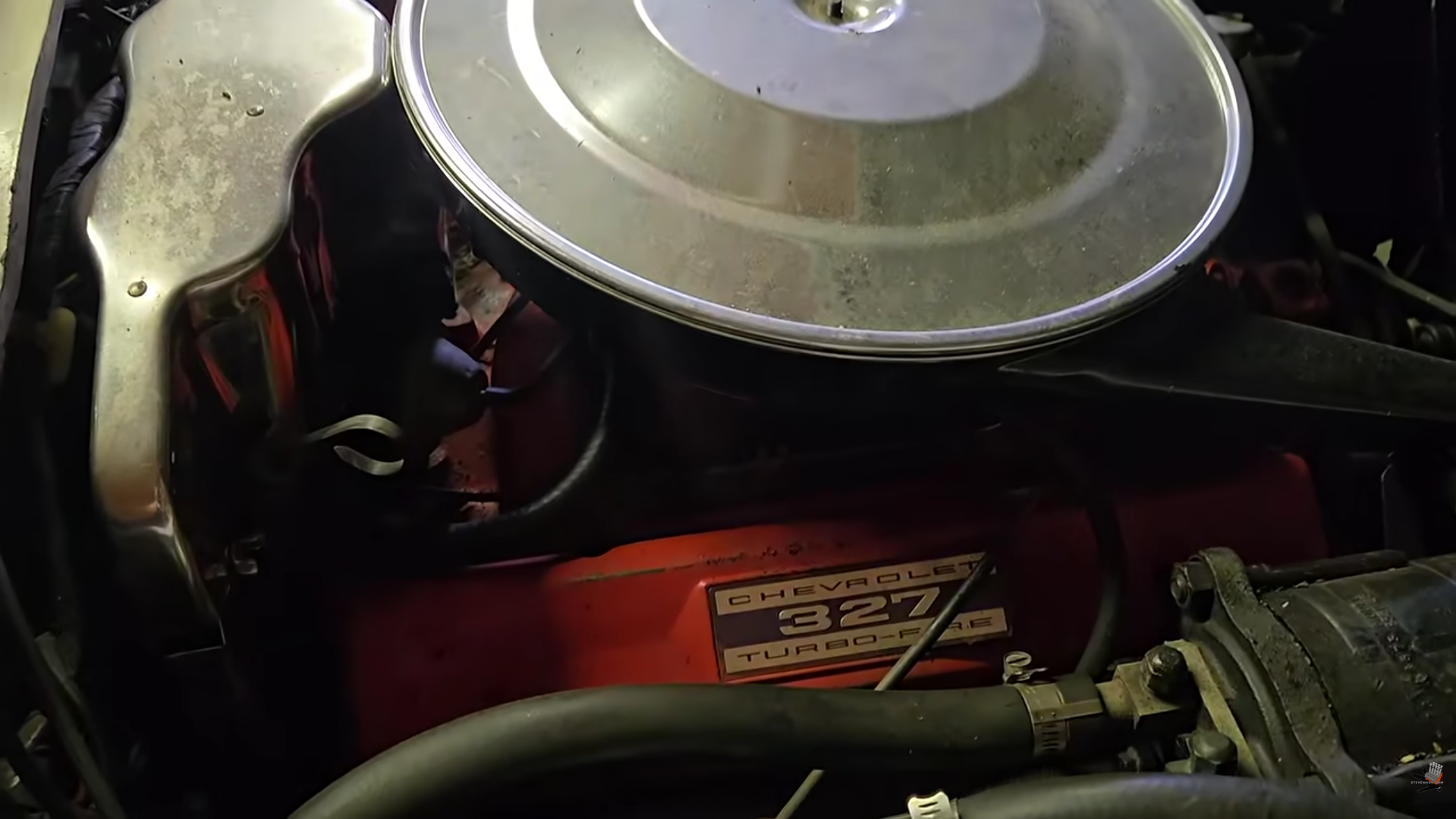
This Corvette wasn’t configured as an all-out performance model. Its 327-cubic-inch small-block V8 is the 300-horsepower version, one step above the 250-hp base engine but below the hotter 340-hp and fuel-injected offerings.
Backing it is Chevrolet’s two-speed Powerglide automatic transmission. Magnante says 2,621 buyers chose the automatic in 1963, making it considerably less common than a manual transmission in that year’s Corvette production.
The Powerglide used an aluminum case by this point rather than the heavier cast-iron construction found in earlier applications. Combined with the 300-hp 327, the drivetrain gives this particular Sting Ray a decidedly different personality from the high-performance combinations that tend to dominate collector attention.
The Interior Adds Another Unusual Option
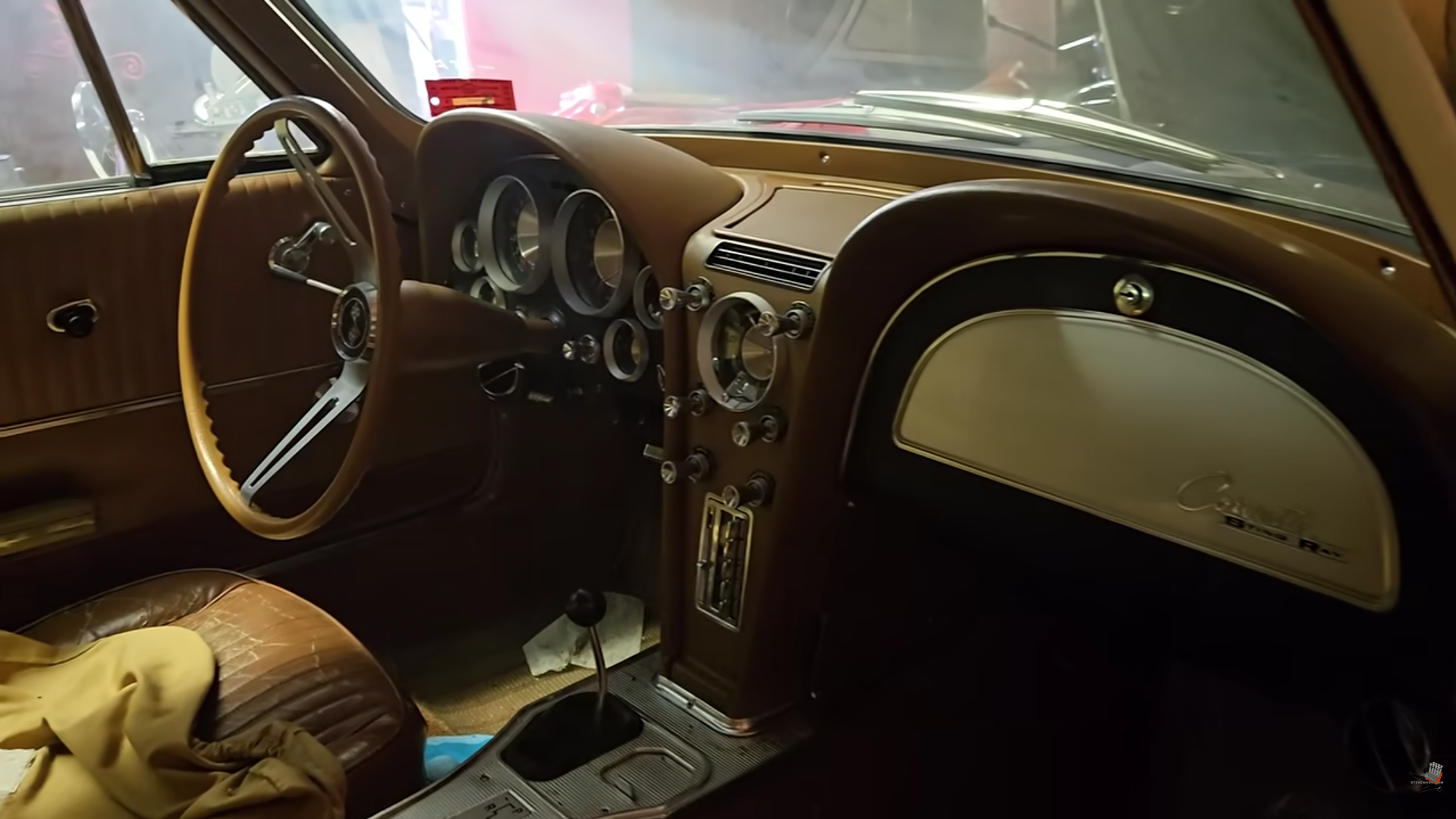
Inside, the Corvette retains its Saddle leather seating, another uncommon piece of its factory specification. Magnante describes the cabin as exceptionally original, with the seats showing remarkably little wear considering the car’s age.
The dashboard also has its period radio and distinctive vertically oriented layout. Chevrolet arranged the radio this way because the Corvette’s center-console packaging left limited space for a conventional horizontal unit.
Several smaller details further identify the car as an early C2. The 1963 model used unique pieces such as the roller mechanism for the fuel-filler door, while the famous split rear glass itself disappeared after only one model year.
The Split Window Lasted Just One Year
Chevrolet built 21,513 Corvettes for 1963, with 10,594 of them leaving the factory as coupes. The new body introduced the fixed-roof Corvette along with the dramatic divided rear window championed by GM styling chief Bill Mitchell.
That center spine became one of the C2’s defining visual features, although complaints about rearward visibility helped bring about its quick disappearance. Chevrolet replaced it with a single-piece rear window for 1964, instantly turning the 1963 coupe into a one-year design.
The car also has the independent rear suspension introduced with the second-generation Corvette. Compared with the solid rear axle used previously, the new setup represented a significant engineering change beneath the equally dramatic new body.
Originality Is What Makes This One Special
This isn’t a flawless restoration built to reproduce how a 1963 Corvette looked when new. Its appeal comes from the opposite direction, with original components, finishes, and details surviving together after decades indoors.
Magnante notes that the body shows no obvious accident damage or cracking, while much of the equipment remains exactly where Chevrolet installed it. While factory air conditioning, a Powerglide, leather upholstery, and the 300-hp 327 V8 are individually interesting, it’s the fact that they all co-exist in an unrestored split-window survivor that makes this Corvette particularly compelling.
A restoration can never recreate six decades of continuous originality wrapped around one of Chevrolet’s most recognizable designs.