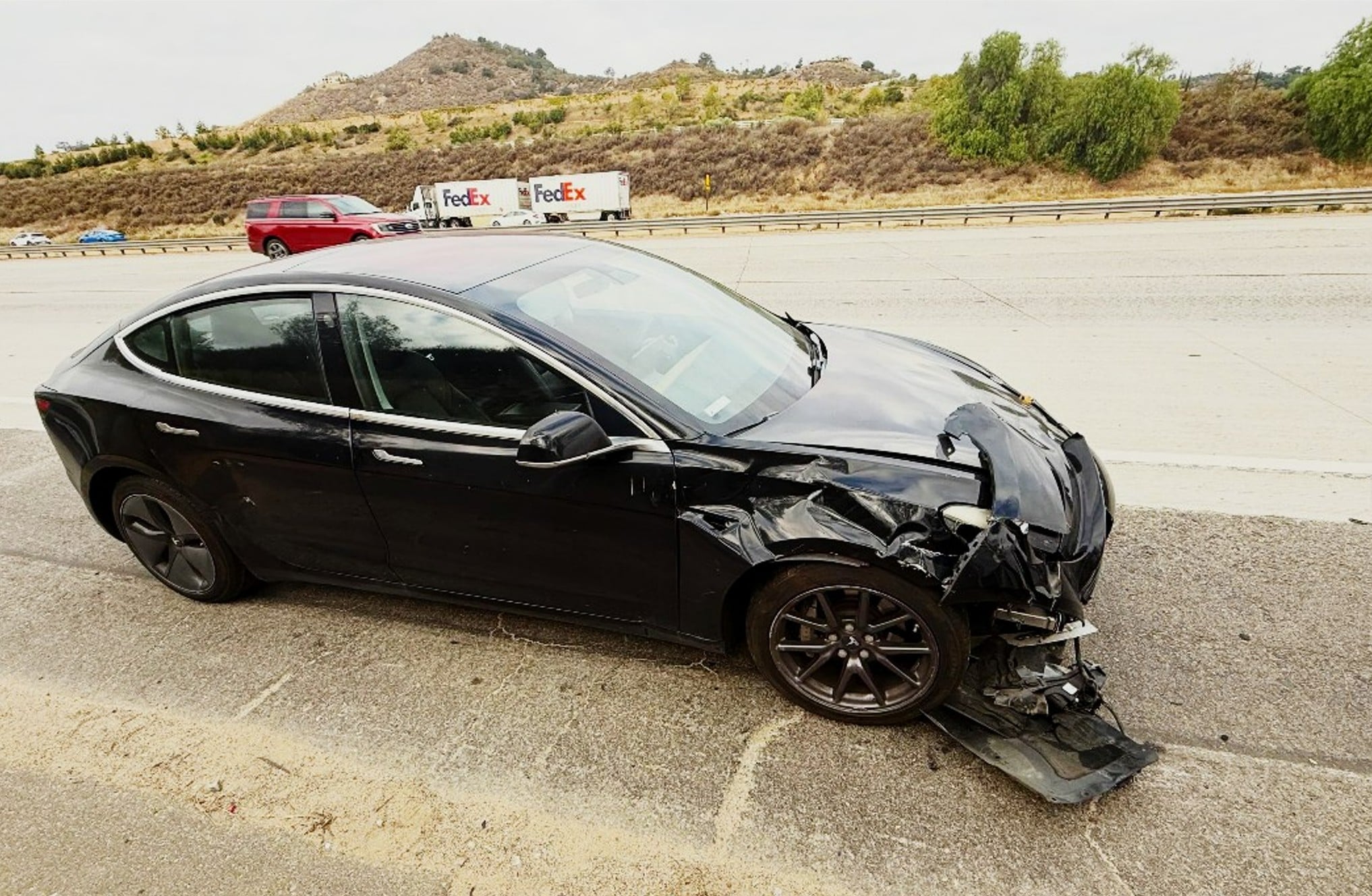
From vehicles and stones to runaway tires, that’s about as far as the list of potential highway hazards goes. But what are the chances of a giant industrial sink striking a car on a freeway?
While the answer could be very close to nil, the driver of a Tesla found out about the possibility the hard way after the sink fell from another vehicle onto the freeway.
Given the freeway speeds, the Tesla driver may have had virtually no time to react, leading to the collision. Images of the aftermath shared by the California Highway Patrol – Oceanside highlight extensive damage to the EV and the sink.
CHP – Oceanside has warned motorists to secure their loads because they could end up crashing into someone else’s car.
Industrial Sink Wasn’t the Culprit
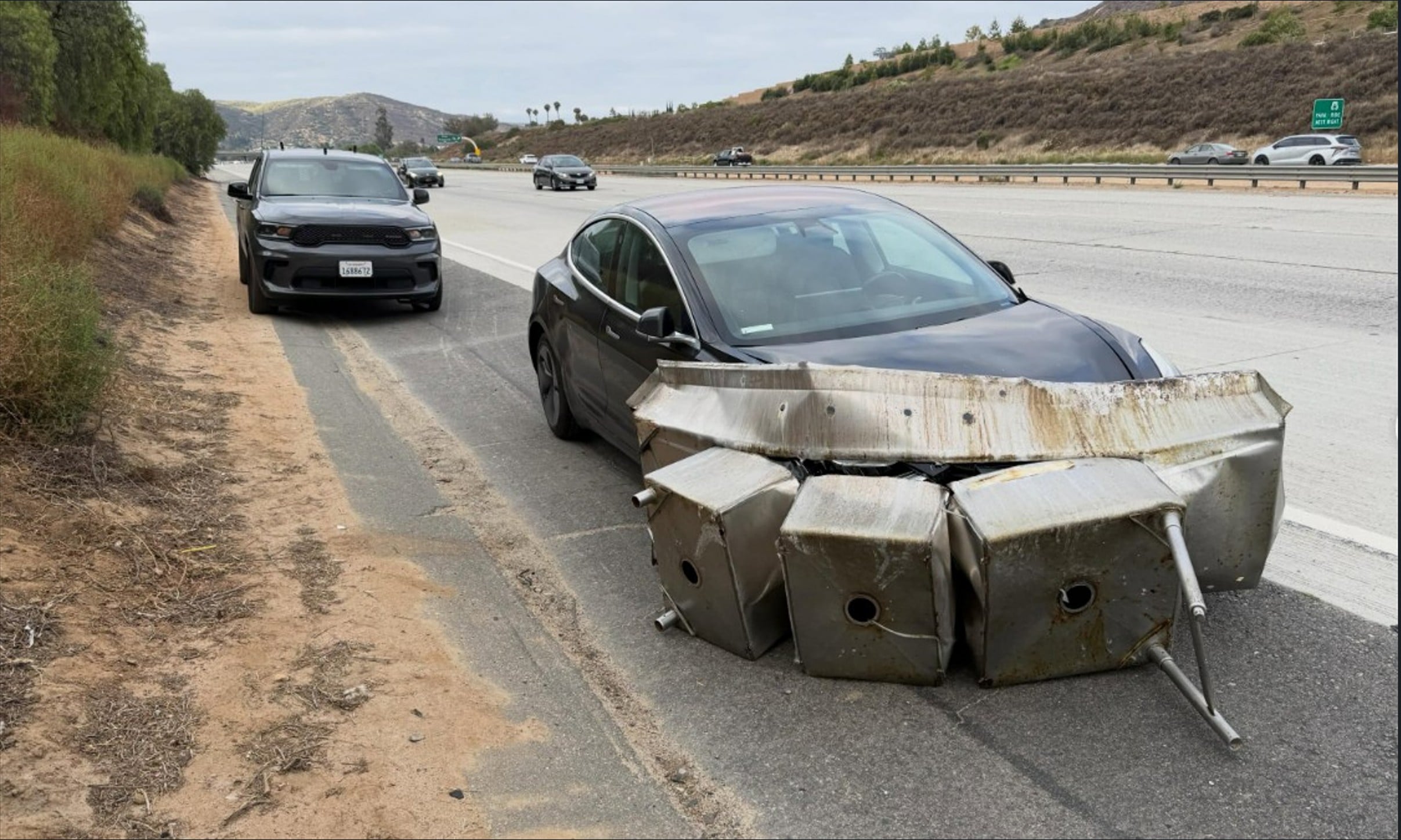
CHP – Oceanside posted an update about the incident, advising drivers to secure their cargo so it does not end up hitting another vehicle. In this case, the industrial sink was not fastened properly, which resulted in it falling onto the freeway.
The sink landed directly in the path of a Tesla, which was unable to avoid it. While the incident did not result in serious injuries, the outcome would have been different if the EV had been traveling at higher speeds.
The post does not reveal whether the driver of the vehicle from which the industrial sink dropped has been identified or if any charges will be filed against them. The post reads:
“⚠️ Secure Your Load — It Could Save a Life
“This Tesla was struck by an industrial sink that fell from the back of another vehicle because it was not properly secured. Fortunately, this incident did not result in serious injuries, but unsecured loads can quickly turn into deadly hazards at freeway speeds.”
CHP – Oceanside Shares Cargo Advisory
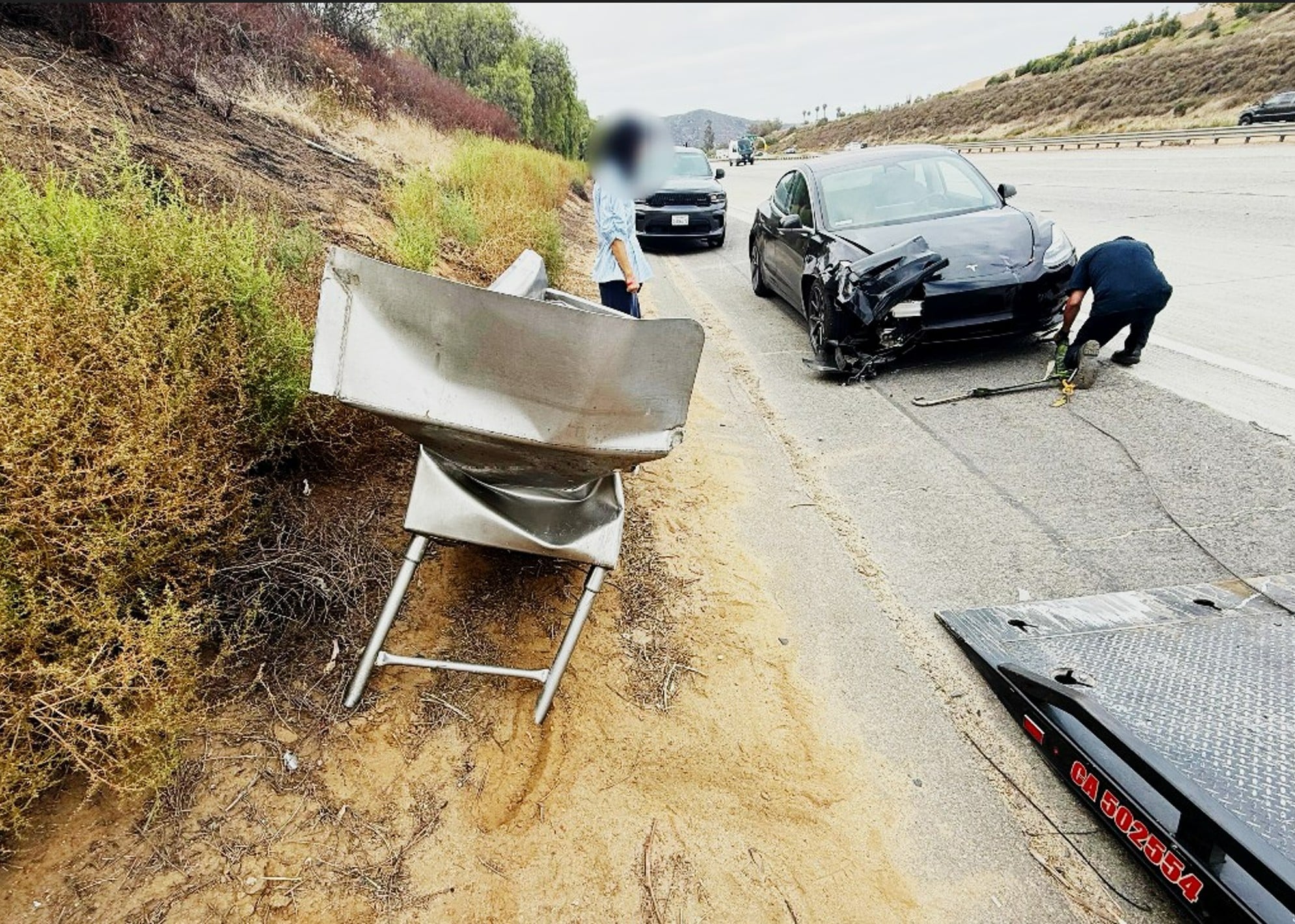
Using this incident as an example, CHP – Oceanside has listed points for motorists to follow before they hit the road. They are as follows:
- “Secure your cargo with appropriate tie-downs.
- “Cover loose materials that could blow away.
- “Double check your load before driving and after the first few miles.
- “If something doesn’t feel secure, don’t drive until it is.”
The post also explains the law regarding securing transported loads. It states:
“California law requires drivers to properly secure any load being transported. Under California Vehicle Code §23114, no vehicle may be driven unless its load is constructed, covered, or secured to prevent any part of it from falling, blowing, spilling, or otherwise escaping onto the roadway. Violations can result in citations, fines, and civil liability if a crash occurs.
“A few extra minutes spent securing your load can prevent crashes, injuries, and even save lives.”
View this post on Instagram