
The Jaguar XJS (originally called the XJ-S) is a luxury grand tourer built by the British automaker Jaguar from 1975 to 1996. The XJS started life as a controversial successor to the legendary E-Type but later evolved into a highly respected classic in its own right, loved for its low-slung, grand-touring proportions, signature long hood, luxurious interior, and the silky-smooth prestige of its V12 powerplants.
Speaking of engines, given the XJS’s long-running reputation for expensive upkeep, it’s almost expected that one that’s been put to good use over its lifetime would eventually develop engine problems, sometimes unfixable. That is the kind of story many XJS projects follow, but published profiles on this specific car say Bryan’s father bought it in 2016 after Aaron at Driftmotion had already swapped in a 2JZ GTE from a mid 1990s Toyota Aristo.
Replacing the V12 with an engine with half the number of cylinders might upset some purists, but the 2JZ gave this 35-year-old XJS a new lease of life. For the uninitiated, this is the same twin-turbocharged mill that powered the vaunted Toyota Supra Mk4 and is widely considered to be one of the greatest engines ever.
In a recent episode on the Magnacars YouTube channel, TJ Lamb gets a tour of a 2JZ-swapped 1990 Jaguar XJS, exploring the cool story behind it and highlighting some of the challenges of living with a 35-year-old car in 2026.
From Dead V12 to 2JZ Power: How This Jaguar XJS Came Back
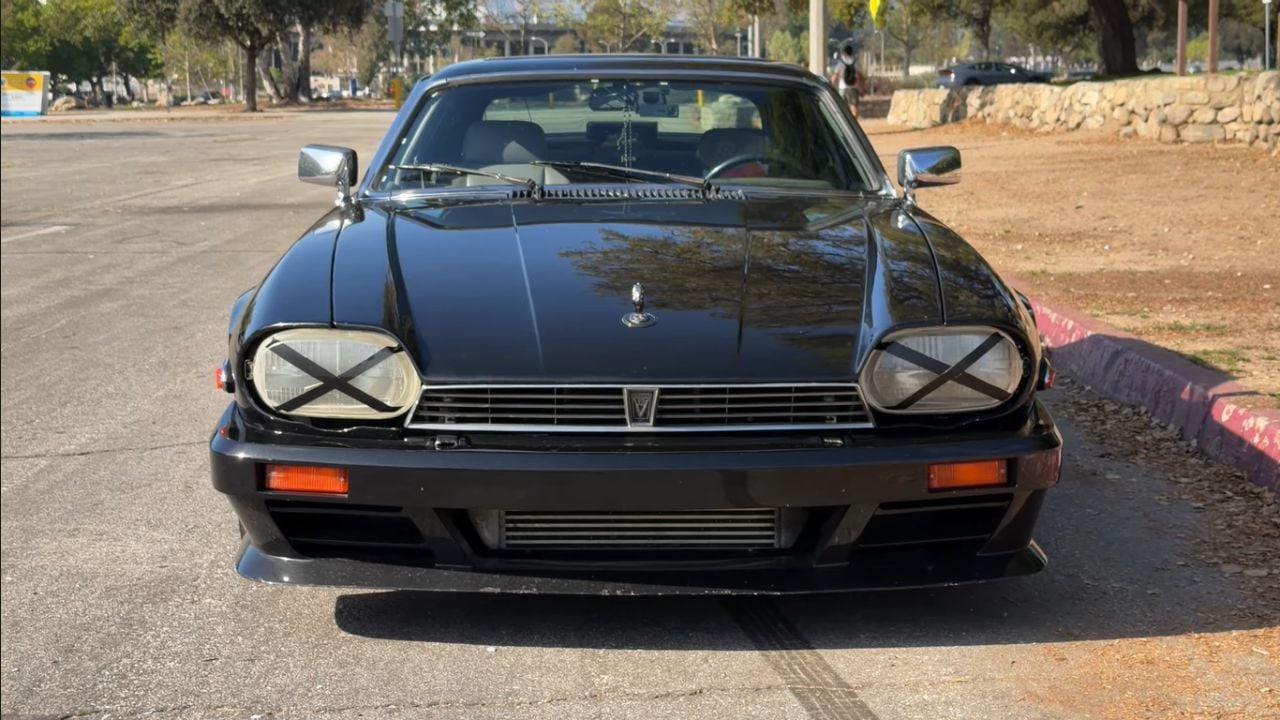
Bryan’s 1990 Jaguar XJS was never going to have an easy life. We learn from the video that the old British grand tourer had already been turned into a project before it landed with him, after a close family friend from the Supra aftermarket world swapped in Toyota power and then let the car sit unfinished. Bryan, who grew up around cars thanks to his dad and the family’s manufacturing shop, eventually got the XJS as a graduation gift and finally started bringing it back in 2022.
What he inherited was far from a finished build. The Jaguar ran, but it still needed paint, wheels, bumper work, and interior sorting before it could really be called complete. Under the hood is what makes this XJS such an oddball: a twin-turbo 2JZ GTE from a mid 1990s Toyota Aristo, not a Supra. That matters because most enthusiasts hear “2JZ Jaguar” and immediately assume a Supra donor, but Bryan is clear that no halo Toyota was sacrificed here.
Bryan says the setup is still relatively mild, with factory turbos and upgraded compressor wheels. That is enough to give the big Jag a serious shot of performance without ruining its grand-touring attitude. The 2JZ has become legendary because it can handle much bigger power on a largely stock bottom end, but Bryan is not chasing a dyno number. He likes the XJS as a subtle, turbocharged cruiser rather than some stripped-out street weapon.
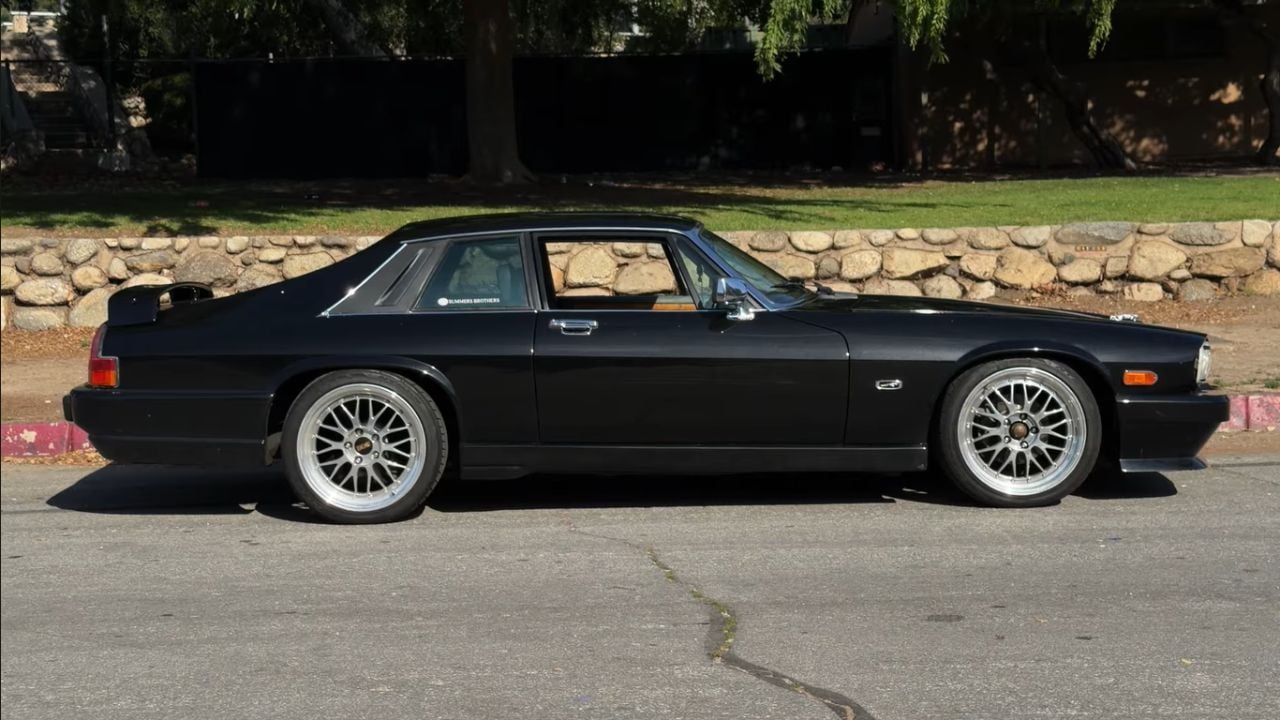
The build goes beyond the engine, too. Bryan says he and his dad redesigned the front and rear bumpers after the old pieces were literally lost on the freeway, helping give the Jaguar its custom look. The swap also uses a TH400 automatic, a custom torque converter, a billet adapter plate, and a rebuilt Jaguar limited slip differential, helping make the build feel properly engineered rather than half finished.
But the car still comes with all the usual old-XJS headaches, especially when it comes to finding parts. Bryan admits some pieces are nearly impossible to source, to the point that the headlights are partly held together with tape, while he and his father have had to fabricate hardware at their shop to keep the car together. Even with the hardships, Bryan says he has already logged more than 10,000 miles in the swapped XJS, including trips to Mexico, Las Vegas, and Arizona, proving this Jaguar is more than just a garage-built conversation piece.
Why Toyota’s 2JZ Still Has Tuners Obsessed
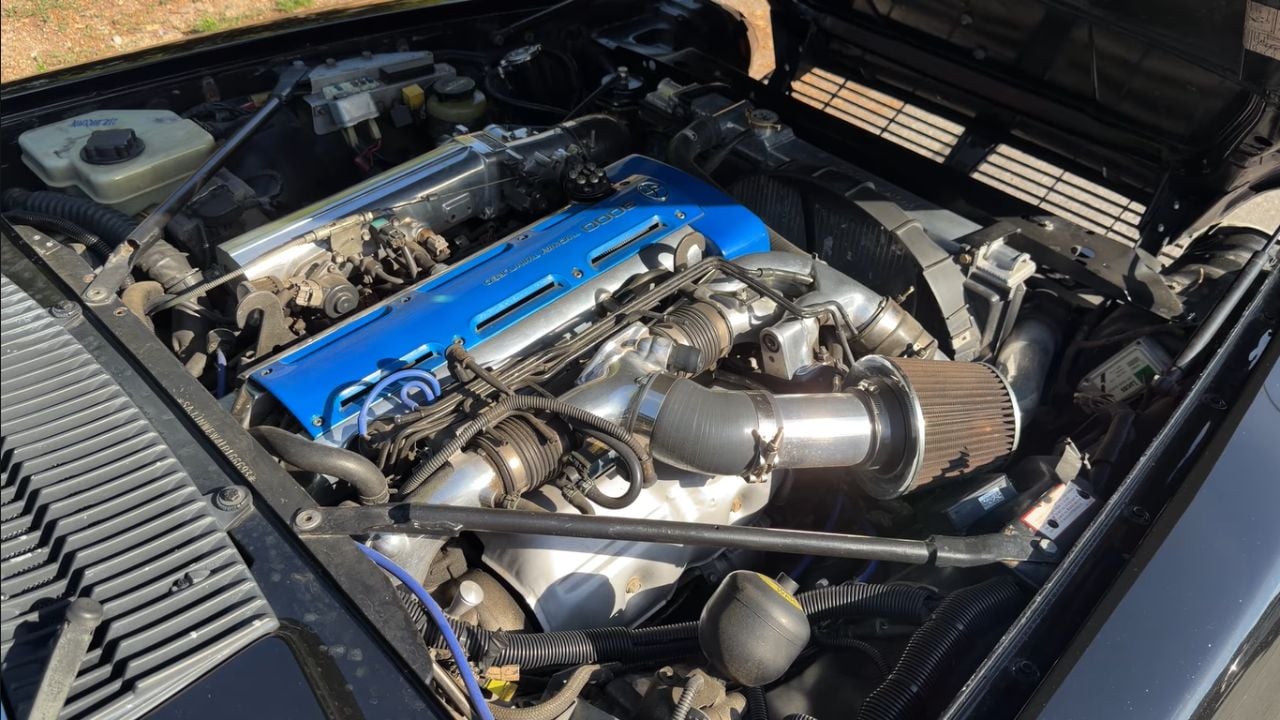
The 2JZ came in several forms, but the twin-turbo 2JZ-GTE in Bryan’s XJS is the icon enthusiasts obsess over. It is the version most closely tied to the Mk4 Supra made famous by the Fast & Furious franchise, though Toyota also fitted the 2JZ-GTE to the Japanese-market Aristo, which is where this engine came from. Toyota launched the Aristo with the 2JZ-GTE in 1991, and the engine’s reputation comes from its cast-iron block, stout bottom end, and huge tuning headroom.
Enthusiasts routinely push 2JZs far beyond factory output, with 1,000-hp builds now part of the legend. That bulletproof image makes Bryan’s build even better, since an old Jaguar XJS is not exactly famous for trouble-free ownership, and he clearly wanted reliable turbo power without turning his grand tourer into a full-blown monster.
What Enthusiasts Might Spend on a Build Like This
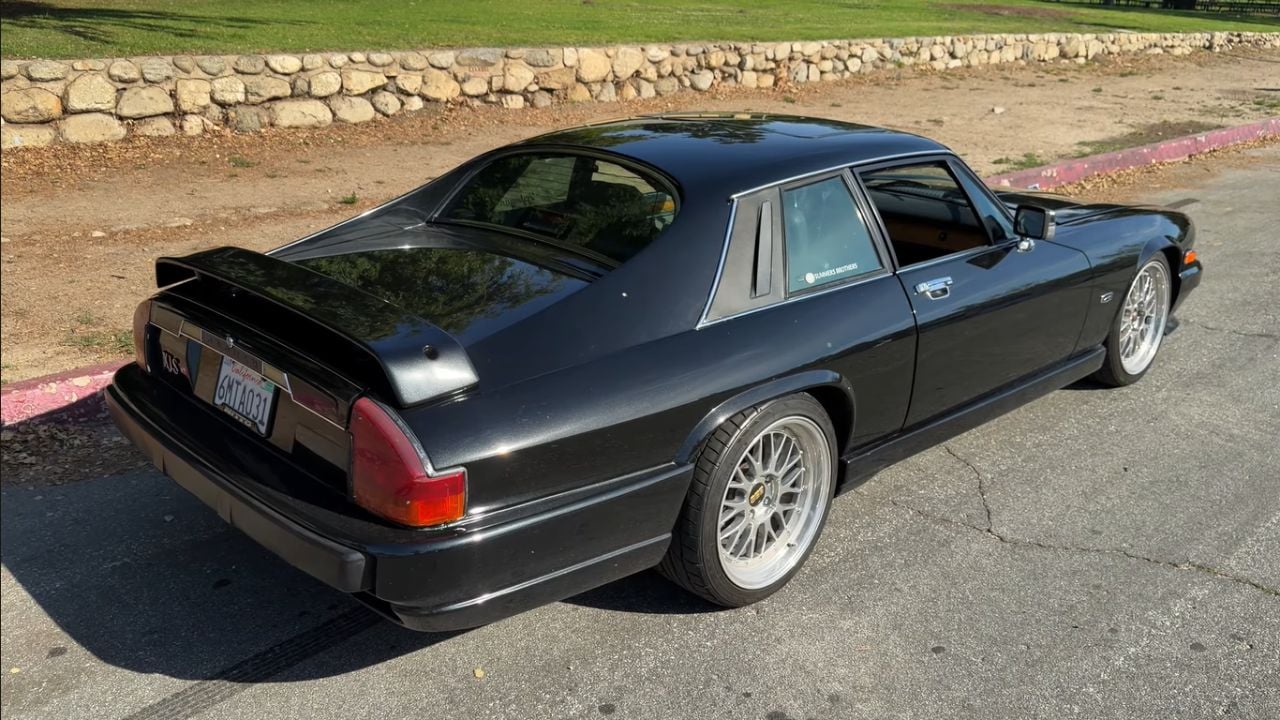
Putting an exact price on Bryan’s XJS is tough because so much of the value is tied up in labor, fabrication, and the kind of know-how you only get from growing up in a shop and building parts with your dad. Still, the Jaguar XJS is a surprisingly affordable place to start: At the time of writing, Classic.com shows a $14,543 market benchmark for the Series II XJS, which makes it one of the cheaper ways into a classic V12-era grand tourer. A rough car like Bryan’s, especially one with a blown original V12, would likely cost even less to buy.
The expensive part is the swap hardware. A used imported Toyota Aristo 2JZ-GTE typically lands in the mid-$6,000s to $9,000 range, depending on mileage, VVT-i spec, and whether it comes as a fuller package with transmission and ECU. And as Bryan makes painfully clear, the real wildcard is still Jaguar stuff. Before starting a build like this, you had better know where your XJS parts are coming from, because he says some of them are nearly impossible to find.
The 2JZ Will Always Be Iconic
In North America, the 2JZ became a pop-culture superstar thanks to the Mk4 Toyota Supra’s role in The Fast and the Furious, but it was already a legend long before Hollywood got involved. By the mid-1990s, tuners already knew the twin-turbo 2JZ-GTE was a powerhouse that could handle huge boost and deliver serious performance.
Its reputation was built on more than dyno numbers. The 2JZ had real race-bred credibility, helping Toyota battle Nissan’s Skyline and its RB26 in the great JDM performance wars of the 1990s, while also proving itself in motorsport. That mix of track credibility, tuning potential, and toughness is exactly what turned it into an icon.
Bryan’s Jaguar XJS is the kind of build that sounds odd on paper, yet somehow comes together as a perfect mash-up of British grand-touring style and Japanese tuner toughness. It also proves that dropping a legendary 2JZ into an old Jag does not magically make ownership easy, especially when parts are scarce, and some fixes still call for tape and fabrication. But that is exactly what gives this XJS its charm. It’s not just a swapped classic, but a deeply personal enthusiast build that keeps a forgotten Jaguar alive in a way that makes us smile.