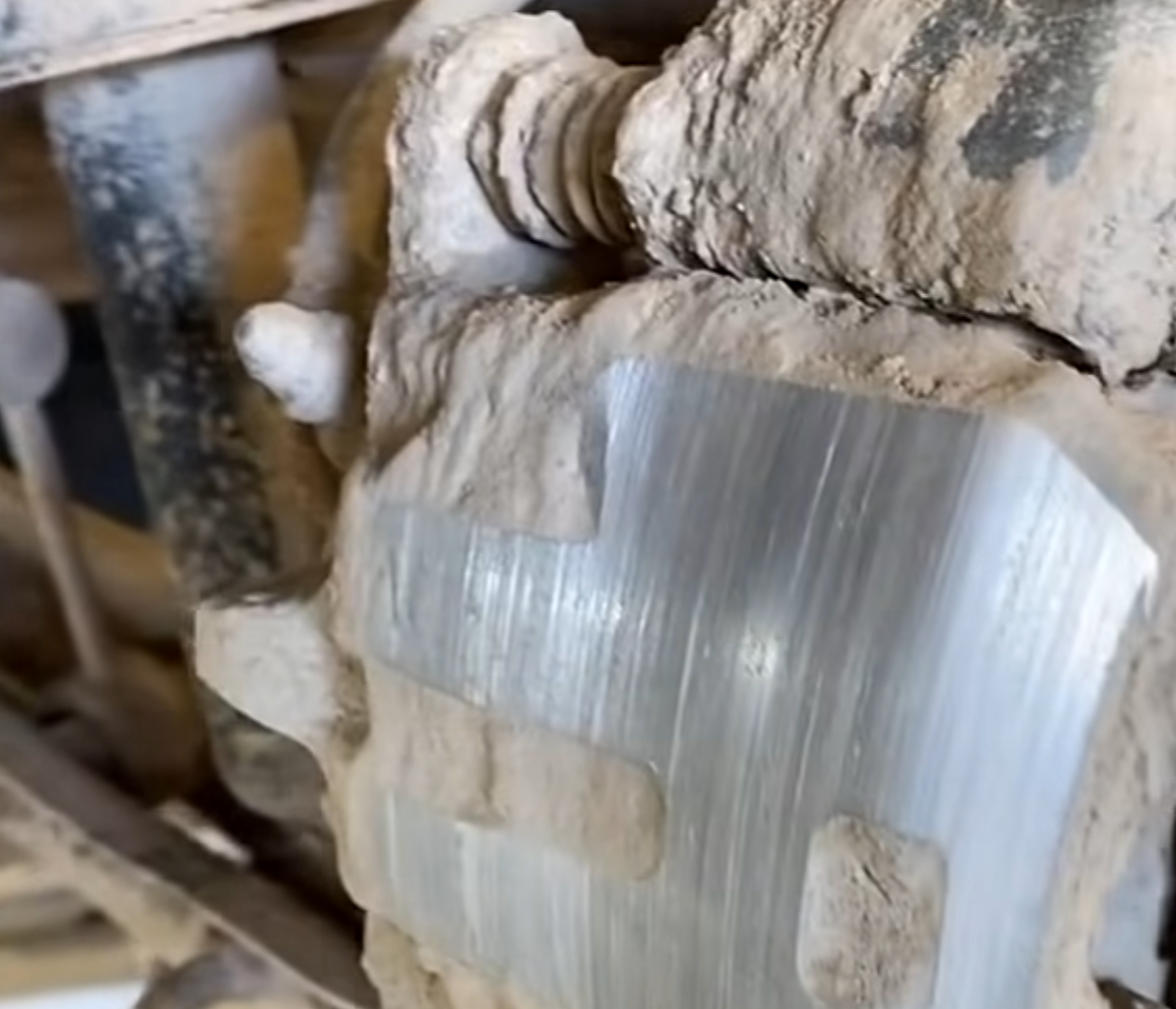
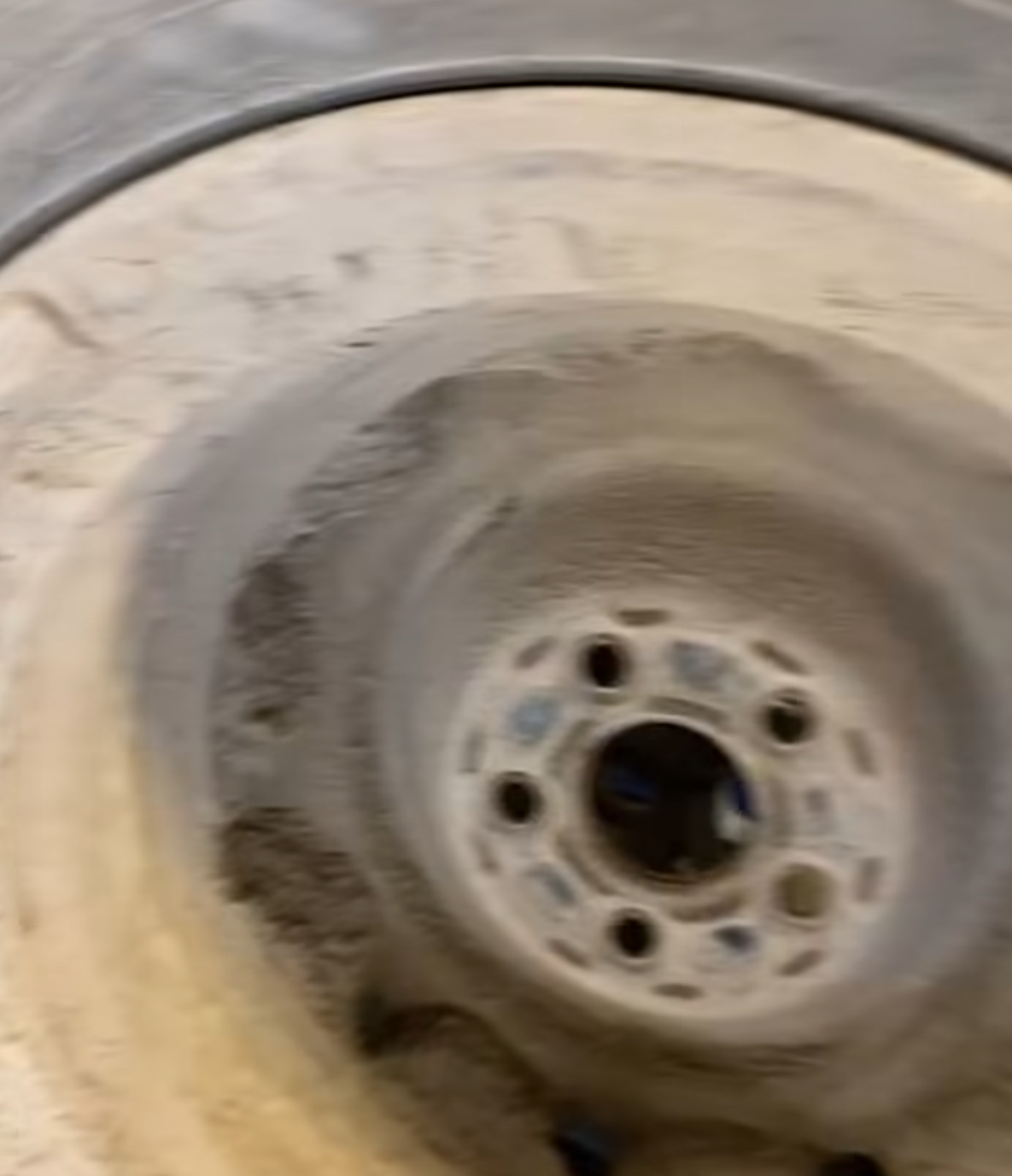
Most people think of a dirty car as an eyesore, not a safety issue. But a mechanic named Aaron, who posts under @autotechaaron on Facebook, recently posted a video that has racked up nearly a million views and has drivers looking at their wheels with a lot more concern than before. The subject? A Subaru that came into his shop carrying so much caked-on mud and grime in its wheels that the buildup had actually started damaging the brake calipers.
If that sounds extreme, it kind of is. Aaron himself said in the caption that it was the first time he had ever seen wheel buildup get bad enough to reach the calipers. But that is exactly what makes the video so striking: this is not the kind of thing anyone expects to happen from skipping a car wash. And yet, there it was, on full display, with nearly a million people stopping to watch and cringe.
To really drive the point home, Aaron walked viewers through a side-by-side comparison of the two wheels. One side was so caked with debris that you could barely make out any detail. The other side was noticeably better, still dirty, but clean enough that the Subaru logo was still visible through the grime. That simple visual comparison did a better job of explaining the problem than any diagram could have.
The video struck a nerve because the fix is not complicated and it does not require a trip to a specialty shop or a fancy product. It just requires actually washing your wheels and doing it properly. That gap between how simple the solution is and how serious the consequences can get is probably exactly why so many people could not scroll past it.
What Is Actually Happening Inside a Dirty Wheel
The grime that packs into your wheels is not just mud. As your brakes work, they shed what is called brake dust, which is a mix of friction material from the brake pads and iron particles shed from the surface of the rotors. That dust is already mildly abrasive on its own, but when it combines with mud, road salt, and moisture, the mixture that forms inside the wheel becomes something the surrounding parts are not designed to tolerate indefinitely.
Brake calipers are built to move. The components inside them need to slide smoothly in order to apply and release pressure on the rotors correctly. When grime builds up around them, it can interfere with that movement, causing the brakes to stick, drag, or wear unevenly across the two sides of the car. Anyone who has ever felt their car pull to one side while braking has likely experienced a version of this, even if a dirty wheel was not the first suspect that came to mind.
Moisture makes the problem worse over time. When the packed grime holds water against metal components, rust can begin to form. Rust accelerates wear and can eventually cause parts to seize, which is where things move from annoying and expensive to genuinely unsafe.
How Uneven Buildup Affects the Way Your Car Drives
One thing commenters latched onto quickly was that the damage does not stay contained to the brakes. When one wheel is significantly dirtier and heavier than the other, that imbalance affects the whole vehicle.
Several viewers pointed out that that much mud in a wheel throws off the tire balance almost immediately. An unbalanced tire does not just cause the steering wheel to vibrate, it also increases rolling resistance, which hurts fuel efficiency, and puts extra stress on suspension components over time. Others mentioned wheel wobble as an additional consequence, which is the kind of vibration that makes a car feel unstable at highway speeds.
If the brake drag is worse on one side than the other, braking performance becomes asymmetrical. The car may pull in one direction under hard braking, and the side with more friction can generate significantly more heat, which shortens the life of the pads and rotors on that corner faster than normal wear would.
What You Can Actually Learn From This
The biggest takeaway from Aaron’s video is not that you need to obsess over your wheels every weekend. It is that rinsing the outside of your car is not the same as actually cleaning your wheels. Most drive-through car washes do a passable job on the exterior panels, but the inside of the wheel, where brake dust and mud accumulate in the tightest spots, often gets minimal attention.
Getting water into those areas, whether from a hose at home or a more thorough hand wash, makes a real difference. According to detailing guidance from Dr. Beasley’s, washing your wheels whenever you wash the rest of the car is enough for most drivers under normal conditions. If you are driving on dirt roads, logging miles in rainy weather, or parking somewhere that exposes the car to a lot of road spray, increasing that frequency is a reasonable precaution.
The other lesson is that neglect tends to be invisible until it is not. The Subaru in Aaron’s video presumably did not look alarming from the outside on day one of the buildup. It built up slowly over many washes that either never happened or never reached the wheel wells. By the time it was visible enough to be shocking, the damage to the calipers was already done. That is a pretty good argument for not waiting until something looks wrong before doing basic maintenance.
What Viewers Had to Say About the Video
The comment section on Aaron’s video was a mix of genuine shock, practical questions, and a few people defending the muddy car on the grounds that it was probably used for farm work or off-road driving. That last group has a point, to a degree. A working truck that gets filthy by design and gets serviced regularly is a different situation than a daily driver that just never gets cleaned. But for most vehicles driven on public roads, the scenario Aaron showed is a cautionary one.
Some commenters went straight to the practical side of things, asking whether a standard drive-through car wash gets into the wheel wells enough to prevent this, which is a reasonable question. The short answer is that it depends on the wash, but in general, a hose directed at the inside of the wheel is more effective than most automated systems. Others simply reacted to the visual, with one person noting they had not audibly gasped at a video in a while before that one got them. That about sums it up.