Track day experiences are some of the best automotive experiences that money can buy. You can take nearly any car you want on the track and push it to its limit. However, it’s not easy to get prepared for such an adventure. But can a racing simulator help you prepare for a track day experience?
Racing simulators have become increasingly realistic over the years. While they can’t simulate the G-forces or the feeling of being on a circuit, they give you an amazing idea of what a car can do on a race track, and what to expect from its handling.
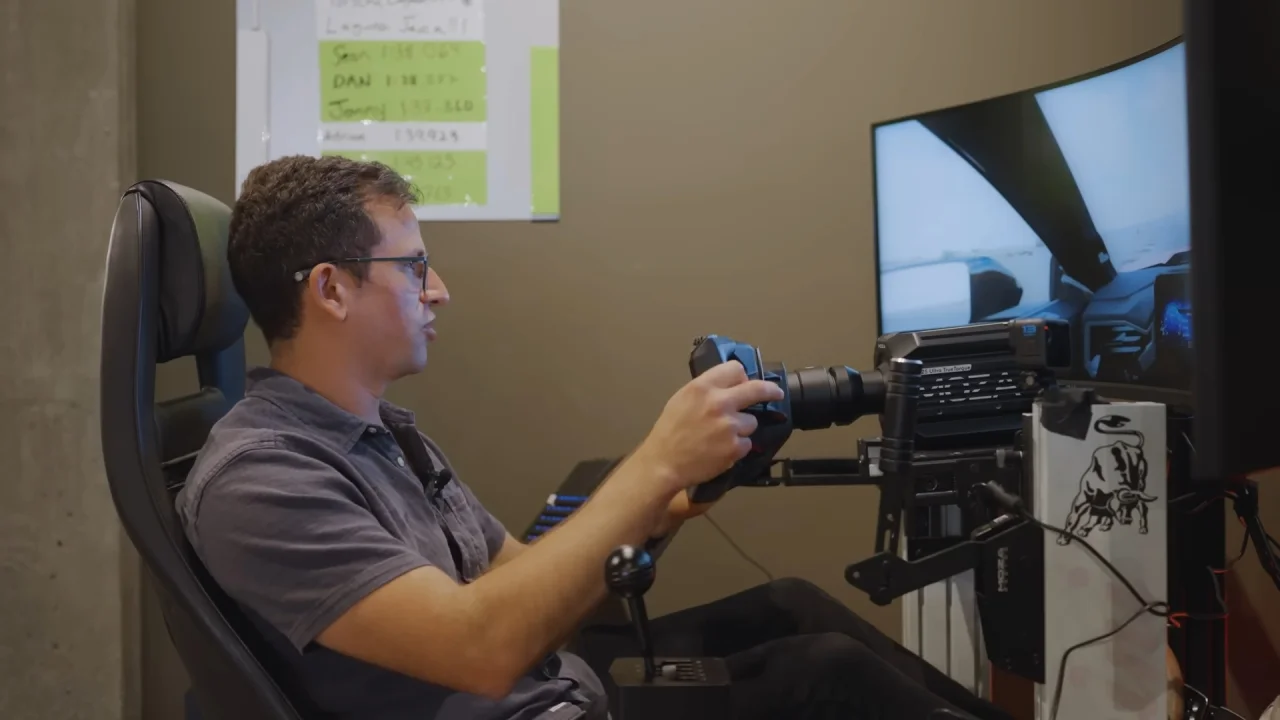
To test this out, Filippo from Cars & Bids decided to have a go at driving a Ford Mustang GT on a simulator, with MOZA racing gear, before taking to the track in the real thing. This test aimed to see how a simulator can help prepare you for driving on a real circuit.
Filippo decided to set a lap time in the sim, built by Doug DeMuro, and then try to replicate the time at the same racetrack in the same car. The closer he could get to the lap time, the more helpful the simulator would have proven to be.
Setting the Lap in the Simulator Was the Easy Part
The racetrack in question was Chuckwalla Valley Raceway, a track located in Desert Center near Joshua Tree National Park in Southern California. The circuit opened in 2010 and is 2.68 miles in length, consisting of 17 turns. Filippo hadn’t actually driven the track in the simulator before, so this was an all-new experience.
The MOZA Racing gear would play an important role in getting the presenter up to speed. MOZA’s products are some of the best that money can buy, and the presenter praised how much he could feel through the steering wheel on the simulator. “I am genuinely impressed by the synergy and feedback I am getting from the steering wheel,” Filippo said of the simulator.
While it was fun, it was also an important way for him to get accustomed to the track layout, how fast he could take each corner, as well as the limits of the car. At the end of his lap, he had set a time of 2:05.45. With that set, it was time for Filippo to head to the real circuit to see how closely the two experiences correlate.
How Did the Simulator Help With the Real-Life Experience?
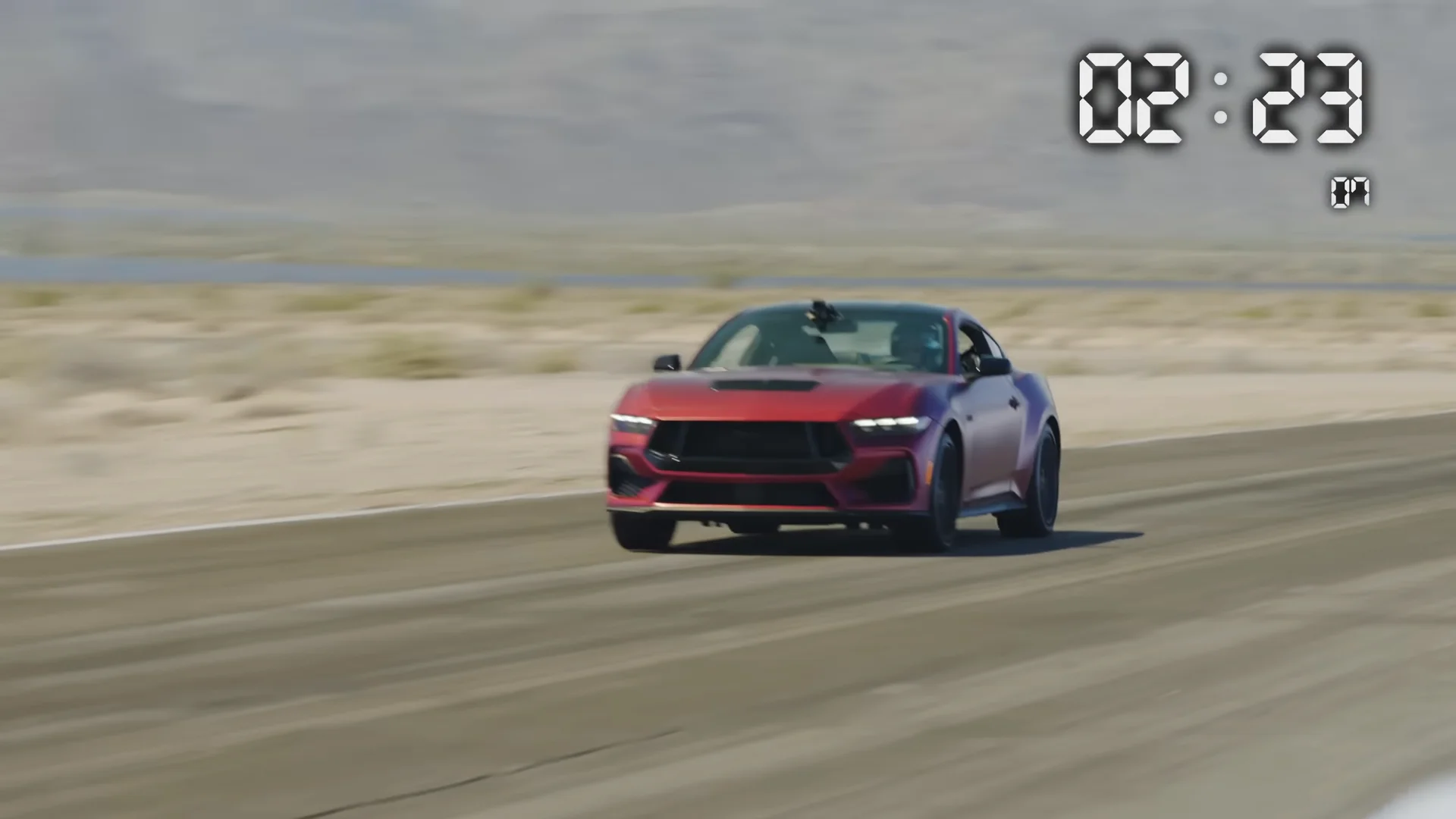
Filippo did admit it was quite scary first venturing onto the circuit. But he said that the simulator helped him learn a lot about the track. He could feel similar sensations in the wheel in real life, and he knew where apexes were, where the limit of the car was, and where he could push on the racetrack. That shows how far simulators have come over recent years.
With the preparation laps completed, Filippo then had to see how close to his sim racing time he could get in the Ford Mustang GT. At the end of his time at Chuckwalla, he had set a lap time of 2:23.67, so around 20 seconds slower than what he had done in the simulator. While the lap was slower, the simulator had helped prepare him for what to expect, and it was much easier than going into the experience blind. So, as it turns out, racing simulators can help prepare you for driving on a real racing circuit.